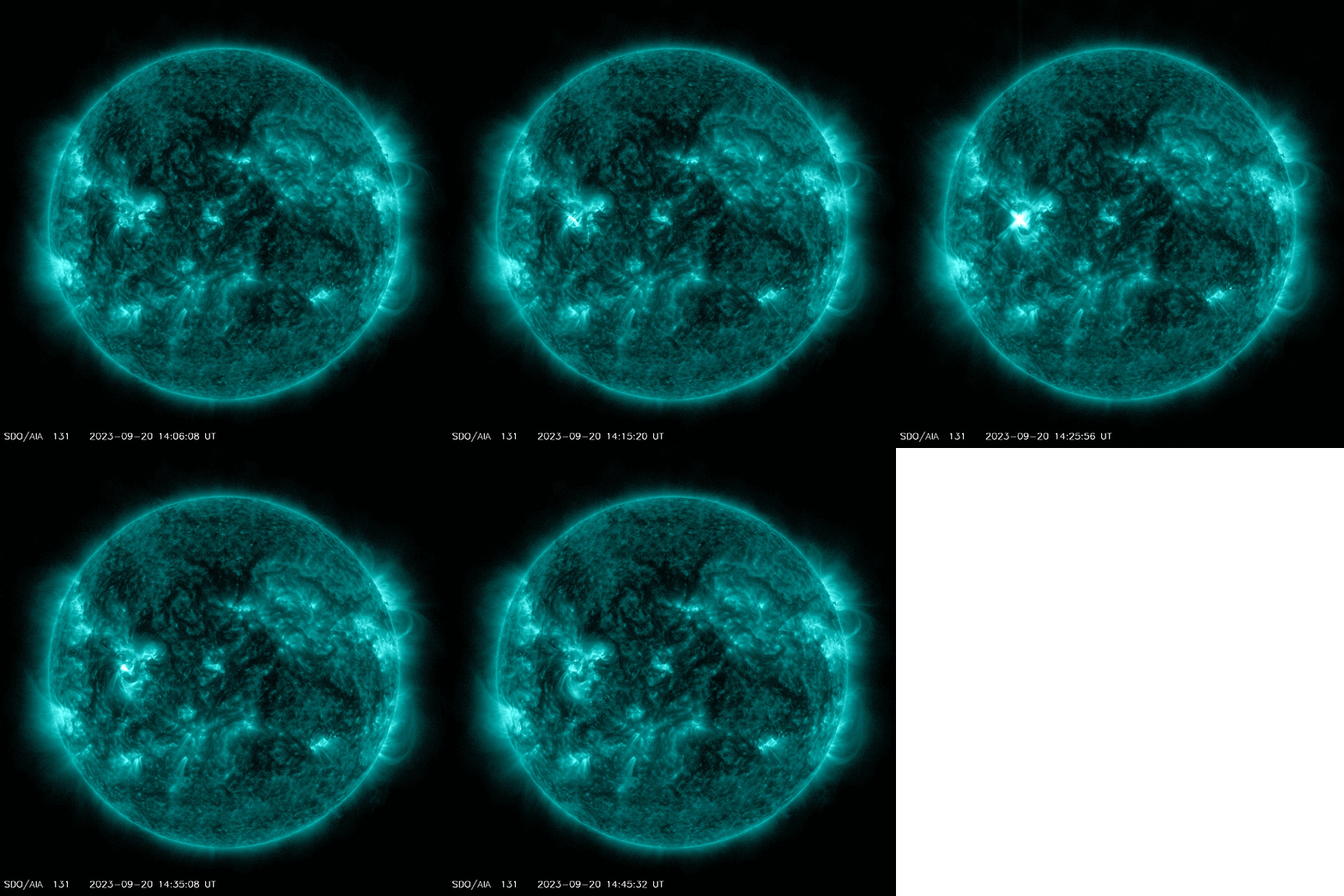
INTENSIFYING FLARE ACTIVITY: Flare activity from big sunspot AR3435 is intensifying. A few hours ago, it almost crossed the X-threshold with this M8-class explosion:
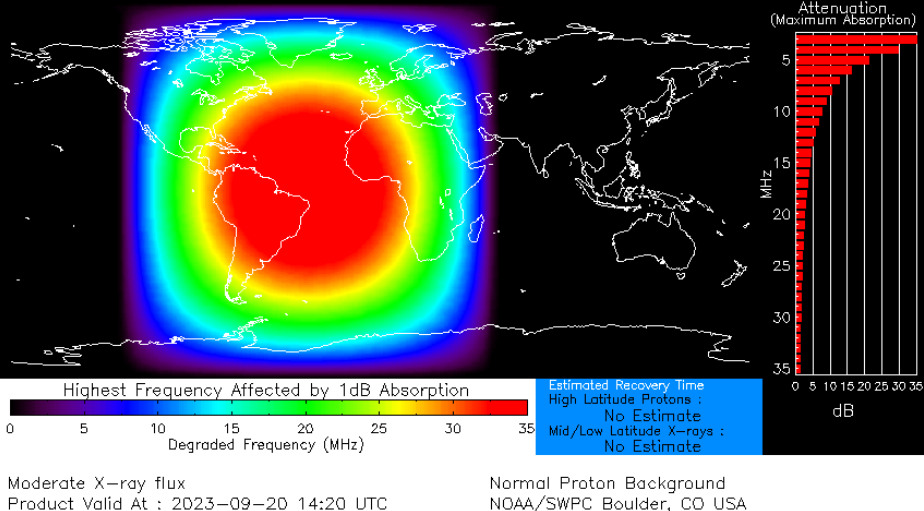
A flash of extreme UV radiation from the flare ionized the top of Earth's atmosphere, causing a shortwave radio blackout over the Atlantic ocean: map. Mariners and ham radio operators may have noticed loss of signal for as much as 30 minutes after 1419 UT. More flares are in the offing as this active sunspot turns toward Earth. Solar flare alerts: SMS Text
CME SPARKS STRONG GEOMAGNETIC STORM: Earth's magnetic field is still reverberating from a fast-moving CME strike on Sept. 18th. The CME's arrival (a day earlier than expected) sparked a strong G3-class geomagnetic storm with auroras stretching from France to the West Coast of the USA.

Jeroen Daniels photographed the display from Edmonton, Alberta:
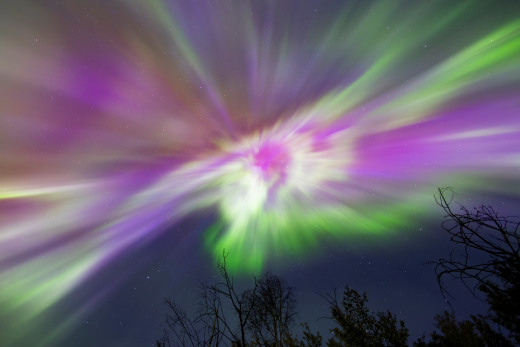
"As soon as the sun set I could see auroras dancing in the twilight sky," says Daniels. "The colours were unlike any that I have seen before--greens mixed with blues mixed with reds, orange, pink. It was amazing!"
At the apex of the storm, red atomic-oxygen auroras spread into the United States as far south as Colorado (+40.4N), Missouri (+40.1N), and Nebraska (+41.9N). It was a true mid-latitude event.
Not all the lights in the sky were auroras. Many observers also spotted STEVE--a glowing ribbon of purple light caused by currents of hot plasma flowing through Earth's magnetosphere. Michele Sadauskas photographed the phenomenon from Glidden, Wisconsin:
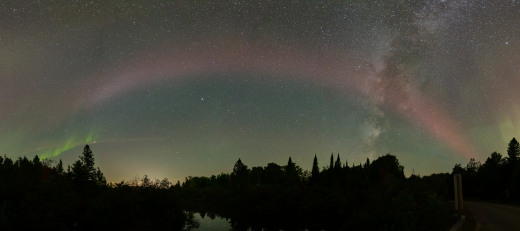
"When I stepped out of the truck, STEVE appeared vividly across the sky," says Sadauskas. "I quickly set up my pano rig and was pretty happy with the capture. This is the first time I've caught STEVE crossing all the way from east to west!"
Other notable sightings of STEVE were made in Montana, Michigan, Nebraska, South Dakota and Wyoming.
Did you miss the storm? Although the CME arrived a full day earlier than expected, subscribers to our Space Weather Alert Service were not taken by surprise. All subscribers received instant text messages when the CME hit Earth's magnetic field. Try it!
Realtime Aurora Photo Gallery
Free: Spaceweather.com Newsletter
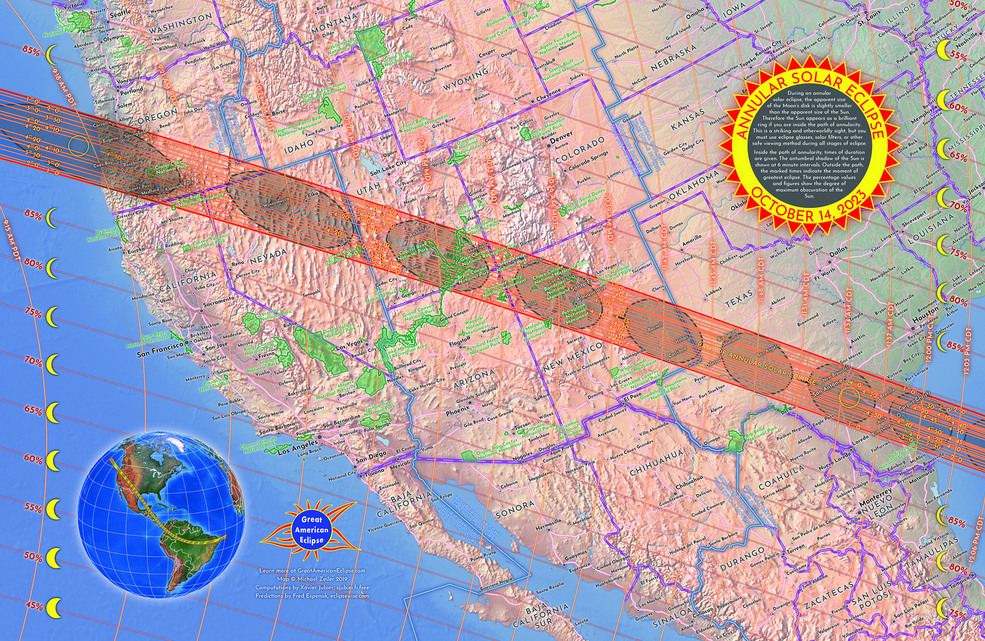
SOLAR ECLIPSE PENDANT: The students of Earth to Sky Calculus are about to try something never done before--to photograph the shadow of an annular solar eclipse from the stratosphere. On Oct. 14th, they'll launch a cosmic ray research balloon equipped with cameras to photograph the shadow zone of an eclipse over Nevada. You can support the flight by buying a Solar Eclipse Pendant:
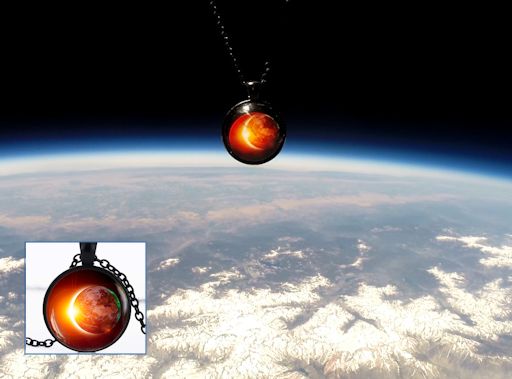
It's yours for $99.95. The students launched this pendant on July 17th. Floating at an altitude 105,000 feet above Earth’s surface, it made contact with space, experiencing temperatures as low as -63 C.
Buy the pendent now and for no additional charge we will fly it back to the stratosphere during the annular eclipse. Just make a note in the COMMENTS BOX of your shopping cart: "Fly my pendant again!"
Note: We have photographed the shadow of an eclipse before. Here's what the total eclipse of Aug. 21, 2017, looked like from the stratosphere over the Nebraska-Wyoming border:
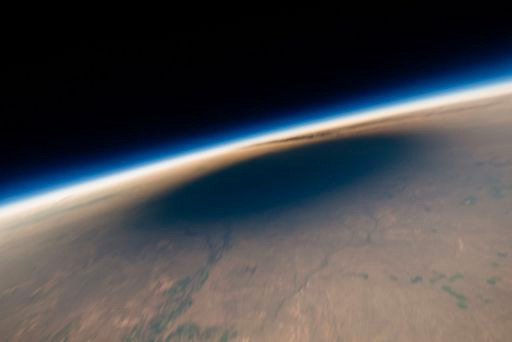
Total eclipses make deep black shadows, in this case blacking out more than 70 miles of terrain. What does the shadow of an *annular* eclipse look like? We hope to find out. It should be fuzzier around the edges, and not nearly as dark in the middle. An overview from the stratosphere could provide a unique picture.
Far Out Gifts: Earth to Sky Store
All sales support hands-on STEM education
Realtime Comet Photo Gallery
Free: Spaceweather.com Newsletter
Realtime Space Weather Photo Gallery
Free: Spaceweather.com Newsletter