GEOMAGNETIC STORM WATCH (G1): Yesterday's M8-class solar flare from sunspot AR3435 (movie) hurled a CME into space. NOAA analysts believe it could graze Earth's magnetic field and cause a minor G1-class geomagnetic storm on Sept. 23rd. A second CME might be following close behind as a result of today's M9-class flare, described below. Aurora alerts: SMS Text
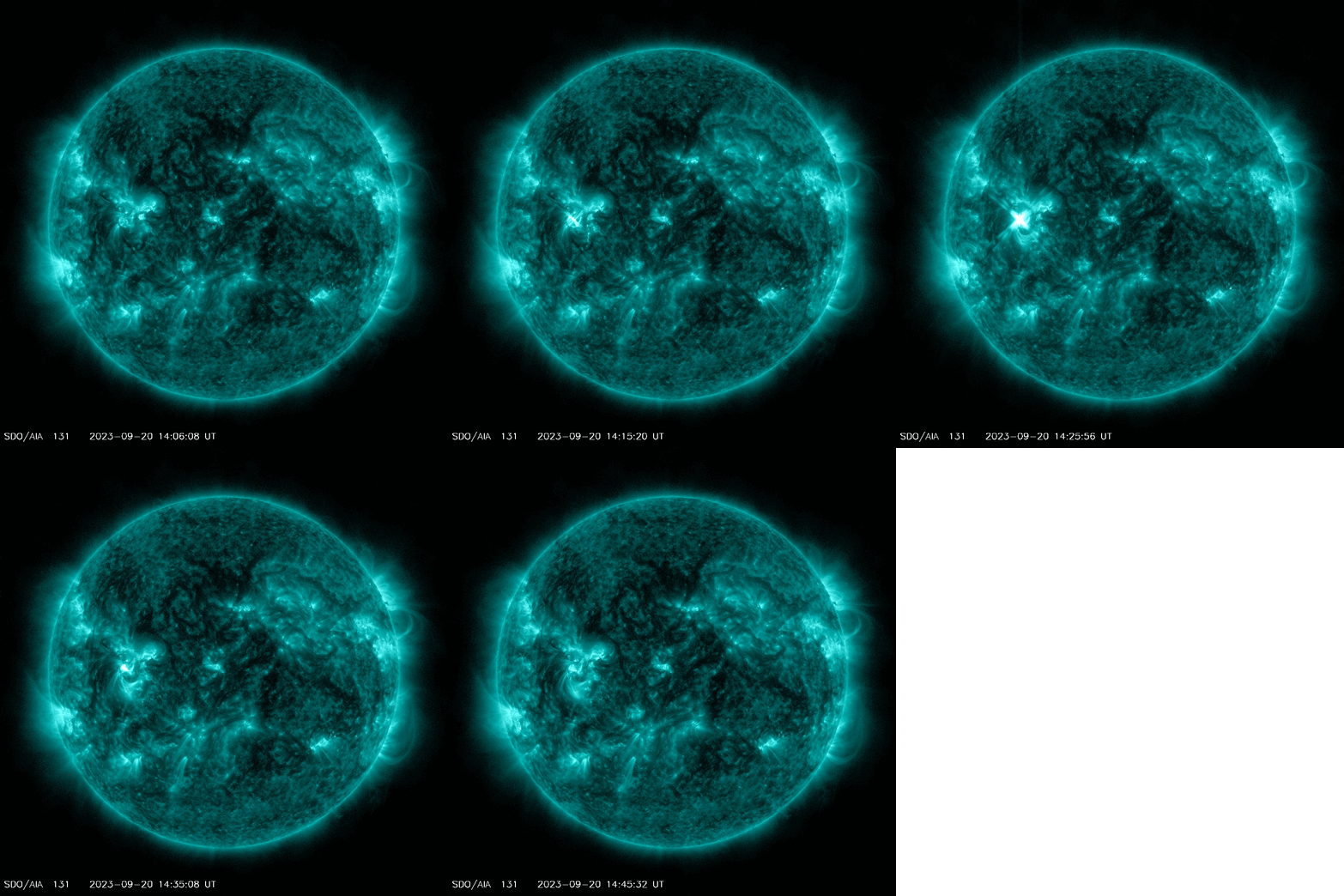
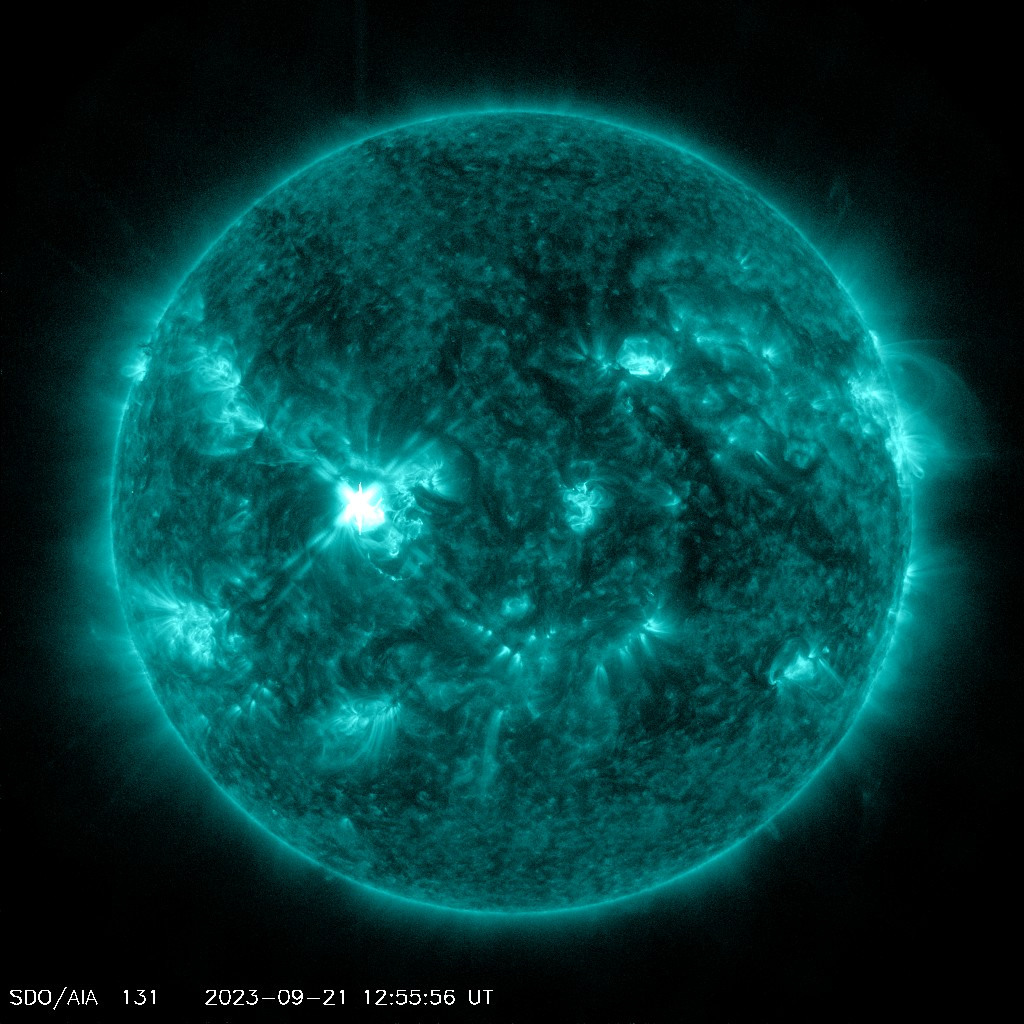
ANOTHER ALMOST-X FLARE (UPDATED): Sunspot AR3435 erupted again today (Sept. 21 @ 1254 UT), producing an M9-class solar flare. NASA's Solar Dynamics Observatory recorded the extreme ultravolet flash:
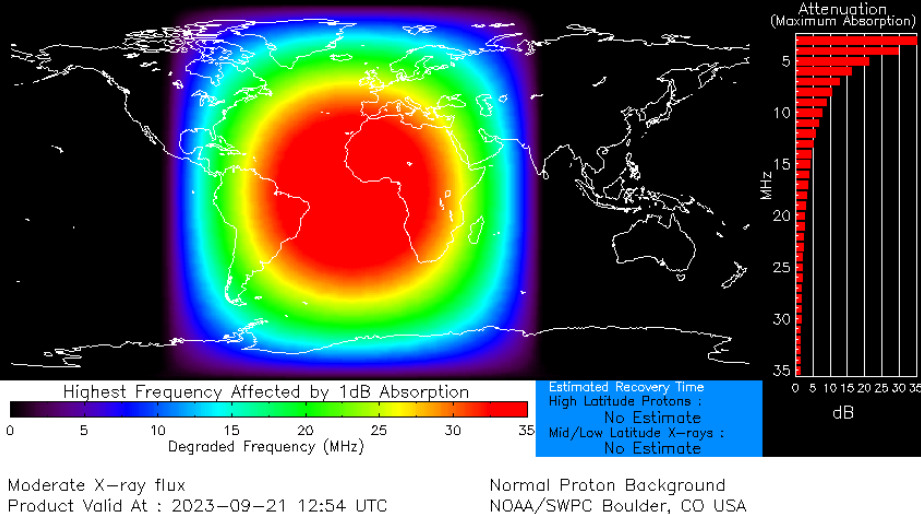
Radiation from the flare produced a shortwave radio blackout mainly over the Atlantic Ocean: map. Mariners and ham radio operators may have noticed loss of signal at frequencies below ~20 MHz.
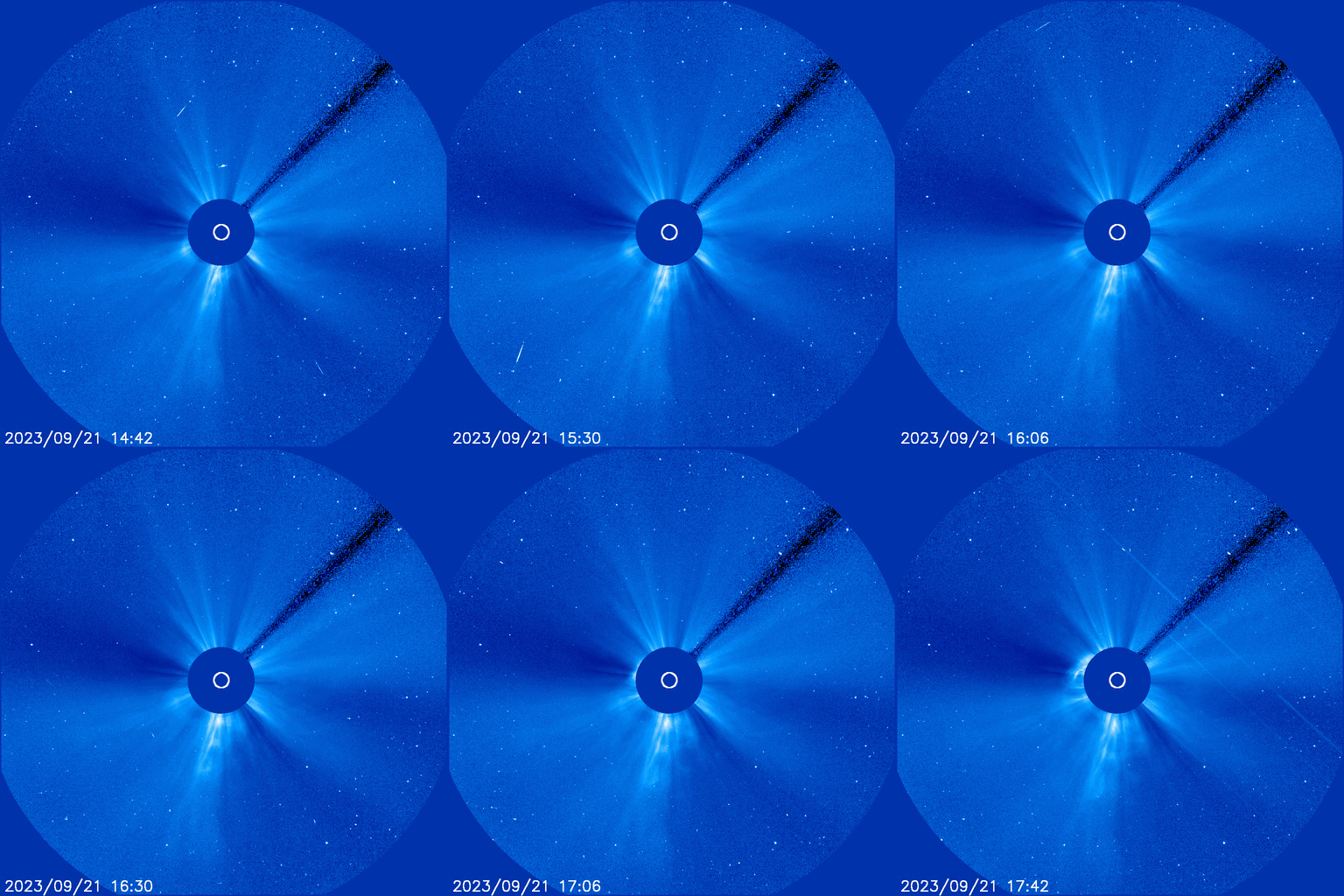
Update: New data from SOHO coronagraphs seem to show a faint Earth-directed CME emerging from the blast site: movie. If so, it will likely reach Earth on Sept. 24th. Stay tuned for confirmation as more data become available. Solar flare alerts: SMS Text
Realtime Space Weather Photo Gallery
Free: Spaceweather.com Newsletter
WHAT HAPPENED IN ARIZONA DURING THE GEOMAGNETIC STORM: Spoiler alert: Yes, there were auroras in Arizona. Jeremy Perez sends this report from the Wupatki National Monument north of Flagstaff: "On the evening of Sept. 18th, I heard reports of auroras at mid-latitudes, so I headed out to see if I could catch them from northern Arizona." The first thing he noticed was a bright display of green airglow:
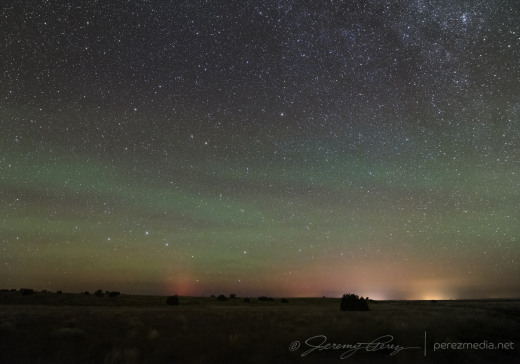
"I was stunned by how bright the airglow was," he says. "It was visible naked eye as soft, layered gray bands near the horizon. My camera easily picked up the green color."
But airglow is not aurora. Auroras are caused by the solar wind and CMEs; airglow, on the other hand, is a simple chemical reaction in Earth's upper atmosphere. Had Perez failed? No. Take a closer look at his photo.

"I eventually caught a 2 to 3 minute swirl of distant red pillars that managed to punch through the airglow," says Perez. "It was the aurora borealis!"
This means the strong G3-class geomagnetic storm of Sept. 18/19 produced auroras all the way down to latitude +36N. That's not the record low for Solar Cycle 25. Earlier this year a similar storm produced auroras as far south as Florida (+29N). Still, Arizona is pretty good. Aurora alerts: SMS Text

Realtime Aurora Photo Gallery
Free: Spaceweather.com Newsletter
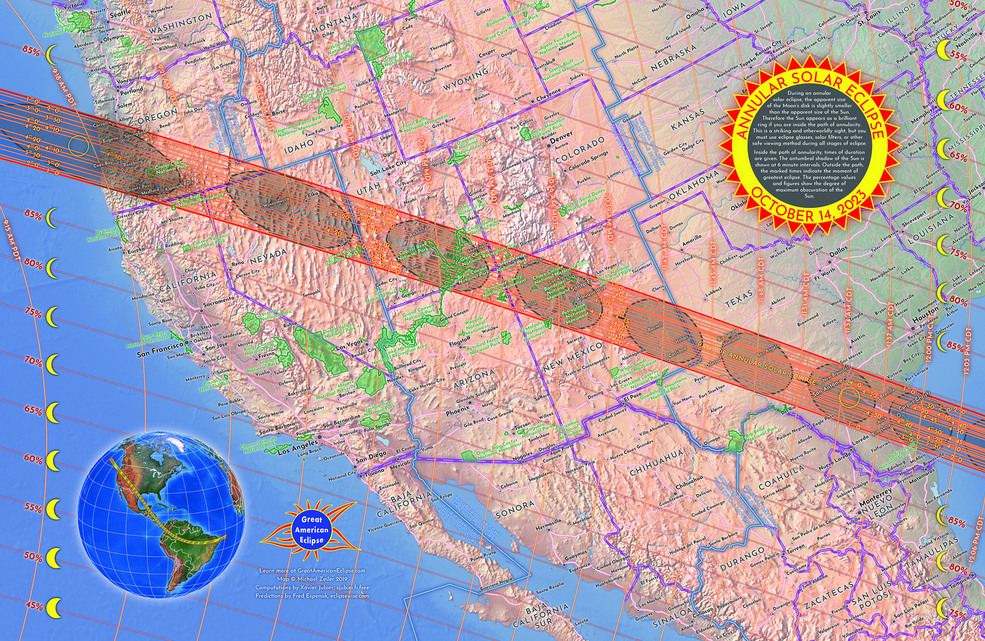
SOLAR ECLIPSE PENDANT: The students of Earth to Sky Calculus are about to try something never done before--to photograph the shadow of an annular solar eclipse from the stratosphere. On Oct. 14th, they'll launch a cosmic ray research balloon equipped with cameras to photograph the shadow zone of an eclipse over Nevada. You can support the flight by buying a Solar Eclipse Pendant:
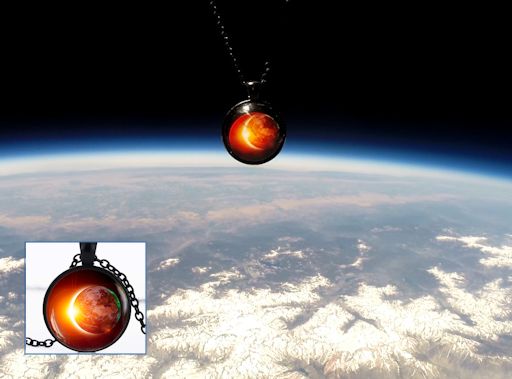
It's yours for $99.95. The students launched this pendant on July 17th. Floating at an altitude 105,000 feet above Earth’s surface, it made contact with space, experiencing temperatures as low as -63 C.
Buy the pendent now and for no additional charge we will fly it back to the stratosphere during the annular eclipse. Just make a note in the COMMENTS BOX of your shopping cart: "Fly my pendant again!"
Note: We have photographed the shadow of an eclipse before. Here's what the total eclipse of Aug. 21, 2017, looked like from the stratosphere over the Nebraska-Wyoming border:
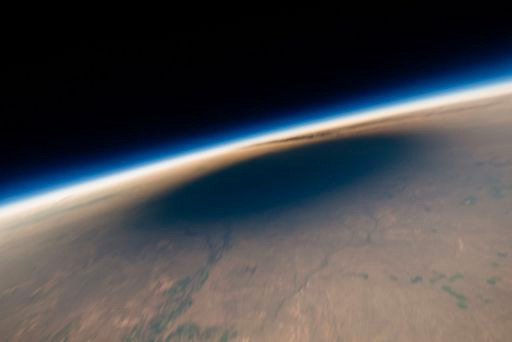
Total eclipses make deep black shadows, in this case blacking out more than 70 miles of terrain. What does the shadow of an *annular* eclipse look like? We hope to find out. It should be fuzzier around the edges, and not nearly as dark in the middle. An overview from the stratosphere could provide a unique picture.
Far Out Gifts: Earth to Sky Store
All sales support hands-on STEM education
Realtime Comet Photo Gallery
Free: Spaceweather.com Newsletter
Realtime Space Weather Photo Gallery
Free: Spaceweather.com Newsletter