GEOMAGNETIC STORM WATCH (G1): A geomagnetic storm watch is in effect for Sept 26th when another CME is expected to hit Earth's magnetic field. NOAA forecasters expect it to be a glancing blow producing only a minor G1-class storm. Aurora alerts: SMS Text

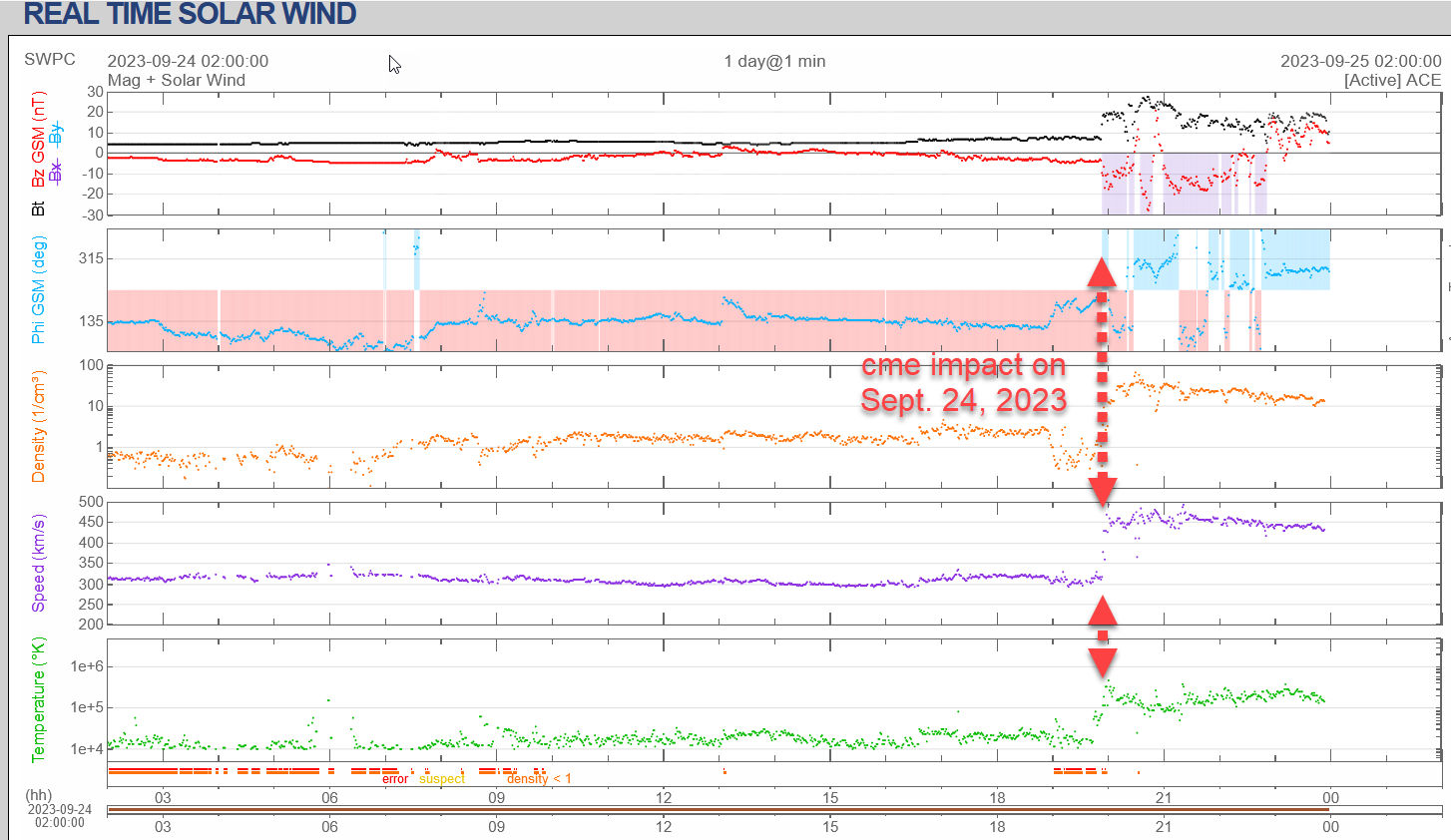
RARE RED AURORAS: As predicted, a CME hit Earth's magnetic field on Sept. 24th (2043 UT). The impact was much stronger than expected. Magnetometer needles in Canada jerked by as much as 129 nT, and a G2-class geomagnetic storm began almost immediately after the CME arrived. Observers in Europe saw rare red auroras as far south as France:

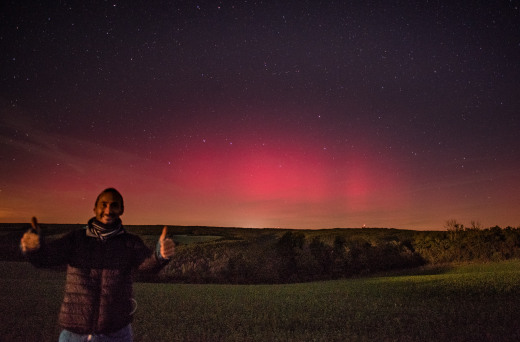
"What a wonderful red aurora we had last night night in France!" says photographer Nicolas Drouhin of Burgundy. "It did not last long (about 5 minutes), but it was intense, even to the naked eye!"
Naked-eye sightings of red auroras are unusual because human eyes are notoriously insensitive to the 6300 Å wavelength of their red light. Yet multiple observers in, e.g., Scotland and Iceland confirmed that they saw the scarlet glow. Some displays were stunningly red:
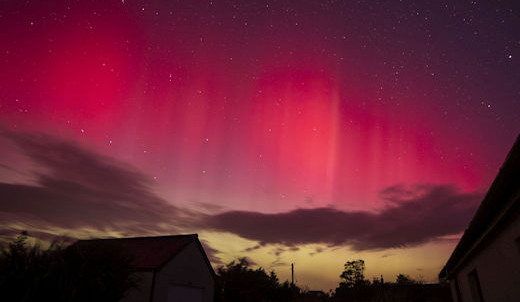
"These were some of the reddest auroras I've ever seen," says photographer Chris Walker of the Mull of Galloway, Scotland.
Red auroras persisted as night fell over North America. However, except in Alaska they were not naked-eye; the storm was ebbing. The farthest south they were photographed was Curtis, Nebraska, at latitude +40.6N.
What makes red auroras rare? Partly it's just that we have trouble seeing them, so they go unreported by sky watchers. Mainly, though, it's because they are the most delicate auroras. Red auroras come from atomic oxygen near the top of Earth's atmosphere. Oxygen atoms excited by solar wind or a CME spit out their red photons very slowly. The radiative lifetime of the transition is 110 seconds--an eternity in the quantum realm. The atoms must remain undisturbed that long to produce their eerie red light.
Realtime Aurora Photo Gallery
Free: Spaceweather.com Newsletter
OSIRIS-REX STRATOSPHERIC PHOTO BALLOON: NASA’s OSIRIS-REx sample return capsule, carrying pieces of asteroid Bennu, safely landed at the Utah Test and Training Range on Sunday morning at 8:52 a.m. MDT. Just before the capsule re-entered Earth's atmosphere, the students of Earth to Sky Calculus launched a high-altitude balloon equipped with cameras to photograph the re-entry:

The balloon traveled to the stratosphere above the capsule's ground track in eastern Nevada, and it was aloft when the blazing hot capsule streaked overhead. There's no guarantee we caught the fireball. So much depends on lucky camera angles and the uncertain brightness of the capsule's glowing heat shield. We will find out in a few days. The payload landed in a remote mountainous area that is non-trivial to access. A recovery team is planning the route now. Stay tuned.
Realtime Space Weather Photo Gallery
Free: Spaceweather.com Newsletter
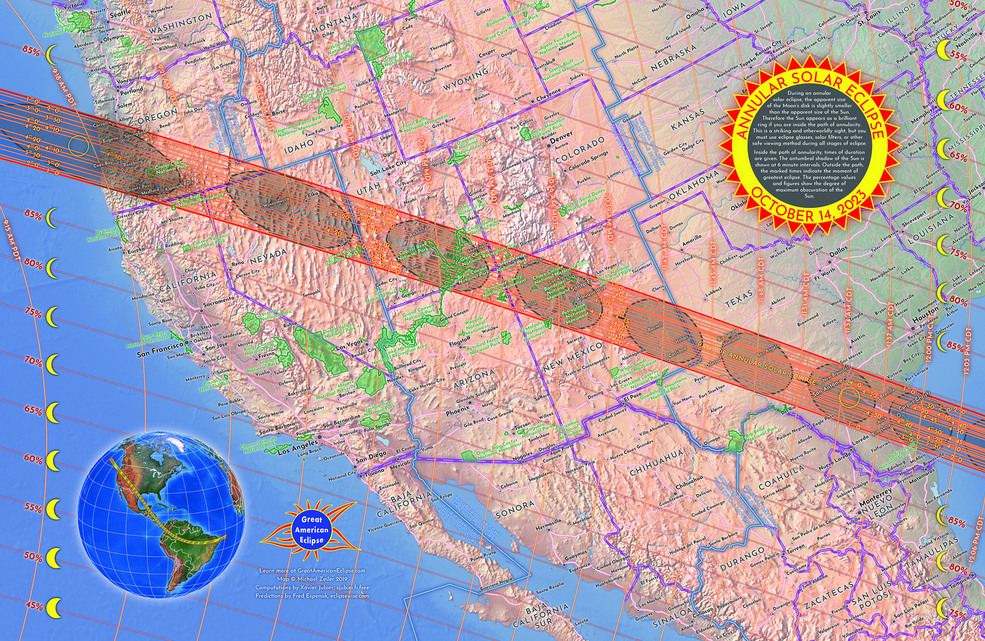
SOLAR ECLIPSE PENDANT: The students of Earth to Sky Calculus are about to try something never done before--to photograph the shadow of an annular solar eclipse from the stratosphere. On Oct. 14th, they'll launch a cosmic ray research balloon equipped with cameras to photograph the shadow zone of an eclipse over Nevada. You can support the flight by buying a Solar Eclipse Pendant:
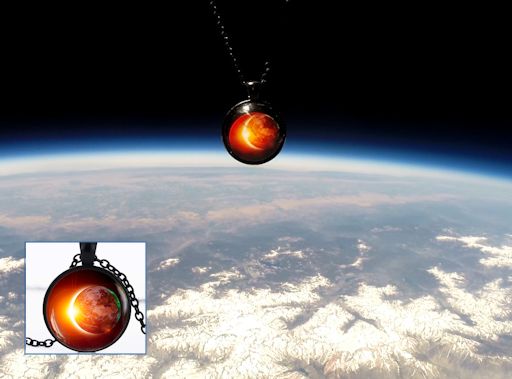
It's yours for $99.95. The students launched this pendant on July 17th. Floating at an altitude 105,000 feet above Earth’s surface, it made contact with space, experiencing temperatures as low as -63 C.
Buy the pendent now and for no additional charge we will fly it back to the stratosphere during the annular eclipse. Just make a note in the COMMENTS BOX of your shopping cart: "Fly my pendant again!"
Note: We have photographed the shadow of an eclipse before. Here's what the total eclipse of Aug. 21, 2017, looked like from the stratosphere over the Nebraska-Wyoming border:
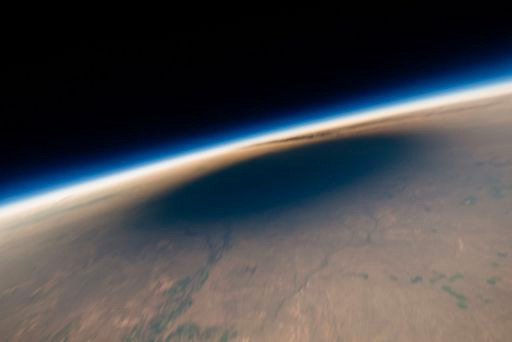
Total eclipses make deep black shadows, in this case blacking out more than 70 miles of terrain. What does the shadow of an *annular* eclipse look like? We hope to find out. It should be fuzzier around the edges, and not nearly as dark in the middle. An overview from the stratosphere could provide a unique picture.
Far Out Gifts: Earth to Sky Store
All sales support hands-on STEM education
Realtime Comet Photo Gallery
Free: Spaceweather.com Newsletter
Realtime Aurora Photo Gallery
Free: Spaceweather.com Newsletter