CO-ROTATING INTERACTION REGION: NOAA forecasters say that a co-rotating interaction region (CIR) could hit Earth later today. CIRs are shock-like transition zones between fast- and slow-moving streams of solar wind. Think of them as mini-CMEs. If this one arrives as predicted, Arctic sky watchers might witness an outburst of lights tonight. Aurora alerts: SMS Text.
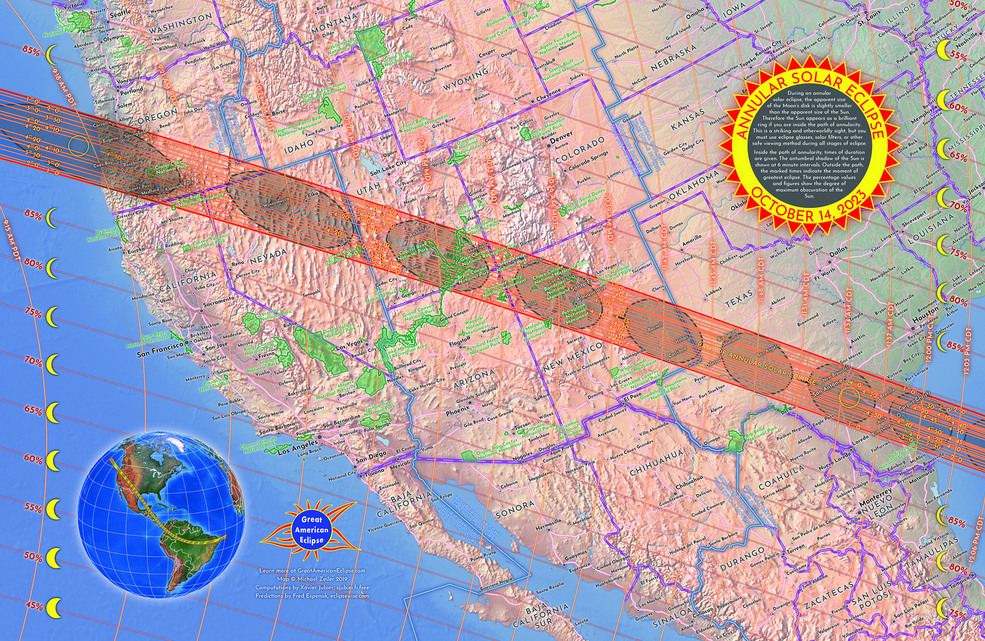
RING OF FIRE SOLAR ECLIPSE--THIS WEEKEND: If you're in the Americas, you can witness a solar eclipse this weekend. The action begins on Saturday morning, Oct. 14th, when the Moon's shadow makes landfall in the Pacific northwest corner of North America; it ends at sunset in Brazil. This animation shows the progress of the eclipse zone:
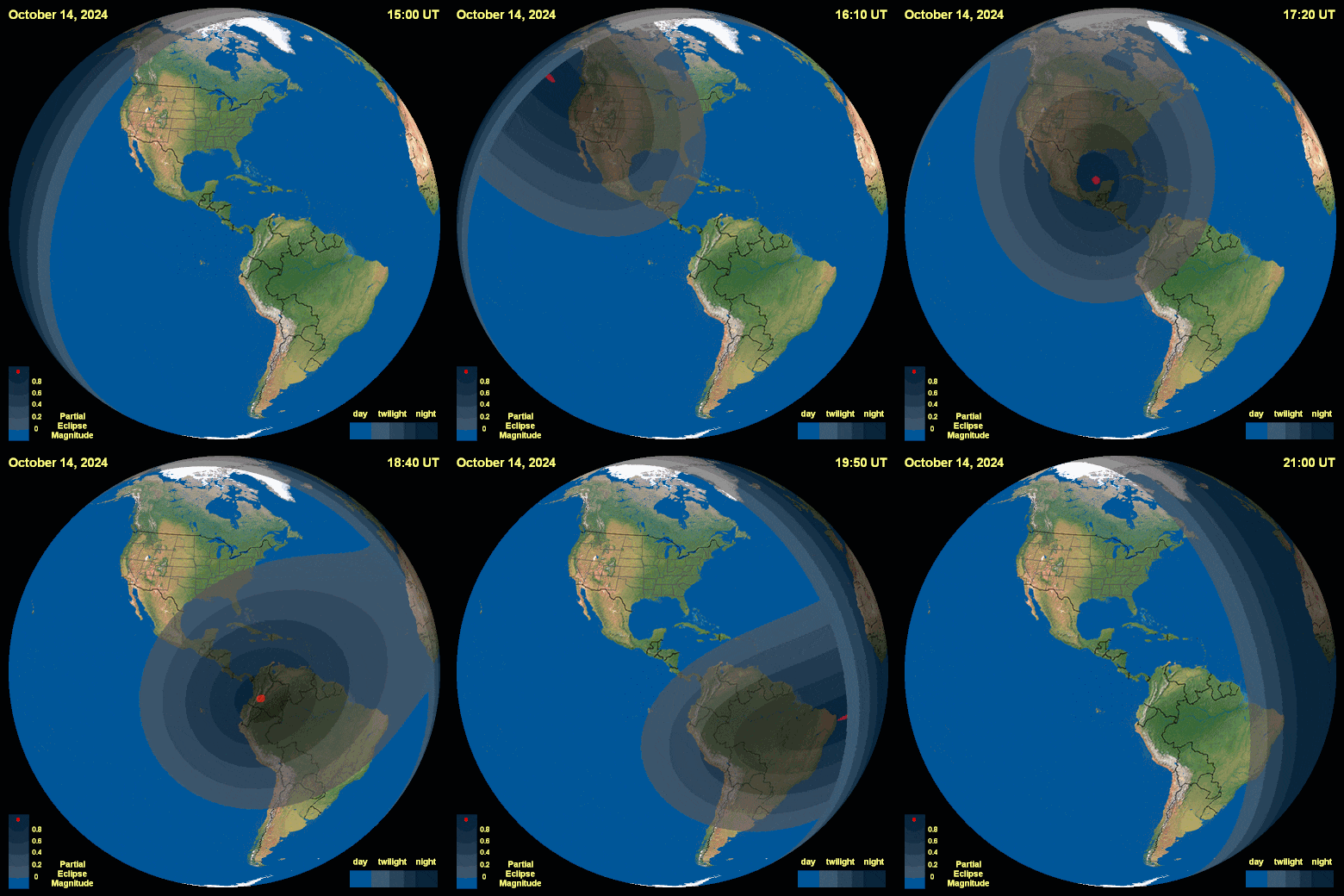
Animation courtesy Peter Zimnikoval of Banska Bystrica, Slovakia
Inside the red circle, the Moon will pass directly in front of the sun, producing an annular eclipse. The sun will look like it has a black hole right in the middle of it. Within the gray zones, the eclipse is partial; the sun will look like a crescent.
You must have eclipse glasses to view this event. The eclipse is not total. The lunar disk will be a little too small to block the whole sun, so even at maximum coverage a ring of fire will be visible--very cool, yet at the same time potentially dangerous to stare at.
Here's something fun. Try looking down:
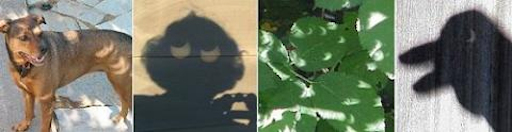
Beneath a leafy tree, you might be surprised to find hundreds of crescent or ring-shaped sunbeams dappling the grass. Overlapping leaves create natural pinhole cameras, each one casting an image of the crescent-sun onto the ground beneath the canopy. You can also use your fingers to create sunbeams; note the turkey. Solar eclipse shadow play is safe and lots of fun.
Visit GreatAmericanEclipse.com for more information and observing supplies.
Realtime Eclipse Photo Gallery
Free: Spaceweather.com Newsletter
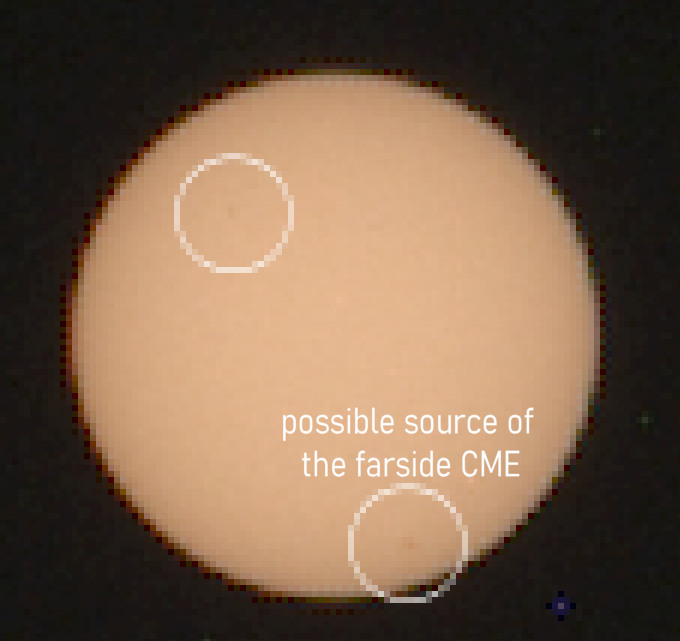
FARSIDE CME TARGETS MARS: Earth just dodged another solar storm. Yesterday, SOHO coronagraphs observed a full-halo CME emerging primarily over the sun's northeastern limb:

This CME will not hit Earth. The blast site is on the farside of the sun. Instead of Earth, Mars should receive a nearly direct hit on Oct. 14th, sparking UV auroras in that planet's magnetic umbrellas. The Perseverance Mars rover is seeing a sunspot that could be the source of the CME: image. Solar flare alerts: SMS Text
Realtime Space Weather Photo Gallery
Free: Spaceweather.com Newsletter
HANDMADE SOLAR ECLIPSE PENDANT: The students of Earth to Sky Calculus are about to try something never done before--to photograph the shadow of an annular solar eclipse from the stratosphere. On Oct. 14th, they'll launch a cosmic ray research balloon equipped with cameras to photograph the shadow zone of an eclipse over Nevada. You can support the flight by buying a handmade Annular Solar Eclipse Pendant:
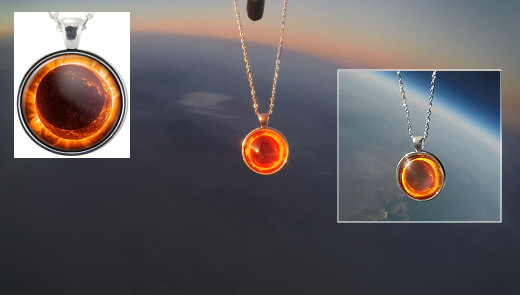
It's yours for $129.95. The students launched this pendant from the eclipse zone in a Nevada test flight on Sept. 24, 2023. Floating at an altitude 118,767 feet above Earth’s surface, it made contact with space, experiencing temperatures as low as --59 C.
Buy the pendent now and for no additional charge we will fly it back to the stratosphere during the annular eclipse. Just make a note in the COMMENTS BOX of your shopping cart: "Fly my pendant again!"
Note: We have photographed the shadow of an eclipse before. Here's what the total eclipse of Aug. 21, 2017, looked like from the stratosphere over the Nebraska-Wyoming border:
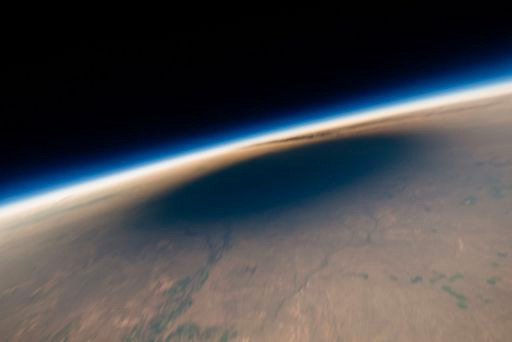
Total eclipses make deep black shadows, in this case blacking out more than 70 miles of terrain. What does the shadow of an *annular* eclipse look like? We hope to find out. It should be fuzzier around the edges, and not nearly as dark in the middle. An overview from the stratosphere could provide a unique picture.
Far Out Gifts: Earth to Sky Store
All sales support hands-on STEM education
Realtime Aurora Photo Gallery
Free: Spaceweather.com Newsletter
Realtime Comet Photo Gallery
Free: Spaceweather.com Newsletter