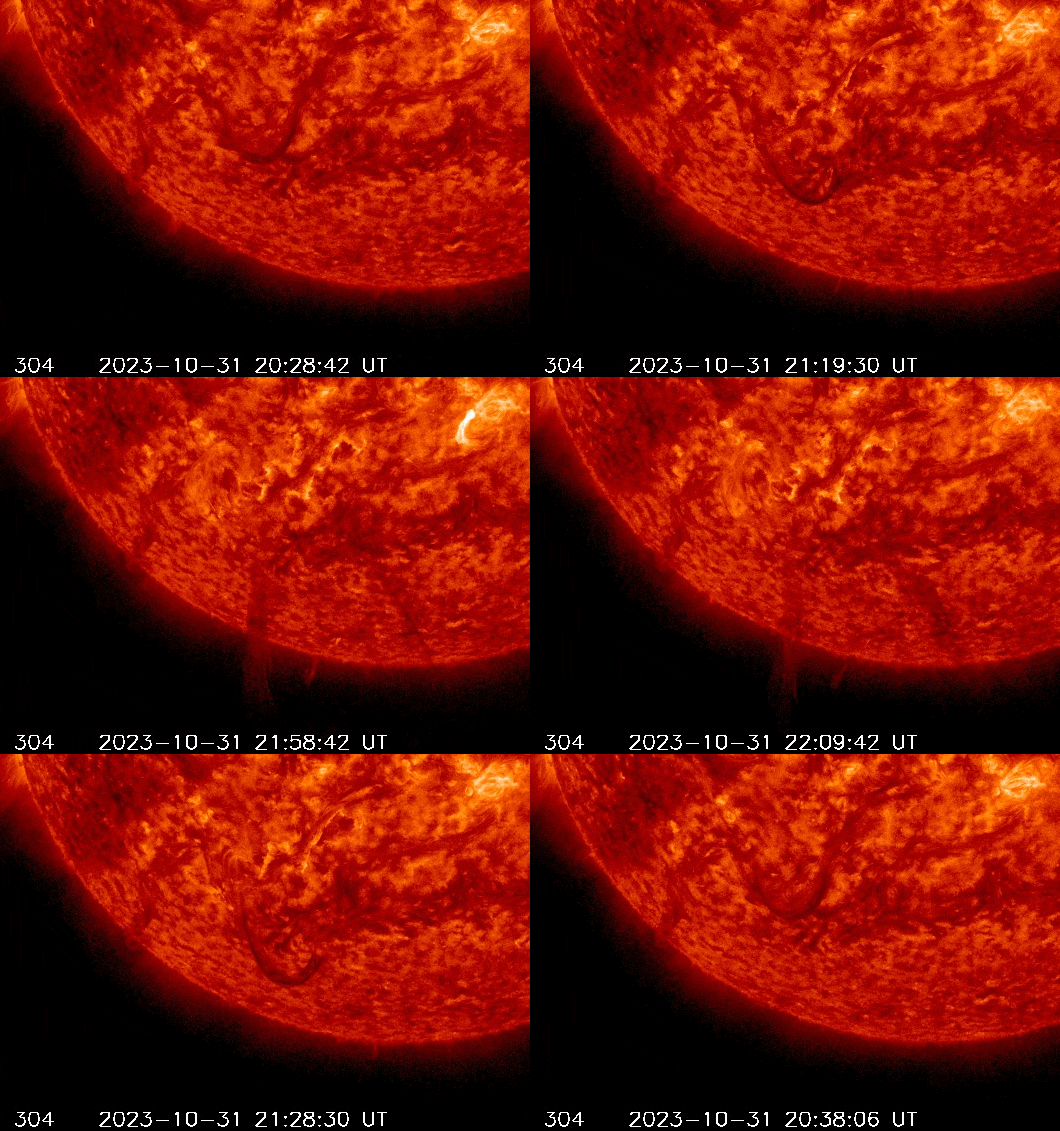
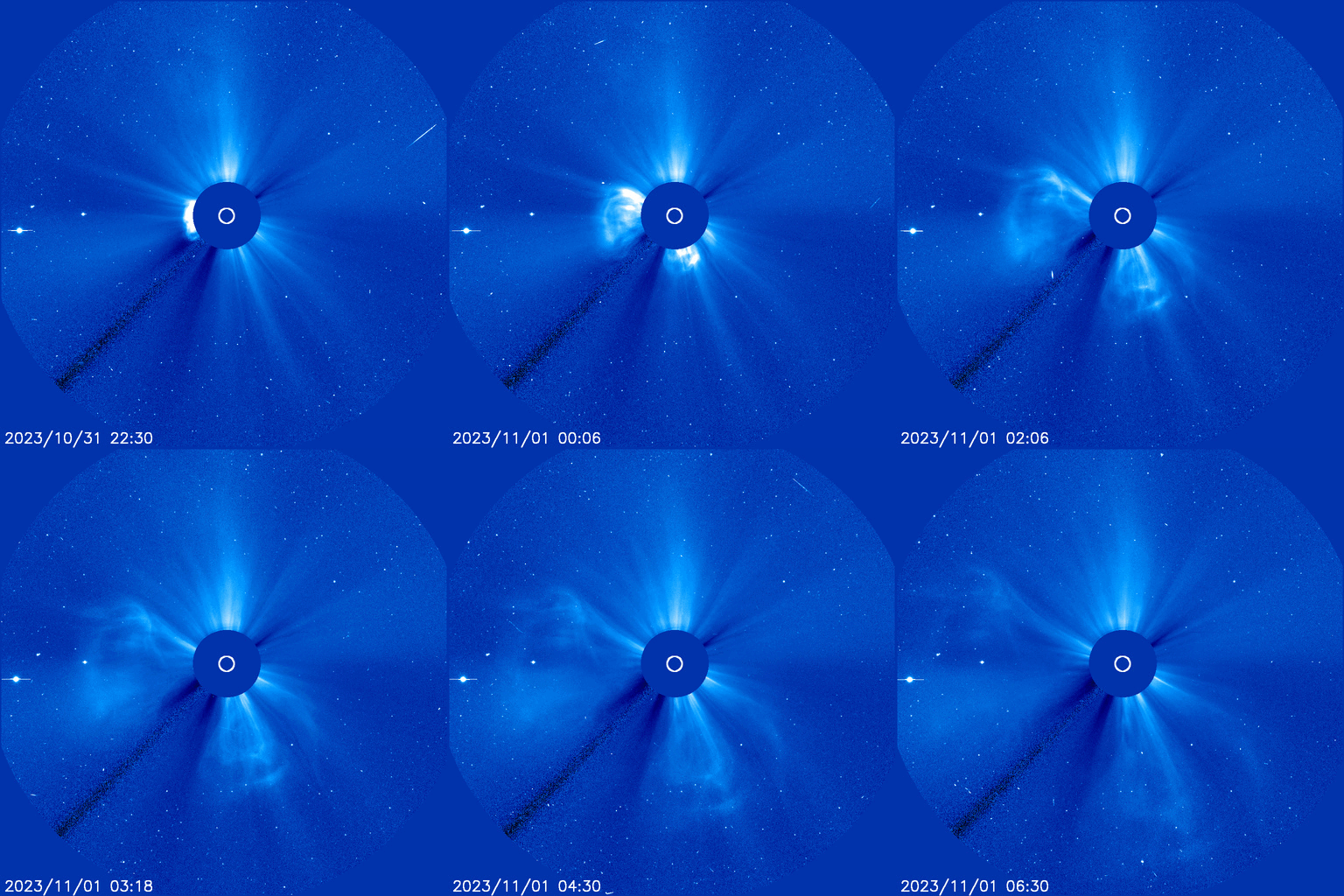
CORRECTION--MAYBE IT *WILL* HIT EARTH: A solar magnetic filament erupted on Halloween night, carving a "canyon of fire" in the sun's southern hemisphere. Initial NASA models of the resulting CME suggested it would miss Earth. However, new NOAA models of the same CME point to a glancing blow on Nov. 4th. If so, the impact could cause a minor G1-class geomagnetic storm with high-latitude auroras. Aurora alerts: SMS Text

RARE BLUE AURORAS OVER FRANCE: If you live in France, you probably remember the night of Sept. 25th. A CME hit Earth's magnetic field, sparking a display of rare red auroras as far south as Burgundy. Upon further review, however, there was a color even more rare than red. C'est bleu:
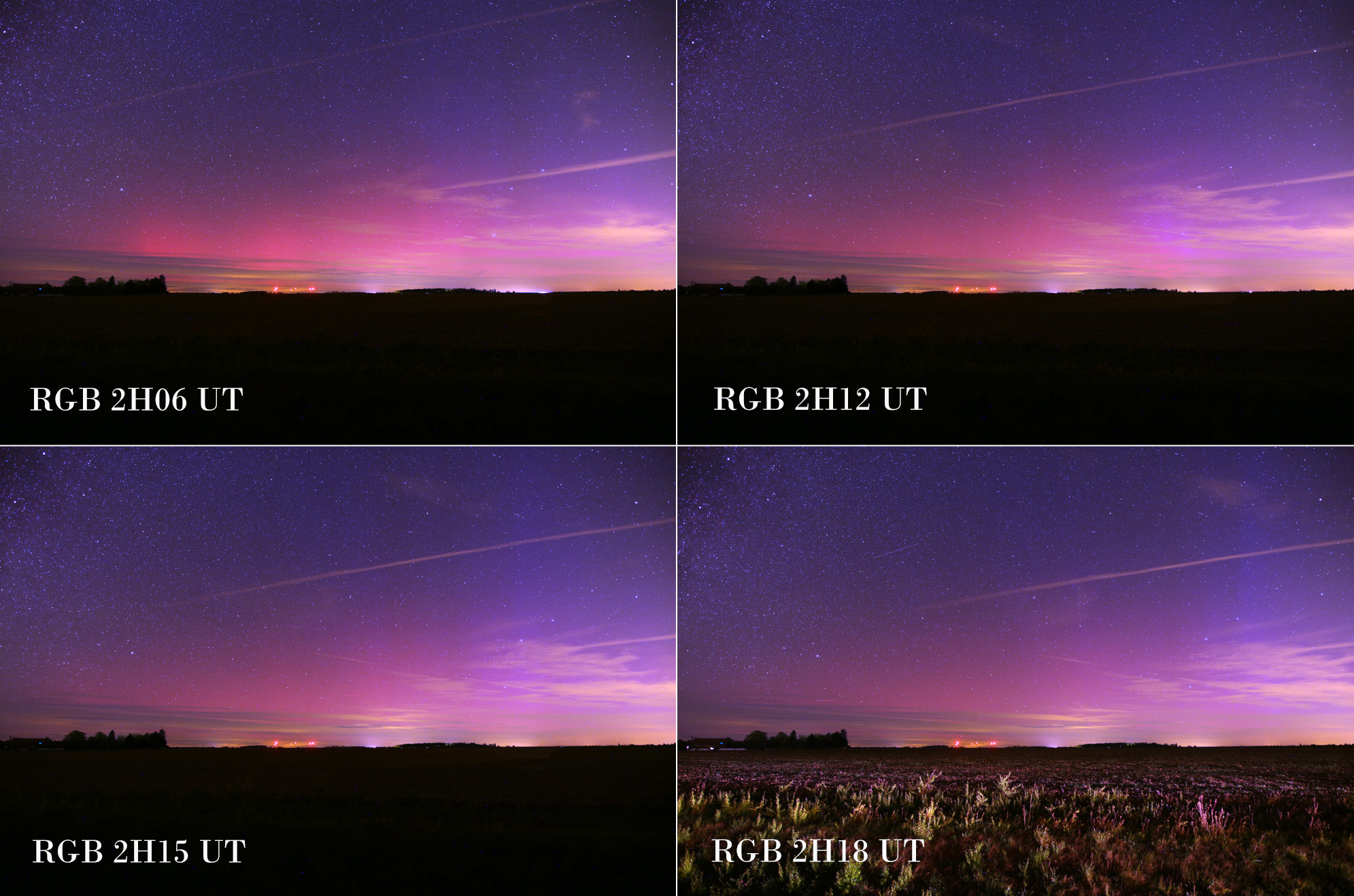
"On Sept. 25th I was very pleased to capture some pictures of the red auroras over France (48°N)," reports photographer Emmanuel Beaudoin. "After careful study of the images, it appears that a second aurora, later that same night, produced an incredible blue color."
This is indeed rare. Blue auroras are seldom seen even in Arctic countries where auroras appear almost every night. How did they get to France? The answer is the Moon, which was almost full (83%) on the night of the storm.
Blue can appear when bright moonlight skims the top of the auroras. The process is called "resonant scattering." High up in the aurora zone, ionized nitrogen molecules (N2+) naturally produce blue light, just a little, usually much too faint to see. But when these ions get hit by moonlight, they capture and re-emit blue photons from the Moon. Voilà!--extra blue.
Realtime Aurora Photo Gallery
Free: Spaceweather.com Newsletter
THE SUPRALATERAL ARC: The sun was setting on Oct. 26th when Jüri Voit of Kuusalu, Estonia, witnessed an unusually complex display of ice halos:
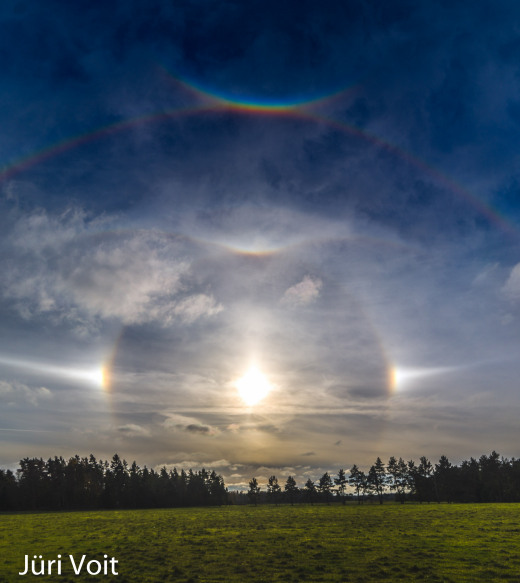
"It was little cold, only -2 degree celsius," he says.
That low temperature was key to the display. Ice crystals forming in clouds overhead caught the rays of the setting sun and bent them into a circumzenithal arc, an upper tangent arc, a 22-degree circular halo, and a pair of bright sundogs.
Most unusual of all was the supralateral arc--the broad rainbow-like band stretching left-to-right across the entire picture. Supralateral arcs are one of the rarest of all ice halos, forming from reflections inside hexagonal-column ice crystals only when the sun is lower than 32 degrees in the sky.
Realtime Space Weather Photo Gallery
Free: Spaceweather.com Newsletter
ALASKAN TIMBER WOLF PENDANT: It's a great gift for wolf lovers. On Sept. 5th, the students of Earth to Sky Calculus launched this Alaskan Timber Wolf Pendant to the stratosphere onboard a cosmic ray research balloon. At the apex of the flight, it floated 103,018 ft high, above 99.7% of Earth's atmosphere.
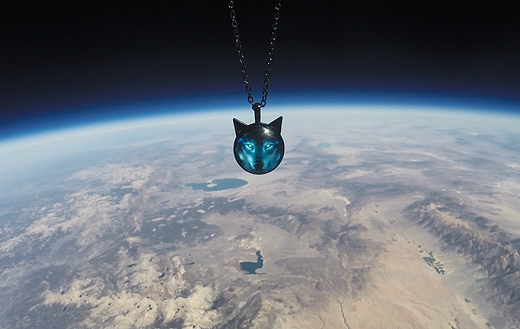
You can have it for $99.95. The students are selling space pendants to support their cosmic ray ballooning program. Each one comes with a greeting card showing the wolf in flight and telling the story of its journey to the edge of space.
Far Out Gifts: Earth to Sky Store
All sales support hands-on STEM education
Realtime Aurora Photo Gallery
Free: Spaceweather.com Newsletter
Realtime Space Weather Photo Gallery
Free: Spaceweather.com Newsletter