UPDATE--THE STORM MAY BE SUBSIDING: A geomagnetic storm is still underway, but it may be subsiding. Storm levels have dropped from G3 to G2 as Earth begins to exit the wake of a CME that struck earlier today. There is still a chance of one more CME impact before the day is over, so aurora watchers should stay tuned. Full story below...


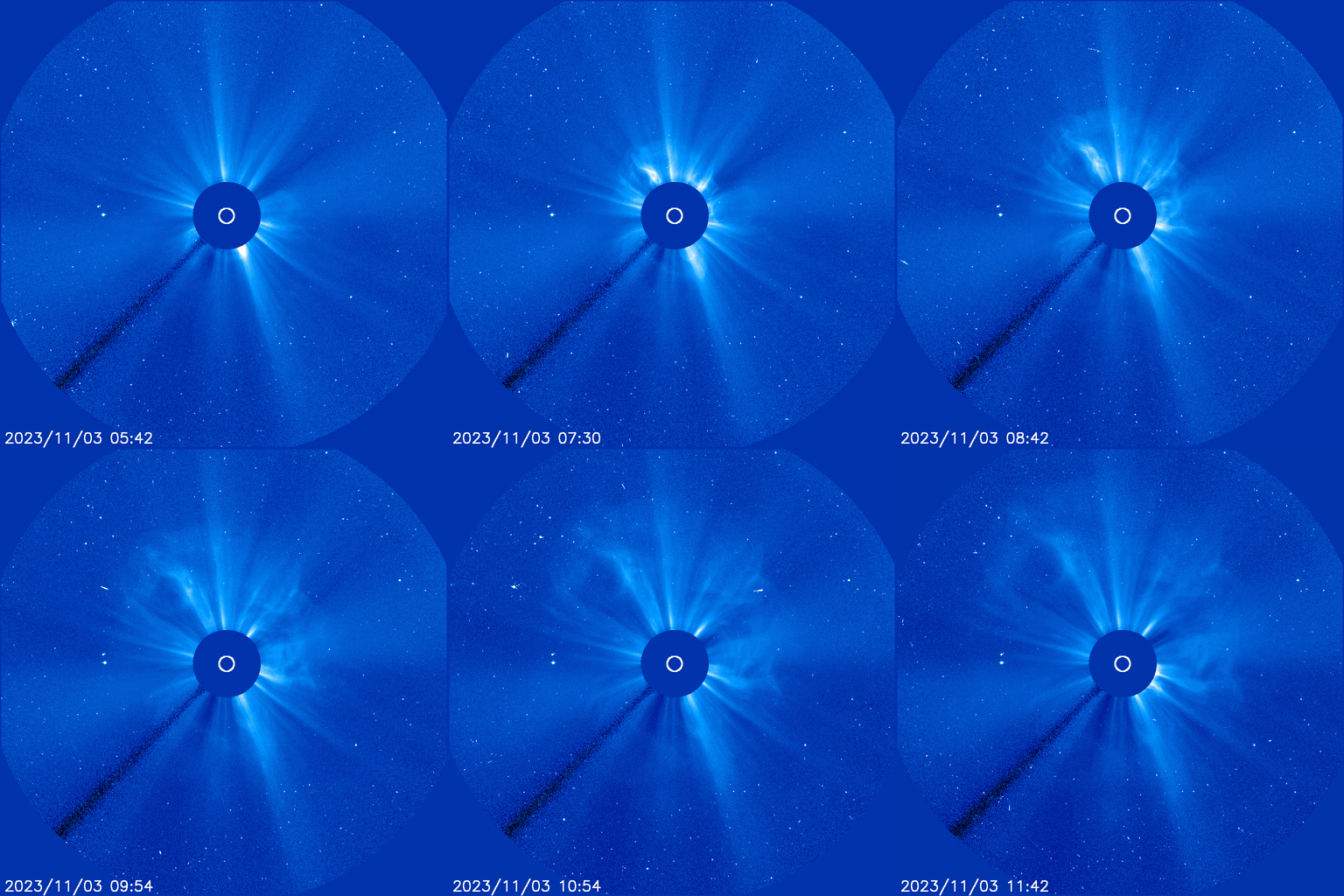
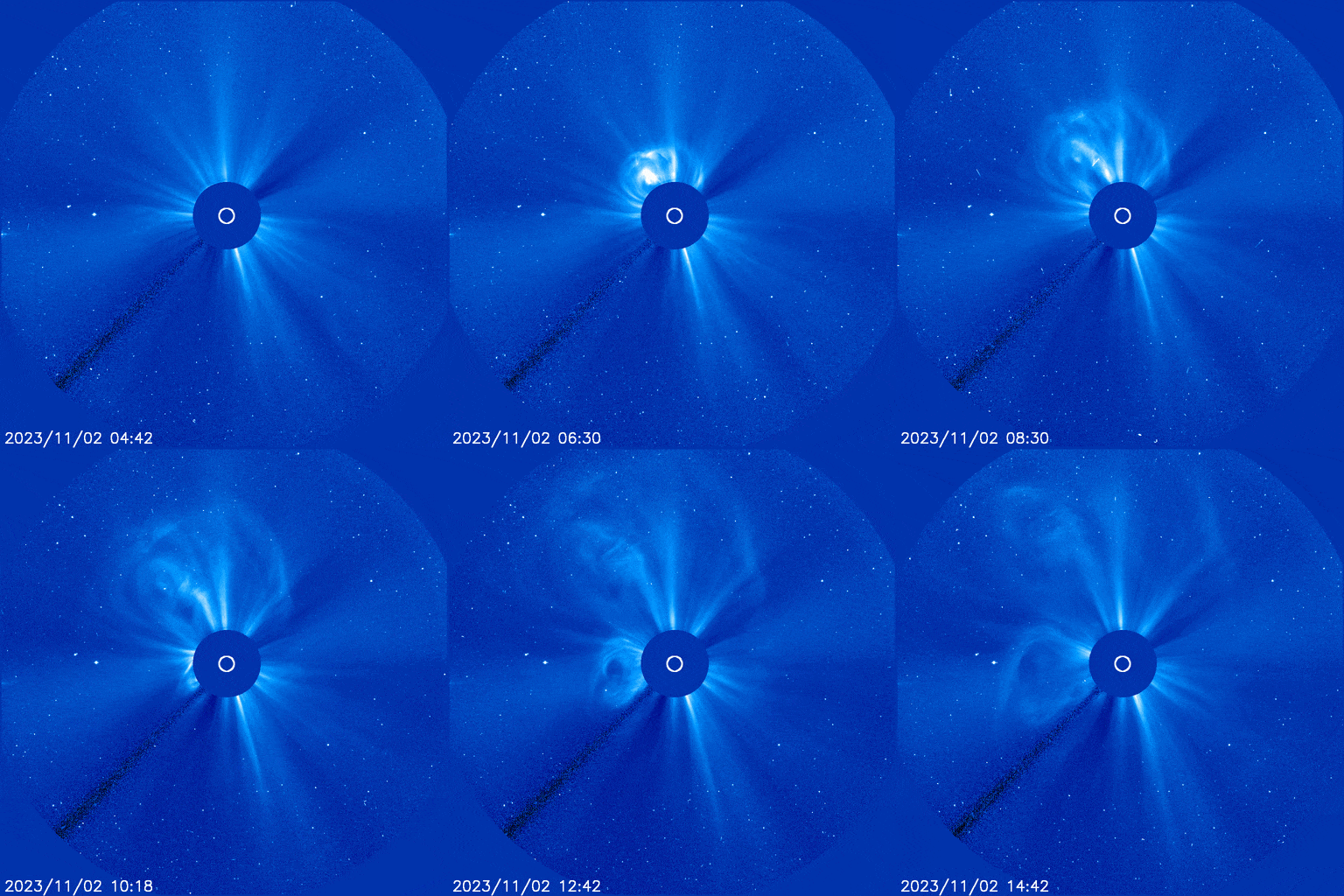
CME IMPACT SPARKS STRONG GEOMAGNETIC STORM: A CME hit Earth's magnetic field on Nov. 5th at 0905 UT, sparking a strong G3-class geomagnetic storm. This could be the early arrival of a full-halo CME, which we warned readers about yesterday. But maybe not. We knew that another lesser CME was preceding the halo, and this could be it. If the full halo CME is still coming, it could intensify geomagnetic activity even more when it arrives later today. Stay tuned! CME alerts: SMS Text
The CME impact sparked auroras in more than a dozen US states. Dan Bush sends this picture from Albany, Missouri (+40.2N):
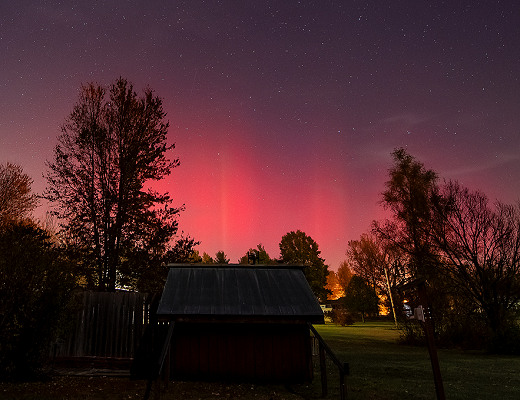
"This display lasted about 15-20 minutes," says Bush. "The red was intense enough that it was easily visible to the dark-adapted naked eye."
Other reports of mid-latitude auroras have come from Colorado (+40.1N) and Kansas (+38.2). Simiar displays may be seen again tonight if the persists after nightfall.
Meanwhile, inside the Arctic Circle, a rare display of naked-eye red auroras is in progress. "In 10 years plus of shooting aurora never seen anything like it," says Oliver Wright, a longtime guide for Lights over Lapland, who sends this picture from Abisko, Sweden:

"I could not belive my eyes as the whole sky was blood red to the naked eye," says Wright. "Unbelievable!"
Red auroras come from atomic oxygen in Earth's upper atmosphee shining at 6300 Å. The human eye is famously insensitive to this wavelength; it takes a strong geomagnetic storm (like today's) to make the red glow visible to the unaided eye.
Realtime Aurora Photo Gallery
Free: Spaceweather.com Newsletter
AMBER DRAGONFLY SPACE PENDANT: This dragonfly has touched space. On Oct 31st, the students of Earth to Sky Calculus launched it to the stratosphere onboard a cosmic ray research balloon, 105,108 feet above California's Sierra Nevada:
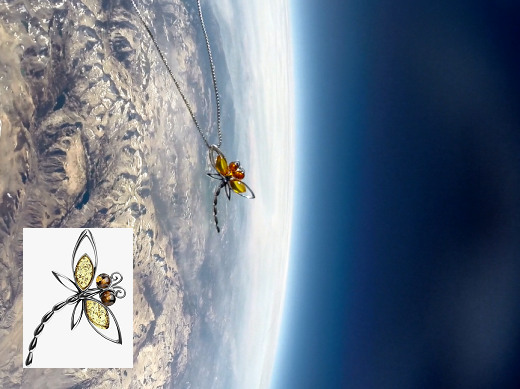
You can have it for $169.95. Made of genuine Baltic Amber with a sterling silver exoskeleton, the rich Cognac-colored pendant measures 3/4 inch and comes with a matching 18-inch sterling silver chain.
The students are selling space pendants to pay the helium bill for their cosmic ray ballooning program. Each one comes with a greeting card showing the jewelry in flight and telling the story of its trip to the stratosphere and back again.
Far Out Gifts: Earth to Sky Store
All sales support hands-on STEM education
FALSE AURORAS: They look like auroras, but they're not. Dewey Vanderhoff photographed these colorful light pillars above Cody, Wyoming, on Oct. 28th:
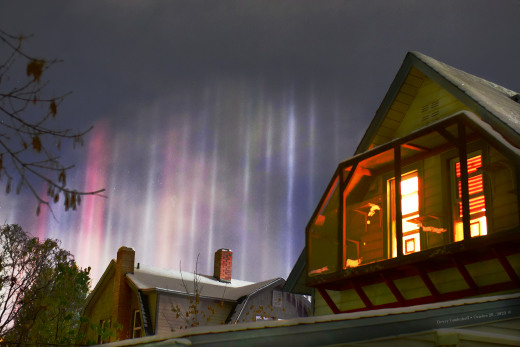
Like better-known sun pillars, light pillars are caused by plate-shaped ice crystals fluttering downward through the atmosphere. On cold autum nights, low-to-the-ground ice crystals can reflect and refract city lights to produce such aurora-like displays. It was only 5°F outside when Vanderhoff took the picture--a 5s exposure at ISO 1600.
Realtime Space Weather Photo Gallery
Free: Spaceweather.com Newsletter
Realtime Aurora Photo Gallery
Free: Spaceweather.com Newsletter
Realtime Comet Photo Gallery
Free: Spaceweather.com Newsletter