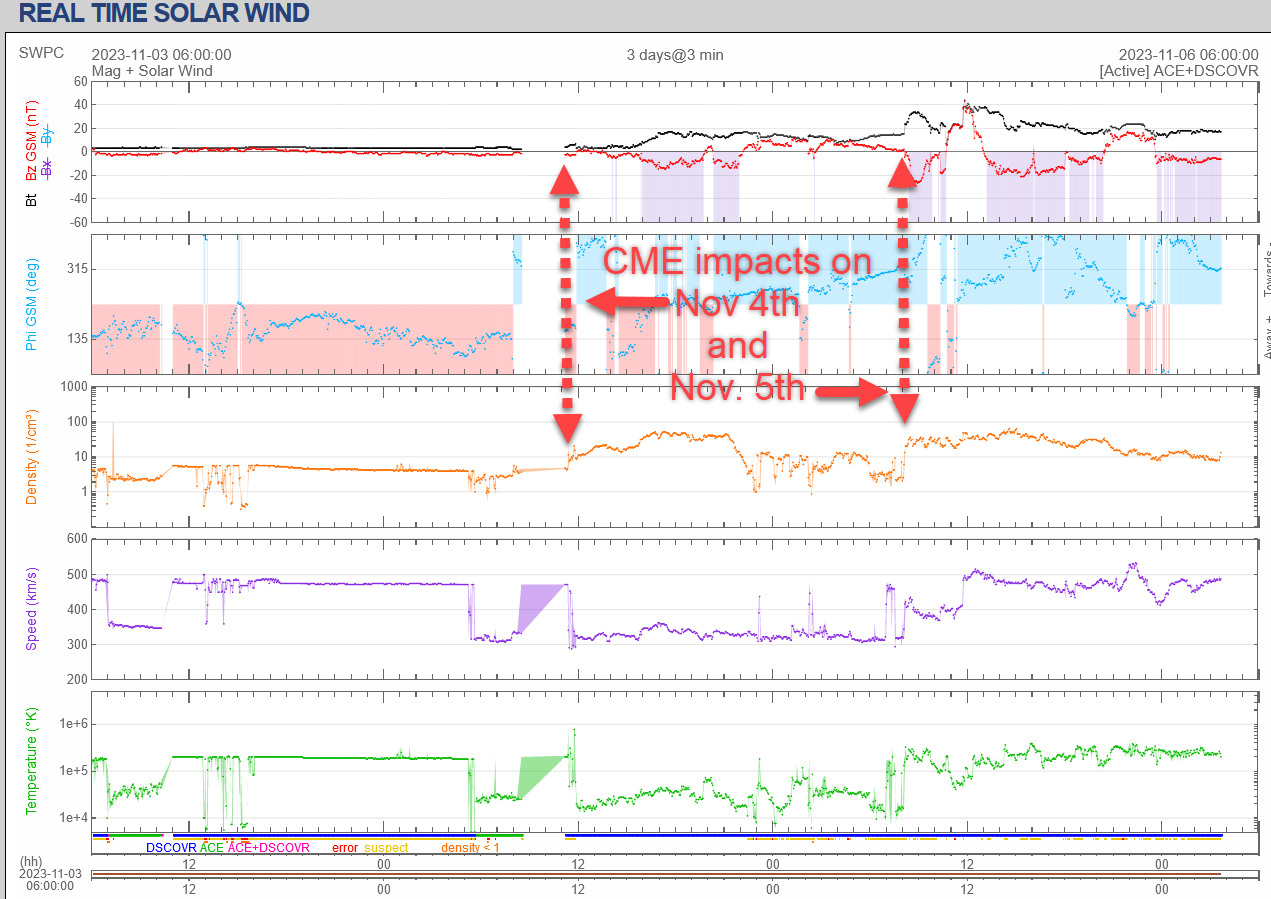
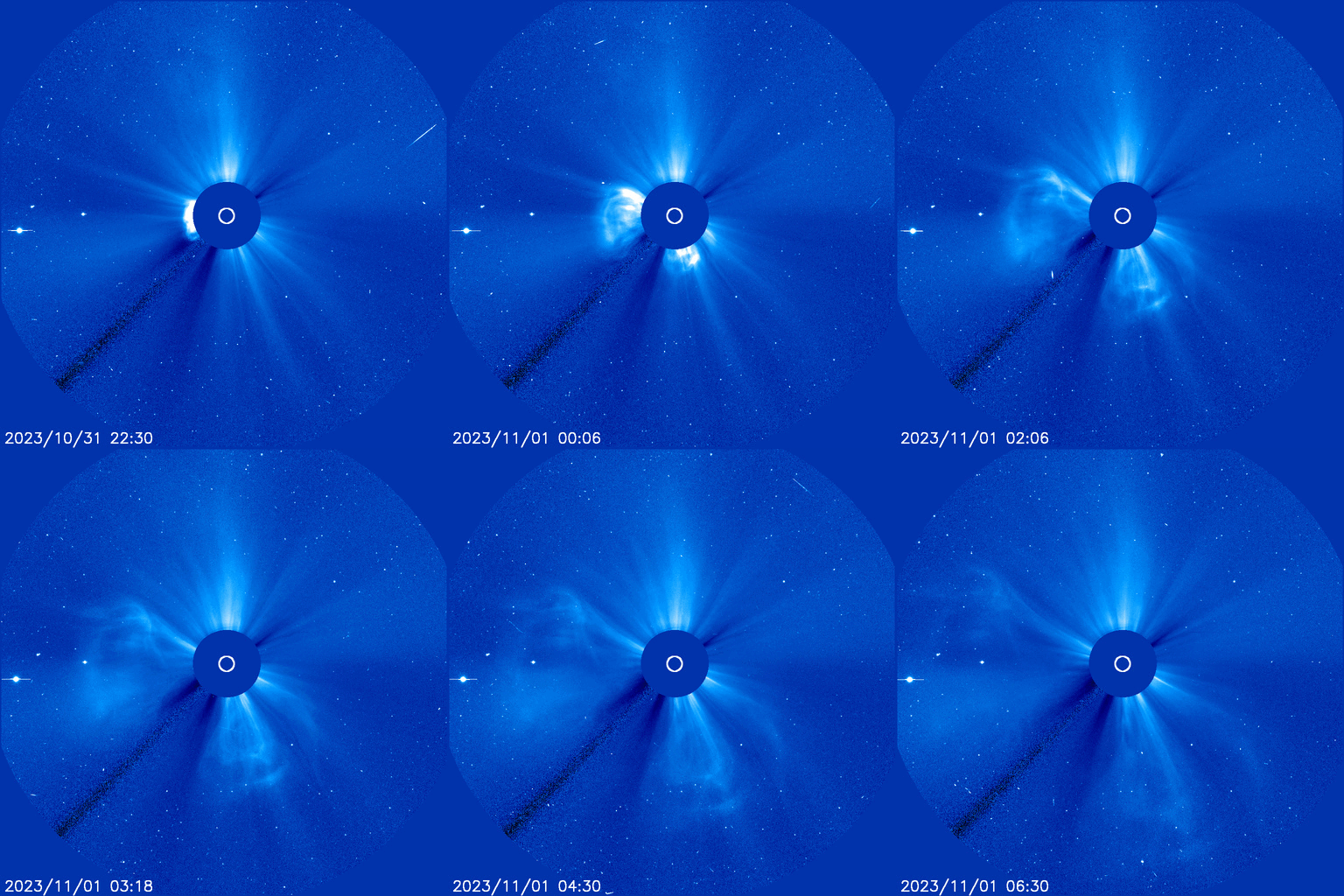
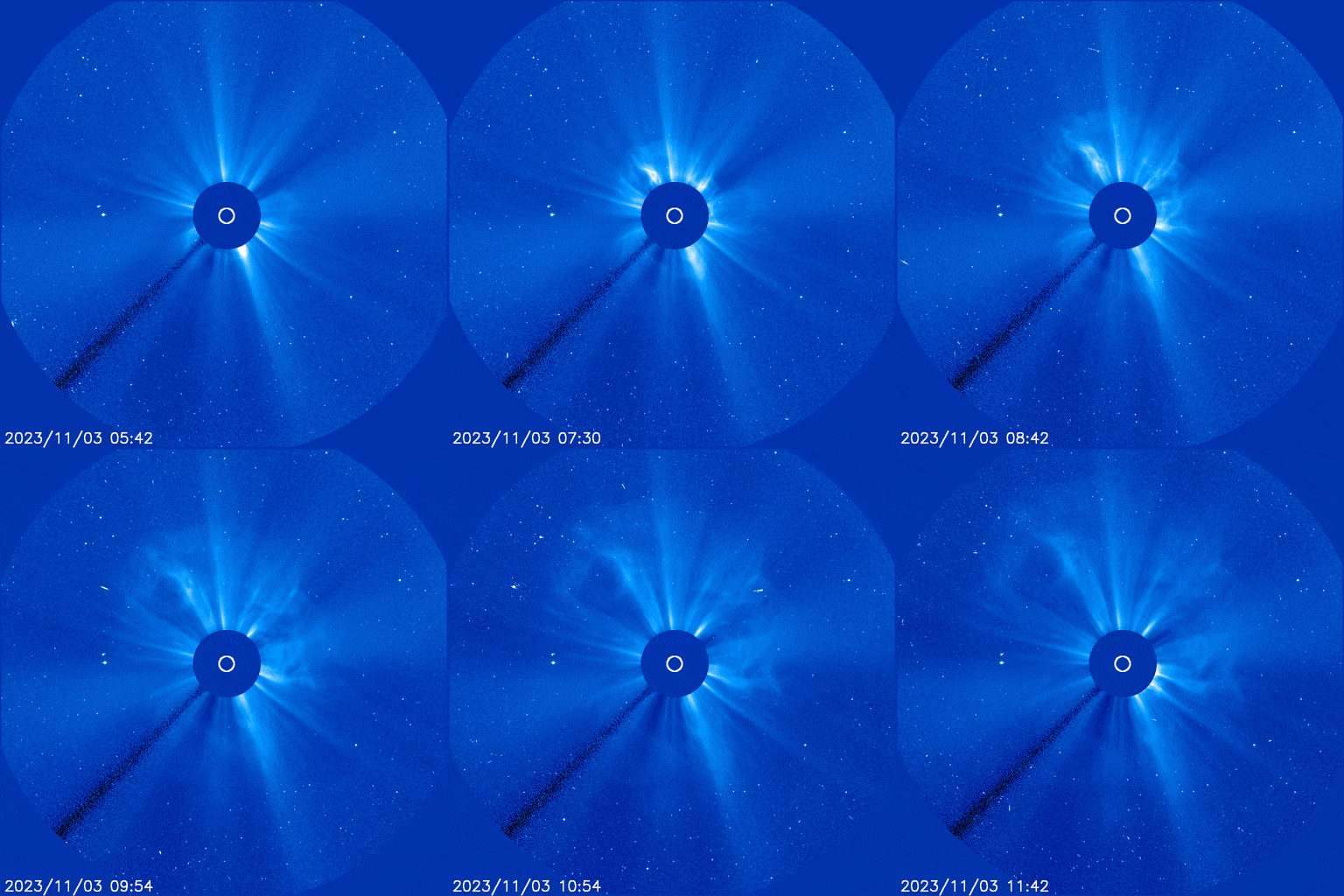
WHAT JUST HAPPENED? Two CMEs hit Earth over the weekend--one on Saturday, Nov. 4th, another on Sunday, Nov. 5th. The double blow sparked a strong G3-class geomagnetic storm with auroras as far south as Colorado (+40.1N) and Texas (+33.6N). The storm is now subsiding with isolated periods of minor G1-class storming expected through Nov. 6th. Aurora alerts: SMS Text


NOT ALL THE LIGHTS WERE AURORAS: At the apex of the storm, bright lights danced across the skies of northern Europe. Not all the lights were auroras. "To our utter amazement we observed a striking phenomenon," reports Martin McKenna of Swatragh, N. Ireland. "It was STEVE!"
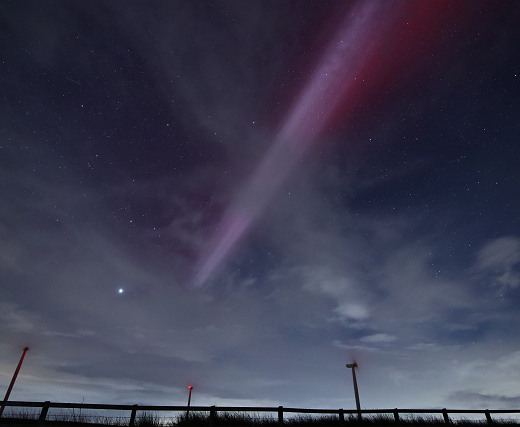
"We were blown away by the intensity of the purple beam," continues McKenna."We could see it plainly with the naked eye, swelling and flickering in brilliance with delicate structures like those seen within a feather. My mate Conor likened it to a celestial funnel cloud or tornado changing form in real time."
STEVE is a recent discovery. It looks like an aurora, but it is not. The soft purple glow is caused by hot (3000°C) rivers of gas flowing through Earth’s magnetosphere at speeds exceeding 6 km/s (13,000 mph). These rivers are energized by strong geomagnetic storms like the one that happened over the weekend.
Wil Cheung observed an even more dramatic apparition of STEVE over Whitley Bay, England:

"It lasted for more than an hour," marvels Cheung. "Strong auroras danced in the north while STEVE flowed through the sky to my south."
Although our understanding of STEVE has rapidly progressed over the past few years, there are still many unsolved mysteries about the phenomenon. Every sighting is about 75% enigma. Did you see STEVE? Submit your images here.
more images of STEVE: from Paul Urwin of Seaburn, Sunderland, England; from Dave Stocks of Brotton, UK;
Realtime Aurora Photo Gallery
Free: Spaceweather.com Newsletter
AMBER DRAGONFLY SPACE PENDANT: This dragonfly has touched space. On Oct 31st, the students of Earth to Sky Calculus launched it to the stratosphere onboard a cosmic ray research balloon, 105,108 feet above California's Sierra Nevada:
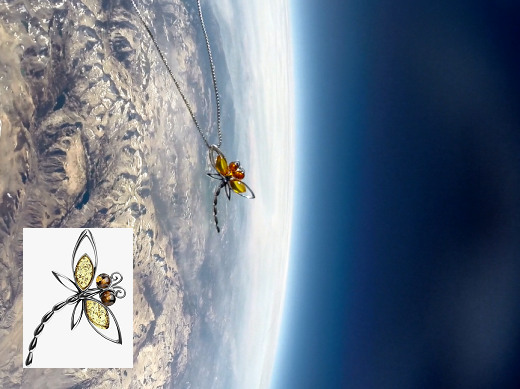
You can have it for $169.95. Made of genuine Baltic Amber with a sterling silver exoskeleton, the rich Cognac-colored pendant measures 3/4 inch and comes with a matching 18-inch sterling silver chain.
The students are selling space pendants to pay the helium bill for their cosmic ray ballooning program. Each one comes with a greeting card showing the jewelry in flight and telling the story of its trip to the stratosphere and back again.
Far Out Gifts: Earth to Sky Store
All sales support hands-on STEM education
Realtime Space Weather Photo Gallery
Free: Spaceweather.com Newsletter
Realtime Comet Photo Gallery
Free: Spaceweather.com Newsletter