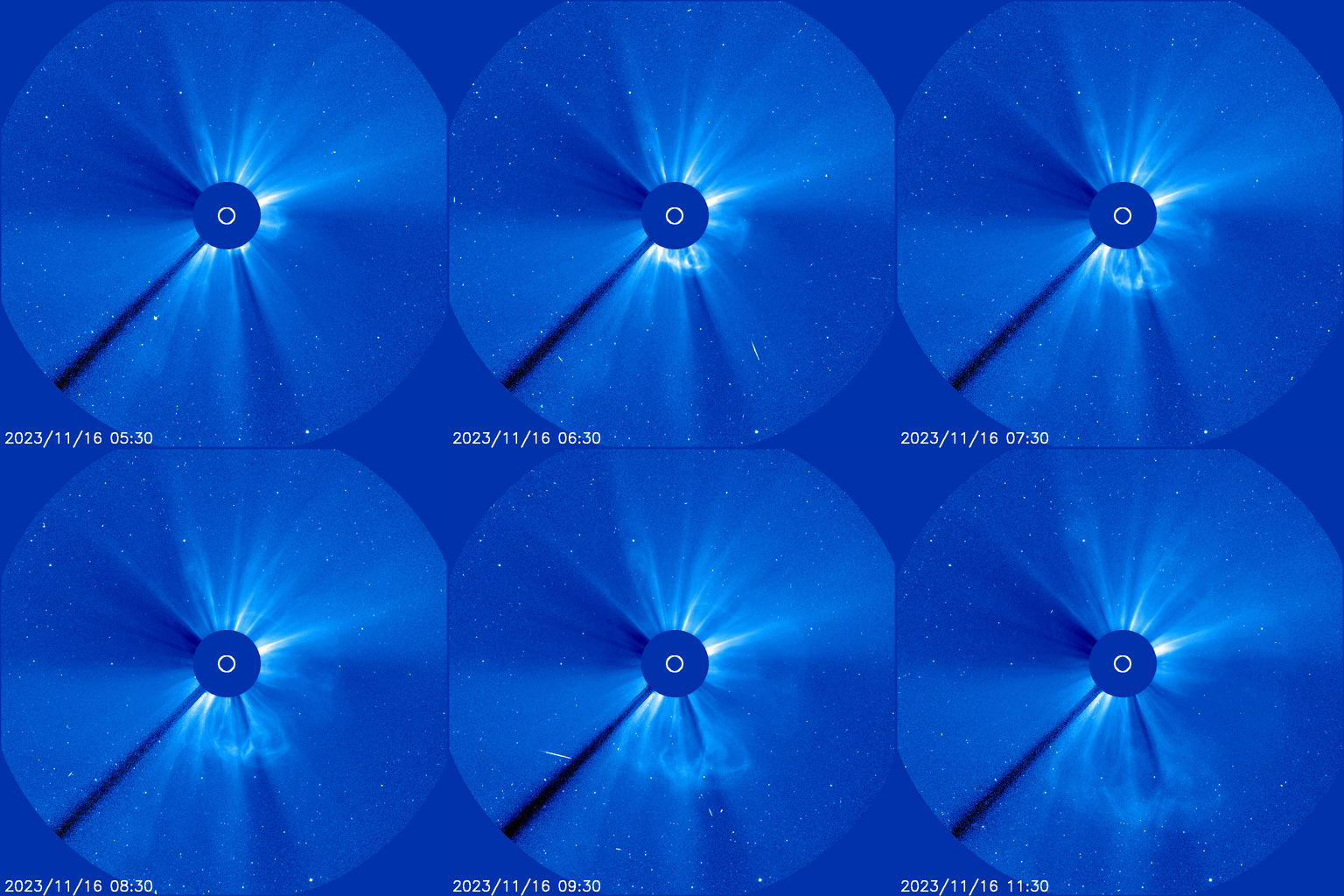
GEOMAGNETIC STORM WATCH--CANCELED: NOAA forecasters have canceled their geomagnetic storm watch for Nov. 20th. A CME (movie) previously expected to hit Earth's magnetic field on Nov. 19th has either missed, or it is moving much more slowly than models indicated. No auroras are in the offing. Aurora alerts: SMS Text
SPACEX AURORAS: There's a new phenomenon in the night sky: "SpaceX auroras." They're red, roughly spherical, and visible to the naked eye for as much as 10 minutes at a time. "We are seeing 2 to 5 of them each month," reports Stephen Hummel of the McDonald Observatory in Texas, who photographed this example on Nov. 3rd:
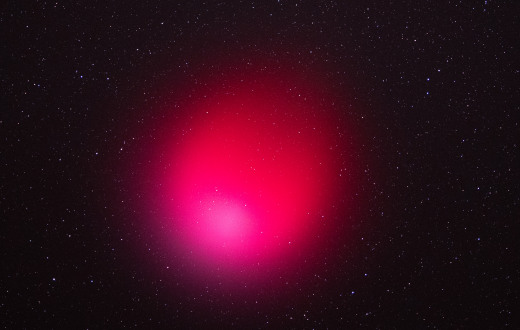
Spoiler alert: They're not auroras. The bright red balls are caused by SpaceX rockets burning their engines in the ionosphere.
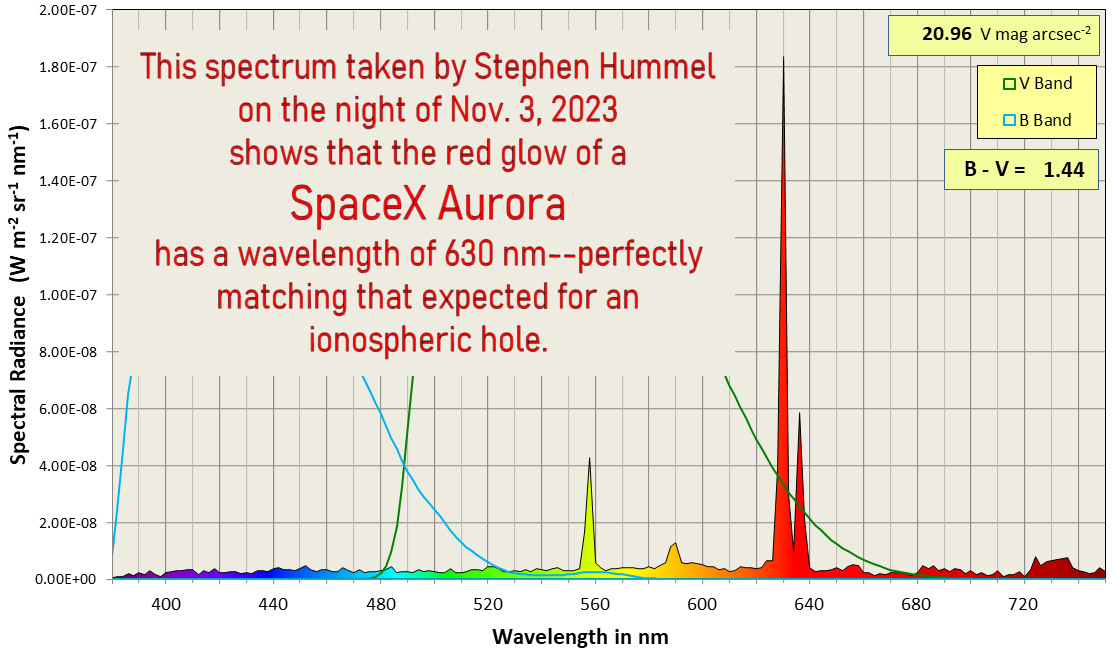
The phenomenon is closely related to something we reported earlier this year. Falcon 9 rockets leaving Earth can "punch a hole in the ionosphere." The ionosphere is a layer of ionized gas surrounding our planet; it is crucial to over-the-horizon shortwave radio communication and can affect the quality of GPS signals. Water-filled rocket exhaust can quench local ionization by as much as 70%, erasing the ionosphere along the rocket's path. For reasons having to do with chemistry, ionospheric holes emit a red glow (630 nm).
"SpaceX auroras" are exactly the same--except instead of rockets going up, they are caused by rockets coming down. The second stage of the Falcon 9 rocket burns its engines in order to de-orbit and return to Earth, creating an ionospheric hole as it descends.
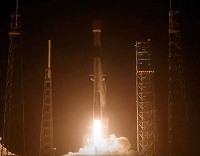 Right: The night launch of this Falcon 9 rocket on Nov. 3, 2023, produced a red glow over McDonald Observatory in Texas.
"We first noticed these SpaceX de-orbit burns over the McDonald Observatory in February 2023," says Boston University space physicist Jeff Baumgarder, who has been studying ionospheric holes for more than 40 years. "The engine burns are only about 2 seconds long, just enough delta V to bring the second stage down over the south Atlantic Ocean. These burns happen ~90 minutes ( ~one orbital period) after launch. During the burn, the engine releases about 400lbs of exhaust gasses, mostly water and carbon dioxide. All this happens at ~300km altitude, near the peak of the ionosphere, so a significant hole is made."
"The resulting 'auroras' can be very bright, easily visible with the naked eye and much brighter than Starlink satellites themselves, although only for a few seconds," notes Hummel.
The question is, are SpaceX auroras good or bad? Hummel is the McDonald Observatory Dark Skies Sr. Outreach Program Coordinator, so naturally he's concerned about the effect these events may have on observational astronomy.
"The frequency of these red clouds could increase as SpaceX targets more launches in the future," says Hummel. "Their impact on astronomical science is still being evaluated. Starlink satellites are a known issue, but the effects of the rocket launches themselves are a growing area of attention."
For Jeff Baumgarder, who has his own dedicated camera at McDonald, the events are a golden opportunity for research.
"The saying 'one person's signal is another person's noise' is appropriate here," says Baumgardner. "We are delighted with the rocket burns. They give us an opportunity to explore how space traffic affects the ionosphere. The ionospheric density is different night to night, so we can learn something about the efficiency of the chemistry by observing many events."
Other sky watchers are beginning to see SpaceX auroras as well. Are you one of them? Submit your pictures here.
Realtime Space Weather Photo Gallery
Free: Spaceweather.com Newsletter
ANNULAR SOLAR ECLIPSE CHRISTMAS ORNAMENT: This is the first Christmas ornament ever flown to the edge of space during a solar eclipse. It hitched a ride to the stratosphere on Oct. 14, 2023, onboard an Earth to Sky cosmic ray research balloon. As the Moon covered the sun, the 3-inch disk floated 112,800 feet above the path of annularity:
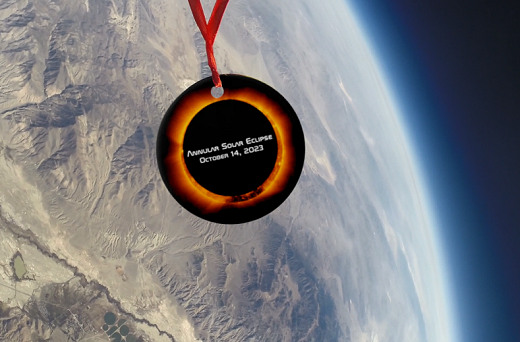
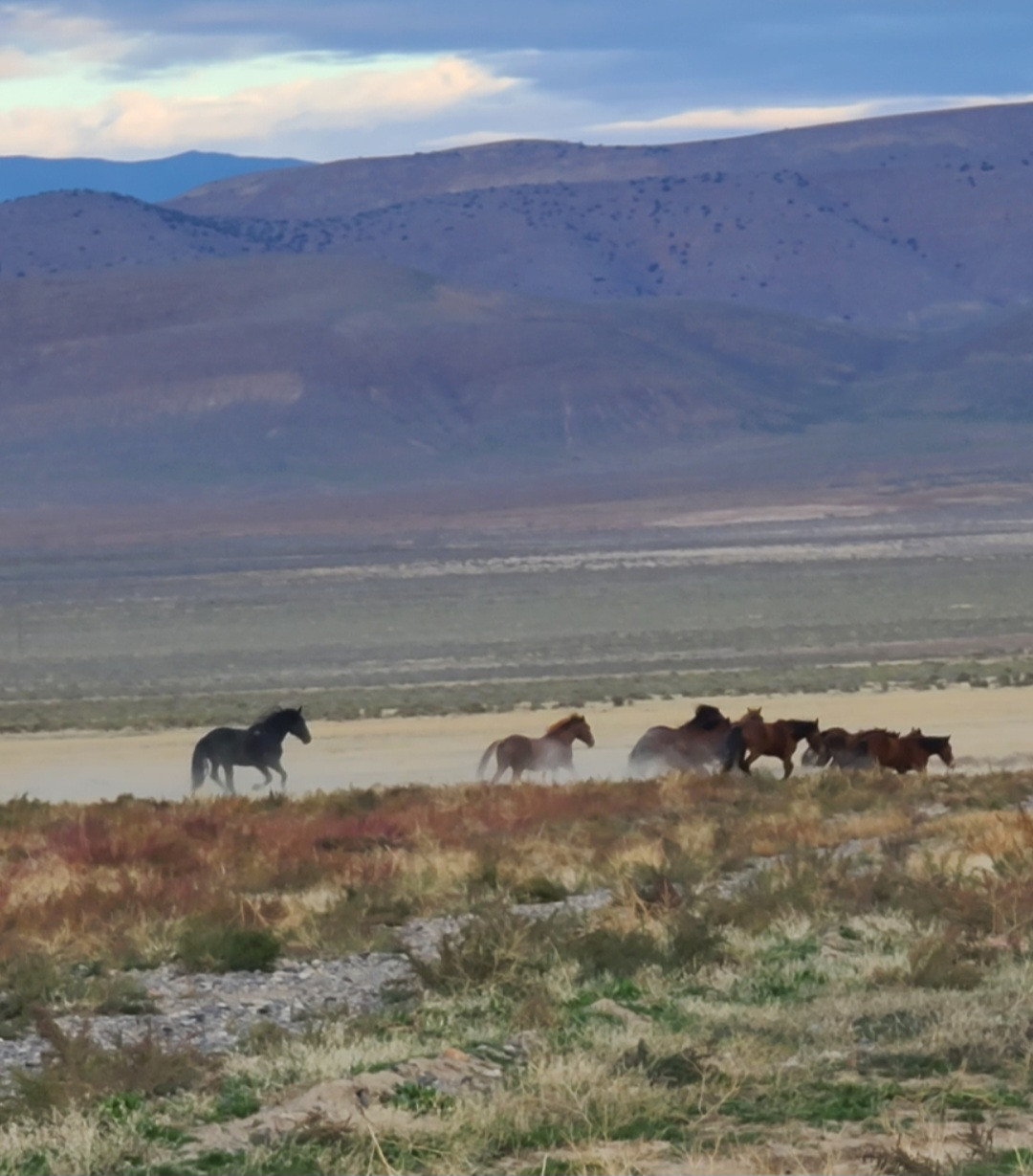
You can have it for $99.95. The ornament left Earth from Nevada's Valley of the Moon, a remote area filled with the scent of sage and herds of wild horses. Indeed, no fewer than three mustang families approached the launch team during the eclipse to see what was going on. It was a magical experience.

The students are selling space ornaments to pay the helium bill for their cosmic ray ballooning program. Each one comes with a greeting card showing the item in flight and telling the story of its trip to the stratosphere and back again.
Far Out Gifts: Earth to Sky Store
All sales support hands-on STEM education
IS THIS THE WEIRDEST COMET EVER? Comet 12P/Pons-Brooks continues to baffle astronomers, who are monitoring the aftermath of its 4th major cryo-volcanic eruption in 2023. Previous eruptions in July and October produced "devils horns." The latest and biggest blast on Nov. 14th has transformed the comet into a pearly-green sphere with a dark lane inside:
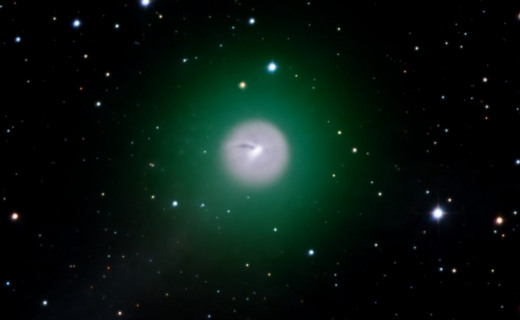
"Bursting Comet 12 has a very interesting coma!" says photographer Rok Palcic of Kamnik, Slovenia.
The "devil's horns" of July and October were probably caused by complex topography on the comet's surface. Exhaust from ice volcanoes may be blocked and redirected by obstacles, creating strange shapes. If so, the dark lane in this month's expanding debris could be just another blockage.
Eliot Herman, who has been photographing the comet every night, has a different idea: "I think the substructure is a shadow," he says. In a contrast-enhanced photo of the comet's core, Herman sees a bright plume, which may trace back to a specific volcanic vent:
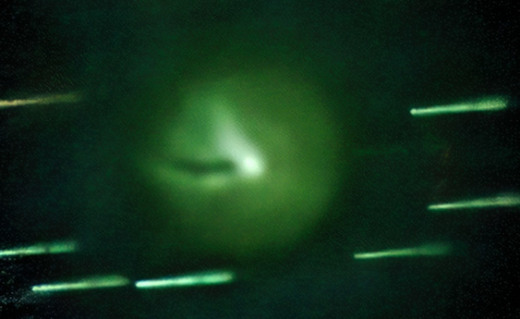
"The dark lane is curved, and its curvature appears to match that of the bright vent emission," he notes. "This gives the impression that the dark lane may be a shadow of the brighter plume projected onto the coma."
Comet 12P is changing every night, so monitoring is encouraged. The comet is currently shining at 9th magnitude, which makes it an easy target for amateur telescopes. Look for it in the constellation Hercules not far from the bright star Vega. [sky map]
more images: from Michael Jaeger of AZM Martinsberg Austria
Realtime Comet Photo Gallery
Free: Spaceweather.com Newsletter
Realtime Aurora Photo Gallery
Free: Spaceweather.com Newsletter