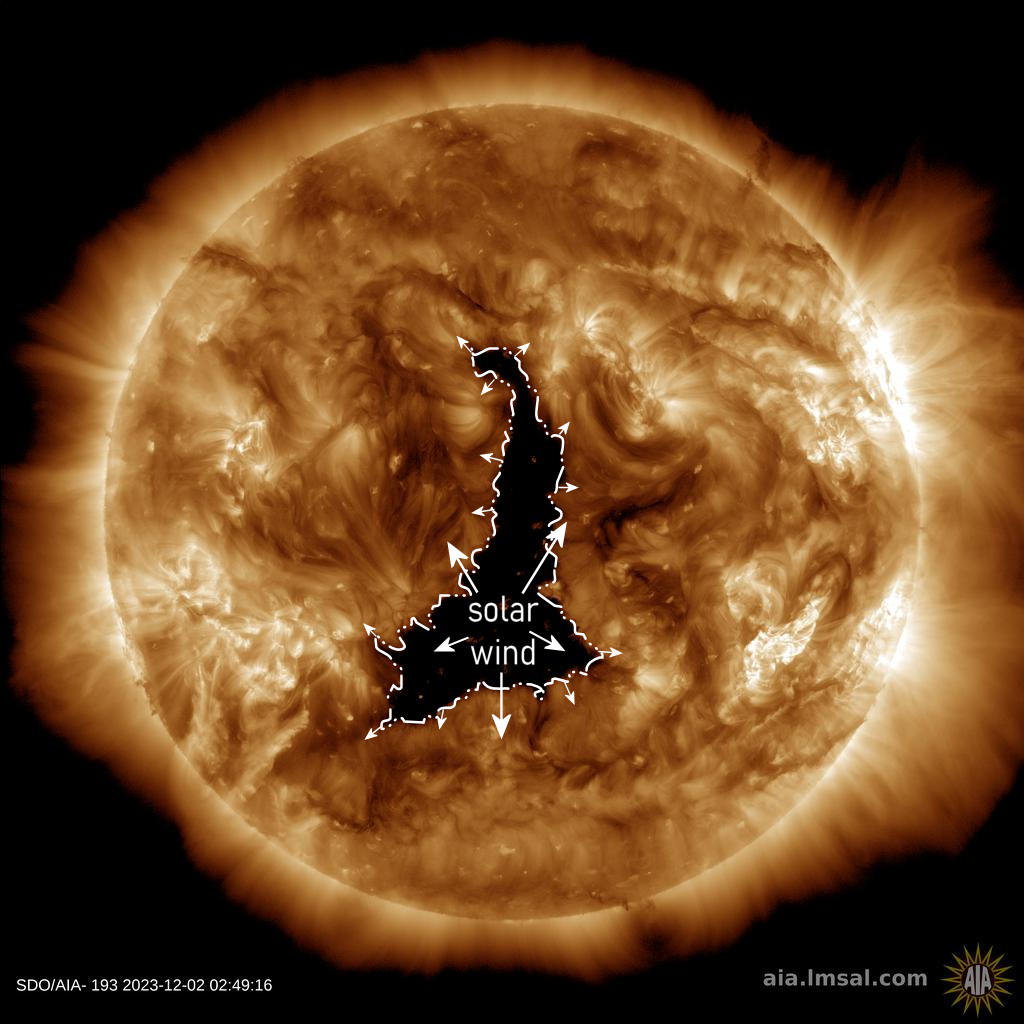
A HOLE IN THE SUN'S ATMOSPHERE: A huge hole has opened in the sun's atmosphere, and it is directly facing Earth. Solar wind flowing from the hole will reach our planet on Dec. 4th or 5th. Its arrival should spark G1-class geomagnetic storms. Aurora alerts: SMS Text

STRONG GEOMAGNETIC STORM: A Cannibal CME struck Earth's magnetic field on Dec. 1st, sparking a strong G3-class geomagnetic storm with auroras in both hemispheres. "We witnessed an incredible show on the Canterbury coastline overlooking the Pacific Ocean," reports Mike White from New Zealand. "The sound of waves crashing onto the beach and washing across the stony pebbles created the perfect soundtrack for these Southern Lights."

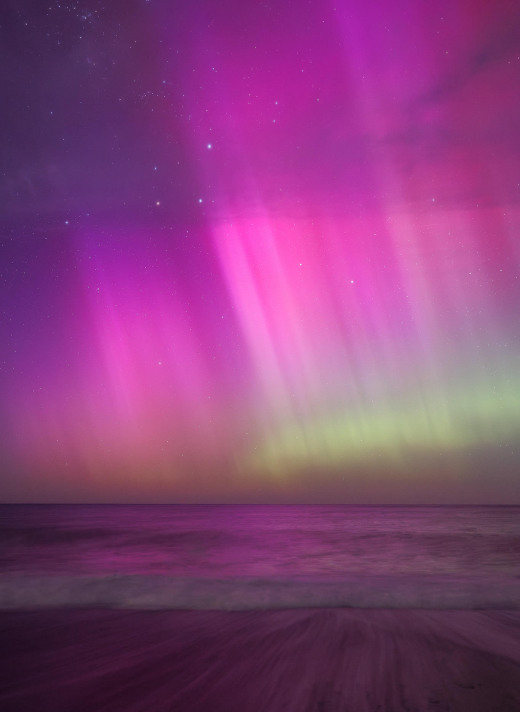
"The Cannibal CME arrived just as New Zealand skies were darkening. The resulting cloud of charged particles rained down Earth's magnetic field lines and delivered a light show that lasted for hours. It was easily visible to the naked eye."
Meanwhile in the northern hemisphere, auroras descended as far south as Arizona and California. Marybeth Kiczenski was in rural Wisonsin when the Northern Lights raced overhead:

This is my favorite tree in Wisconsin," says Kiczenski. "After five separate attempts for catch auroras at this location, it finally came together!"
The storm is subsiding now, with minor G1-class activity in progress as Earth exits the CME's wake. High latitude sky watchers should remain alert for auroras through Dec. 2nd.
Would you like to know when the next CME arrives? Sign up for our Space Weather Alert Service and you'll receive an instant text message when solar storm clouds strike Earth.
Realtime Aurora Photo Gallery
Free: Spaceweather.com Newsletter
"BUZZ'S BOOTPRINT" APOLLO 11 CHRISTMAS ORNAMENT: This is a must-have Christmas ornament for space fans: Buzz's Bootprint. On Nov. 28, 2023, the students of Earth to Sky Calculus launched it to the stratosphere onboard a cosmic ray research balloon:

You can have it for $99.95. Apollo 11 astronaut Edwin 'Buzz' Aldrin photographed this footprint in the lunar soil as part of an experiment to study the nature of lunar dust and the effects of pressure on the surface. The image has become one of the enduring symbols of the first visit to the Moon.
The students are selling space ornaments to support their cosmic ray ballooning program. Each one comes with a greeting card showing the ornament in flight plus a red ribbon for hanging on your tree. Shop Now.
Far Out Gifts: Earth to Sky Store
All sales support hands-on STEM educatio
Realtime Comet Photo Gallery
Free: Spaceweather.com Newsletter
Realtime Space Weather Photo Gallery
Free: Spaceweather.com Newsletter