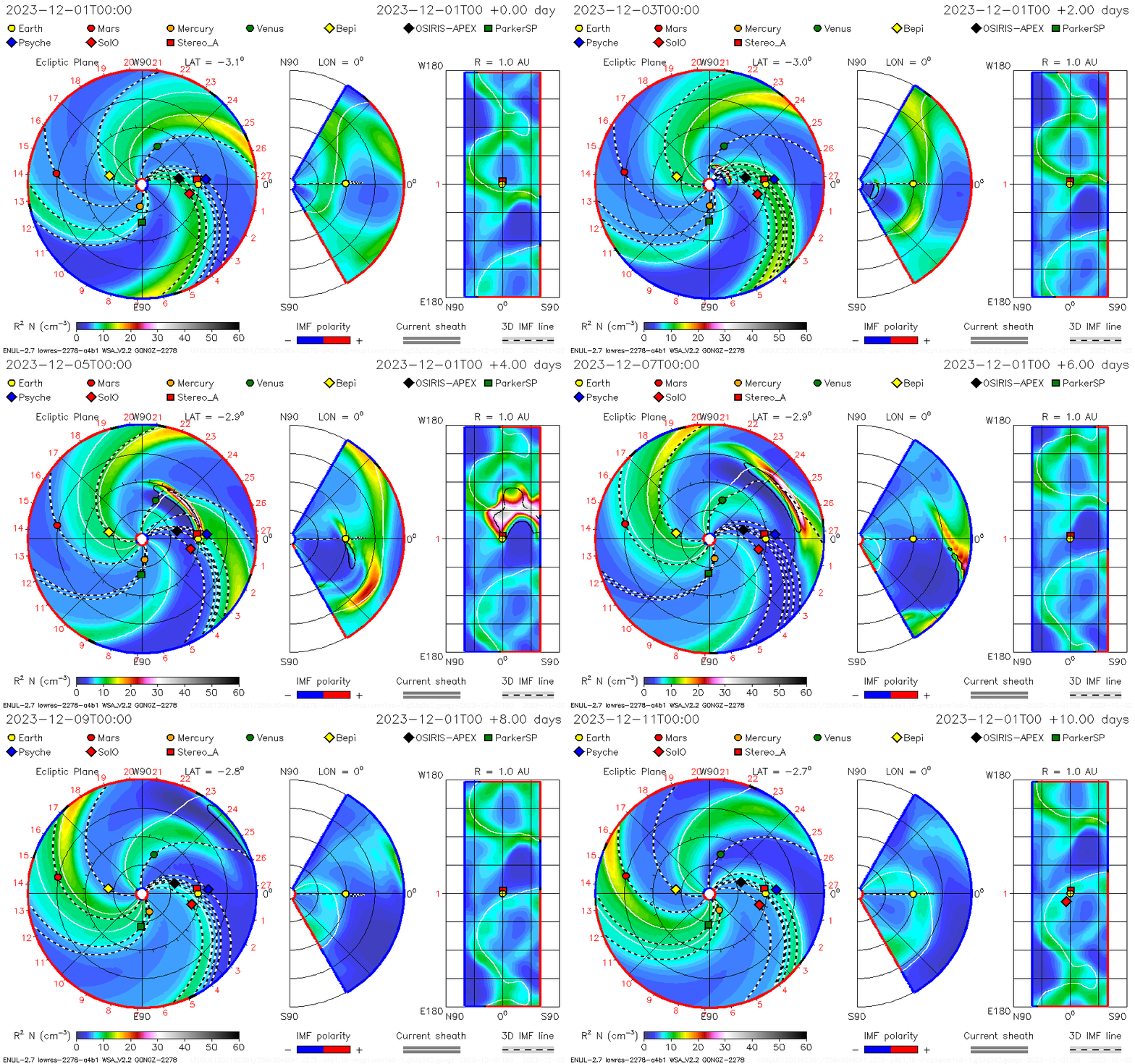
UPDATED GEOMAGNETIC STORM WATCH (G1): NOAA forecasters have downgraded the current geomagnetic storm watch from G2 (Moderate) to G1 (Minor). This is in response to the late arrival of a solar wind stream flowing from the huge coronal hole, described below. Despite this development, high-latitude sky watchers should remain alert for auroras on Dec. 5th. A glancing-blow CME may yet provide a light show. Aurora alerts: SMS Text


A HUGE HOLE IN THE SUN'S ATMOSPHERE: A huge hole has opened in the sun's atmosphere, and it spewing a stream of solar wind directly toward Earth. NASA's Solar Dynamics Observatory photographed the structure, which stretches almost 800,000 km along its long axis:
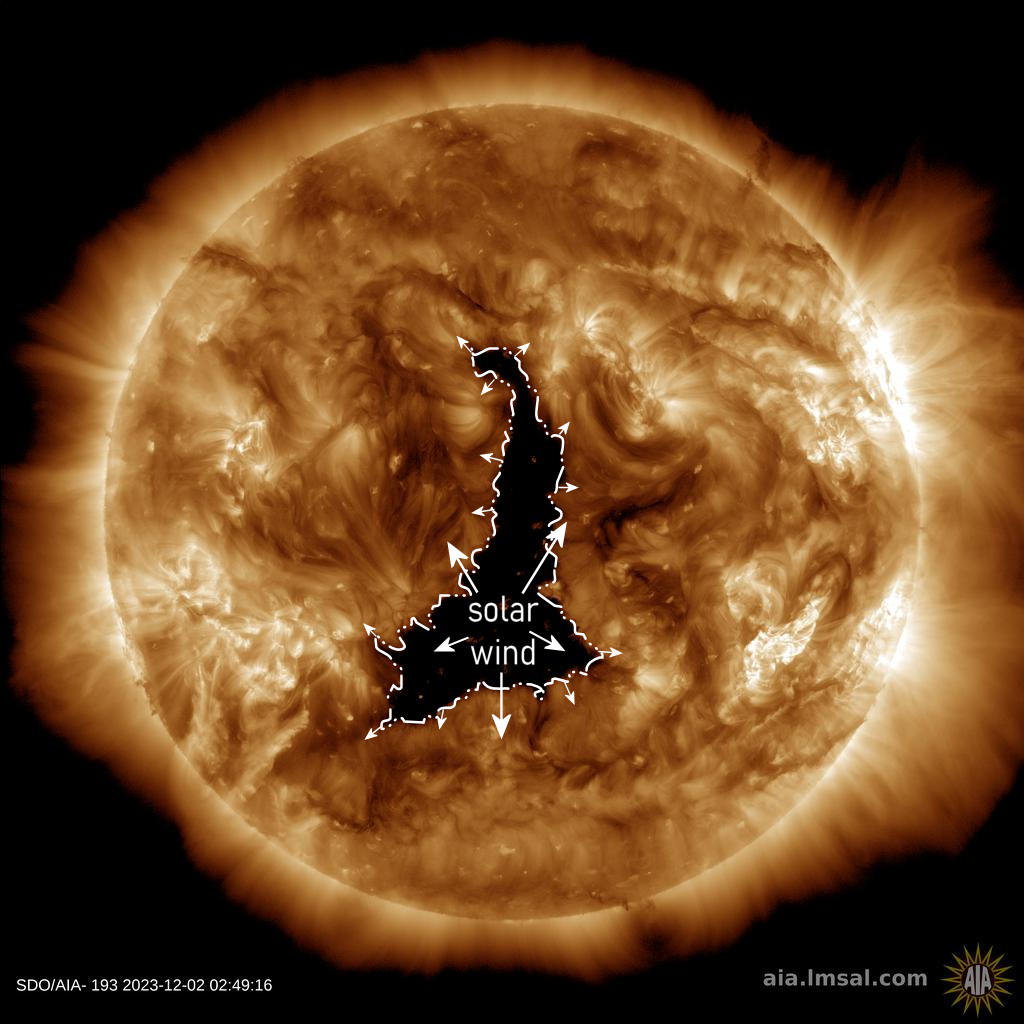
This is a coronal hole--a region in the sun's atmosphere where magnetic fields have opened up, allowing solar wind to escape. The hole looks dark because hot glowing gas normally contained there is missing. The gaseous material is on its way to Earth.
The solar wind is due to arrive Dec. 4th or 5th. Together with a glancing-blow CME, also en route, it could spark G1 (Minor) to G2-class (Moderate) geomagnetic storms. Aurora alerts: SMS Text
Realtime Aurora Photo Gallery
Free: Spaceweather.com Newsletter
CHRISTMAS GIFTS FROM THE EDGE OF SPACE: Christmas is coming. Are you looking for a far-out gift? Check out the Earth to Sky Store. It's filled with unique items that have flown to the edge of space onboard cosmic ray research balloons.

Carried aloft by giant helium balloons, these unique gifts have flown above 99.7% of Earth's atmosphere, experiencing space-like blasts of cosmic rays, extreme cold, and a wild ride parachuting back to Earth after the balloon explodes. Even Amazon doesn't carry items this far out.
Don't forget to enter coupon code "BUZZALDRIN" at checkout for a 10% holiday discount.
Far Out Gifts: Earth to Sky Store
All sales support hands-on STEM education
RARE BLUE AURORAS OVER KANSAS: This doesn't happen very often. On Dec. 1st, auroras appeared over Kansas. A strong G3-class geomagnetic storm was underway when Tyler Schlitt photographed the display from Cottonwood Falls:

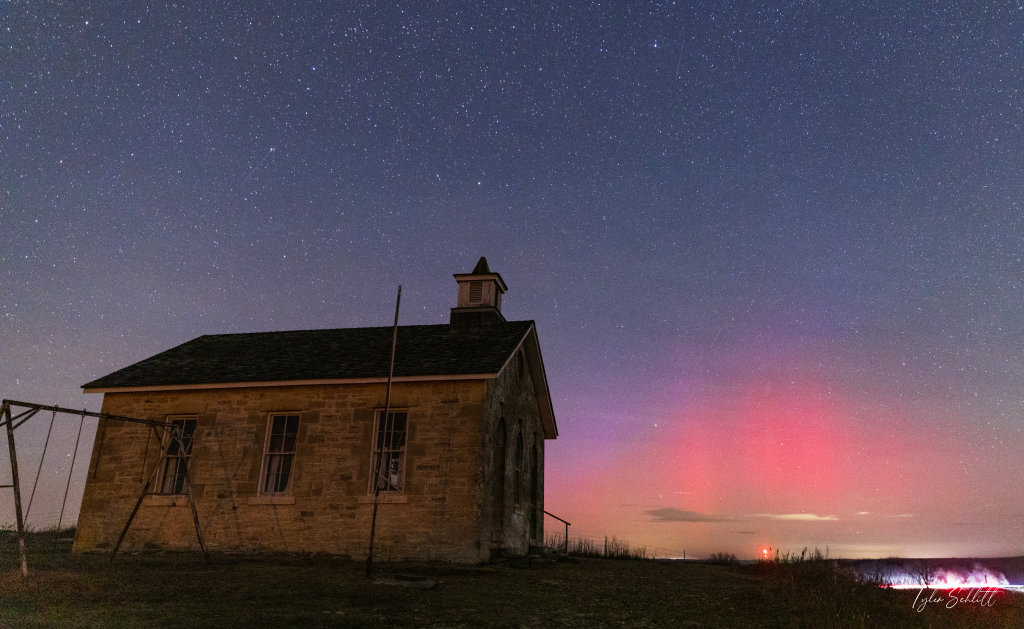
"This is a very old school house in the Flint Hills of Kansas--a place I've been dreaming of shooting auroras," says Schlitt. "I saw a G3 storm watch in effect, so I drove to Kansas and there they were!"
Schlitt is an experienced observer of mid-latitude auroras, yet he was surprised to see a blue-purple fringe on top of the usual bright red pillars. Indeed, blue auroras are very rare. They are seldom seen even in Arctic countries where auroras appear almost every night. How did they get to Kansas? The answer is the Moon, which was almost full (88%) on the night of the storm.
Blue appears when bright moonlight skims the top of the auroras. The process is called "resonant scattering." High up in the aurora zone, ionized nitrogen molecules (N2+) naturally produce blue light, just a little, usually much too faint to see. But when these ions get hit by moonlight, they capture and re-emit blue photons from the Moon. Voilà!--extra blue.
Realtime Aurora Photo Gallery
Free: Spaceweather.com Newsletter
Realtime Comet Photo Gallery
Free: Spaceweather.com Newsletter
Realtime Space Weather Photo Gallery
Free: Spaceweather.com Newsletter