BIRTH OF A NEW METEOR SHOWER: Meteor forecaster Jeremie Vaubaillon and colleagues are urging sky watchers to be alert for a new meteor shower. "We predict the birth of a new shower on Dec. 12, 2023, between 8:00 and 12:30 UT," say the researchers in a preprint. Best seen from Australia, New Zealand, and Indonesia (visibility map), the meteors come from Comet 46P/Wirtanen, which made an extremely close approach to Earth five years ago. "I'm expecting no more than a few visible meteors per hour," says Vaubaillon. "But even a few sightings will tell us that the real number of particles is quite high (given a bias toward small meteoroids in this debris stream). Space agencies are interested in any kind of detection to evalutate the risk for spacecraft."

SUNDIVING COMET: The Solar System is about to have one less comet. SOHO coronagraphs are monitoring its death dive into the sun on Dec. 11th:
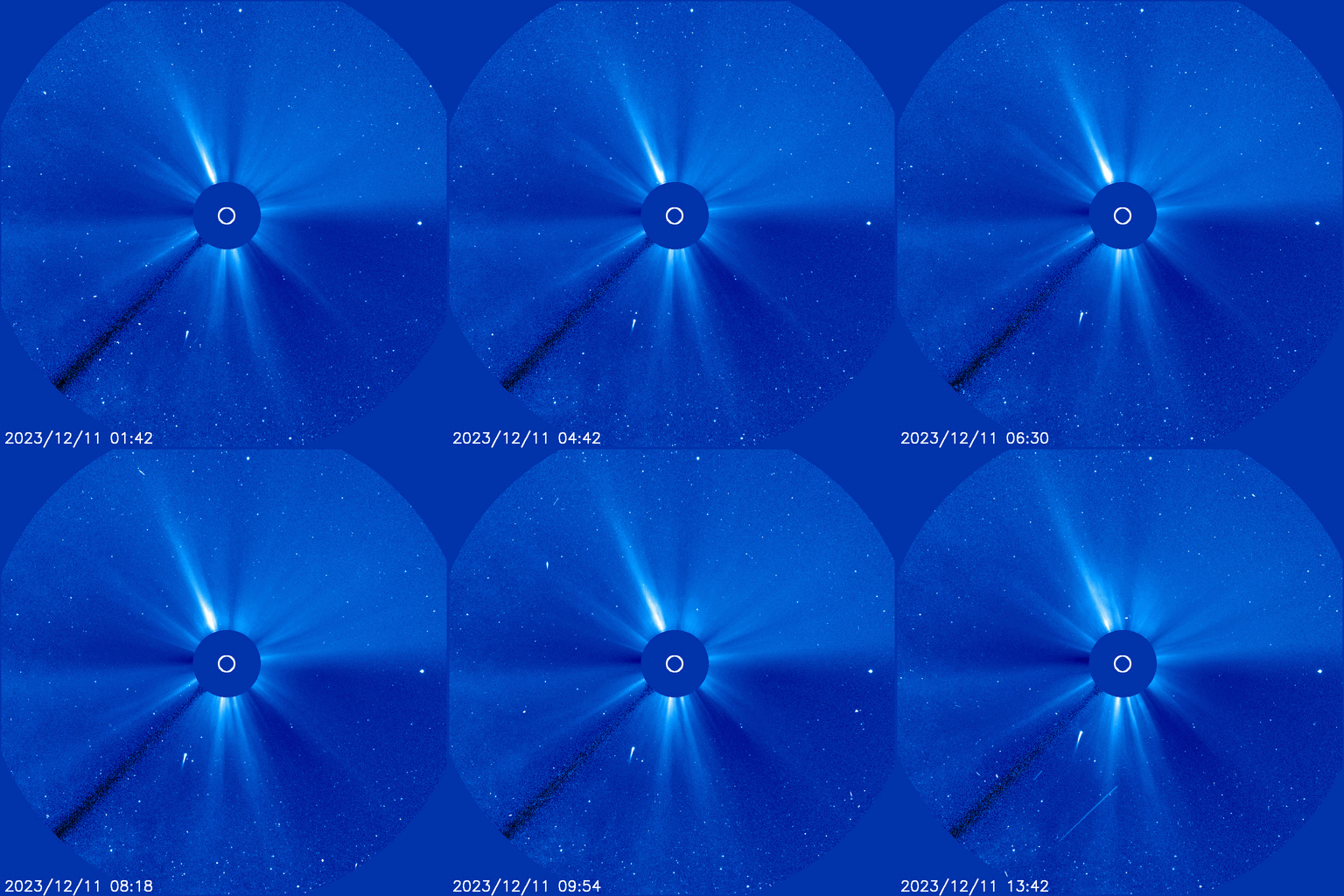
This kamikaze comet is a member of the Kreutz sungrazer family. Named after a 19th century German astronomer who studied them in detail, Kreutz sungrazers are fragments from the breakup of a giant comet at least 2000 years ago. Several of these fragments pass by the sun and disintegrate every day. Most are too small to see. Today's fragment is a big exception.
Stay tuned for an updated movie in the hours ahead. Although the comet will not survive, a tiny cloud of debris and disembodied tail might emerge from behind the sun on Dec. 12th.
Realtime Comet Photo Gallery
Free: Spaceweather.com Newsletter
AN EXTREMELY RARE OCCULTATION OF BETELGEUSE: One of the most famous stars in the night sky is about to disappear. On Dec. 12th (Dec. 11th in the USA), asteroid Leona will pass directly in front of Betelgeuse for an extremely rare occultation visible from south Florida to Italy. Sky watchers in the "path of totality" can look up and see the red giant vanish, dramatically altering the appearance of the constellation Orion.

There are huge population centers in the occultation path, especially in south Florida where Leona's shadow crosses Miami and Fort Lauderdale. For observers there, Betelgeuse will wink out for about 10 seconds on the evening of Dec. 11th just before 8:25 pm Eastern Standard Time. In Europe, the occultation happens on Dec. 12th between 1:10 UT and 1:16 UT. To find out when to look from your location, we recommend downloading this excellent Google Earth file; when viewing the map, click on the little dots for occultation times.
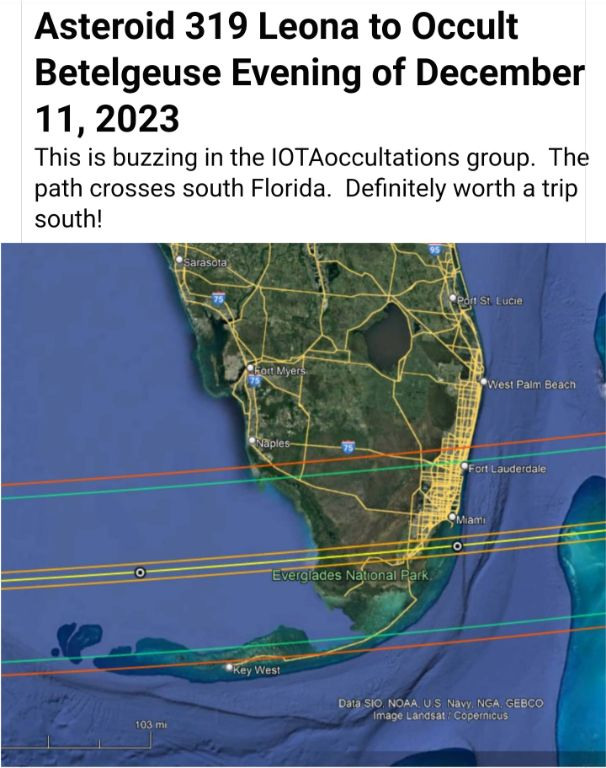
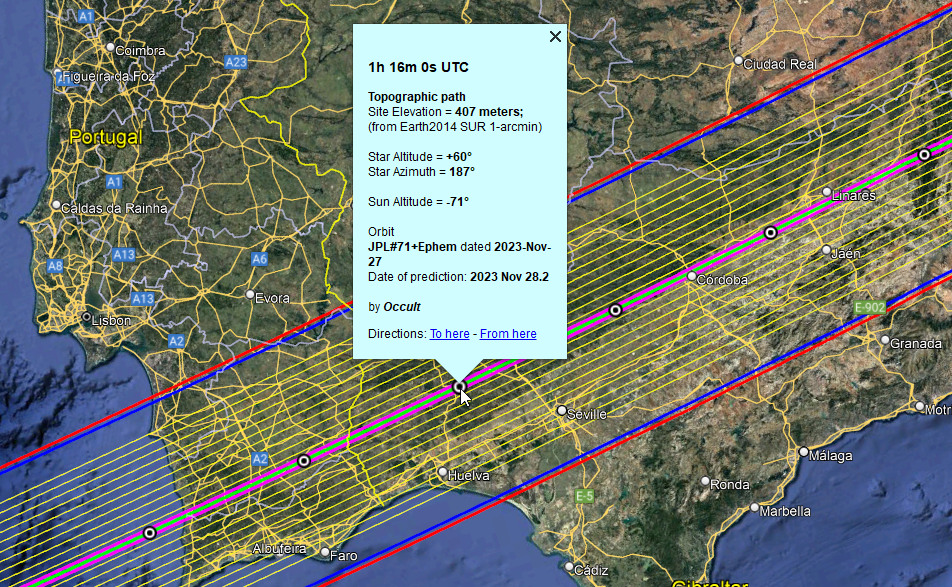
Are you in the occultation zone? Submit your photos here.
Realtime Space Weather Photo Gallery
Free: Spaceweather.com Newsletter
CHRISTMAS GIFTS FROM THE EDGE OF SPACE: Christmas is coming. Are you looking for a far-out gift? Check out the Earth to Sky Store. It's filled with unique items that have flown to the edge of space onboard cosmic ray research balloons.

Carried aloft by giant helium balloons, these unique gifts have flown above 99.7% of Earth's atmosphere, experiencing space-like blasts of cosmic rays, extreme cold, and a wild ride parachuting back to Earth after the balloon explodes. Even Amazon doesn't carry items this far out.
Don't forget to enter coupon code "BUZZALDRIN" at checkout for a 10% holiday discount.
Far Out Gifts: Earth to Sky Store
All sales support hands-on STEM education
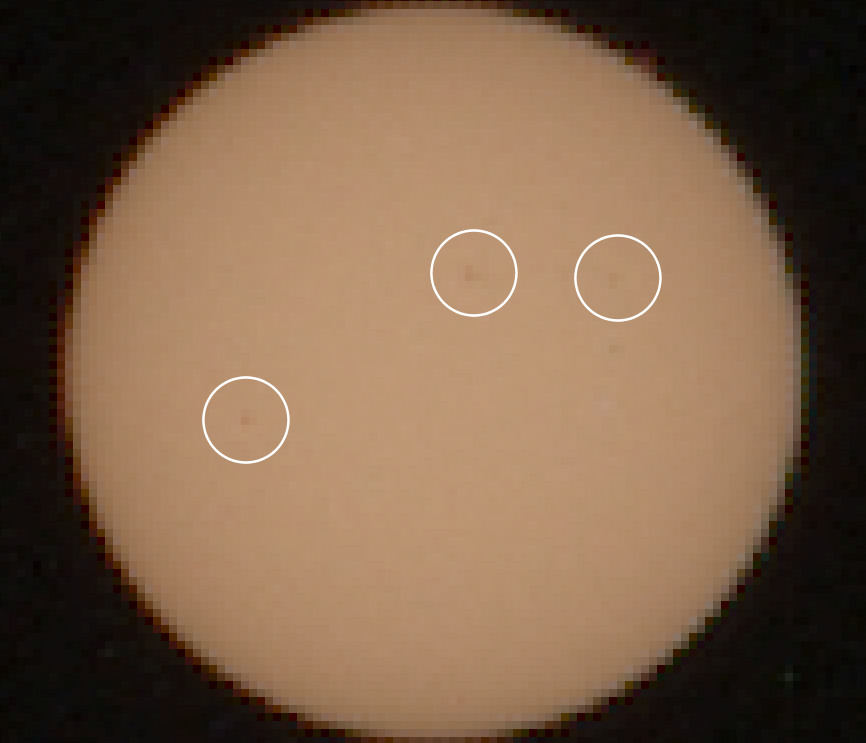
FARSIDE SUNSPOTS: There are sunspots on the farside of the sun so big, they are affecting the way the whole sun vibrates. Their locations are marked in this helioseismic map from NASA's Solar Dynamics Observatory:

The two largest sunspots are visible from Mars. NASA's Perseverance rover saw them today in its routine check of the sun. Low-resolution images from Mars only catch large sunspots, confirming that these are big ones. The first of the batch will rotate onto the Earthside of the sun later this week. Solar flare alerts: SMS Text
Realtime Aurora Photo Gallery
Free: Spaceweather.com Newsletter
Realtime Comet Photo Gallery
Free: Spaceweather.com Newsletter