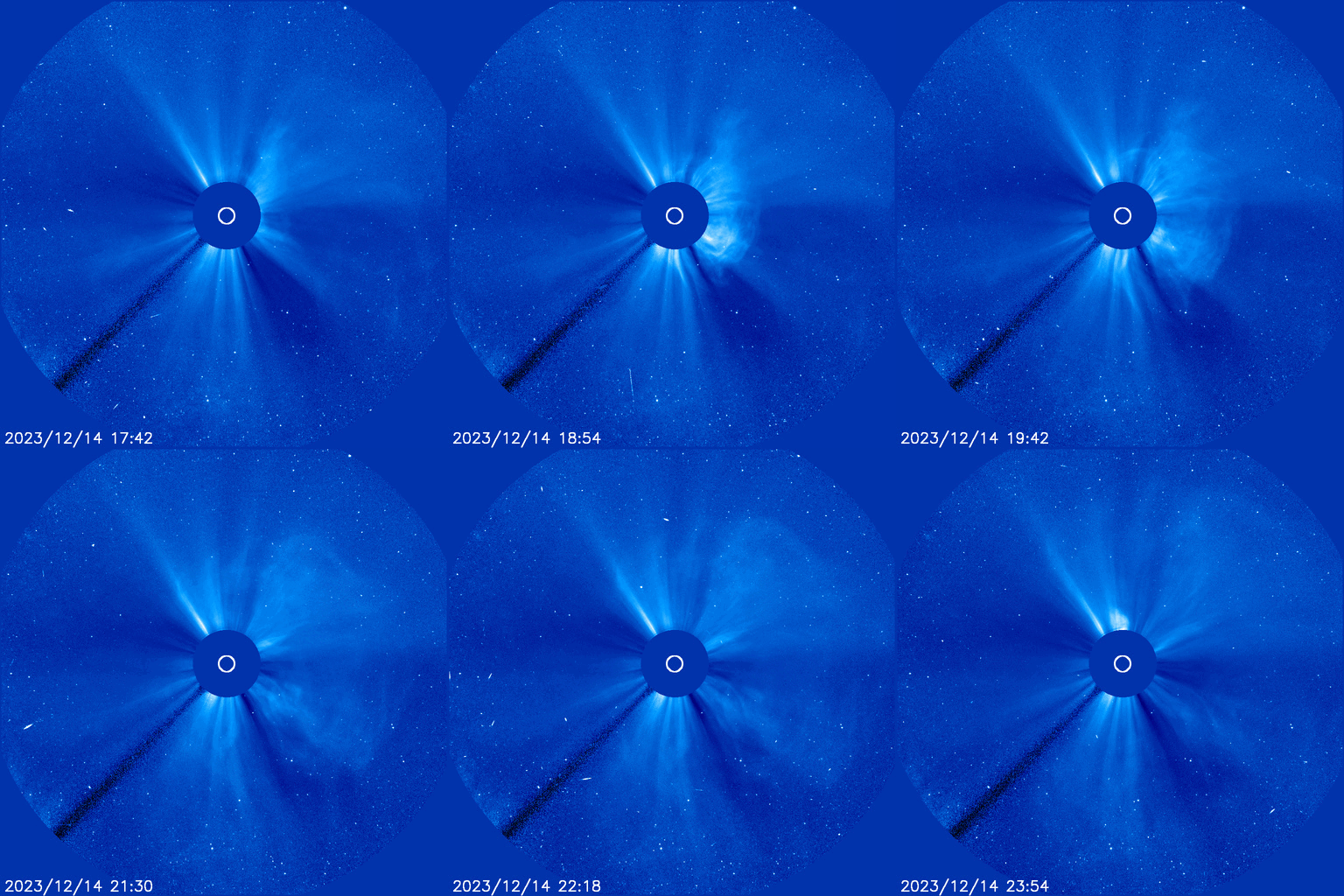
GEOMAGNETIC STORM WATCH -- CANCELED: The weekend forecast called for a G2-class geomagnetic storm. It didn't happen. Forecasters thought a CME would hit Earth on Dec. 16th; either the CME missed or hit so weakly that satellite sensors did not detect it. Either way, the watch is canceled. CME impact alerts: SMS Text
AN OUTBREAK OF POLAR STRATOSPHERIC CLOUDS: A cold wave just swept through the Arctic stratosphere. Really cold. We know because on Dec. 17th these colorful clouds appeared over Sweden:
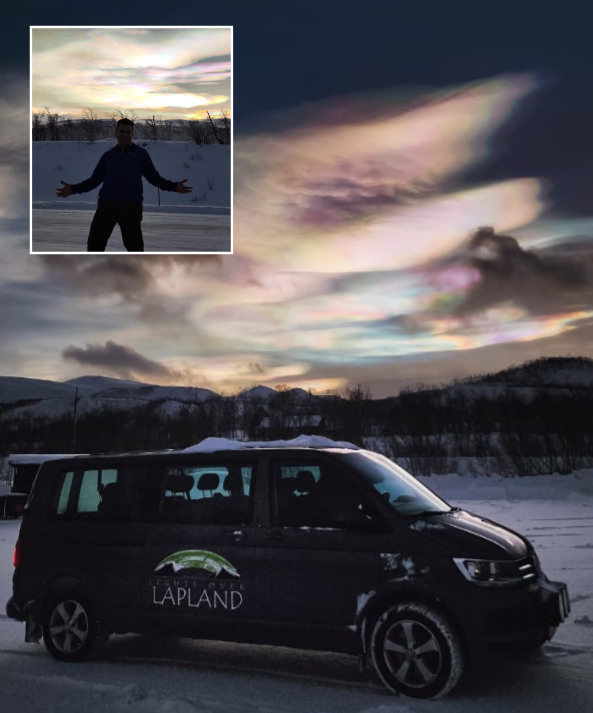 Above: A "PSC selfie" by Lights over Lapland driver Dimitrios Roukounakis
"It's that magical time of year again," says Chad Blakley, owner of the aurora tour guide service Lights over Lapland in Abisko, Sweden. "We just witnessed a spectacular display of polar stratospheric clouds."
Widely considered to be the most beautiful clouds on Earth, polar stratospheric clouds (PSCs) are rare. Earth's stratosphere is very dry and normally it has no clouds at all. PSCs form when the temperature in the Arctic stratosphere drops to a staggeringly-low -85 C. Then, and only then, can widely-spaced water molecules begin to coalesce into tiny ice crystals. High-altitude sunlight shining through the crystals creates intense iridescent colors that can rival auroras.
NASA forecast models of the polar stratosphere show that temperatures have indeed dropped into the very low range required for colorful Type II PSCs:
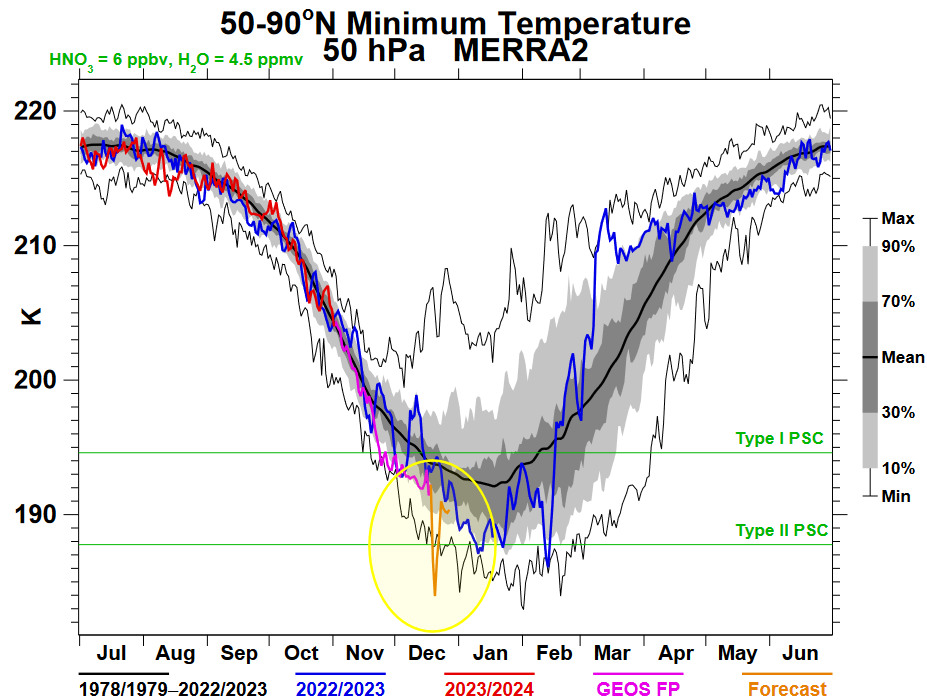 Above: Note the temperature dip inside the highlighted yellow oval
During a typical Arctic winter, PSCs appear no more than a handful of times, and the first sightings usually come in January. Yesterday's apparition on Dec. 17th marks an early start, and may herald many more PSCs to come. Stay tuned!
Realtime Space Weather Photo Gallery
Free: Spaceweather.com Newsletter
AMBER DRAGONFLY SPACE PENDANT: This dragonfly has touched space. On Nov. 28th, the students of Earth to Sky Calculus launched it to the stratosphere onboard a cosmic ray research balloon, 109,228 feet above California's Sierra Nevada:

You can have it for $179.95. Made of genuine Baltic Amber with a sterling silver exoskeleton, the pendant measures 1 1/4 inch and comes with a matching 18-inch sterling silver chain. The wings of the dragonfly include four pieces of natural amber colored Cognac, Olive Green and Honey Yellow.
The students are selling space pendants to pay the helium bill for their cosmic ray ballooning program. Each one comes with a greeting card showing the jewelry in flight and telling the story of its trip to the stratosphere and back again.
Far Out Gifts: Earth to Sky Store
All sales support hands-on STEM education
Realtime Aurora Photo Gallery
Free: Spaceweather.com Newsletter
Realtime Comet Photo Gallery
Free: Spaceweather.com Newsletter