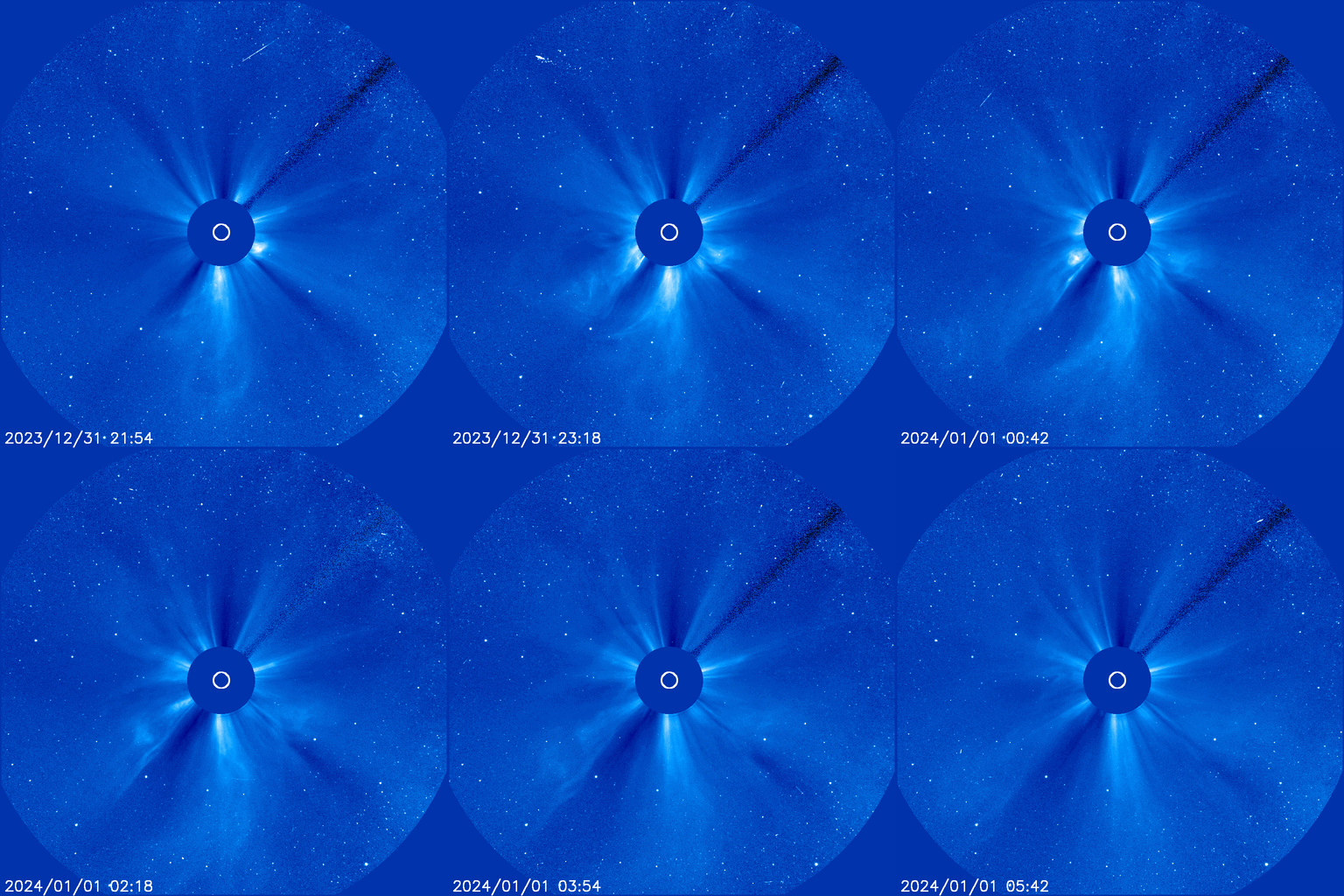
BRACE FOR IMPACT: A CME is expected to graze Earth's magnetic field today, Jan. 2nd. Normally, grazing impacts have little effect, but this one might be different. The CME was hurled into space by the strongest solar flare of Solar Cycle 25, an X5-class explosion on New Year's Eve. G1-class geomagnetic storms are likely if/when the CME arrives. CME impact alerts: SMS Text


STRANGELY-MAGNETIZED SUNSPOT: There's something strange about sunspot AR3536. Its magnetic field is cockeyed. This magnetic map from NASA's Solar Dynamics Observatory shows what we mean:
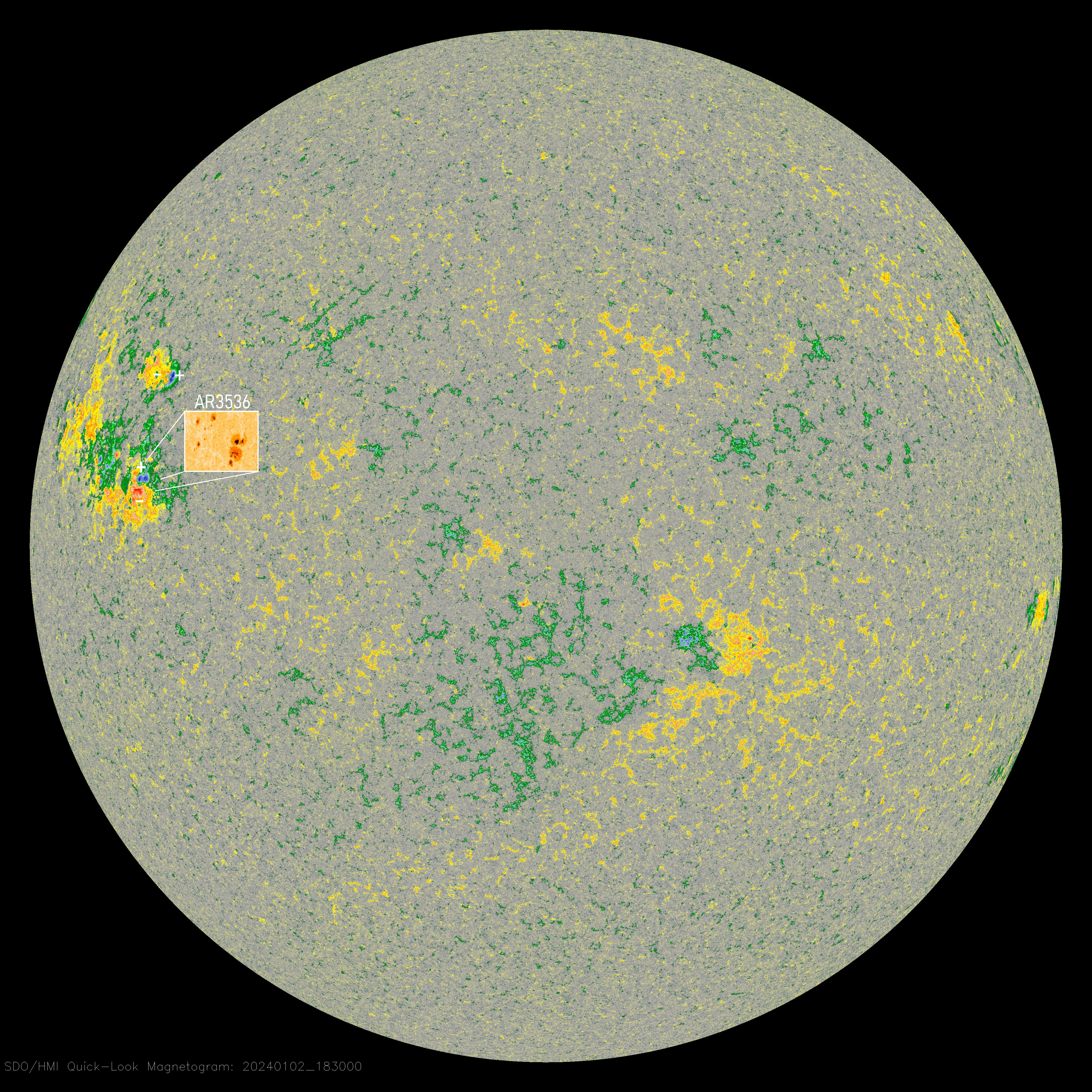
All sunspots have two magnetic poles, plus (+) and minus (-). They're supposed to be oriented side-by-side, like this:  . Instead, the magnetic field of AR3536 is perpendicular to normal:
  . This twist may explain why the sunspot is so active. Twisted magnetic fields harbor extra energy for solar flares. In the past 2 days, AR3636 has unleashed four M-class flares and an X5-class flare that ranks as the most powerful explosion of Solar Cycle 25 (so far).
If this strange magnetization persists, more flares may be in the offing. Stay tuned! Solar flare alerts: SMS Text
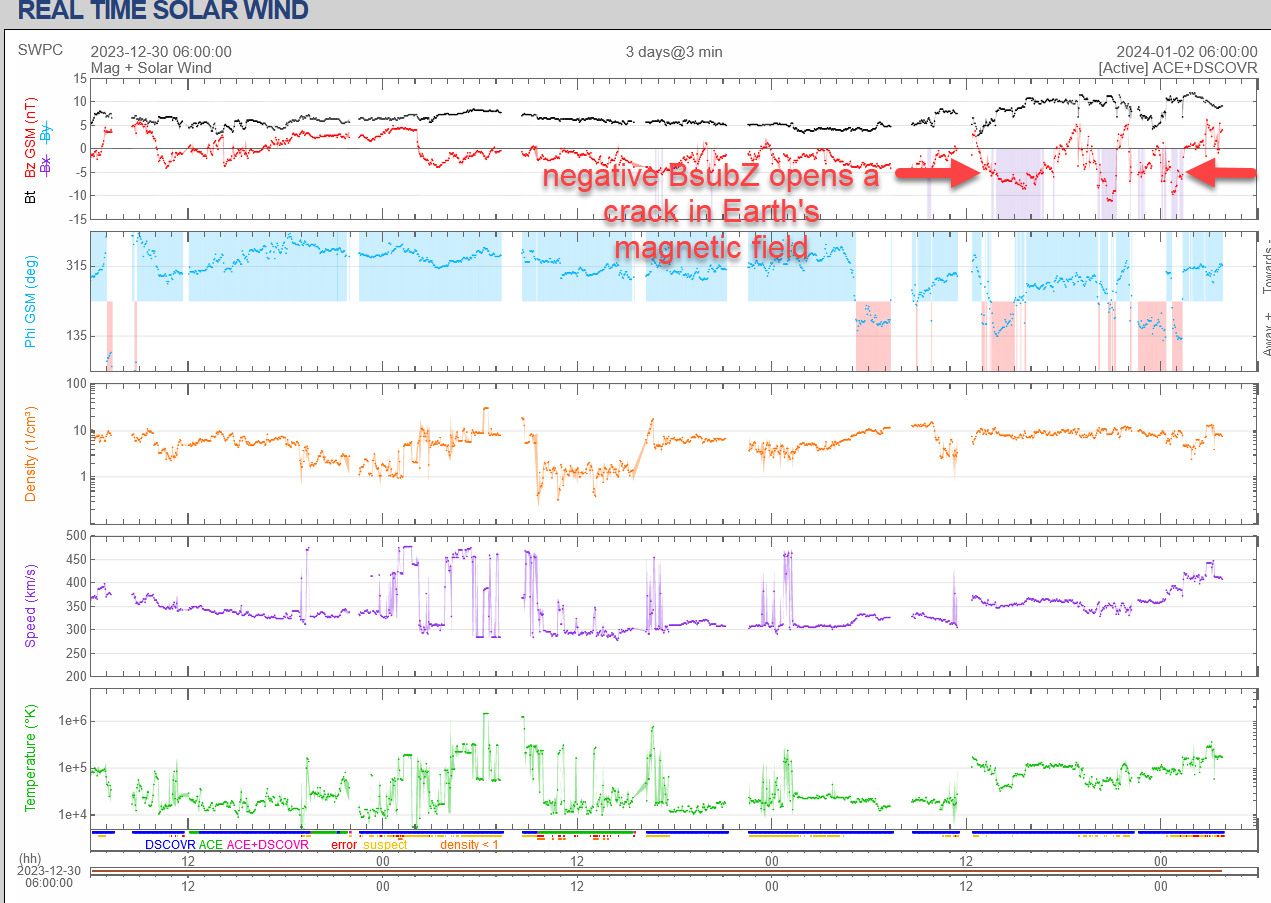
THE FIRST AURORAS OF THE YEAR: On Jan. 1st, a crack opened in Earth's magnetic field. Solar wind poured through the gap and fueled the first auroras of 2024. Northern lights tour guide Chris Percival photographed the display over Vesterålen, Norway:

"Our guests had a fantastic display here tonight in Arctic Norway," says Percival. "Shortly after the Moon rose and lit up the landscape, the aurora borealis decided to make a powerful appearance."
The "crack" was formed by the impact of a co-rotating interaction region (CIR). CIRs are transition zones between fast- and slow-moving streams of solar wind. They contain CME-like shocks that open cracks and spark strong Arctic auroras. Aurora alerts: SMS Text
Realtime Space Weather Photo Gallery
Free: Spaceweather.com Newsletter
AMBER DRAGONFLY SPACE PENDANT: This dragonfly has touched space. On Nov. 28th, the students of Earth to Sky Calculus launched it to the stratosphere onboard a cosmic ray research balloon, 109,228 feet above California's Sierra Nevada:

You can have it for $179.95. Made of genuine Baltic Amber with a sterling silver exoskeleton, the pendant measures 1 1/4 inch and comes with a matching 18-inch sterling silver chain. The wings of the dragonfly include four pieces of natural amber colored Cognac, Olive Green and Honey Yellow.
The students are selling space pendants to pay the helium bill for their cosmic ray ballooning program. Each one comes with a greeting card showing the jewelry in flight and telling the story of its trip to the stratosphere and back again.
Far Out Gifts: Earth to Sky Store
All sales support hands-on STEM education
Realtime Aurora Photo Gallery
Free: Spaceweather.com Newsletter
Realtime Comet Photo Gallery
Free: Spaceweather.com Newsletter