LUNAR LANDER TO CRASH INTO EARTH: The Peregrine lunar lander launched one week ago from Cape Canaveral won't land on the Moon after all. It is returning to Earth where it will re-enter our planet's atmosphere probably on Jan. 18th. "We do not believe Peregrine’s re-entry poses safety risks, and the spacecraft will burn up in Earth’s atmosphere," says Astrobotic CEO, John Thornton. The lander was doomed by a propellant leak; allowing it to re-enter will keep cislunar space safe and clear for future Moon missions. Stay tuned for updates.
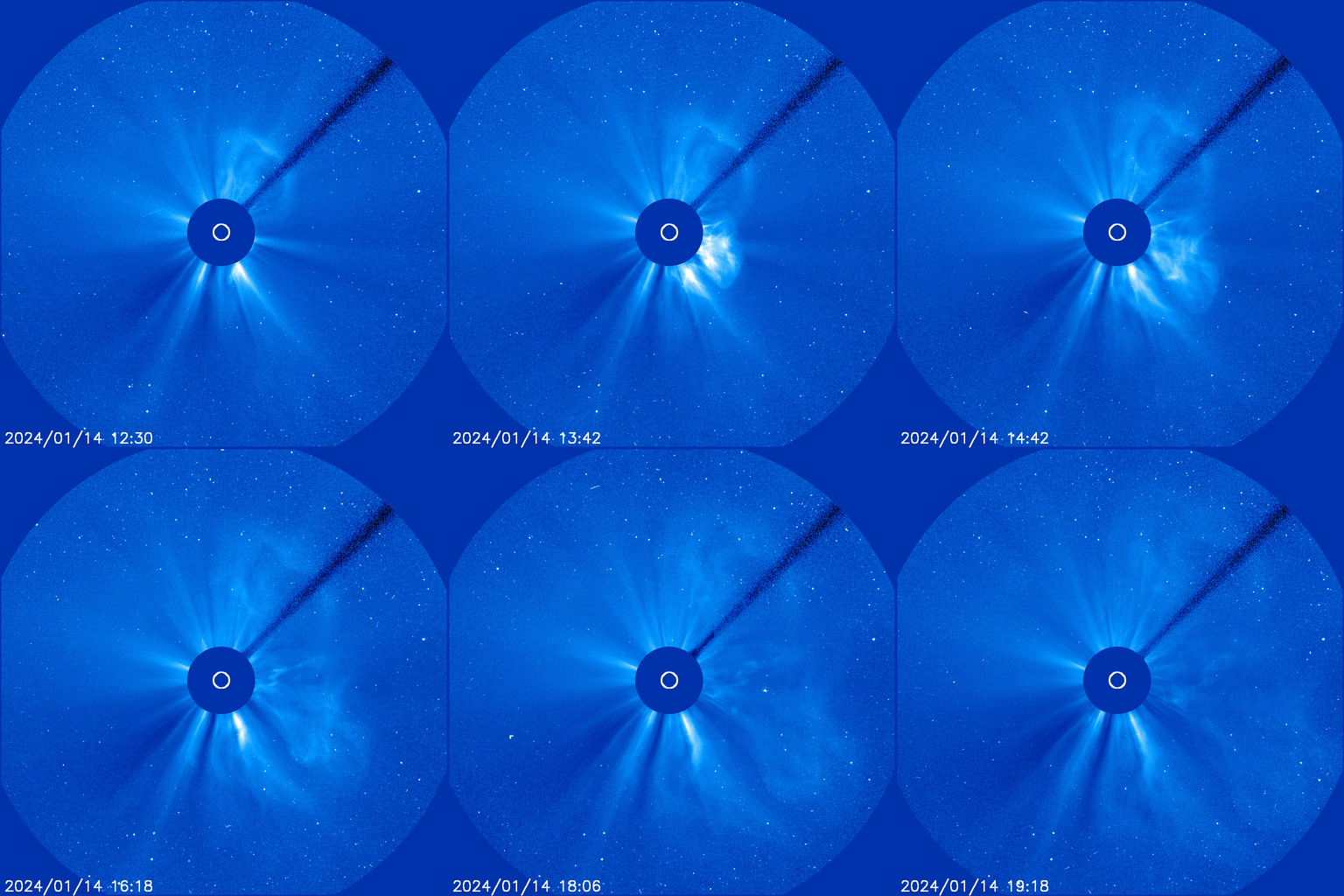
A CME IS ABOUT TO HIT MERCURY *AND* VENUS: A spectacular CME left the sun on Jan. 14th. It won't hit Earth. Instead, Mercury and Venus are in the line of fire. This NASA model shows it striking the two planets in quick succession:
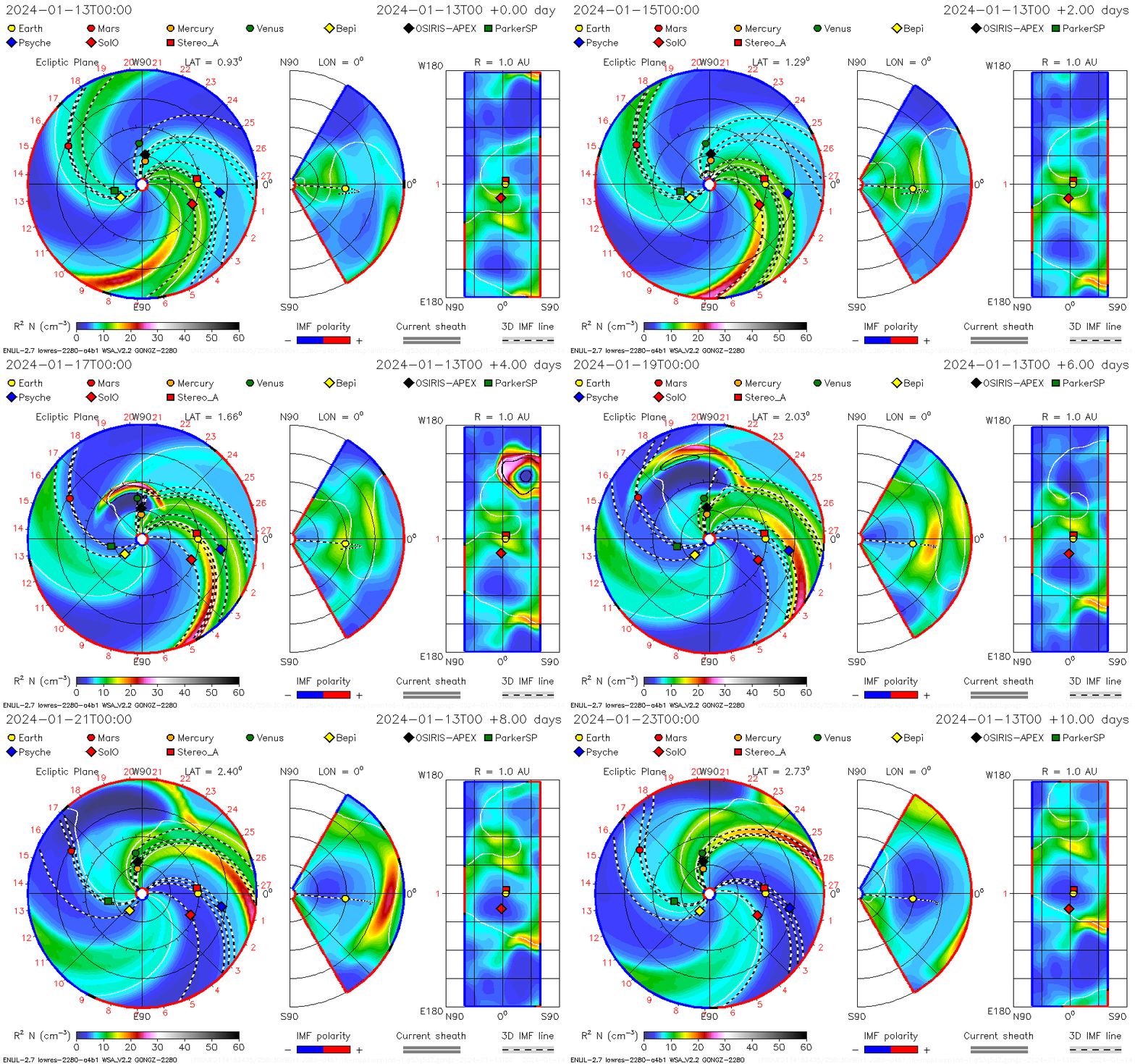
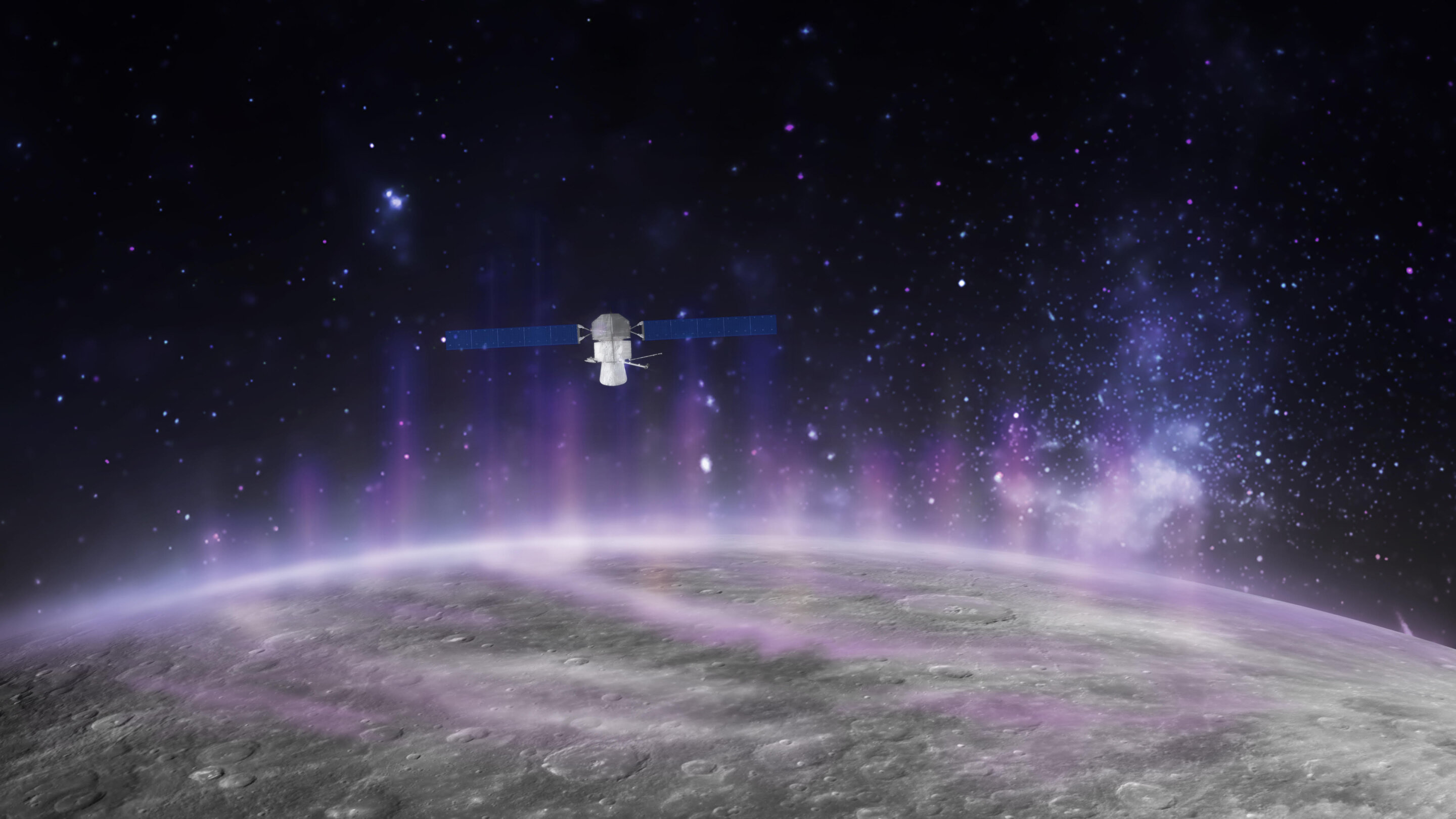
The strike on Mercury (Jan. 15th) could ignite X-ray auroras on that planet's rocky surface, while the strike on Venus (Jan. 16th) will probably erode a small amount of its upper atmosphere. Earth isn't the only world with space weather! Aurora alerts: SMS Text
Realtime Space Weather Photo Gallery
Free: Spaceweather.com Newsletter
BIRTH OF A CREPUSCULAR RAY: At one time or another, every sky watcher has seen a crepuscular ray--a long tube of darkness arcing across the twilight sky. It's a highlight of cloudy sunsets. Rarely, however, do onlookers see the source of the ray. This Saturday evening photo from Peter Lowenstein of Mutare, Zimbabwe, shows how they get started:
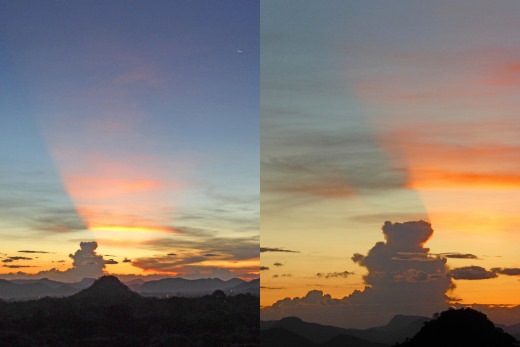
"The sunset was amazingly vivid and remained bright after the sun disappeared below the horizon," says Lowenstein. "The waning rays of the setting sun projected a prominent bright crepuscular ray upwards between an approaching cumulus cloud and the young (two-day-old) crescent Moon."
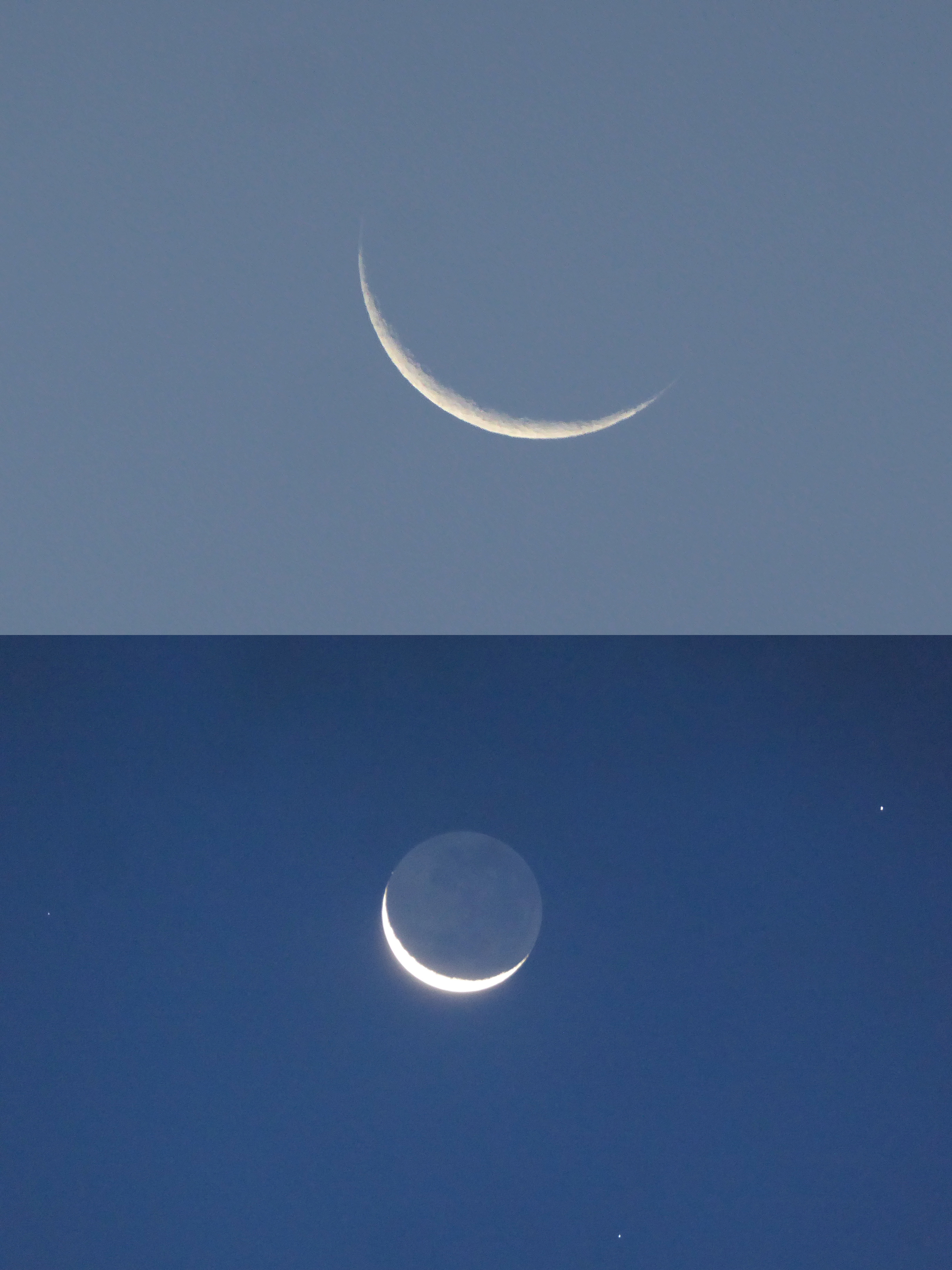
Lowenstein's photo shows what scientists have long known: Crepuscular rays are cloud shadows. The clouds themselves are usually too low on the horizion to see, so the rays appear to exist for no reason. Tall summertime cumulous clouds are usually to blame, although mountains can do the trick, too.
Realtime Space Weather Photo Gallery
Free: Spaceweather.com Newsletter
VALENTINE'S CRYSTAL BEAR AND ROSE: Valentine's Day is coming. Looking for a far-out gift? This Crystal Bear and Rose flew to the stratosphere onboard a cosmic ray research balloon on Dec. 17th:
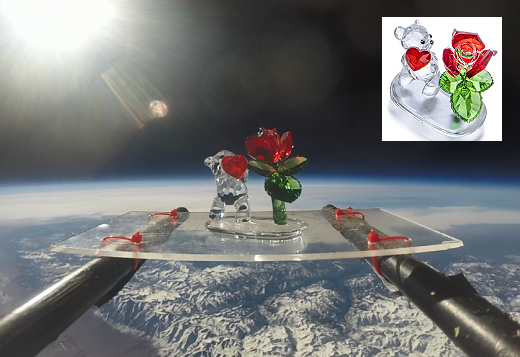
You can have it for $129.95. The students of Earth to Sky Calculus are selling space bears to support their high-altitude ballooning program. Each one comes with a greeting card showing the ursine astronaut in flight and telling the story of its journey to the edge of space and back again.
Far Out Gifts: Earth to Sky Store
All sales support hands-on STEM education
Realtime Aurora Photo Gallery
Free: Spaceweather.com Newsletter
Realtime Comet Photo Gallery
Free: Spaceweather.com Newsletter