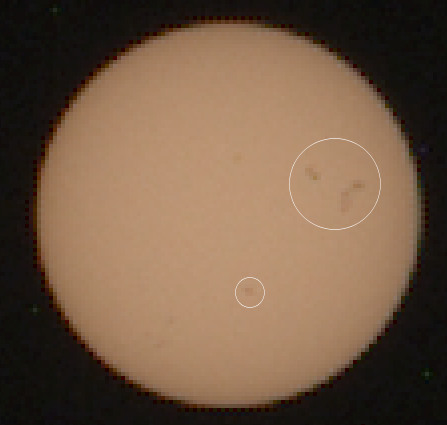
BIG SUNSPOTS VISIBLE FROM MARS: Yesterday, Mars rover Perseverance looked up at the sun and saw an impressive group of sunspots. Take a look at this image. At first glance, those fuzzy spots might not seem impressive. However, the camera Perseverance uses to look at the sun puts only 90 pixels across the solar disk; a sunspot group has to be big to register. This "Martian sunspot group" is not visible from Earth now, but it will turn toward us later this week. Solar flare alerts: SMS Text
SOLAR PROTONS ARE RAINING DOWN ON EARTH: Energetic protons from the sun are striking the top of Earth's atmosphere today following a strong solar flare during the early hours of Jan. 29th. This is called a "radiation storm," and it is currently a category S2 event. Such a storm can cause elevated levels of radiation in airplanes flying over Earth's poles and unwanted glitches in the electronics of Earth-orbiting satellites.

NASA's Solar Dynamics Observatory recorded the M6.8-class solar flare, which started this storm:
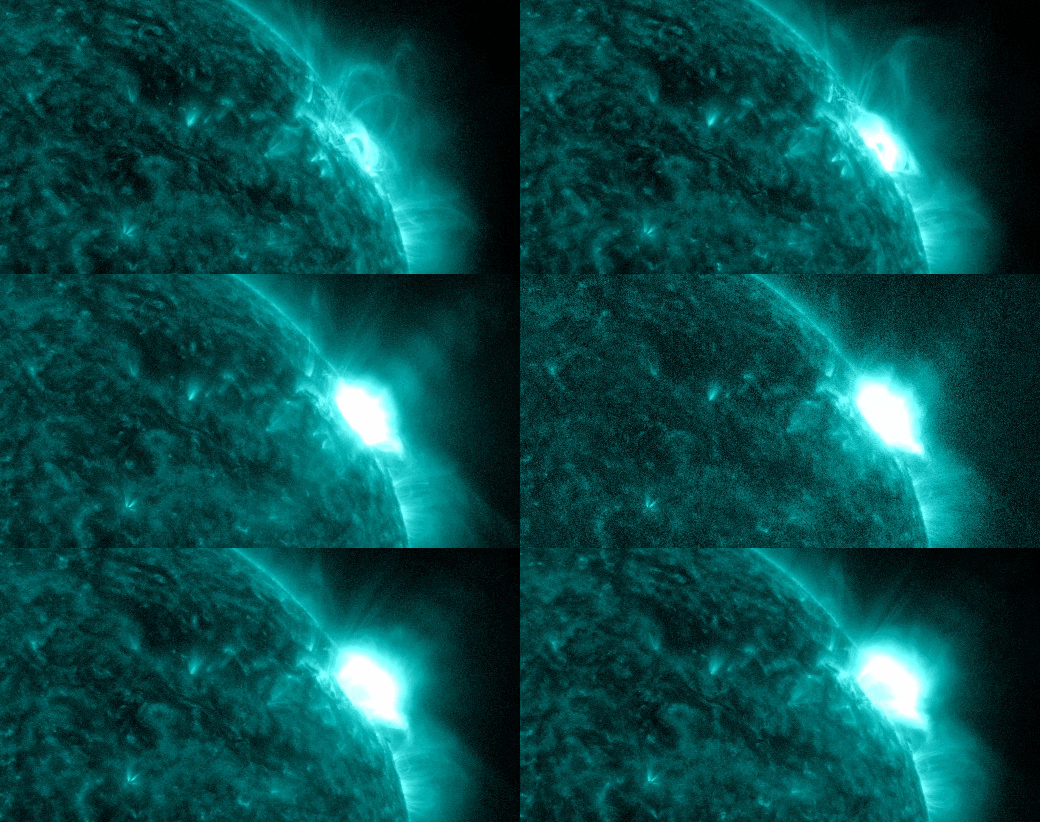
The source of the flare was departing sunspot AR3559. Not all flares cause radiation storms, but this one did because the sunspot is unusually well connected to Earth.
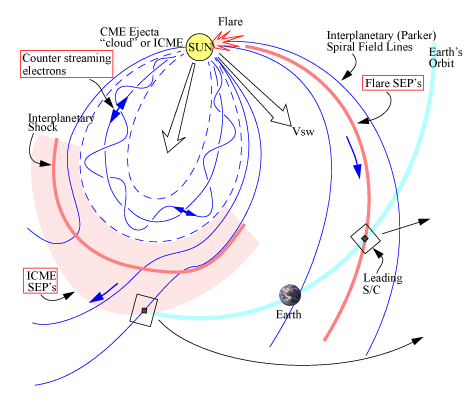
That may seem counterintuitive, because the sunspot is not directly facing our planet. However, when sunspots are near the sun's western limb (as AR3559 is), they can link to Earth magnetically. Take a look at this diagram, and you'll understand why. It's called "the Parker Spiral." Protons accelerated by the flare are now following the Parker Spiral toward Earth and raining down on our atmosphere.
NOAA's GOES-18 satellite is recording the protons as they pass by en route to Earth:
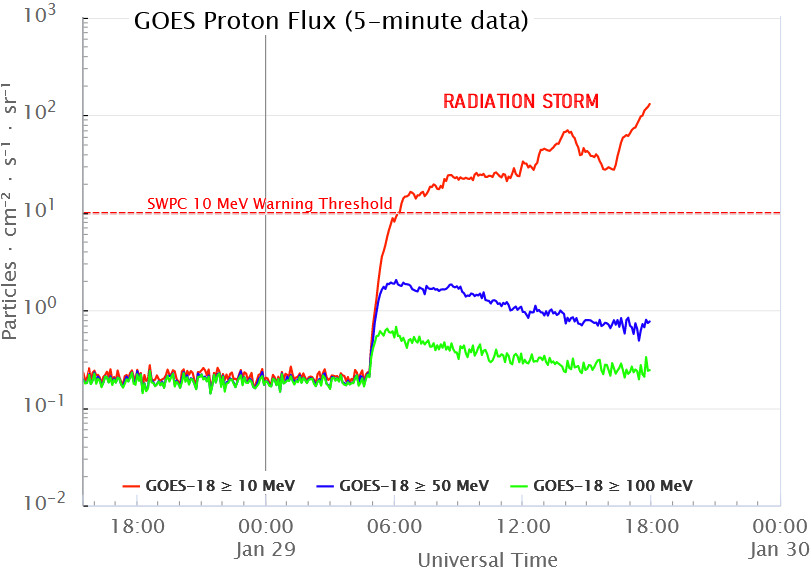
The three colors represent different energy ranges. Blue and green are especially noteworthy; they trace the most energetic protons capable of penetrating the metal hulls of satellites and aircraft. A significant pulse of these "hard" protons was recorded in the hours immediately after the flare.
The explosion also hurled a CME into space, shown here in a coronagraph animation from the Solar and Heliospheric Observatory (SOHO):
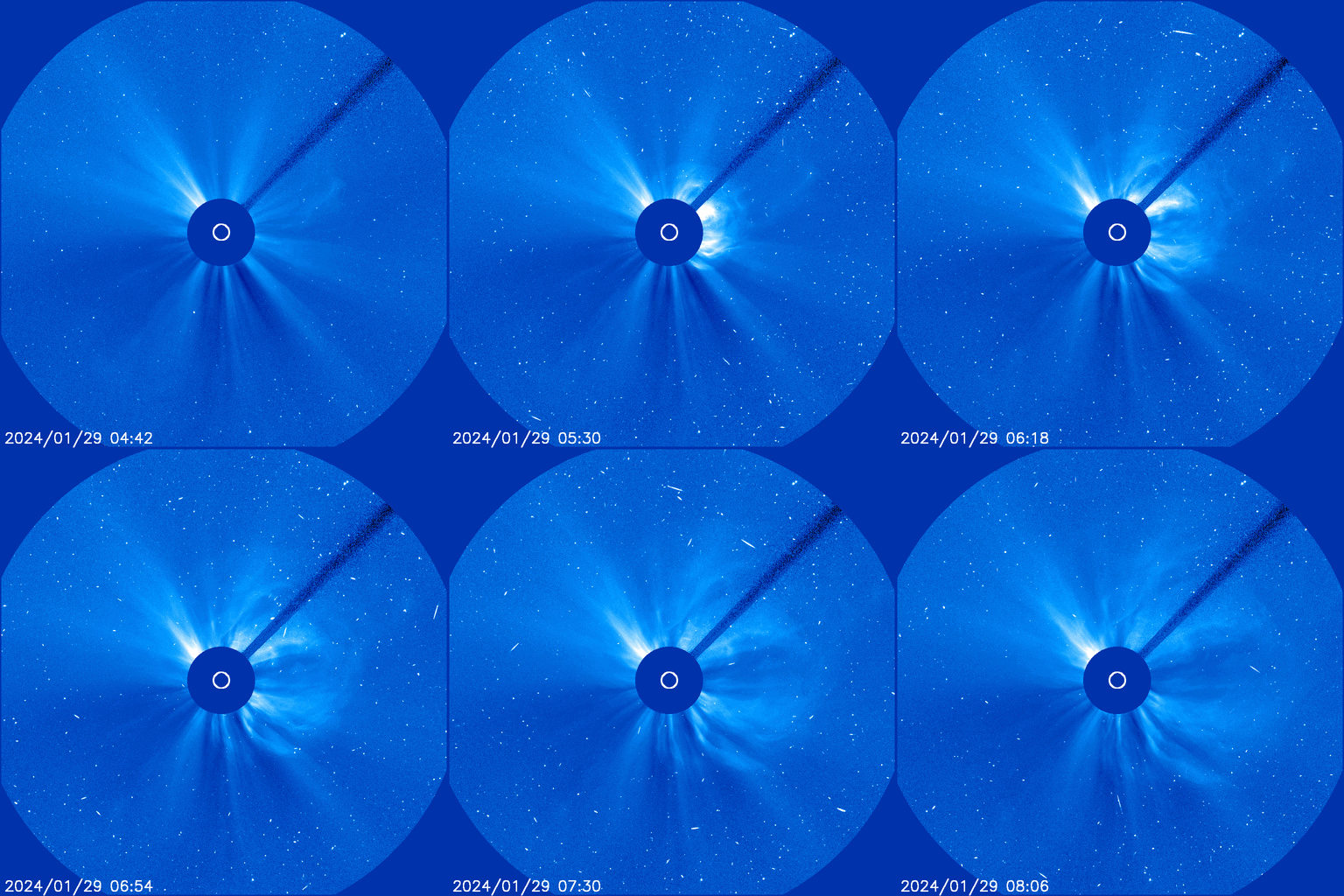
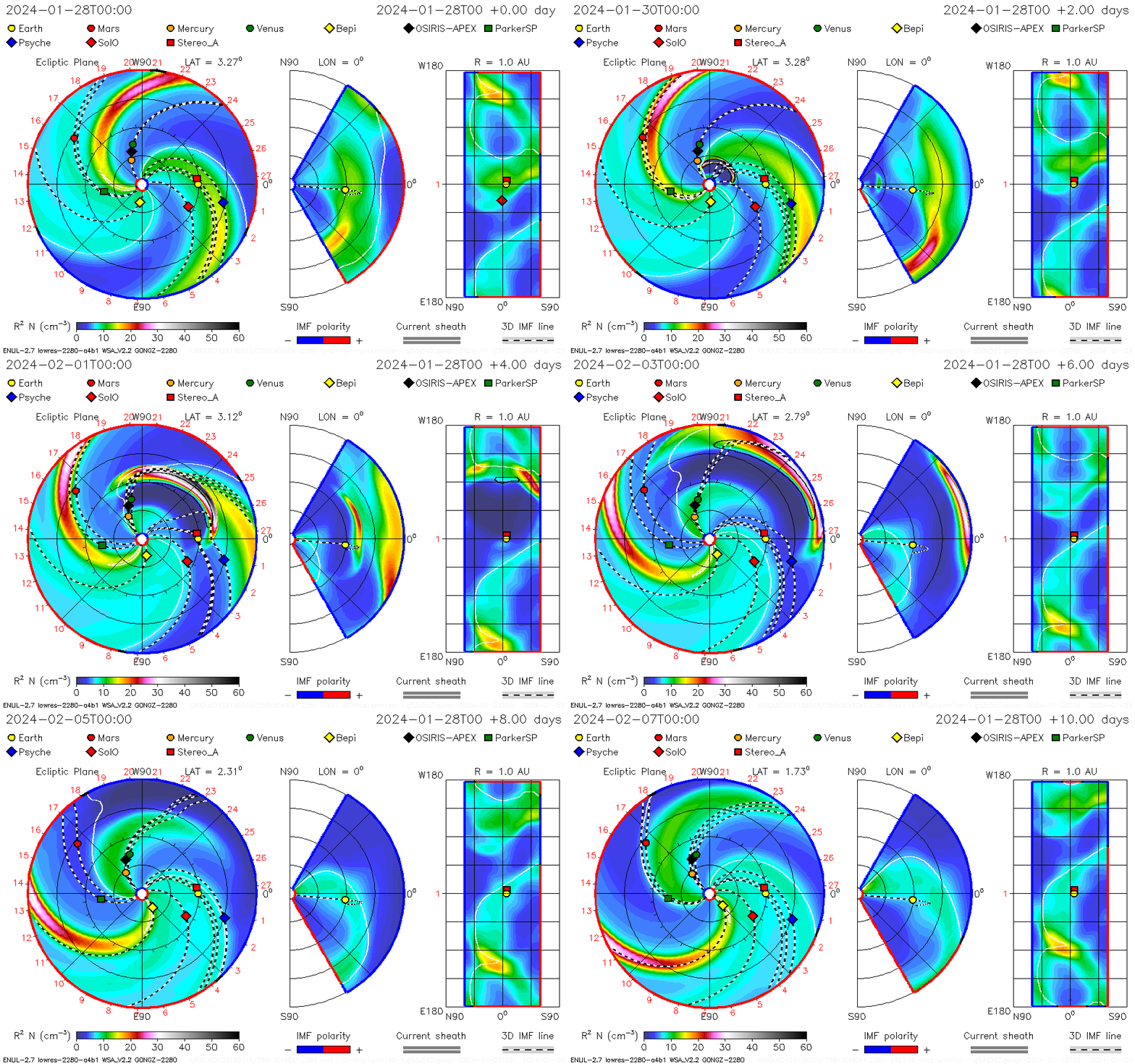
The many speckles in the animation are solar protons striking the spacecraft's camera. It is a sign and side-effect of the radiation storm. A NASA model of the CME suggests it will graze Earth during the early hours of Jan. 31st. Confirmation awaits independent modeling by NOAA.
Realtime Space Weather Photo Gallery
Free: Spaceweather.com Newsletter
SNOOPY & WOODSTOCK FOR VALENTINE'S DAY: Does your Valentine love Snoopy and Woodstock? This is the perfect gift for them. On Jan. 26th, the students of Earth to Sky Calculus launched the pair to the stratosphere onboard a cosmic ray research balloon:
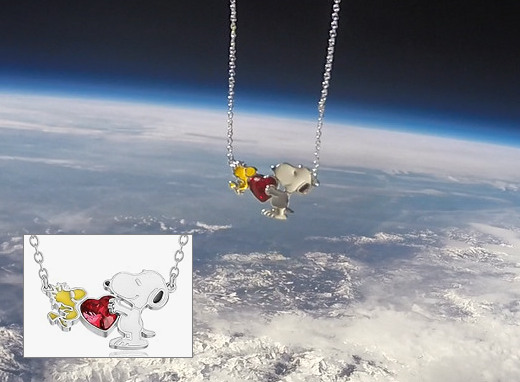
You can have this premium pendant for $149.95. Framed by sterling silver, Snoopy is handing Woodstock a miniature ruby heart, expressing a joyous affection that will delight any Peanuts fan.
The students are selling space pendants to pay the helium bill for their cosmic ray ballooning program. Each one comes with a greeting card showing the jewelry in flight and telling the story of its trip to the stratosphere and back again.
Far Out Gifts: Earth to Sky Store
All sales support hands-on STEM education
Realtime Aurora Photo Gallery
Free: Spaceweather.com Newsletter
Realtime Comet Photo Gallery
Free: Spaceweather.com Newsletter