VENUS AND MARS CONJUNCTION: Set your alarm for dawn. On Thursday, Feb. 22nd, Venus and Mars will meet in the sunrise sky. Look low and east to see the two planets only 0.6 degrees apart. You'll notice brilliant Venus first; it's an easy naked-eye object even in twilight. Binoculars may be required to spot red Mars surrounded by the glow of dawn. Check Sky&Telescope for a "dawn challenge" sky map.
SOLAR ECLIPSE COMET: Anticipation is building for a rare sight during this April's total solar eclipse. In addition to the sun's corona, there's going to be a comet. 12P/Pons-Brooks will be close to the sun during totality, potentially visible to the naked eye inside the Moon's shadow.
Here's what it looks like right now:
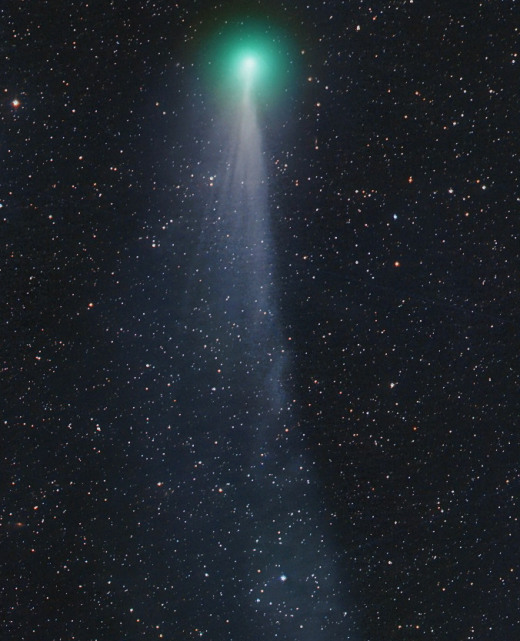
Click to view the rest of the comet's tail
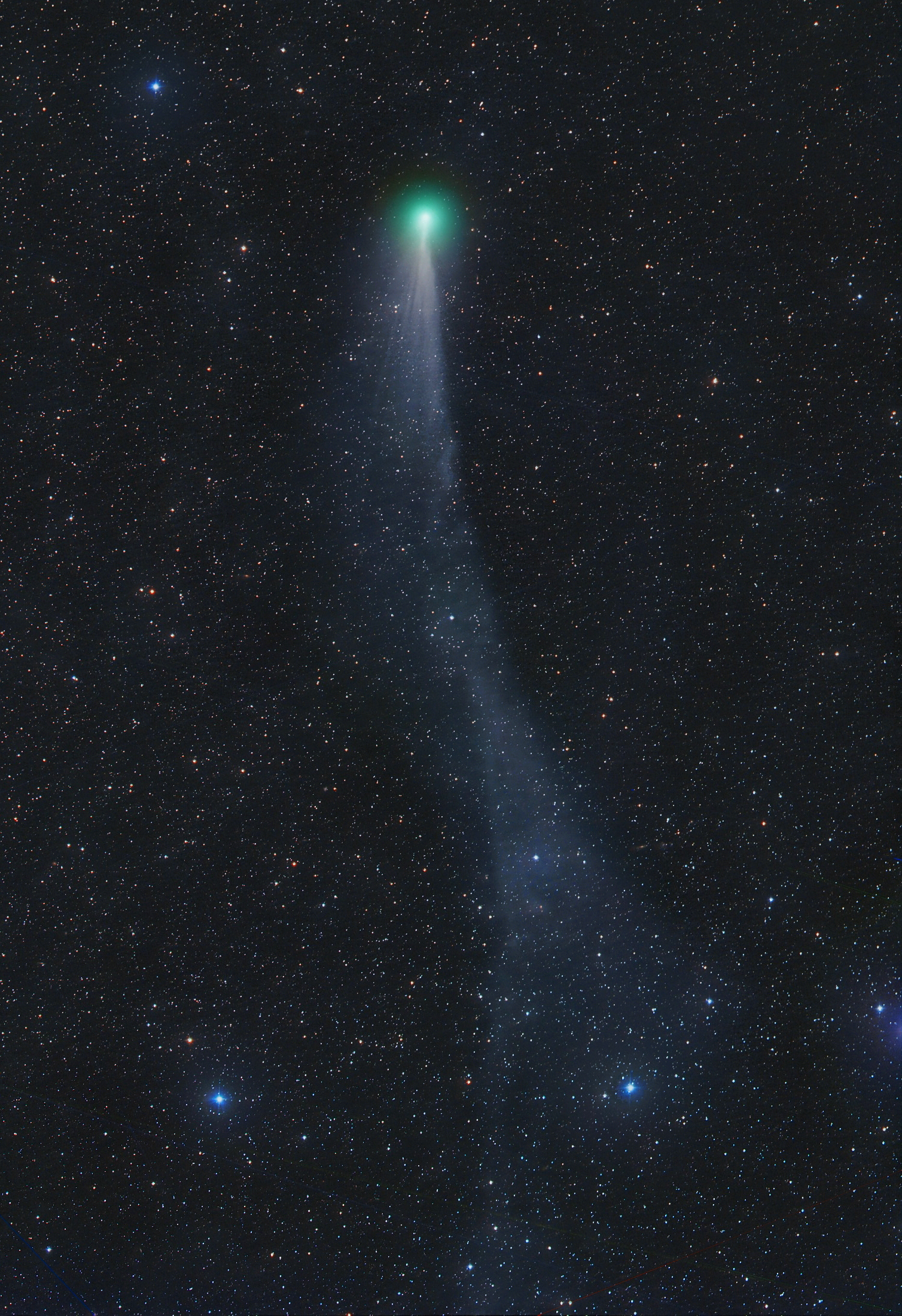
Michael Jaeger photographed the comet from his backyard observatory in Austria on Feb. 16th. "The comet's tail is magnificent," he says. "It is currently more than 2.5 degrees long."
At the moment, 12P is invisible to the naked eye; you need a telescope to see it. However, it is approaching the sun for a close encounter in April. Between now and then, forecasters expect the comet's brightness to increase at least 40-fold to magnitude +4.0. That would make it a borderline naked-eye object just in time for the eclipse.
"Border-line naked eye" doesn't sound spectacular, but 12P may have a trick up its sleeve. The comet is famously variable, with surges in brightness that no astronomer can fully predict. 12P is festooned with ice geysers, old-faithful-like vents that spew plumes of gas and dust into space, cloaking the comet in a veil of sunlight-reflecting material. An eruption of one of these geysers during (or even around the same time as) the solar eclipse could catapult it into the realm of magnificent.
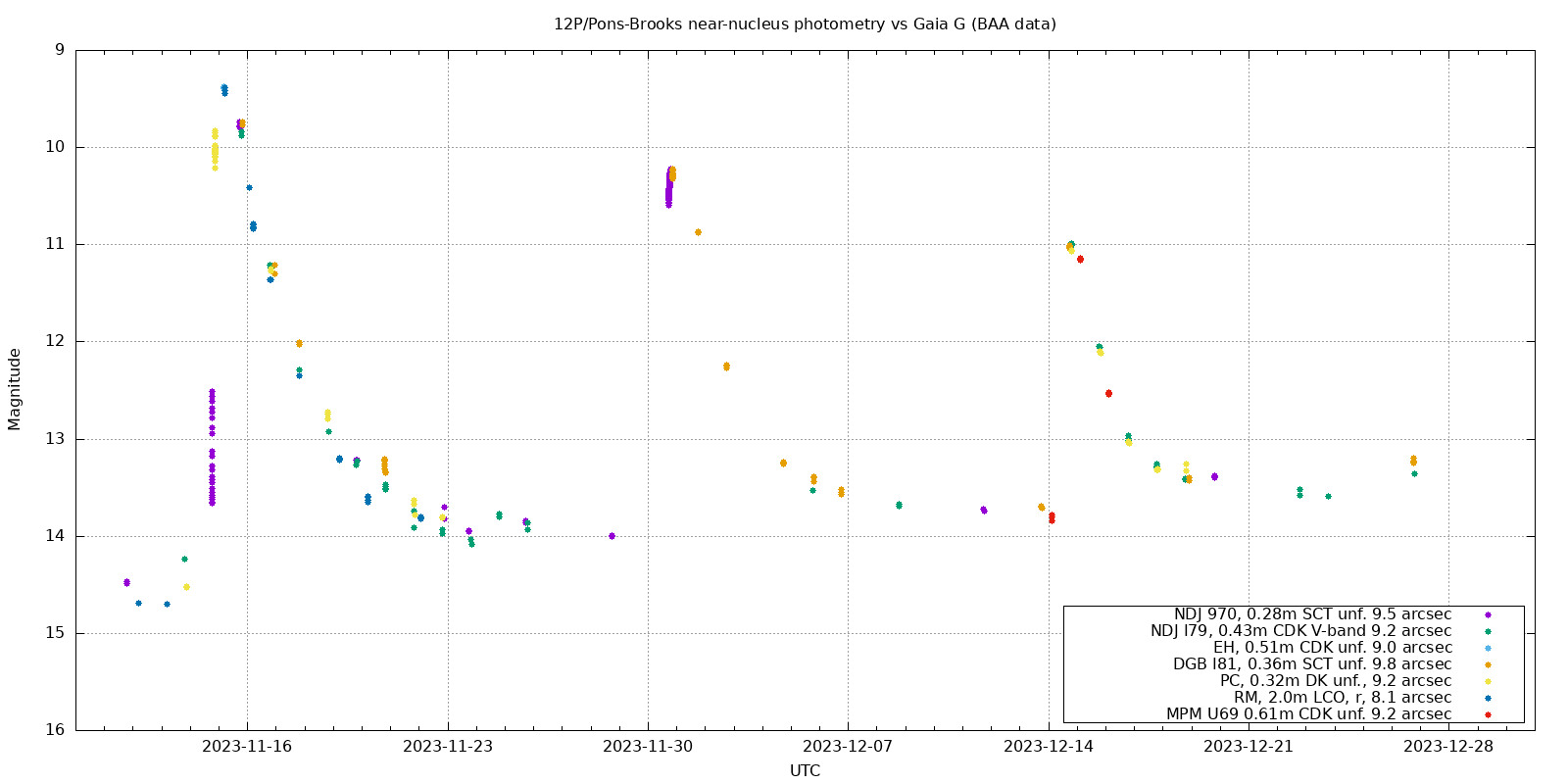
The eruptions are not rare. Astronomers recorded at least half-a-dozen in 2023. One of them increased the comet's brightness more than 100-fold (5 magnitudes). These outbursts may become even more frequent as the comet approaches the sun and heat opens more vents.
A tip for eclipse photographers: Take two cameras--one for the sun, and another for Comet 12P. You might be glad you did.
Observing Tip: Venus and Jupiter will be visible, too. Venus will be very bright and shine 15º from the sun even before totality begins, while Jupiter, 30º from the sun, will appear during totality. Comet 12P will be close to Jupiter.
Realtime Space Weather Photo Gallery
Free: Spaceweather.com Newsletter
18K GOLD "LOVE YOU TO THE MOON" LOCKET: This is a very special locket. It's heart-shaped, plated with 18K gold, and we will fly it again during this year's total eclipse of the sun. Keep reading...
On Jan. 26, 2024, the students of Earth to Sky Calculus launched this locket to the stratosphere onboard a cosmic ray research balloon. At the apex of the flight, it floated 111,535 feet above the Sierra Nevada mountains of central California:
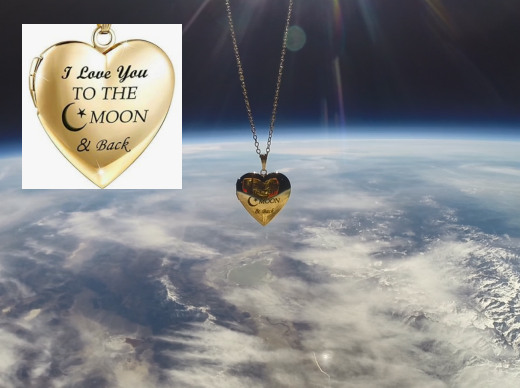
Buy it now for $149.95, and we'll fly it again--FOR FREE--during the total solar eclipse on April 8, 2024. The students will be launching multiple balloons from the path of totality in Texas. Your pendant will go along for the ride, touching the shadow of the Moon at the edge of space. (Simply type "FLY IT AGAIN" in the comments box at checkout.)
The locket, which opens to hold a personal photo or other small item, comes with a greeting card showing the jewelry in flight and telling the story of its journey to the edge of space.
Far Out Gifts: Earth to Sky Store
All sales support hands-on STEM education
Realtime Aurora Photo Gallery
Free: Spaceweather.com Newsletter
Realtime Comet Photo Gallery
Free: Spaceweather.com Newsletter