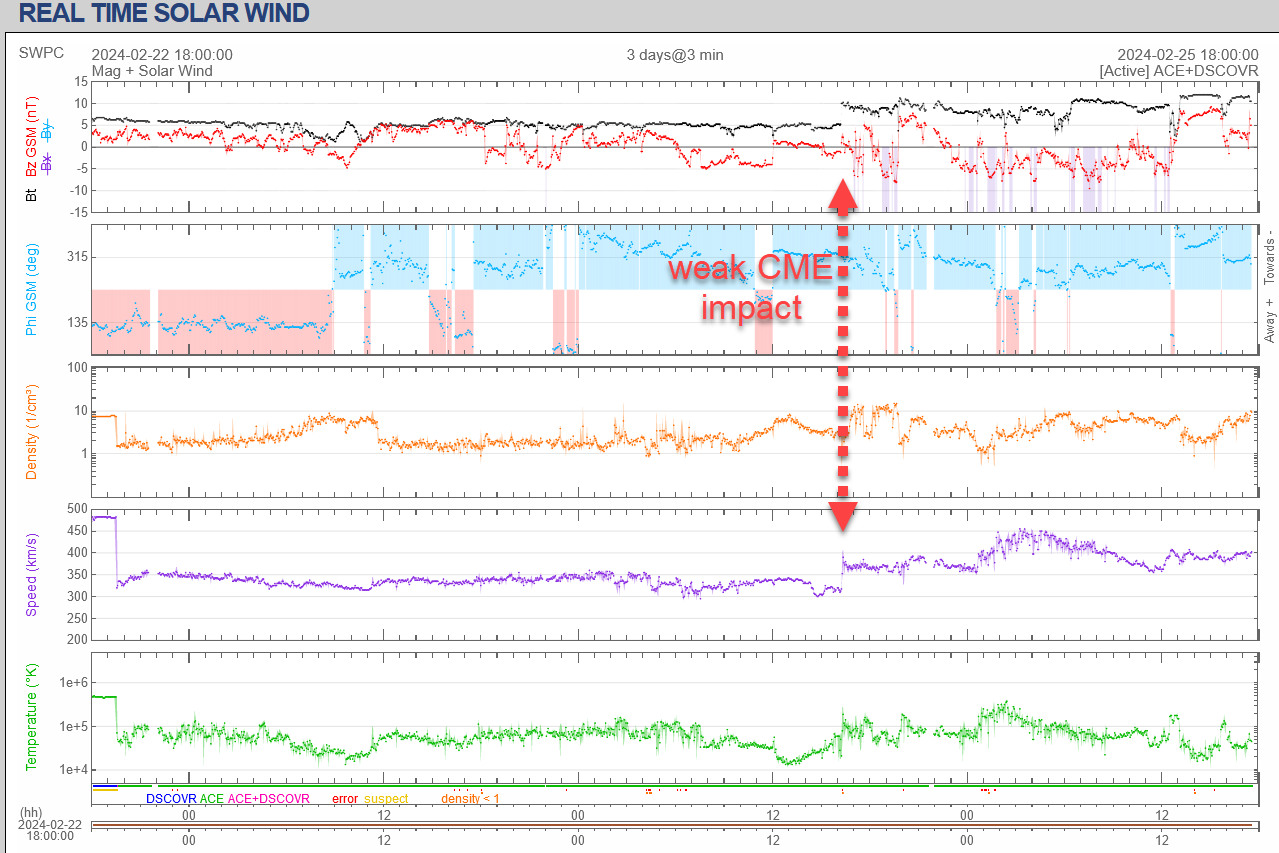
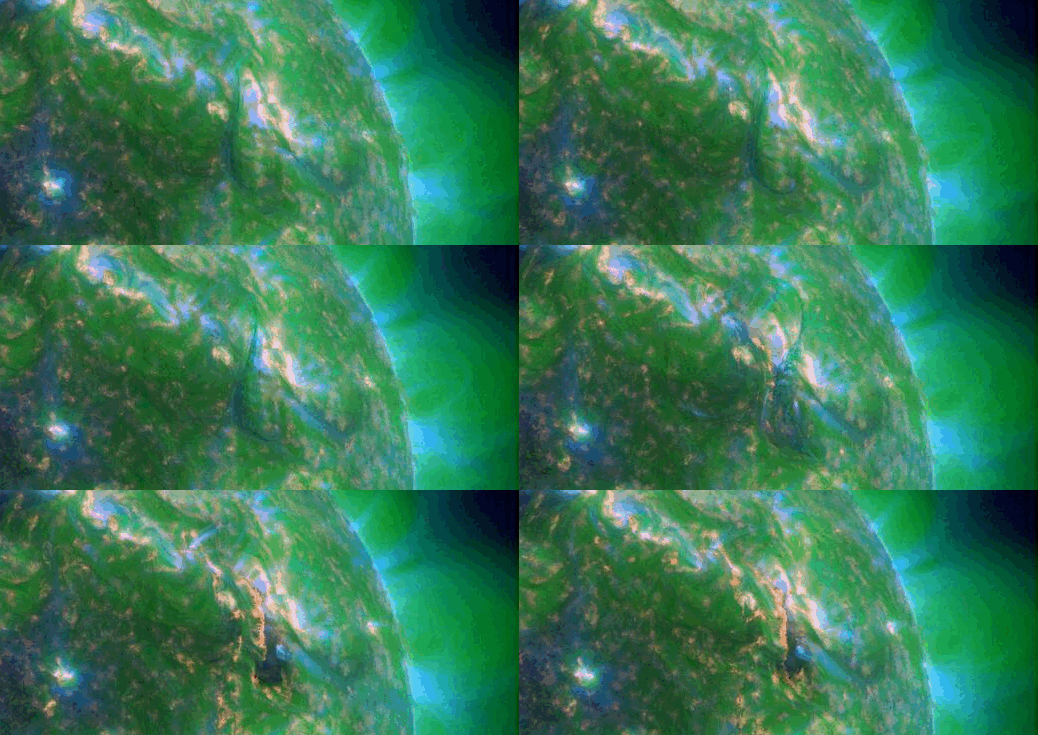
WEAK IMPACT FAILS TO CAUSE A STORM: As predicted, a CME grazed Earth's magnetic field on Feb. 25th (~1645 UT). However, the impact was weak and it did not cause a geomagnetic storm. The CME was hurled into space on Feb. 21st by an erupting filament of magnetism (movie) in the sun's northern hemisphere. Aurora alerts: SMS Text
BIG SUNSPOT GETS EVEN BIGGER: Giant sunspot AR3590 spent the weekend getting bigger. This two-day movie from NASA's Solar Dynamics Observatory shows its area increasing by a quarter in only 48 hours:
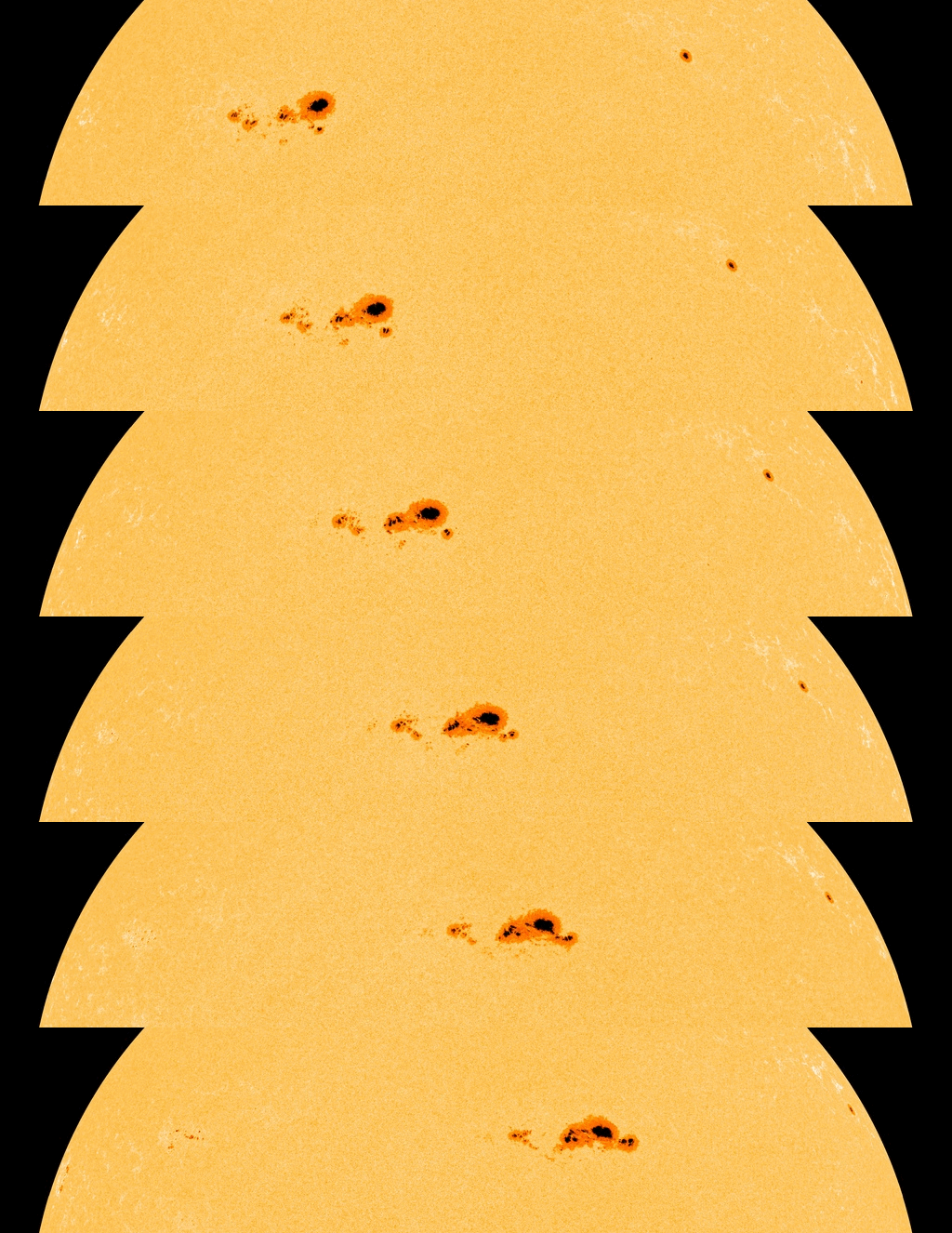
AR3590 is now the largest sunspot of Solar Cycle 25. For comparison, it is now 60% as large (by surface area) as the great sunspot that caused the Carrington Event in Sept. 1859. Even a 60%-intensity Carrington Event occuring today could cause problems for satellites, power grids, and internet connectivity. That's why forecasters are carefully watching this sunspot.
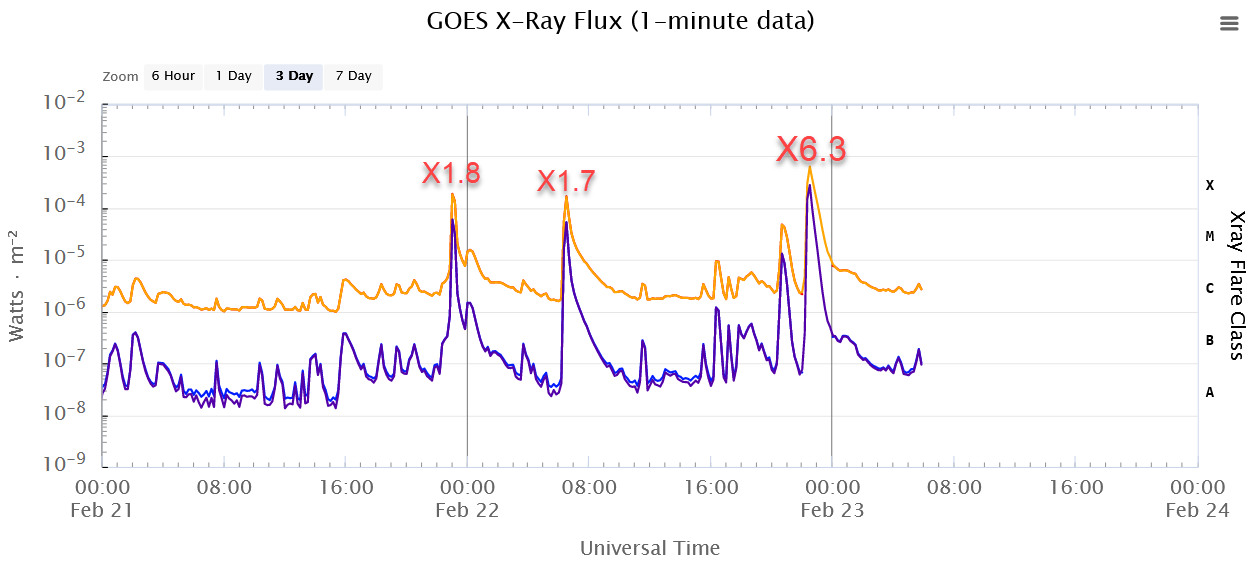
Last week, AR3590 unleashed three X-flares in rapid succession, including the strongest flare of the current solar cycle (X6.3) . Since then the sunspot has been relatively quiet, producing only a handful of low-level M-class explosions. Is it gathering itself for another X-flare? If so, the flare will be geoeffective as AR3590 is almost directly facing Earth. Solar flare alerts: SMS Text
more images: from John O'Neal of Statesville, NC; from Ivar Hamberg of Nice, France; from Gerardo Jimenez of Ávila. Spain; from Dan Bush of Albany, Missouri; from Hadházi Csaba of Hajduhadhaz, Hungary;
Realtime Space Weather Photo Gallery
Free: Spaceweather.com Newsletter
SUNSPOT SUNSET: Yesterday in Venice, Italy, a flock of birds was about to cross the setting sun. Photographer Filippo Fazzini quickly aimed his camera to catch the transit. "I also caught giant sunspot AR3590," he says.
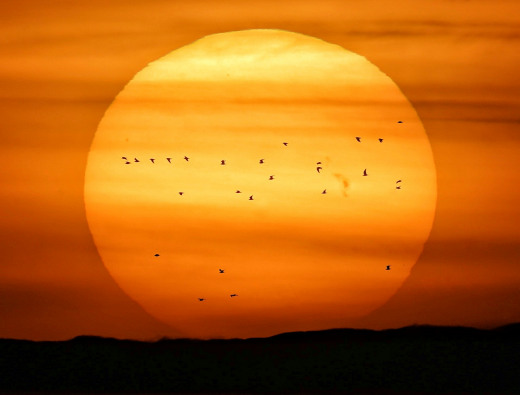
"This is a 1/8000 sec exposure at ISO 100 taken with my Sony A7 III," says Fazzini. "I did not need a solar filter."
Indeed, when the sun is hanging low at dawn or dusk, the atmosphere itself acts like a solar filter, tempoarily dimming the sun enough for photography. Be careful though! It is never safe to look at the sun through unfiltered optics; magnified sunlight can damage your eyes. Always point your camera using the LCD viewfinder as Fazzini did.
more images: from Robert Lowton of Mam Tor, Peak District, UK; from Bill Reyna of West Orange, NJ, USA;
Realtime Space Weather Photo Gallery
Free: Spaceweather.com Newsletter
18K GOLD "LOVE YOU TO THE MOON" LOCKET: This is a very special locket. It's heart-shaped, plated with 18K gold, and we will fly it again during this year's total eclipse of the sun. Keep reading...
On Jan. 26, 2024, the students of Earth to Sky Calculus launched this locket to the stratosphere onboard a cosmic ray research balloon. At the apex of the flight, it floated 111,535 feet above the Sierra Nevada mountains of central California:
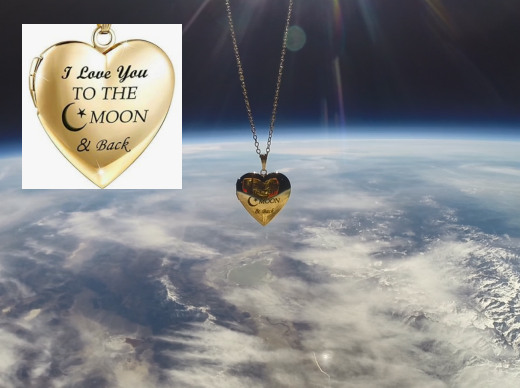
Buy it now for $149.95, and we'll fly it again--FOR FREE--during the total solar eclipse on April 8, 2024. The students will be launching multiple balloons from the path of totality in Texas. Your pendant will go along for the ride, touching the shadow of the Moon at the edge of space. (Simply type "FLY IT AGAIN" in the comments box at checkout.)
The locket, which opens to hold a personal photo or other small item, comes with a greeting card showing the jewelry in flight and telling the story of its journey to the edge of space.
Far Out Gifts: Earth to Sky Store
All sales support hands-on STEM education
Realtime Aurora Photo Gallery
Free: Spaceweather.com Newsletter
Realtime Comet Photo Gallery
Free: Spaceweather.com Newsletter