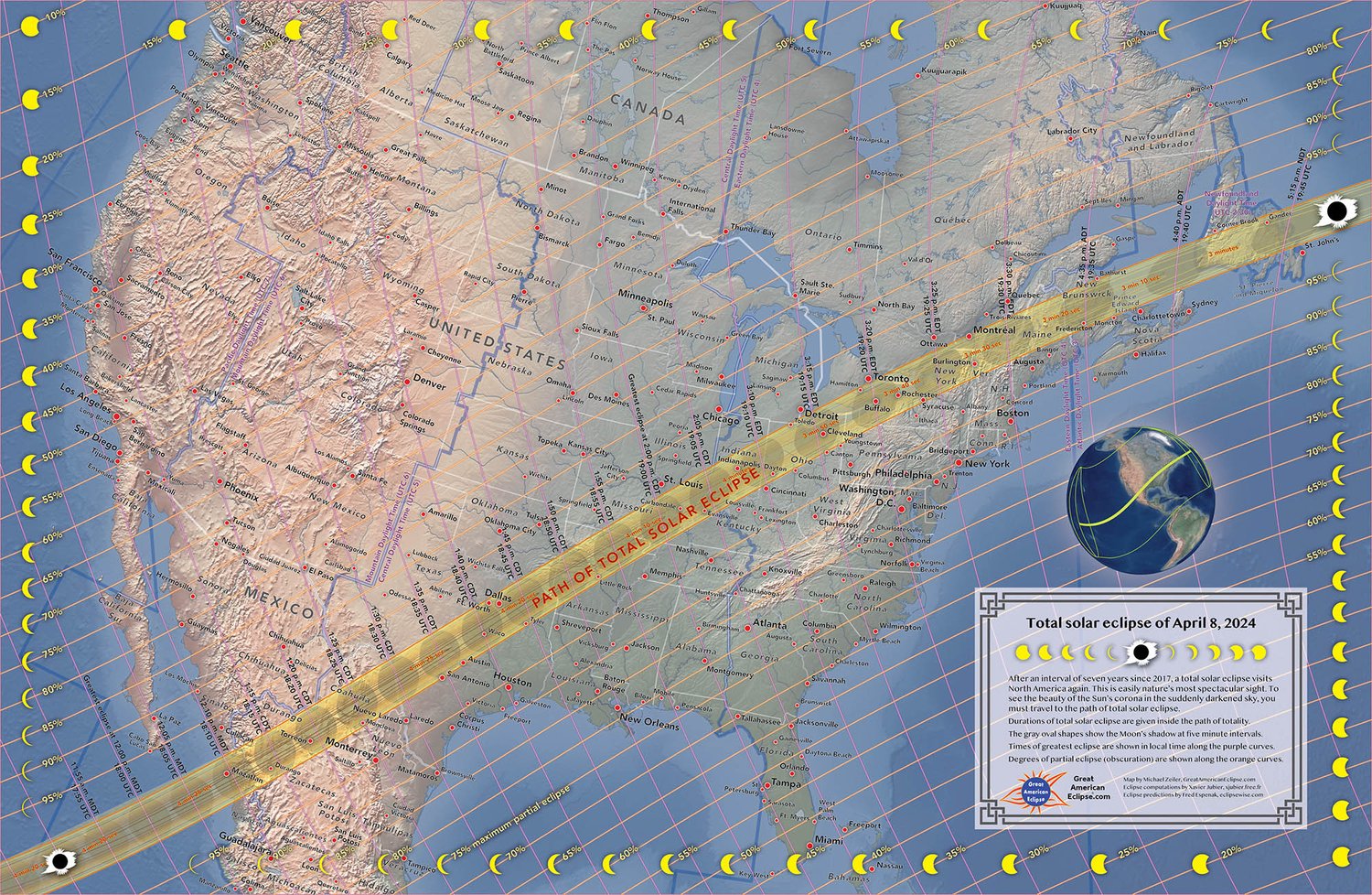
ONE MONTH UNTIL THE SOLAR ECLIPSE: Mark your calendar. On April 8, 2024, the Moon will pass directly in front of the sun for a total solar eclipse. More than 31 million people live inside the path of totality, which cuts across 13 US states. Millions more will travel to see the sun's ghostly corona--a life-changing sight for many who witness it. Will you be one of them? Details here.
THESE RED LIGHTS ARE NOT AURORAS: Last Sunday, March 3rd, a CME hit Earth's magnetic field. The surprisingly strong impact sparked a G2-class geomagnetic storm with bright auroras around the Arctic Circle. Upon closer inspection, however, not all of those lights were auroras. Some were "SAR arcs":

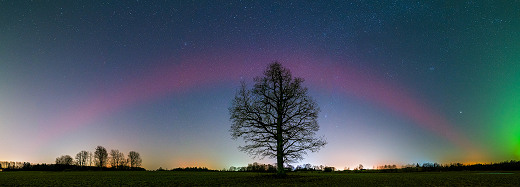
During the storm, Märt Varatu photographed this red 'bow over Kiia küla, Estonia. "It was a strong SAR arc," he says.
SARs were discovered in 1956 at the beginning of the Space Age. Researchers didn’t know what they were and unwittingly gave them a misleading name: "Stable Auroral Red arcs" or SARs. In fact, they are not auroras.
Auroras appear when charged particles rain down from space, hitting the atmosphere and causing it to glow like the picture tube of an old color TV. SARs form differently. They are a sign of heat energy leaking into the upper atmosphere from Earth’s ring current system, a donut-shaped circuit carrying millions of amps around our planet. During the geomagnetic storm of March 3rd, this ring current sprang a significant leak.
The same red arcs were widely observed from Latvia to eastern Russia. Vladimir Nerush photographed this fragment just east of Moscow:
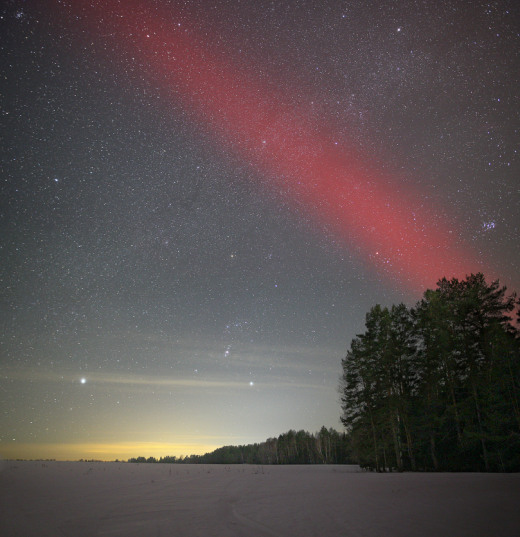
"It emerged from the trees and passed right by the Pleiades," says Nerush. "The red color was so pure."
Indeed, SAR arcs are among the reddest things in the sky, with a monochromatic glow at 6300 Å that comes from atomic oxygen in the upper atmosphere. The human eye is relatively insensitive to light at this wavelength; we have a hard time seeing SAR arcs. Cameras catch them easily, though. Pro tip for photographers: Use a 6300 Å filter.
more images: from Juris Seņņikovs of Dobele, Latvia; from Ilgonis Vilks of Jurmala, Latvia
Realtime Space Weather Photo Gallery
Free: Spaceweather.com Newsletter
18K GOLD "LOVE YOU TO THE MOON" LOCKET: This is a very special locket. It's heart-shaped, plated with 18K gold, and we will fly it again during this year's total eclipse of the sun. Keep reading...
On Jan. 26, 2024, the students of Earth to Sky Calculus launched this locket to the stratosphere onboard a cosmic ray research balloon. At the apex of the flight, it floated 111,535 feet above the Sierra Nevada mountains of central California:
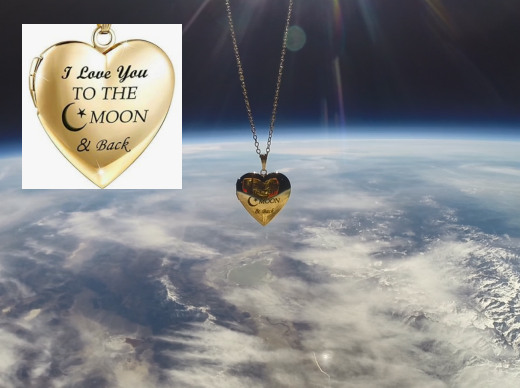
Buy it now for $149.95, and we'll fly it again--FOR FREE--during the total solar eclipse on April 8, 2024. The students will be launching multiple balloons from the path of totality in Texas. Your pendant will go along for the ride, touching the shadow of the Moon at the edge of space. (Simply type "FLY IT AGAIN" in the comments box at checkout.)
The locket, which opens to hold a personal photo or other small item, comes with a greeting card showing the jewelry in flight and telling the story of its journey to the edge of space.
Far Out Gifts: Earth to Sky Store
All sales support hands-on STEM education
A POTENTIALLY DANGEROUS SUNSPOT: Don't be surprised if there's an X-flare today. Sunspot AR3599 has a delta-class magnetic field that harbors energy for the most powerful explosions. And as this back-and-forth animation shows, it may be unstable:

Over the past 24 hours, the sunspot has reshaped itself, rearranging its internal dark cores. Magnetic fields of opposite polarity are being pulled apart and pressed together, creating conditons for explosive magnetic reconnection. If AR3599 does explode, the resulting solar flare will be geoeffective as the sunspot is directly facing Earth. Solar flare alerts: SMS Text
Realtime Space Weather Photo Gallery
Free: Spaceweather.com Newsletter
Realtime Aurora Photo Gallery
Free: Spaceweather.com Newsletter
Realtime Comet Photo Gallery
Free: Spaceweather.com Newsletter