EQUINOX AURORA WATCH: Northern Spring begins today, and almost immediately a CME is expected to hit Earth. It was thrown into space on March 17th when a solar magnetic filament erupted. The CME's impact on March 20th could spark a display of equinox auroras fueled by the Russell-McPherron effect. NOAA is forecasting G1-class geomagnetic storms on March 20th and 21st. Aurora alerts: SMS Text.
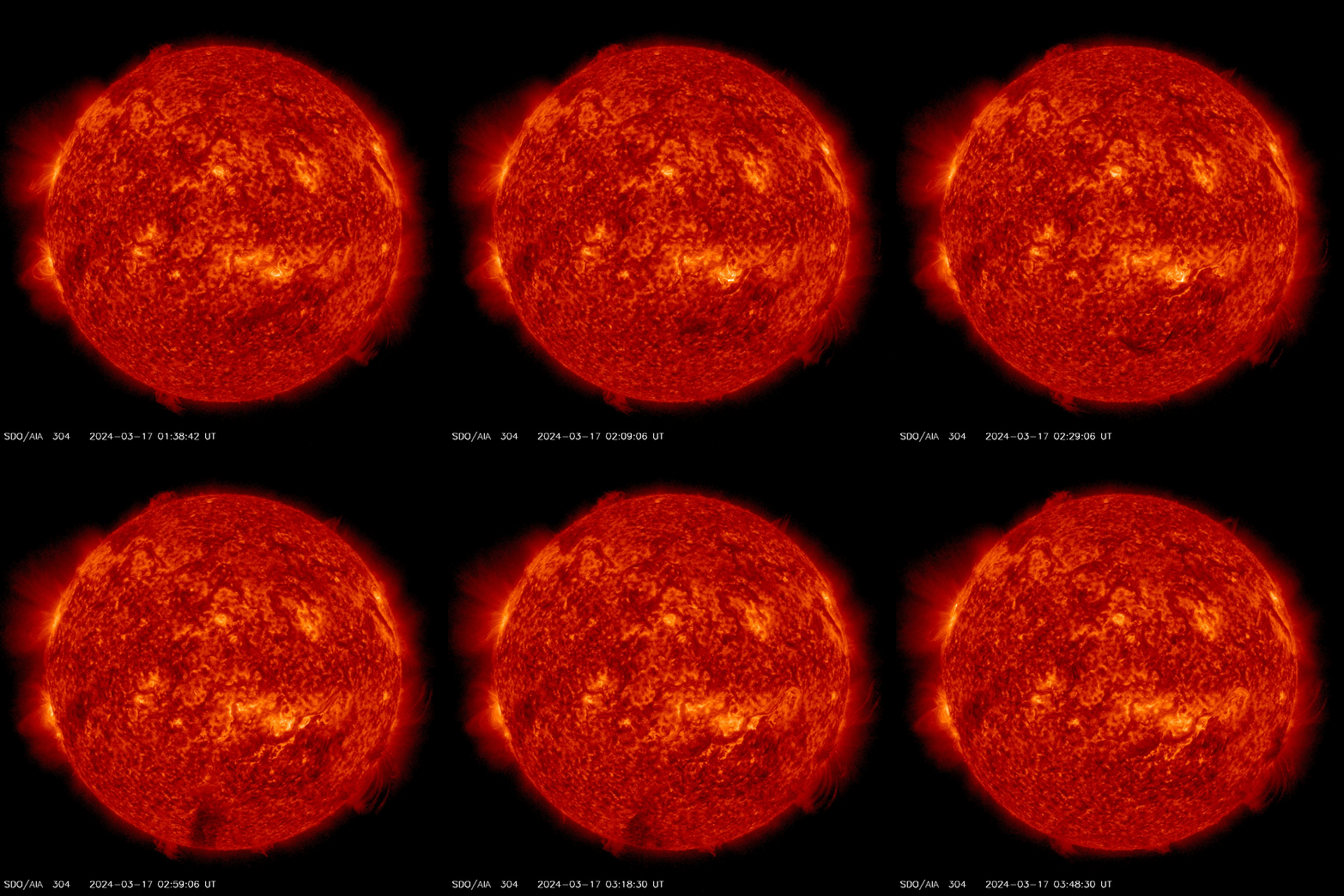

A POTENTIALLY DANGEROUS SUNSPOT: New sunspot AR3615 is complicated. It looks more like a rash than a sunspot, with a dozen-plus dark cores scattered randomly over a wide area. A magnetic map of the region shows why it is potentially dangerous:

While most sunspots are bipolar with only two dominant magnetic poles (+ and -) , AR3615 appears to have many poles crushed together. The close proximity of multiple pluses (+) and minuses (-) within a single sunspot group could lead to magnetic reconnection and strong solar flares.
Indeed, AR3615 is crackling with flares. The strongest so far is this M6.7-class explosion recorded by NASA's Solar Dynamics Observatory on March 18th (1919 UT):
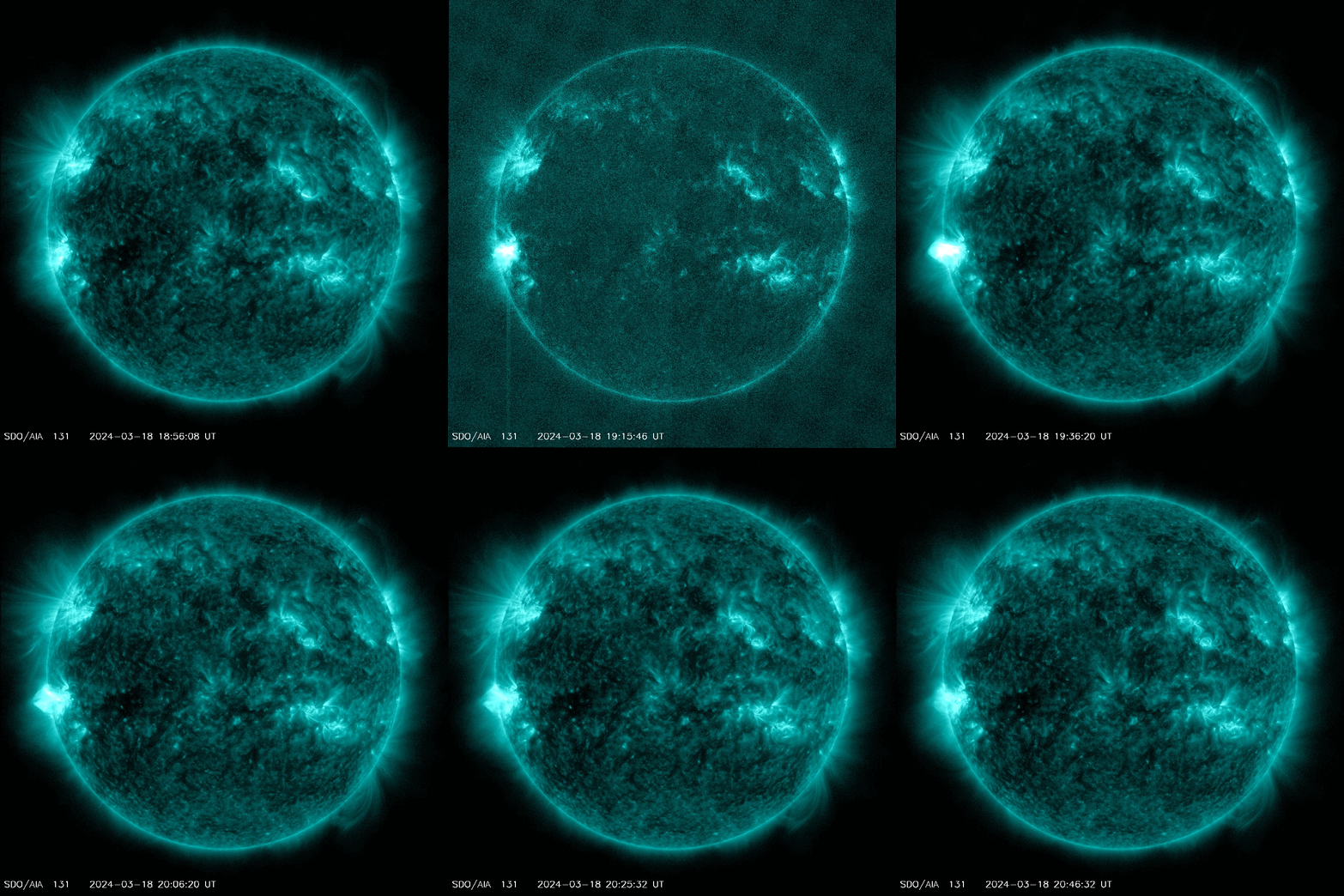
Ultraviolet radiation from the flare ionized the top of Earth's atmosphere, causing a shortwave radio blackout over western parts of the USA: map. Mariners and ham radio operators may have noticed loss of signal below 30 MHz for as much as 30 minutes after the flare's peak.

AR3615 is growing in spot count and complexity, so it could soon pose a threat for X-class solar flares as well. Stay tuned. Solar flare alerts: SMS Text.
Realtime Space Weather Photo Gallery
Free: Spaceweather.com Newsletter
ROCKET EXHAUST AT SUNSET: So far this year, SpaceX is launching a rocket every 3 days on average. The latest, on March 18th, created a sunset sky show widely seen across the southwestern USA. Doug Backlund sends this picture from Ajo, Arizona:
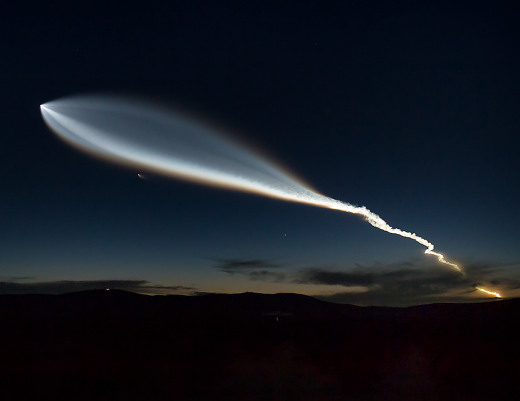
"It was a spectacular launch," says Backlund. "We could see the plume here in Arizona almost 600 miles from the actual launch site at Vandenberg Space Force Base in California."
The Falcon 9 rocket carried a new batch of 22 Starlink satellites to orbit, bringing the total number of Starlinks in Earth orbit to more than 5,500. The 7:28 pm Pacific launch time guaranteed wide visibility. With a backdrop of darkening twilight, the rocket's icy exhaust lit up brilliantly when it caught the rays of the setting sun.
more images: from Chris Cook of Seal Beach, California; from Thom Peck of Poway, California; from Jennifer Majestic of Sierra Vista, Arizona; from Carl Bernhardt of Riverisde, California; from Bill Golisch of Oceanside CA; from Marcus Prazniak of Tonopah, NV;
Realtime Aurora Photo Gallery
Free: Spaceweather.com Newsletter
18K GOLD "LOVE YOU TO THE MOON" LOCKET: This is a very special locket. It's heart-shaped, plated with 18K gold, and we will fly it again during this year's total eclipse of the sun. Keep reading...
On Jan. 26, 2024, the students of Earth to Sky Calculus launched this locket to the stratosphere onboard a cosmic ray research balloon. At the apex of the flight, it floated 111,535 feet above the Sierra Nevada mountains of central California:
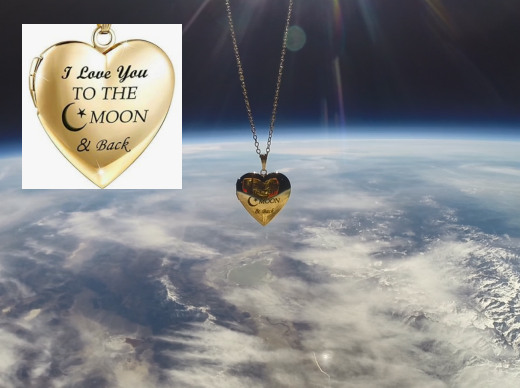
Buy it now for $149.95, and we'll fly it again--FOR FREE--during the total solar eclipse on April 8, 2024. The students will be launching multiple balloons from the path of totality in Texas. Your pendant will go along for the ride, touching the shadow of the Moon at the edge of space. (Simply type "FLY IT AGAIN" in the comments box at checkout.)
The locket, which opens to hold a personal photo or other small item, comes with a greeting card showing the jewelry in flight and telling the story of its journey to the edge of space.
Far Out Gifts: Earth to Sky Store
All sales support hands-on STEM education
Realtime Aurora Photo Gallery
Free: Spaceweather.com Newsletter
Realtime Comet Photo Gallery
Free: Spaceweather.com Newsletter