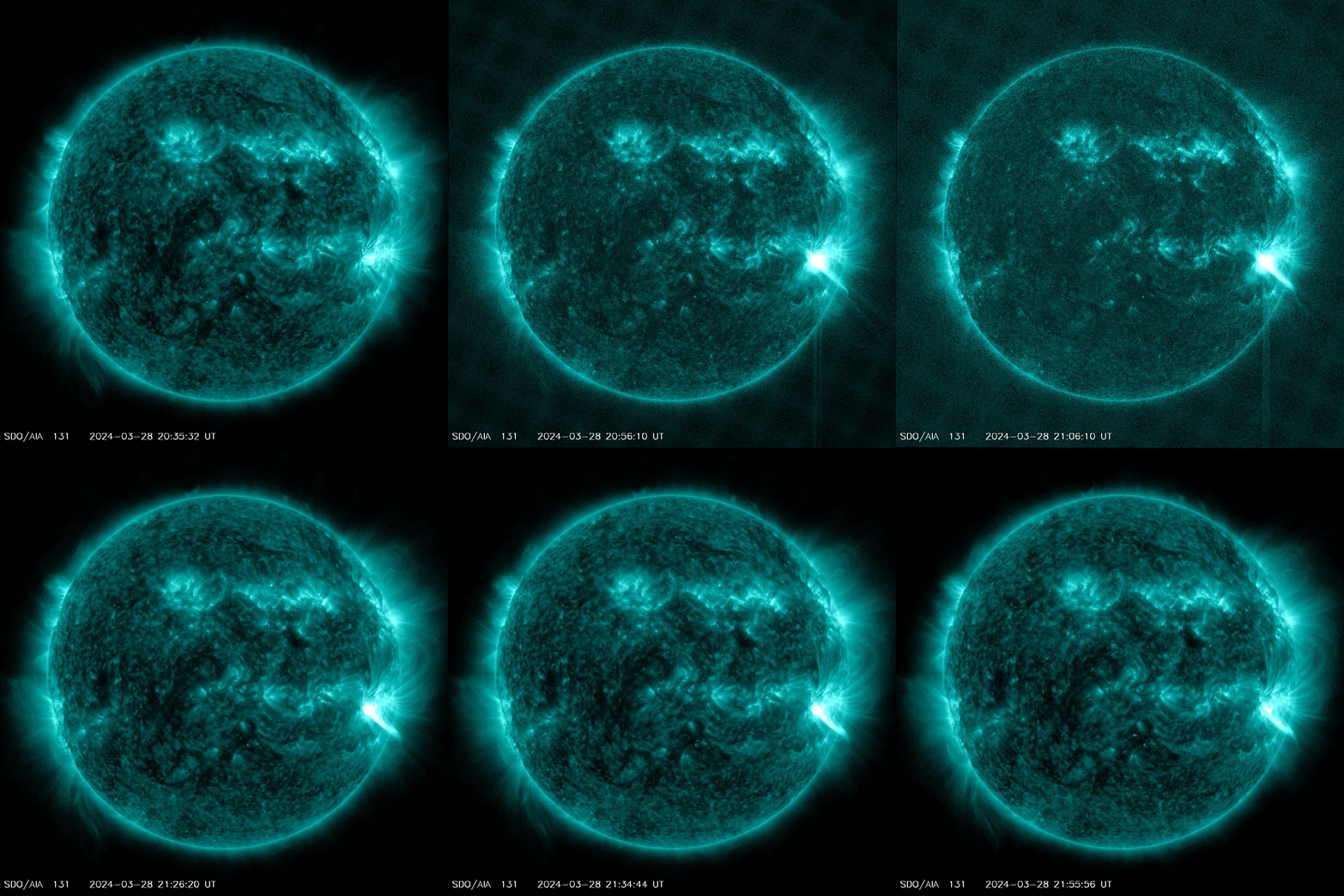
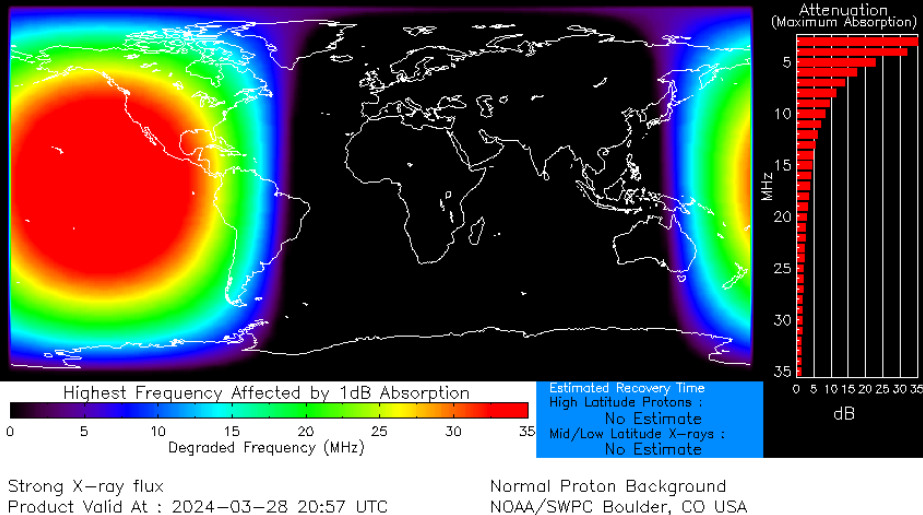
X-CLASS SOLAR FLARE AND CME (UPDATED): Yesterday, giant sunspot AR3615 produced another X1-class solar flare. The explosion on March 28th at 2053 UT ionized the top of Earth's atmosphere and caused a deep shortwave radio blackout over the Pacific Ocean: map. NOAA forecasters have modeled the trajectory of a CME that emerged from the blast site, and determined that it will not hit Earth. No geomagnetic storms will result from this event. Solar flare alerts: SMS Text
SIZZLING SUNSPOT: Sunspot AR3615 is literally sizzling. Earlier today, David Wilson of Inverness, Scotland, photographed the active region spitting hot plasma as it approaches the sun's western limb:
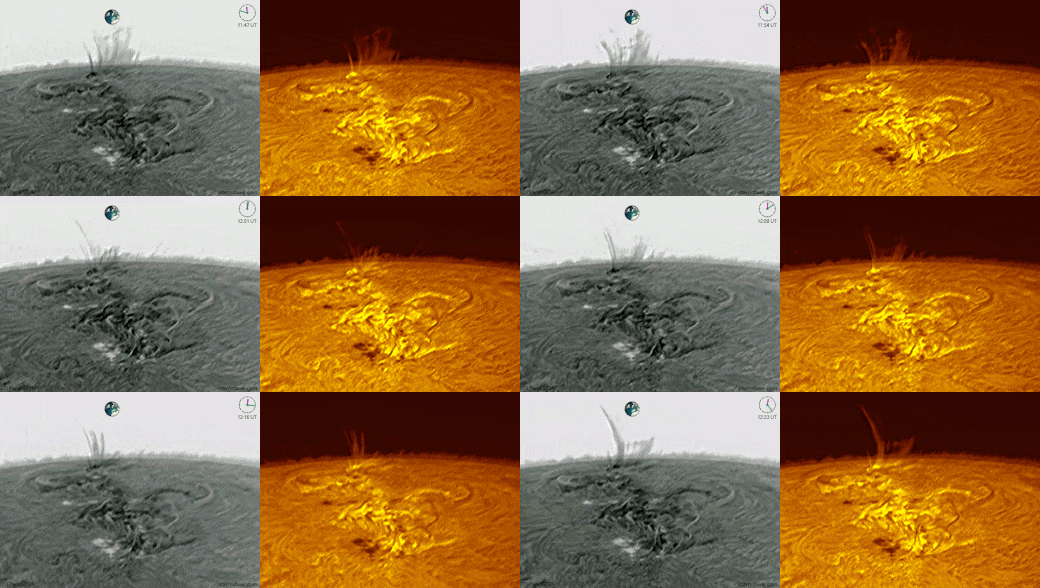
"I don't often photograph the solar surface, but this was too good to miss," says Wilson. "It reminds me of the current Icelandic volcano."
The sunspot's location near the edge of the solar disk gives photographers a good look at its sizzling magnetic canopy. Up-and-down motions captured in Wilson's video are part of the turmoil that gives rise to strong solar flares. Just yesterday, AR3615 unleashed two strong M-class flares and an X-flare.
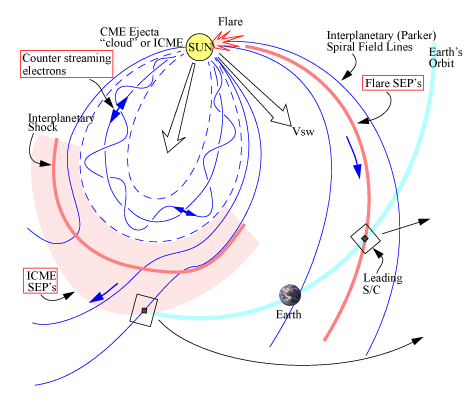
Any eruptions this weekend could have a strong effect on Earth. Sunspots located near the sun's western limb are magnetically connected to our planet via the Parker Spiral. If AR3615 erupts while it is transiting this "danger zone," energetic protons and electrons may be funneled back toward Earth for a solar radiation storm. Stay tuned! Solar flare alerts: SMS Text
Realtime Space Weather Photo Gallery
Free: Spaceweather.com Newsletter
COMPLEX MOON HALOS: Last night in Michigan, Travis Stokes went outside to watch the Moon rise. He witnessed an amazing collection of luminous arcs and rings:
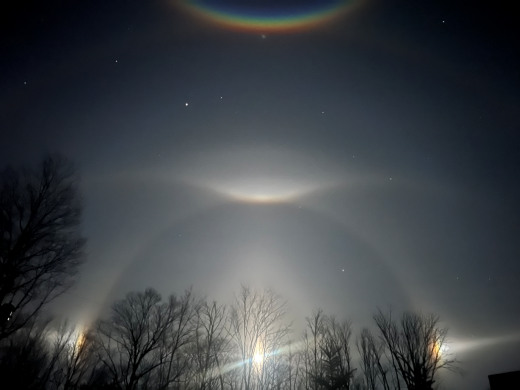
"They were so bright I was able to photograph them using my iPhone at about 1:30 a.m.," says Stokes.
These are ice halos. Tiny crystals floating in cirrus clouds above Stoke's home in the town of Helmer caught the rays of the Moon and bent them into a variety of forms. Here are some of their names:
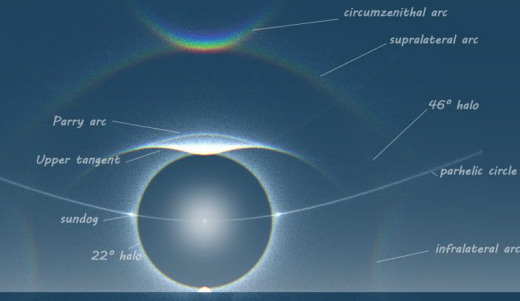
A few of these are common--e,g, the 22 degree halo and moondogs. Less common are the circumzenithal arc, upper tangent arc, parhelic circle and the hint of a Parry arc. It was a rare display indeed!
Realtime Space Weather Photo Gallery
Free: Spaceweather.com Newsletter
18K GOLD "LOVE YOU TO THE MOON" LOCKET: This is a very special locket. It's heart-shaped, plated with 18K gold, and we will fly it again during this year's total eclipse of the sun. Keep reading...
On Jan. 26, 2024, the students of Earth to Sky Calculus launched this locket to the stratosphere onboard a cosmic ray research balloon. At the apex of the flight, it floated 111,535 feet above the Sierra Nevada mountains of central California:
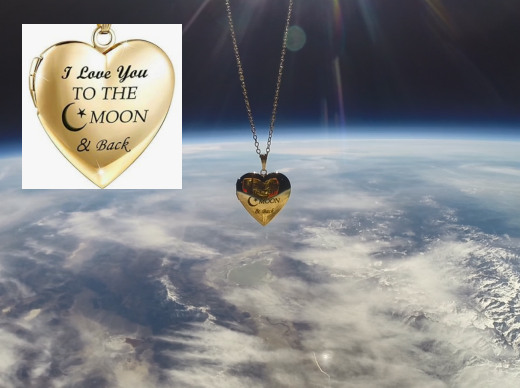
Buy it now for $149.95, and we'll fly it again--FOR FREE--during the total solar eclipse on April 8, 2024. The students will be launching multiple balloons from the path of totality in Texas. Your pendant will go along for the ride, touching the shadow of the Moon at the edge of space. (Simply type "FLY IT AGAIN" in the comments box at checkout.)
The locket, which opens to hold a personal photo or other small item, comes with a greeting card showing the jewelry in flight and telling the story of its journey to the edge of space.
Far Out Gifts: Earth to Sky Store
All sales support hands-on STEM education
Realtime Aurora Photo Gallery
Free: Spaceweather.com Newsletter
Realtime Comet Photo Gallery
Free: Spaceweather.com Newsletter