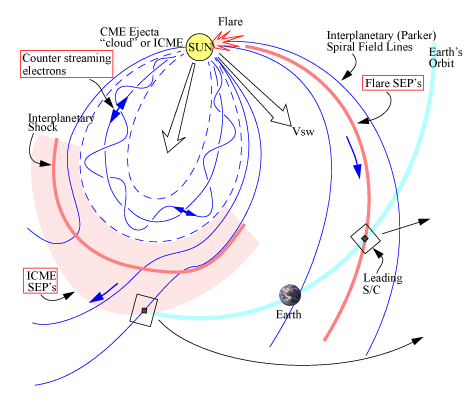
SOLAR RADIATION STORM WATCH--CANCELED: Departing sunspot AR3615 erupted on March 30th (2116 UT), producing an M9.4-class solar flare only percentage points below category X. At first it seemed that the explosion would cause a solar radiation storm. AR3615 is magnetically well-connected to Earth via the Parker Spiral. Debris from the blast should have spiraled back to our planet. However, that didn't happen, so the radiation storm watch is canceled. Solar flare alerts: SMS Text

THIS USED TO BE RARE: Seeing rockets soar through the night sky used to be rare. Not anymore. Launch rates are skyrocketing. This year alone SpaceX has launched more than 30 times--and it's only March. Last night in Puerto Rico, Frankie Lucena watched a Falcon 9 rocket ascend over the Carribean:
"I was in Cabo Rojo, facing northwest, when the rocket appeared," he says. "With engines burning, it glided slowly among the twinkling stars--very pretty!"
This was actually SpaceX's second launch of the night. The first occured at 5:52 p.m. EDT when a Falcon 9 rocket carried the Eutelsat 36D telecommunications satellite to space from NASA's Kennedy Space Center (KSC). Then, at 9:30 p.m. EDT, another Falcon 9 carried 23 of SpaceX's Starlink broadband satellites from Cape Canaveral Space Force Station next door to KSC. Lucena witnessed the Starlink launch.
Later, Jeremy Perez watched the rocket's 2nd stage execute a deorbit burn outside Flagstaff, Arizona:
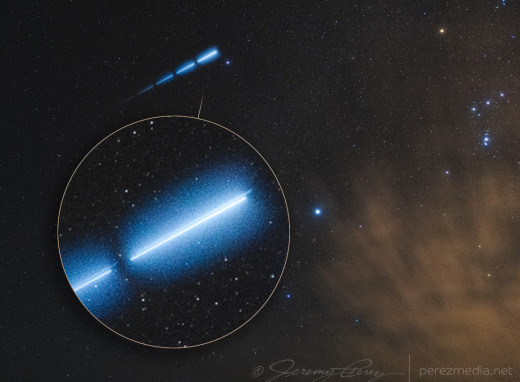
"The camera exposures do not convey the visual experience," says Perez. "It looked like a delicate, cometary, dandelion poof drifting overhead, and not brilliant blue visually like the camera picked up. The zoomed inset view shows double trailing as the deployed satellites drifted along next to the 2nd stage as it fired its engines."
These images are a sample of what, once rare, is now happening frequently in the night sky. Check the SpaceX launch schedule, and look up.
Realtime Space Weather Photo Gallery
Free: Spaceweather.com Newsletter
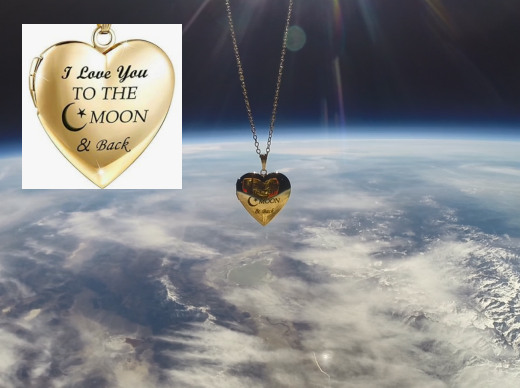
18K GOLD "LOVE YOU TO THE MOON" LOCKET: This is a very special locket. It's heart-shaped, plated with 18K gold, and we will fly it again during this year's total eclipse of the sun. Keep reading...
On Jan. 26, 2024, the students of Earth to Sky Calculus launched this locket to the stratosphere onboard a cosmic ray research balloon. At the apex of the flight, it floated 111,535 feet above the Sierra Nevada mountains of central California:
Buy it now for $149.95, and we'll fly it again--FOR FREE--during the total solar eclipse on April 8, 2024. The students will be launching multiple balloons from the path of totality in Texas. Your pendant will go along for the ride, touching the shadow of the Moon at the edge of space. (Simply type "FLY IT AGAIN" in the comments box at checkout.)
The locket, which opens to hold a personal photo or other small item, comes with a greeting card showing the jewelry in flight and telling the story of its journey to the edge of space.
Far Out Gifts: Earth to Sky Store
All sales support hands-on STEM education
Realtime Aurora Photo Gallery
Free: Spaceweather.com Newsletter
Realtime Comet Photo Gallery
Free: Spaceweather.com Newsletter