ANIMAL BEHAVIOR DURING THE SOLAR ECLIPSE: Humans aren't the only animals who respond to solar eclipses. Baboons, bees, spiders, giraffes and many other species have surprised researchers with their reactions to the Moon covering the sun. Would you like to help investigate? Solar Eclipse Safari, a citizen science project, is asking people in the path of totality of the April 8th solar eclipse to report their observations of wildlife. Watch their training video and get involved!
STARLINK VS. COMET 12P: This is a great week to photograph Comet 12P/Pons-Brooks in the evening sky. The comet is almost 4th magnitude, an easy target for small telescopes and cameras, and there is no Moon to interfere with a long exposure. Just one problem: Starlink. "I tried to image the comet on March 28th," reports Richard Schrantz of Nicholasville, KY. "Even though the field of view is just 1.75 degrees wide, I was carpet-bombed by satellites!"
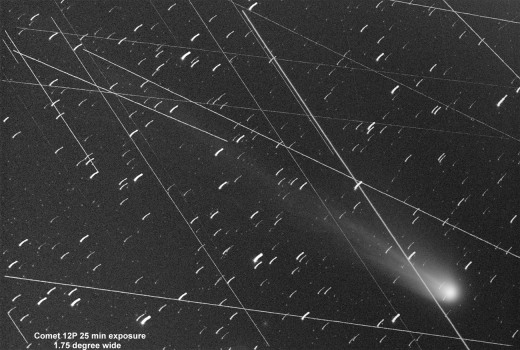
"This represents only 25 minutes of exposure," says Schrantz. "Thanks, Starlink (and/or other satellites)."
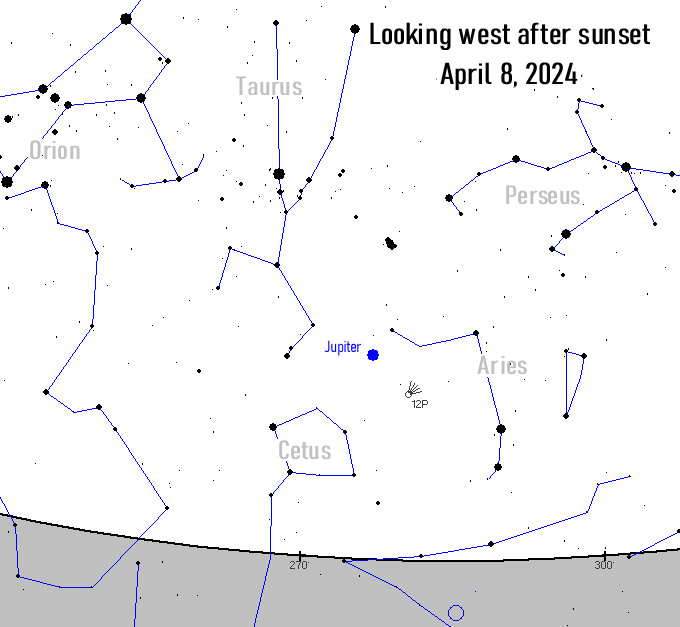
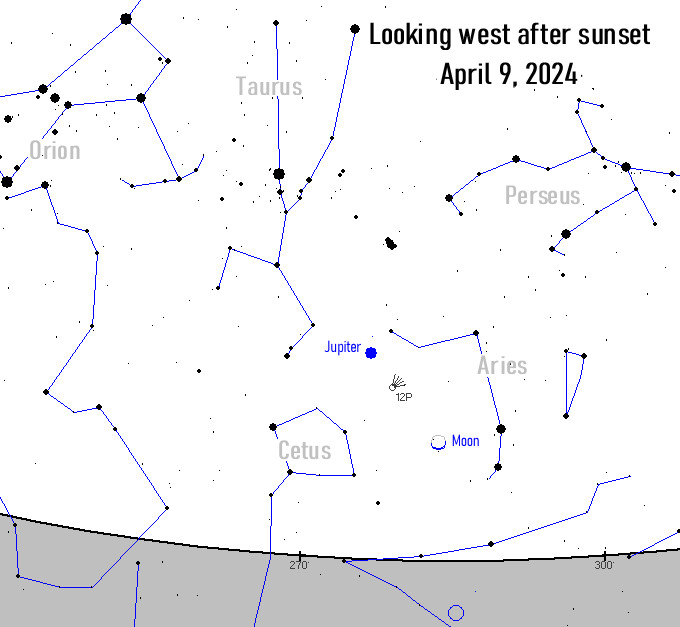
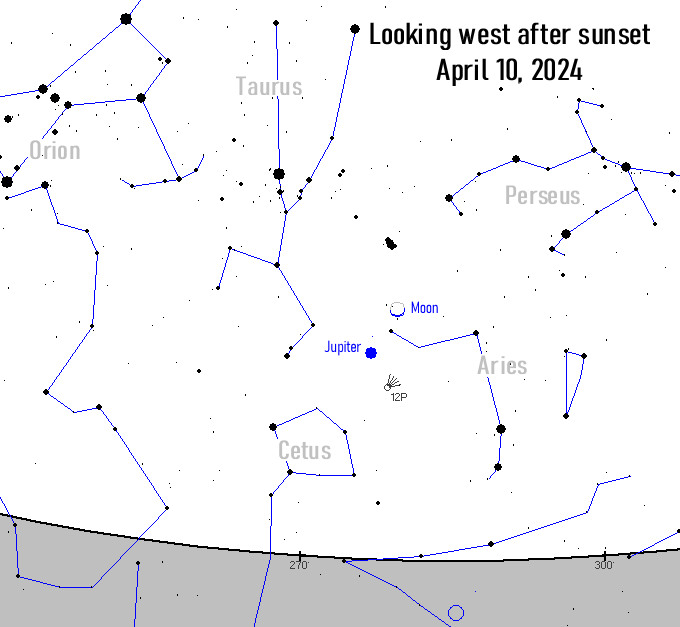
Comet 12P is especially vulnerable to this kind of "carpet-bombing." The reason has to do with the comet's location and time of day. The best time to see 12P is just after sunset when the comet may be found hanging low in the western sky. This is also the best time to see satellites, which shine in high altitude sunlight after night falls on the ground below.
If you do photograph 12P, try taking a series of short exposures, then discard the ones (if any) criss-crossed by satellites. Combining the "clean" shots can produce an image like this:
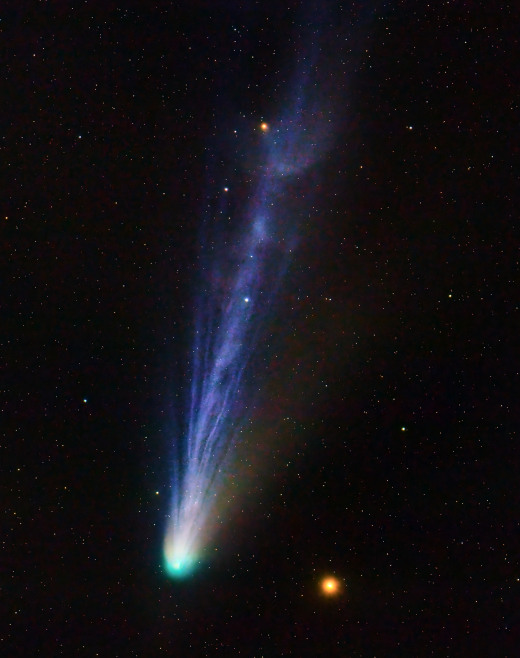
"This is a 32 min exposure in 15 sec single shots," says Fritz Helmut Hemmerich, who observed the comet from Tenerife in the Canary Islands on March 31st. "The comet looked great as it passed near the yellow-orange star Hamal (mutton in Arabic) in the constellation Aries. I'm very happy to get this shot with such modest equipment."
Satelites aside, Comet 12P is a great target for amateur astrophotographers. It will be in the evening sky all week long, and might even be visible during the April 8th solar eclipse. Point your optics here, or find it using one of these sky maps: April 3, 4, 5, 6, 7, 8, 9, 10
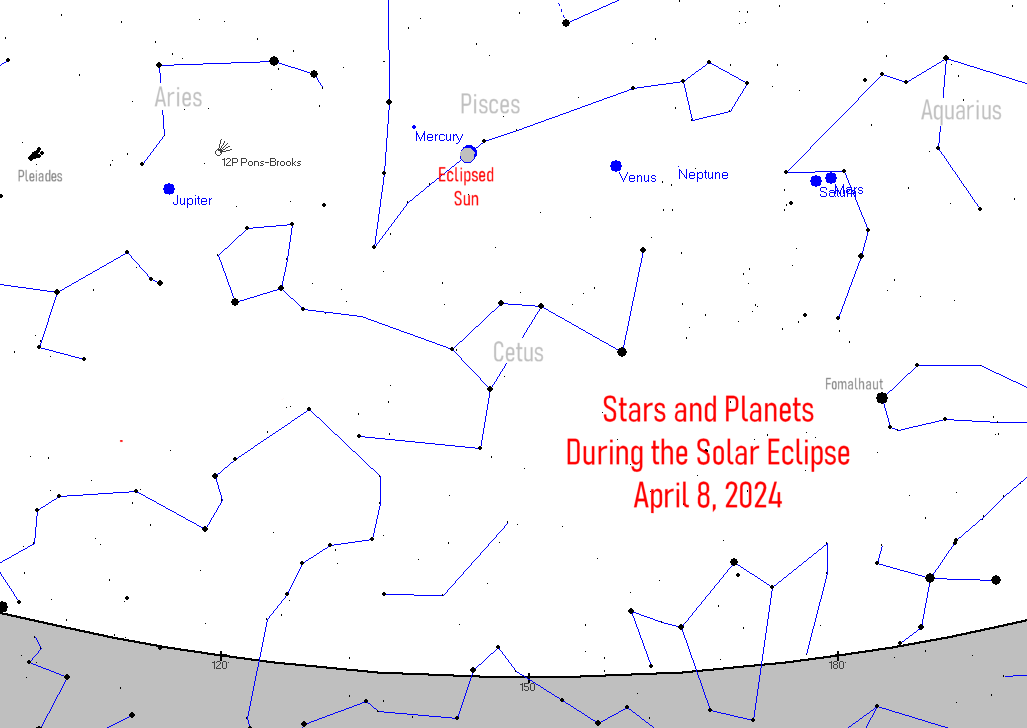
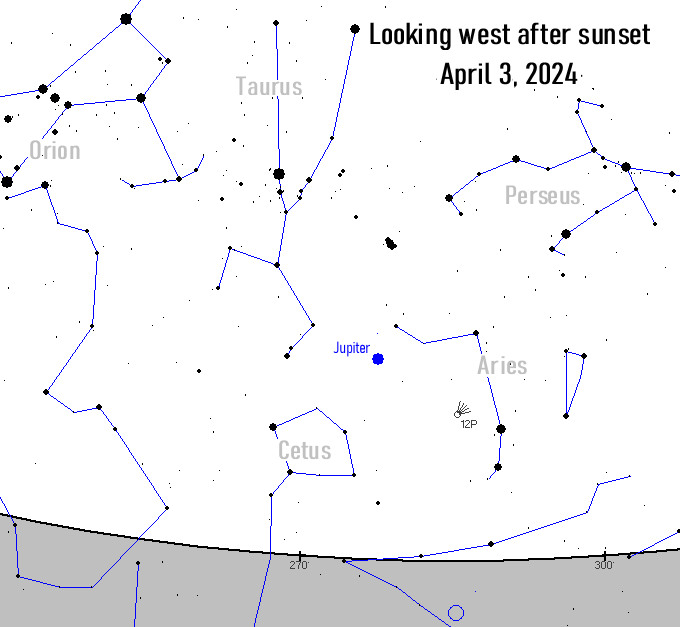
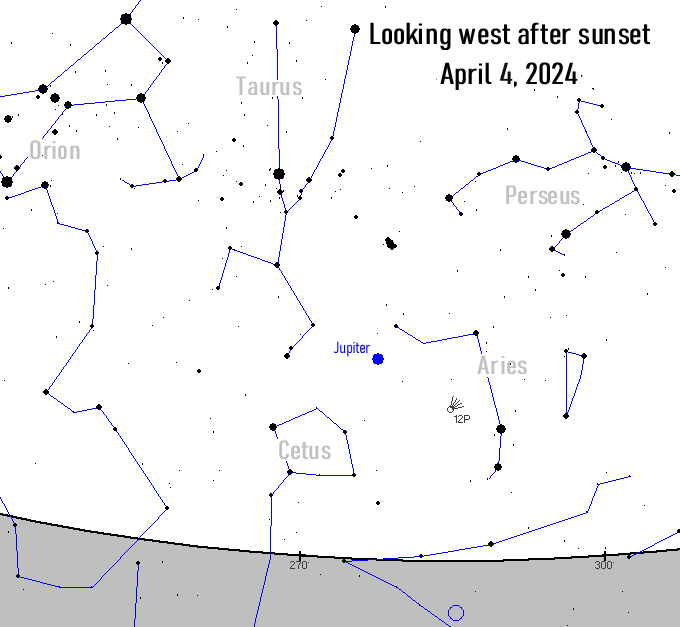
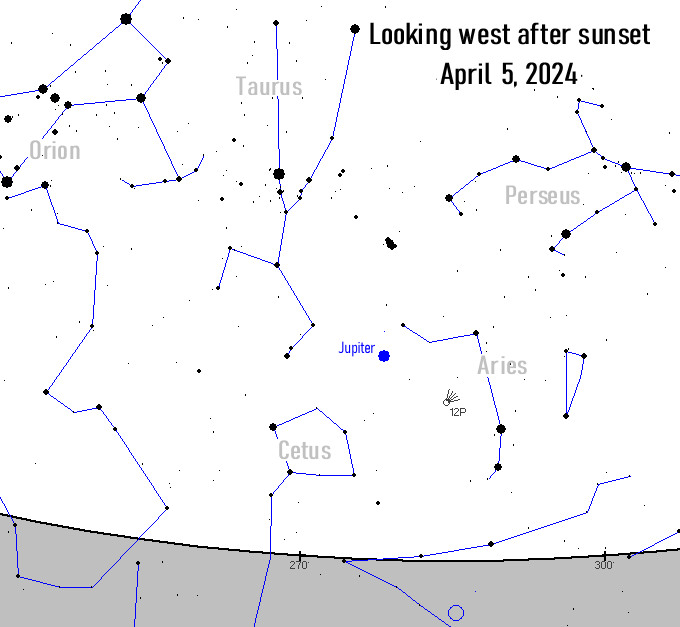
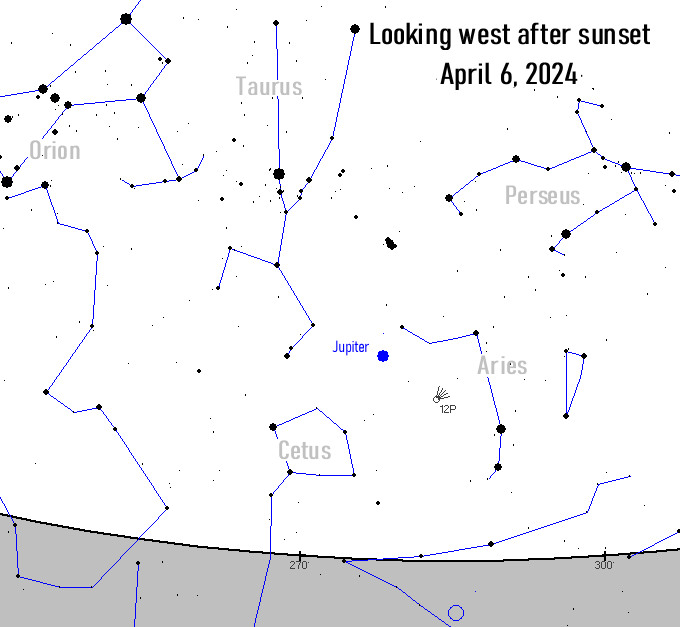
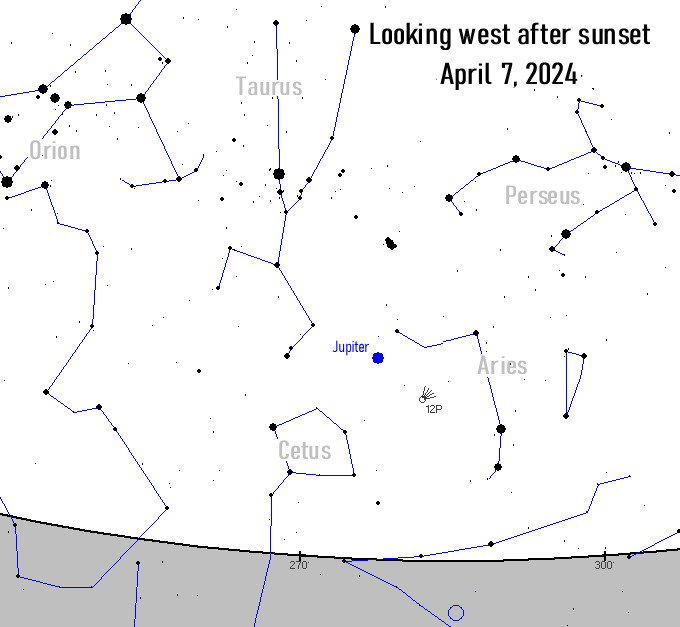
more images: from Michael Jaeger of Aicha, Bavaria; from Jeremy Perez of Flagstaff, Arizona; from Danilo Pivato of Maremma Toscana, Italy
Realtime Space Weather Photo Gallery
Free: Spaceweather.com Newsletter
18K GOLD "LOVE YOU TO THE MOON" LOCKET: This is a very special locket. It's heart-shaped, plated with 18K gold, and we will fly it again during this year's total eclipse of the sun. Keep reading...
On Jan. 26, 2024, the students of Earth to Sky Calculus launched this locket to the stratosphere onboard a cosmic ray research balloon. At the apex of the flight, it floated 111,535 feet above the Sierra Nevada mountains of central California:
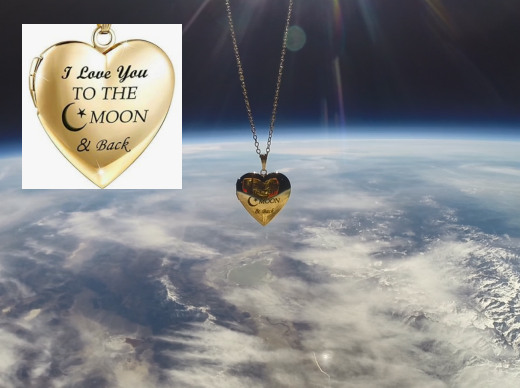
Buy it now for $149.95, and we'll fly it again--FOR FREE--during the total solar eclipse on April 8, 2024. The students will be launching multiple balloons from the path of totality in Texas. Your pendant will go along for the ride, touching the shadow of the Moon at the edge of space. (Simply type "FLY IT AGAIN" in the comments box at checkout.)
The locket, which opens to hold a personal photo or other small item, comes with a greeting card showing the jewelry in flight and telling the story of its journey to the edge of space.
Far Out Gifts: Earth to Sky Store
All sales support hands-on STEM education
Realtime Aurora Photo Gallery
Free: Spaceweather.com Newsletter
Realtime Comet Photo Gallery
Free: Spaceweather.com Newsletter