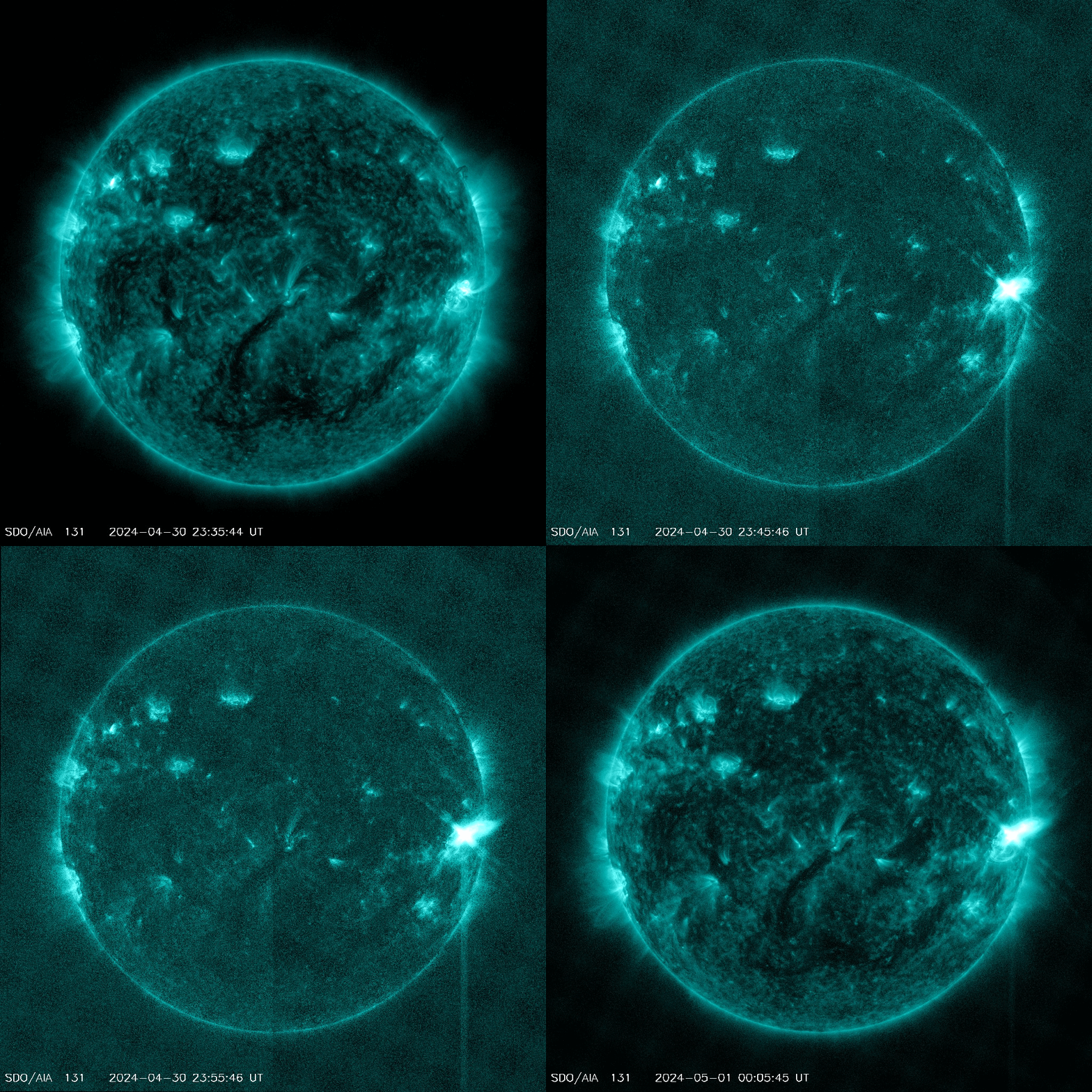
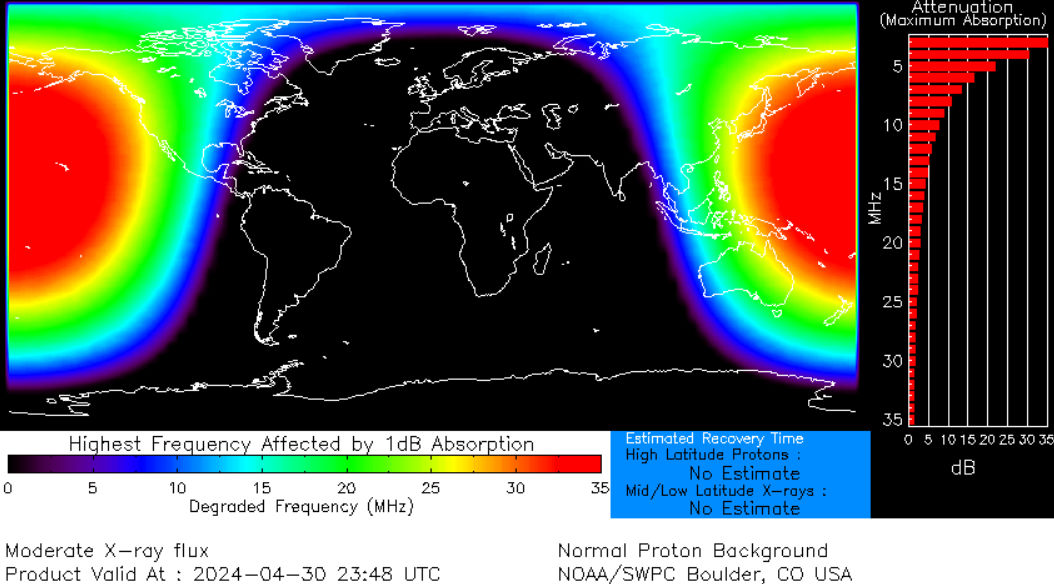
SOLAR FLARE AND RADIO BLACKOUT (UPDATED): Active sunspot AR3654 exploded on April 30th (2345 UT), producing an M9.5-class flare only percentage points from category X. Ham radio operators and mariners observed a shortwave radio blackout around the Pacific Ocean (map). The explosions did *not* produce a significant CME. Solar flare alerts: SMS Text
COMET 12P/PONS-BROOKS AND THE SOLAR WIND:"Solar wind" is a relatively new idea. The first scientist to think of it may have been Sir. Arthur Eddington who, in 1910, suggested that Comet Morehouse might be shaped by some unseen gaseous outflow from the sun. Astronomers didn't think much of his suggestion. It might have been an easier sell if they had seen this picture of Comet 12P/Pons-Brooks:
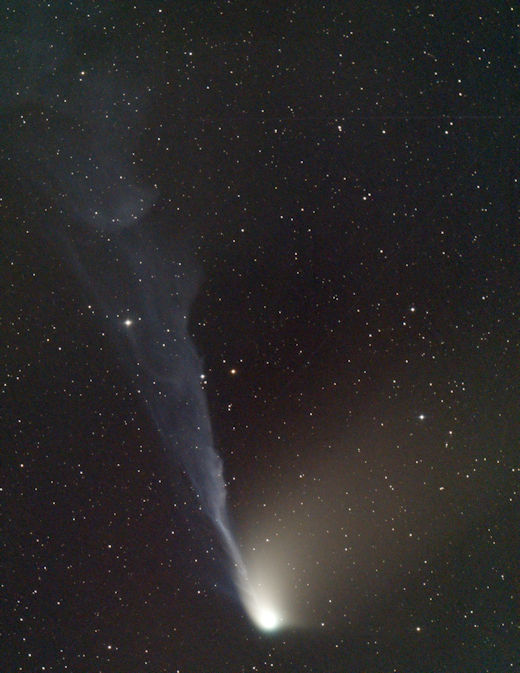
Michael Mattiazzo photographed the comet on April 30th from Swan Hill, Victoria, Australia. "The comet's tail is incredibly active," he says.
Most of the ripples, curls and streamers captured so beautifully in Mattiazzo's photo are caused by the buffeting of solar wind. Not only that, the comet's tail is pointing directly away from the sun--another sign that Eddington's "outflow" really exists.
Eventually, Eddington's idea started to catch on among other researchers, although it was a slow process with widespread acceptance taking almost 50 years. American astrophysicist Eugene Parker coined the term "solar wind" around 1957. In January 1959, the Soviet spacecraft Luna 1 directly observed the solar wind and measured its strength for the first time.
This month, amateur astronomers in the southern hemisphere can behold the effects of solar wind with their own eyes. Comet 12P/Pons-Brooks is emerging from an April close encounter with the sun (perihelion), and its wind-sculpted tail is a beautiful sight through backyard telescopes. Point your optics here.
more images: from Mike White of Twizel, New Zealand
Realtime Space Weather Photo Gallery
Free: Spaceweather.com Newsletter
TAHITIAN BLACK SOLAR ECLIPSE PEARL: It came from Tahiti, and now it has touched the shadow of the Moon. On April 8, 2024, the students of Earth to Sky Calculus launched this black pearl into a total eclipse of the sun over Texas. Riding on a cosmic ray research balloon, the pearl was 86,564 feet high when lunar darkness swallowed it for 3 minutes 45 seconds:
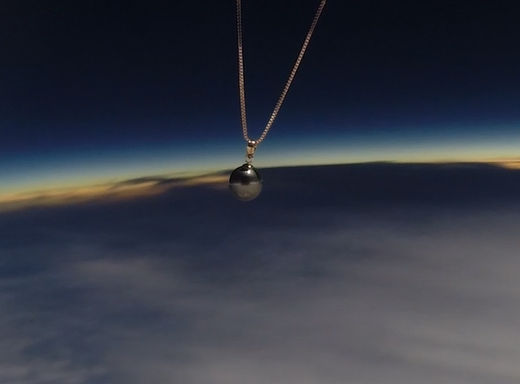
You can have it for $299.95. Measuring 9 mm in diameter, this genuine Tahitian pearl has an 18K rose gold clasp and is suspended from a matching 925 Sterling Silver chain. It comes with a greeting card showing the pearl in flight and telling the story of its journey to the edge of space during the 2024 total eclipse.
Far Out Gifts: Earth to Sky Store
All sales support hands-on STEM education
Realtime Comet Photo Gallery
Free: Spaceweather.com Newsletter
Realtime Aurora Photo Gallery
Free: Spaceweather.com Newsletter