GEOMAGNETIC STORM WATCH (G2): Yesterday, an X1.6-class solar flare (movie) hurled a CME toward Earth. NASA and NOAA models agree that the bulk of the CME should pass north of our planet, with its southern flank glancing our magnetic field late on May 5th. Moderately strong G2-class geomagnetic storms are possible when the CME arrives. Aurora alerts: SMS Text
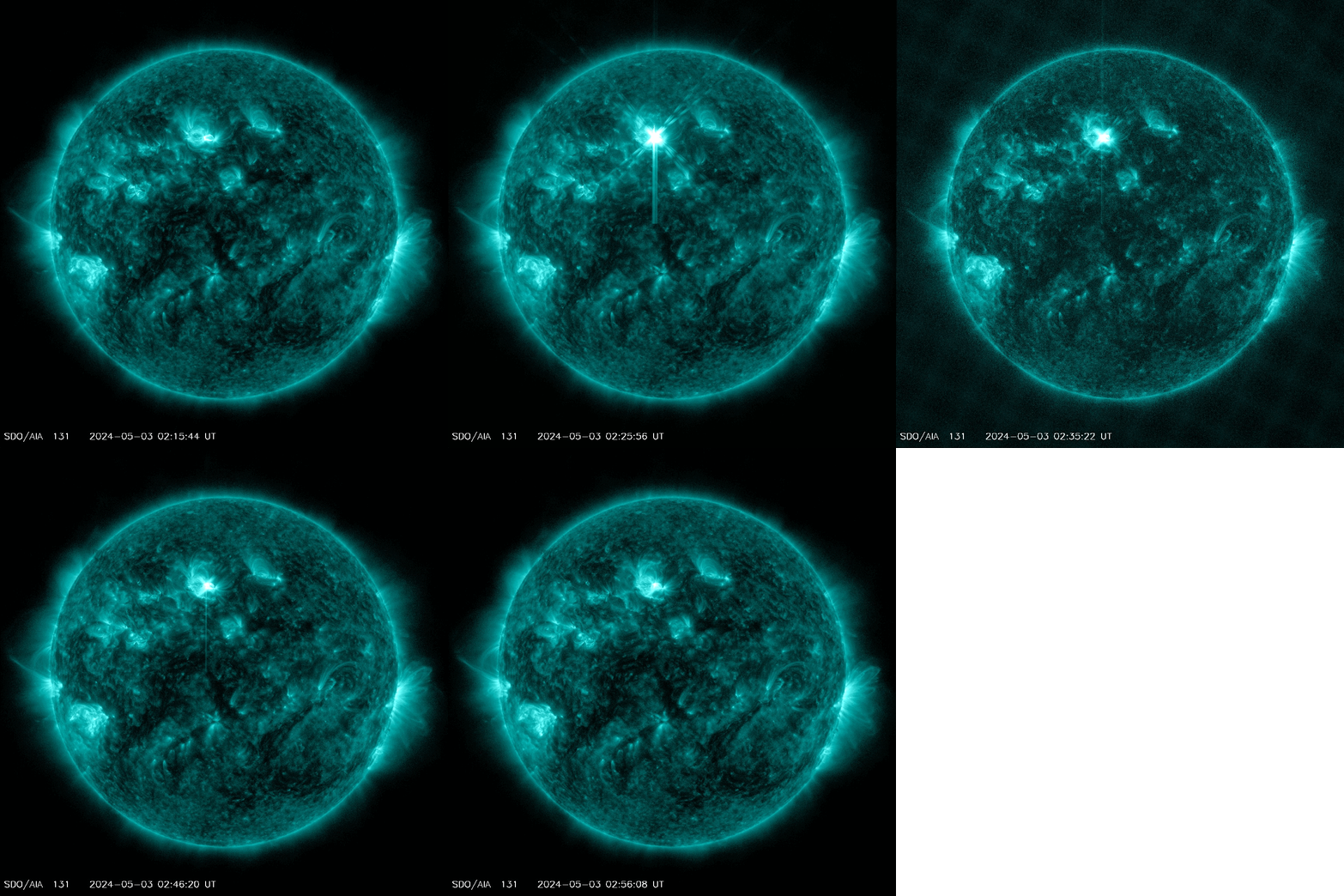


GROWTH OF A DANGEROUS SUNSPOT: When May began, sunspot AR3663 didn't exist. Now it is 10 times wider than Earth and crackling with strong solar flares. This 4 day movie from NASA's Solar Dynamics Observatory shows the sunspot's development:
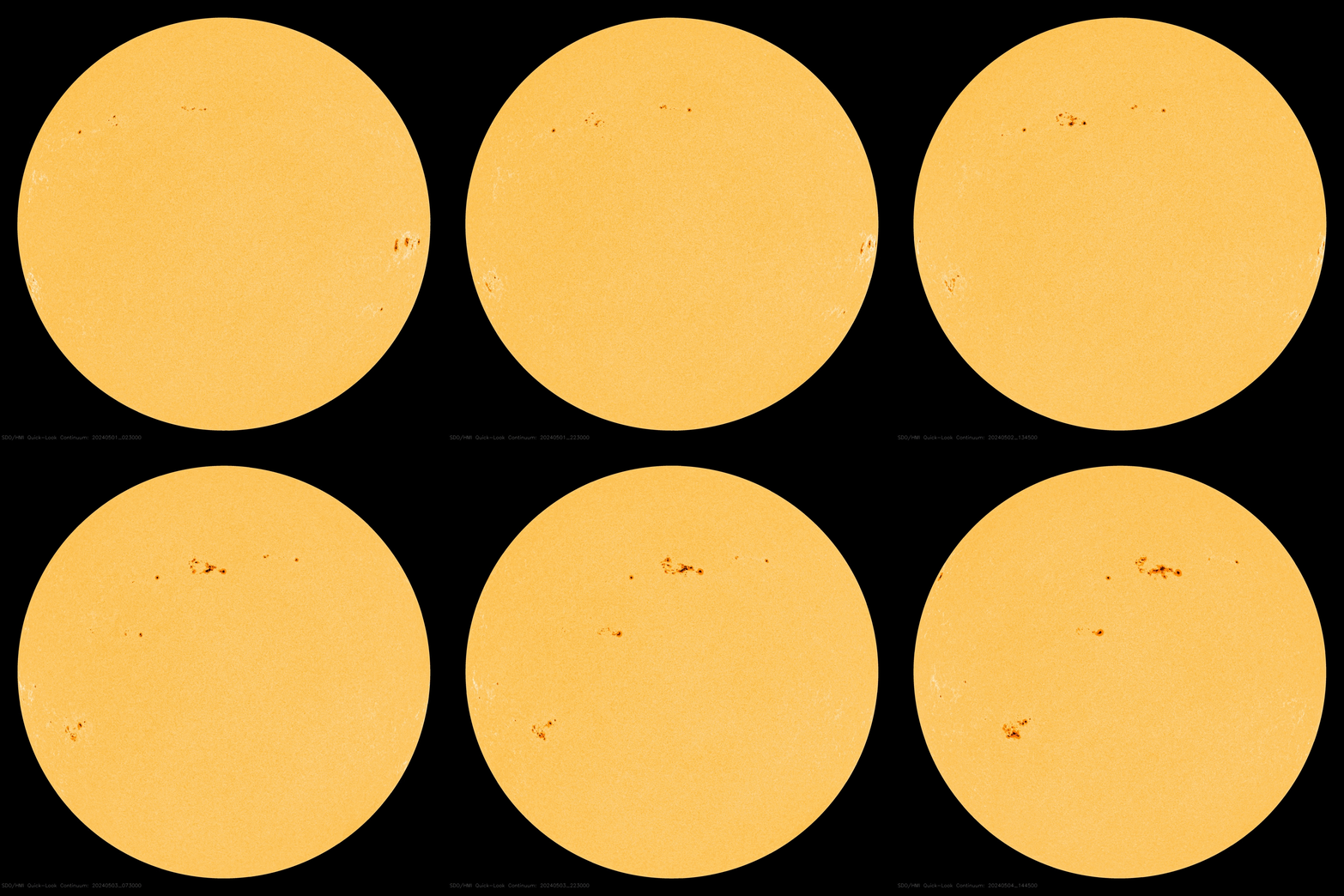
During the time shown above, AR3663 developed a mixed-polarity 'beta-gamma-delta' magnetic field. This means it is unstable and harbors energy for powerful X-class explosions. Indeed, it has already unleashed one such flare (X1.6 on May 3rd) and almost another (M9.1 on May 4th). More flares are in the offing this weekend. Solar flare alerts: SMS Text
Realtime Space Weather Photo Gallery
Free: Spaceweather.com Newsletter
SPACEX SPIRAL SIGHTED DURING GEOMAGNETIC STORM: On the evening of May 2nd, sky watchers in Europe went outside to observe the fading glow of a strong (G3) geomagnetic storm. "I was looking for aurora borealis after sunset, when suddenly a bright yellow object appeared near Polaris," reports Gabriel Murawski from Dusia Lake, Lithuania. It was a SpaceX spiral:
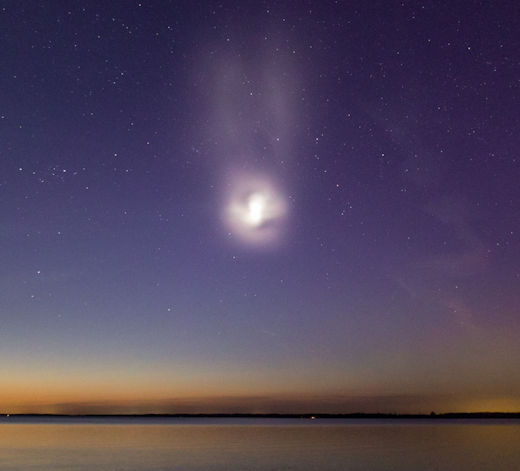
Earlier the same day, SpaceX launched a pair of Earth observation satellites from California onboard a Falcon 9 rocket (May 2nd @ 1836 UTC). After deploying the satellites, the Falcon 9's second stage performed a de-orbit burn; a bit of spin twisted the exhaust into a glowing spiral.
"It looked amazing!" says Murawski. "The spiral gliding next to the violet aurora borealis made a spectacular scene."
Spirals are an increasingly routine by-product of SpaceX operations, with many recent Falcon 9 launches creating them. Similar swirls have been photographed over Norway, New Zealand, east Africa, Hawaii, and most famous of all, this specimen over Alaska. If you haven't seen one yet, it may be just a matter of time.
more images: from Petr Horálek of Zahorice, Czech Republic; from Andrzej Błoński of Subcarpathia, Poland;
Realtime Space Weather Photo Gallery
Free: Spaceweather.com Newsletter
TAHITIAN BLACK SOLAR ECLIPSE PEARL: It came from Tahiti, and now it has touched the shadow of the Moon. On April 8, 2024, the students of Earth to Sky Calculus launched this black pearl into a total eclipse of the sun over Texas. Riding on a cosmic ray research balloon, the pearl was 86,564 feet high when lunar darkness swallowed it for 3 minutes 45 seconds:
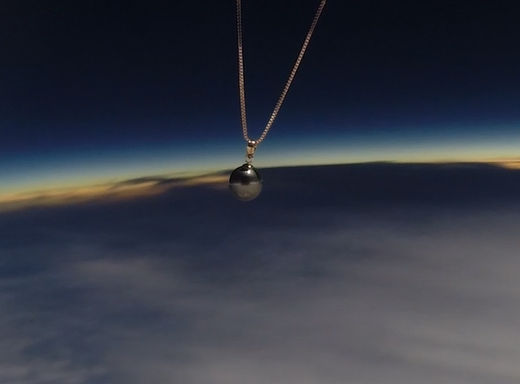
You can have it for $299.95. Measuring 9 mm in diameter, this genuine Tahitian pearl has an 18K rose gold clasp and is suspended from a matching 925 Sterling Silver chain. It comes with a greeting card showing the pearl in flight and telling the story of its journey to the edge of space during the 2024 total eclipse.
Far Out Gifts: Earth to Sky Store
All sales support hands-on STEM education
Realtime Comet Photo Gallery
Free: Spaceweather.com Newsletter
Realtime Aurora Photo Gallery
Free: Spaceweather.com Newsletter