IS ANOTHER CME COMING? MAYBE: Don't be surprised if a CME grazes Earth's magnetic field in the next 48 hours. A flurry of strong solar flares over the weekend hurled multiple, overlapping CMEs into space. Their trajectories are hard to model, but at least one may have an Earth-directed component. CME impact alerts: SMS Text
ANOTHER STRONG X-CLASS SOLAR FLARE: Hyperactive sunspot AR3663 erupted again today, producing a strong X4.5-class solar flare. NASA's Solar Dynamics Observatory recorded the extreme ultraviolet flash:
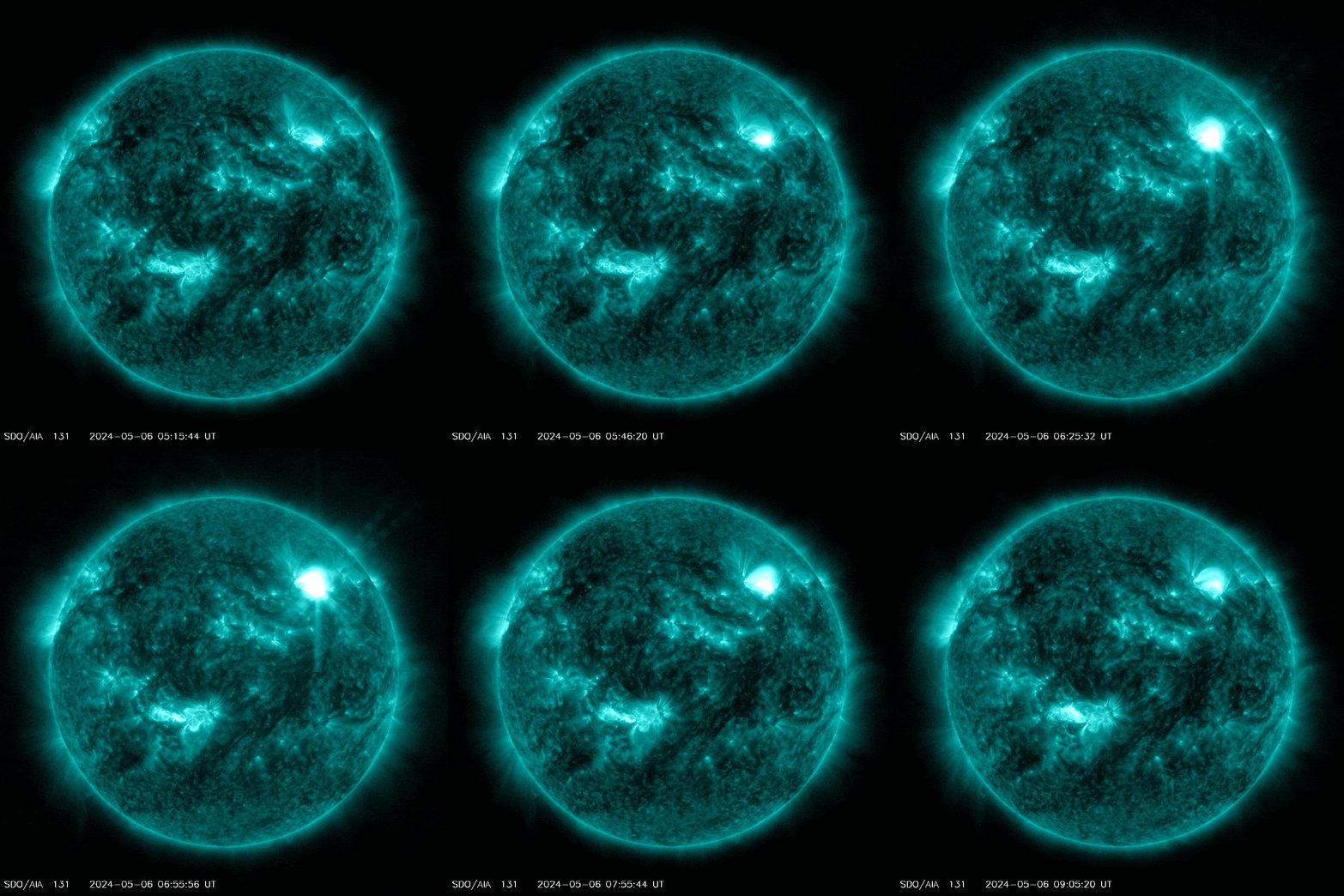
Click to play a movie of the explosion
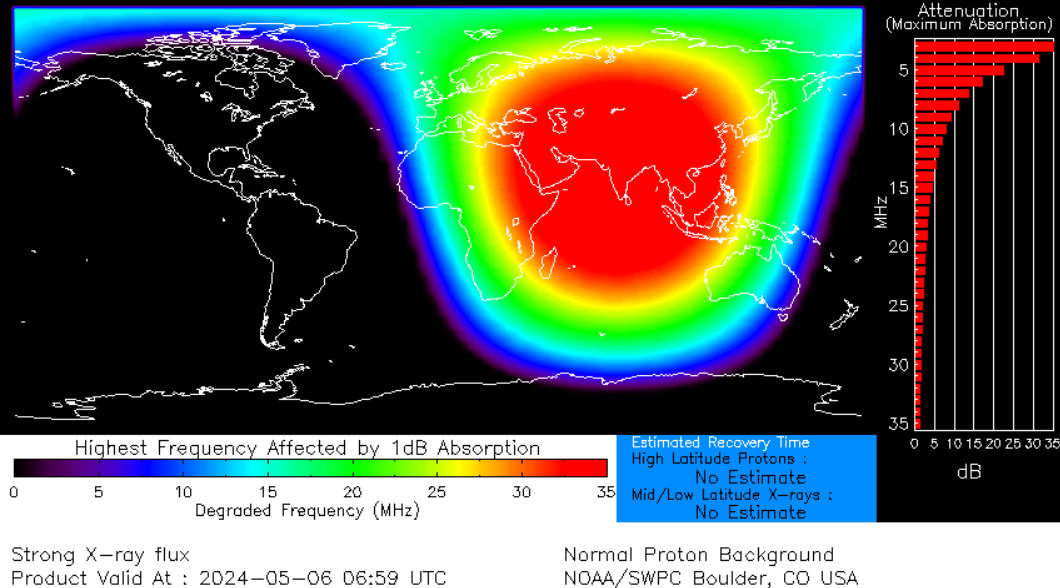
Radiation from the flare caused a deep shortwave blackout around the Indian Ocean. Mariners and ham radio operators may have noticed loss of signal at frequencies below 30 MHz for as much as 30 minutes after the flare's peak (0635 UT).
This marks the 4th X-flare since May 3rd (X1.6, X1.2, X1.2, X4.5), making AR3663 the most active sunspot of Solar Cycle 25 so far. AR3663 is flaring so often because it has an unstable 'beta-gamma-delta' magnetic field, in which opposite polarities are bumping together in explosive proximity.
This sunspot may not be finished. NOAA forecasters estimate a 50% chance of more X-flares in the next 24 hours. Stay tuned! Solar flare alerts: SMS Text
Realtime Space Weather Photo Gallery
Free: Spaceweather.com Newsletter
MID-LATITUDE AURORAS IN EUROPE: A CME expected to hit Earth on May 5th arrived right on time. Solar wind data suggest a close encounter around 1800 UT in good accord with NASA and NOAA predictions. The resulting G1-class geomagnetic storm sparked mid-latitude auroras in Europe:

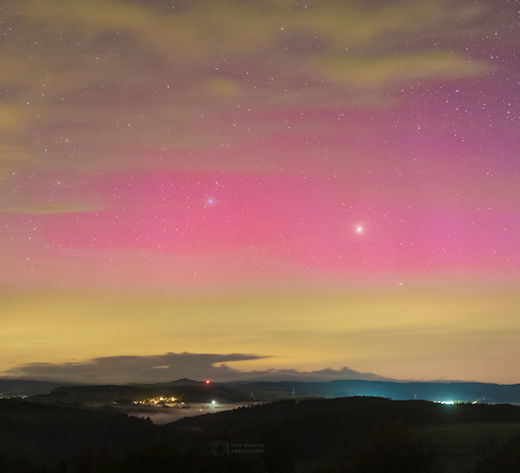
"Auroras surprisingly appeared here in the Czech Republic at latitude +50 N," reports photographer Petr Horálek at the Institute of Physics in Opava. "They were visible to the naked eye despite the cirrus clouds."
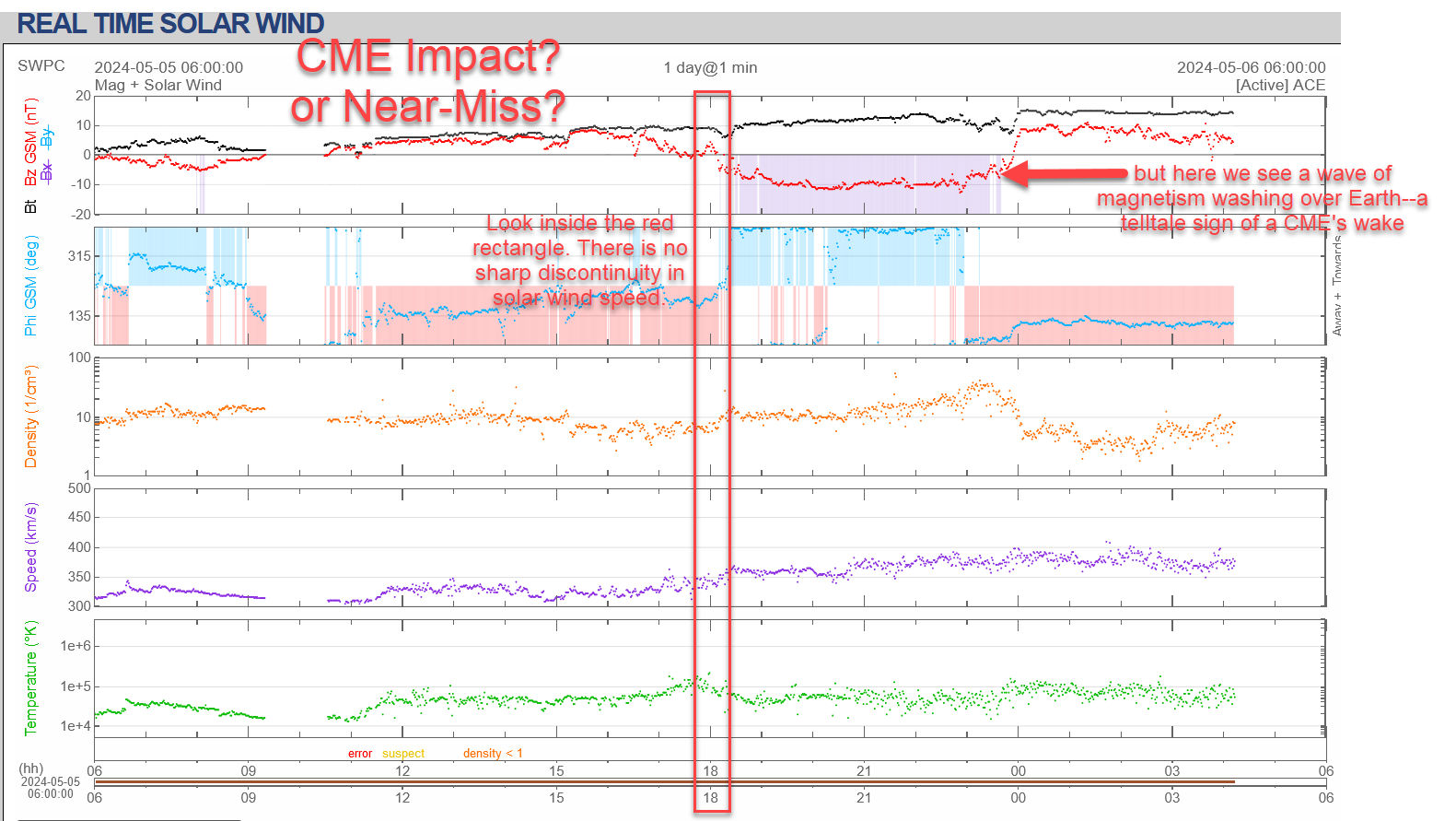
This might not have been a direct hit. Normally, on-target CMEs produce a sharp discontinuity in the speed of solar wind blowing around our planet. Not this time. Instead, a gentle ripple of south-pointing magnetism washed over the Earth for several hours--typical of near-miss CMEs that catch us in their wake. Aurora alerts: SMS Text
Realtime Aurora Photo Gallery
Free: Spaceweather.com Newsletter
TAHITIAN BLACK SOLAR ECLIPSE PEARL: It came from Tahiti, and now it has touched the shadow of the Moon. On April 8, 2024, the students of Earth to Sky Calculus launched this black pearl into a total eclipse of the sun over Texas. Riding on a cosmic ray research balloon, the pearl was 86,564 feet high when lunar darkness swallowed it for 3 minutes 45 seconds:
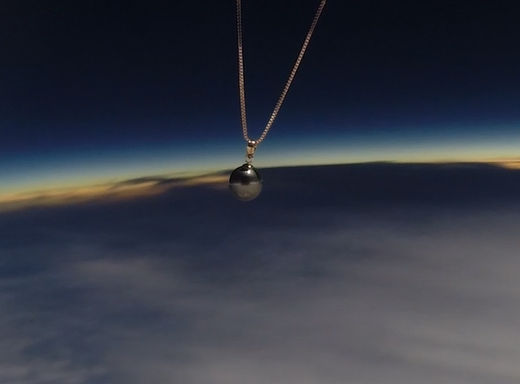
You can have it for $299.95. Measuring 9 mm in diameter, this genuine Tahitian pearl has an 18K rose gold clasp and is suspended from a matching 925 Sterling Silver chain. It comes with a greeting card showing the pearl in flight and telling the story of its journey to the edge of space during the 2024 total eclipse.
Far Out Gifts: Earth to Sky Store
All sales support hands-on STEM education
Realtime Comet Photo Gallery
Free: Spaceweather.com Newsletter
Realtime Aurora Photo Gallery
Free: Spaceweather.com Newsletter