GEOMAGNETIC STORM WATCH (G2): NOAA forecasters say that G2-class geomagnetic storms are possible on May 11th when a halo CME (described below) is expected to hit Earth's magnetic field. Storm conditions could escalate to category G3 (Strong) if, as we suspect, a second CME is following close behind. Stay tuned for updates. CME impact alerts: SMS Text


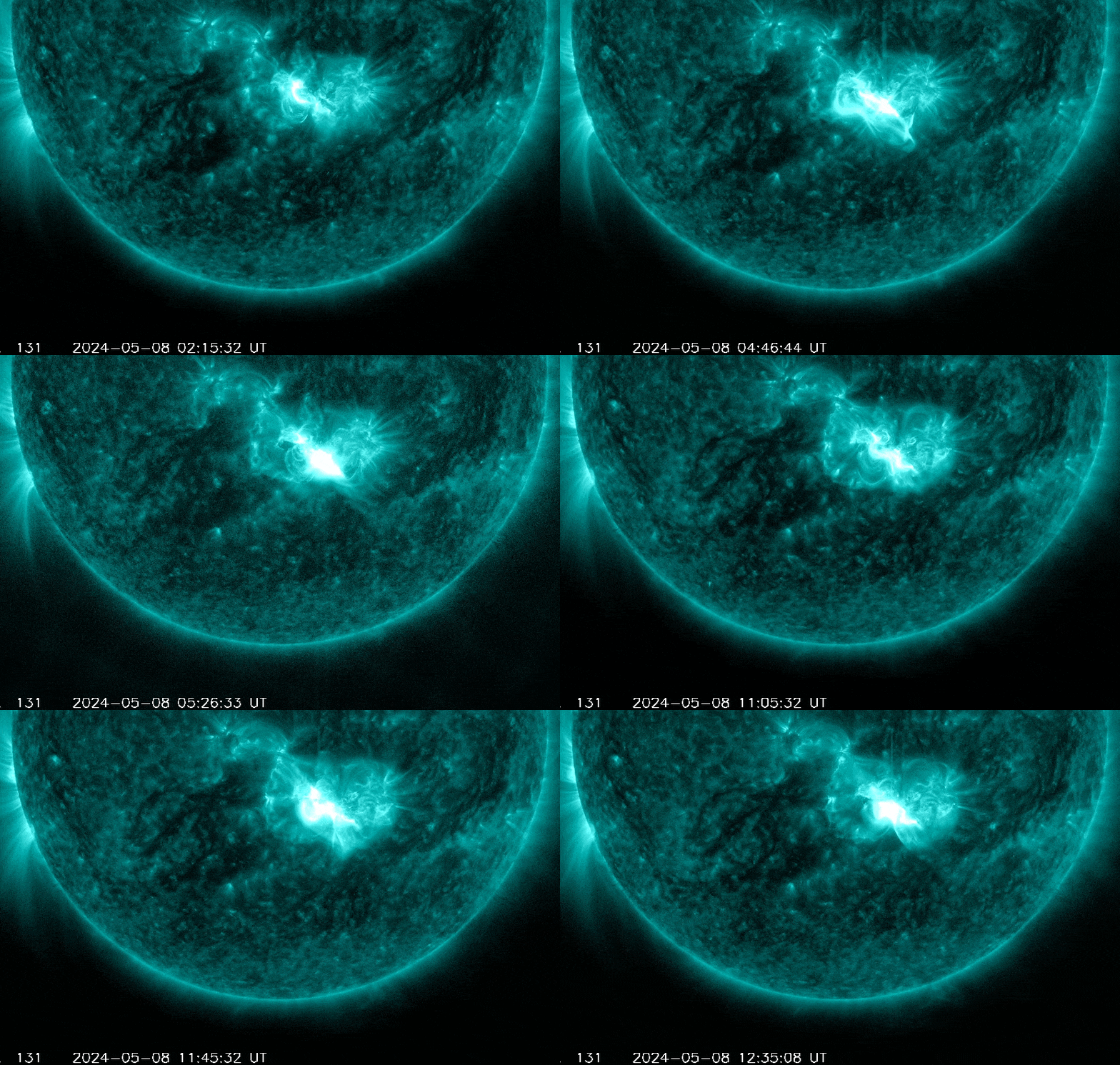
EARTH-DIRECTED CME: A CME is coming. It was hurled into space earlier today by a roiling series of explosions in the magnetic canopy of giant sunspot AR3664. This movie from the Solar and Heliospheric Observatory shows the CME leaving the sun bracketed by Venus (right) and Jupiter (left):
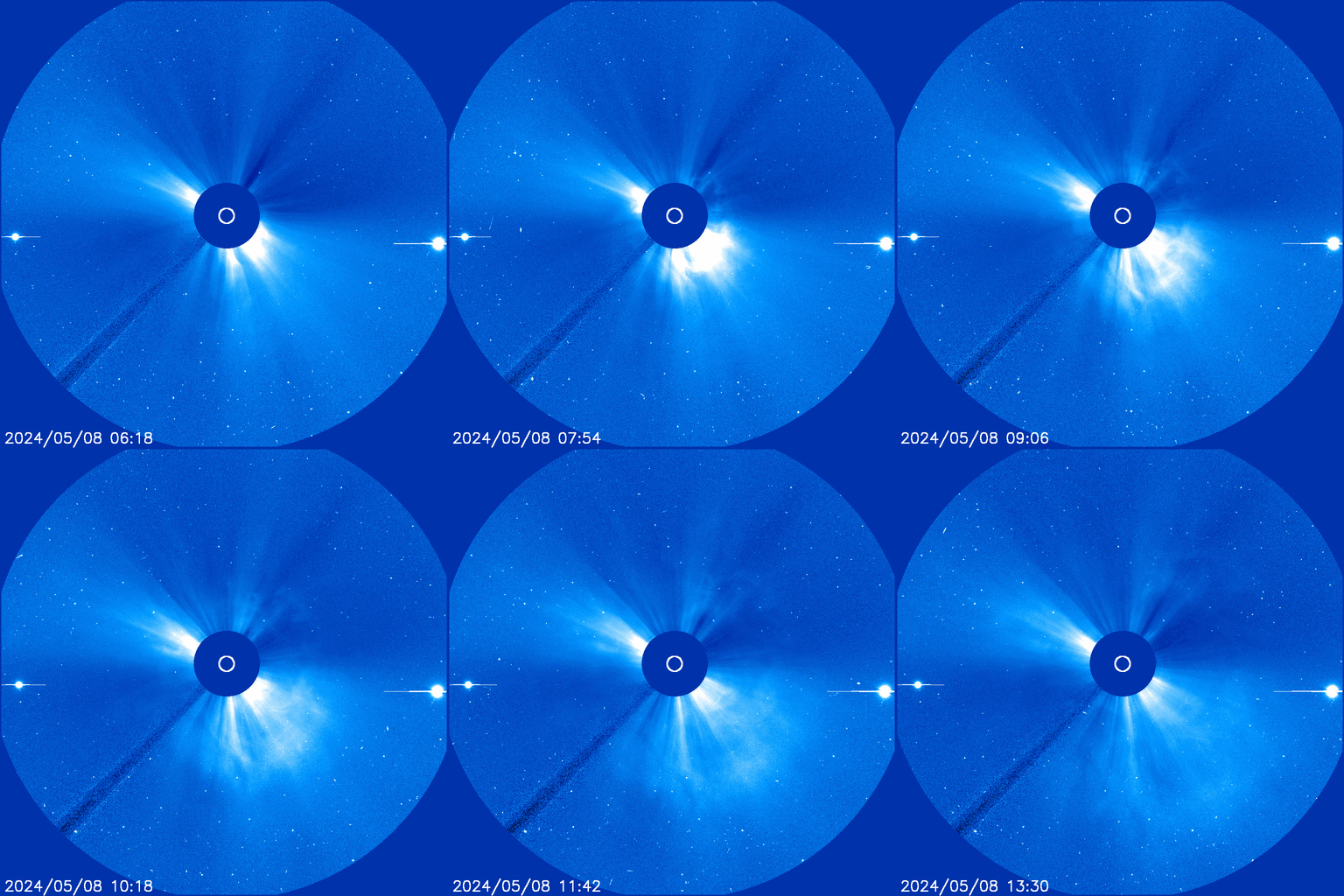
A NOAA forecast model predicts the CME will reach Earth late on May 10th, sparking G1- to G2-class geomagnetic storms on May 11th.

A second CME might be following close behind this one. You can see a hint of it emerging near the end of the movie, above. Stay tuned for updates as more data arrive from SOHO coronagraphs. CME impact alerts: SMS Text
Realtime Space Weather Photo Gallery
Free: Spaceweather.com Newsletter
THIS SUNSPOT IS HUGE: Sunspot AR3664 has grown so large, it is now rivals the great Carrington sunspot of 1859 in size and visual appearance. To illustrate their similarity, Carrington's famous sketch (to scale) has been added to a NASA picture of today's sun:
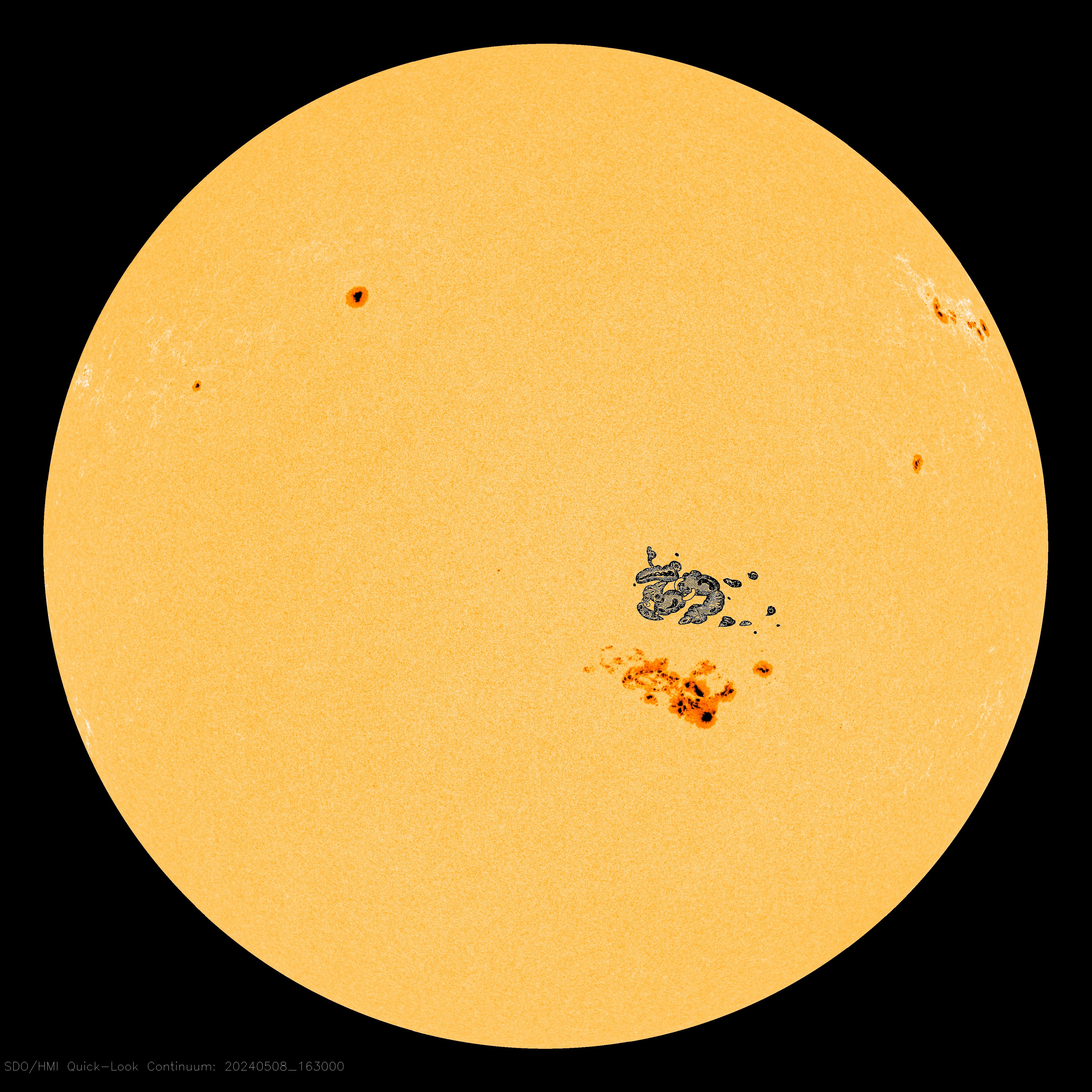
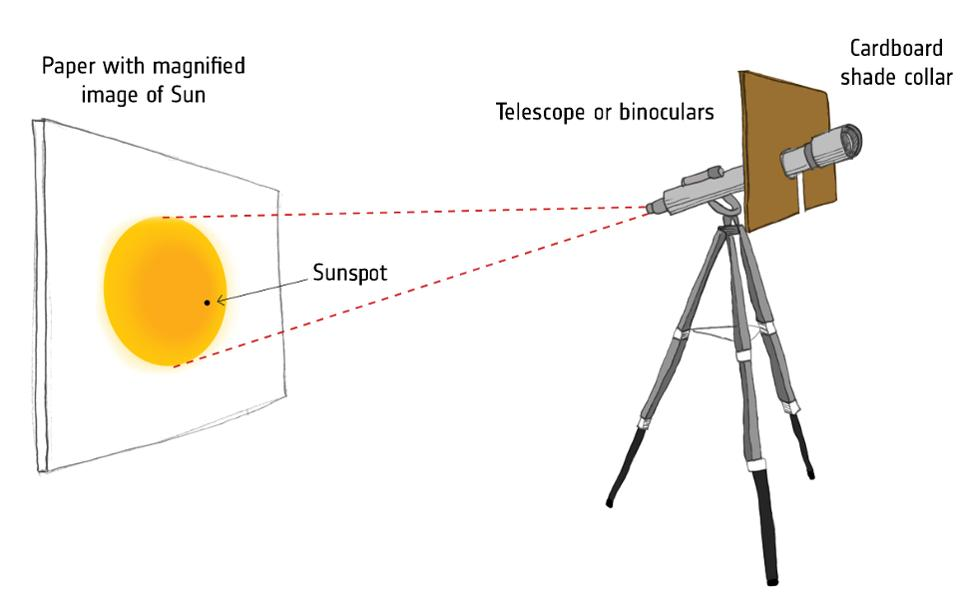
How big is AR3664? Sprawling almost 200,000 km from end to end, it is 15 times wider than Earth. You can see AR3664 through ordinary eclipse glasses with no magnification at all. Moreover, it is easy to project an image of this sunspot onto the sidewalk or a white screen just as Carrington did in the 19th century.
Carrington's sunspot is famous because in August and Sept. 1859 it emitted a series of intense solar flares and CMEs. The resulting geomagnetic storms set fire to telegraph offices and sparked auroras from Cuba to Hawaii. The "Carrington Event" has since become a touchstone of space weather in pop culture, with headlines stoking fears of an "internet apocalypse" if it repeats. Recent studies suggest that Carrington-class storms occur once every 40 to 60 years, so we're overdue.
Does this mean we're about to get hit by another Carrington Event? Probably not. Big sunspots don't always produce big CMEs. Indeed, the CME AR3664 hurled toward us earlier today is puny compared to the CMEs of 1859. It won't cause much trouble when it arrives this weekend. Nevertheless, it would be wise to keep an eye on this growing active region while Earth is in its strike zone. CME impact alerts: SMS Text
more images: from Martin Wise of Trenton, Florida
TAHITIAN BLACK SOLAR ECLIPSE PEARL: It came from Tahiti, and now it has touched the shadow of the Moon. On April 8, 2024, the students of Earth to Sky Calculus launched this black pearl into a total eclipse of the sun over Texas. Riding on a cosmic ray research balloon, the pearl was 86,564 feet high when lunar darkness swallowed it for 3 minutes 45 seconds:
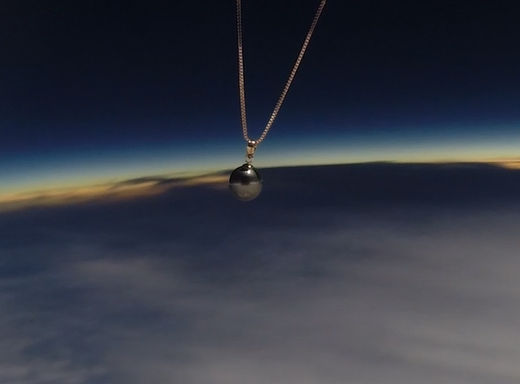
You can have it for $299.95. Measuring 9 mm in diameter, this genuine Tahitian pearl has an 18K rose gold clasp and is suspended from a matching 925 Sterling Silver chain. It comes with a greeting card showing the pearl in flight and telling the story of its journey to the edge of space during the 2024 total eclipse.
Far Out Gifts: Earth to Sky Store
All sales support hands-on STEM education
Realtime Comet Photo Gallery
Free: Spaceweather.com Newsletter
Realtime Aurora Photo Gallery
Free: Spaceweather.com Newsletter