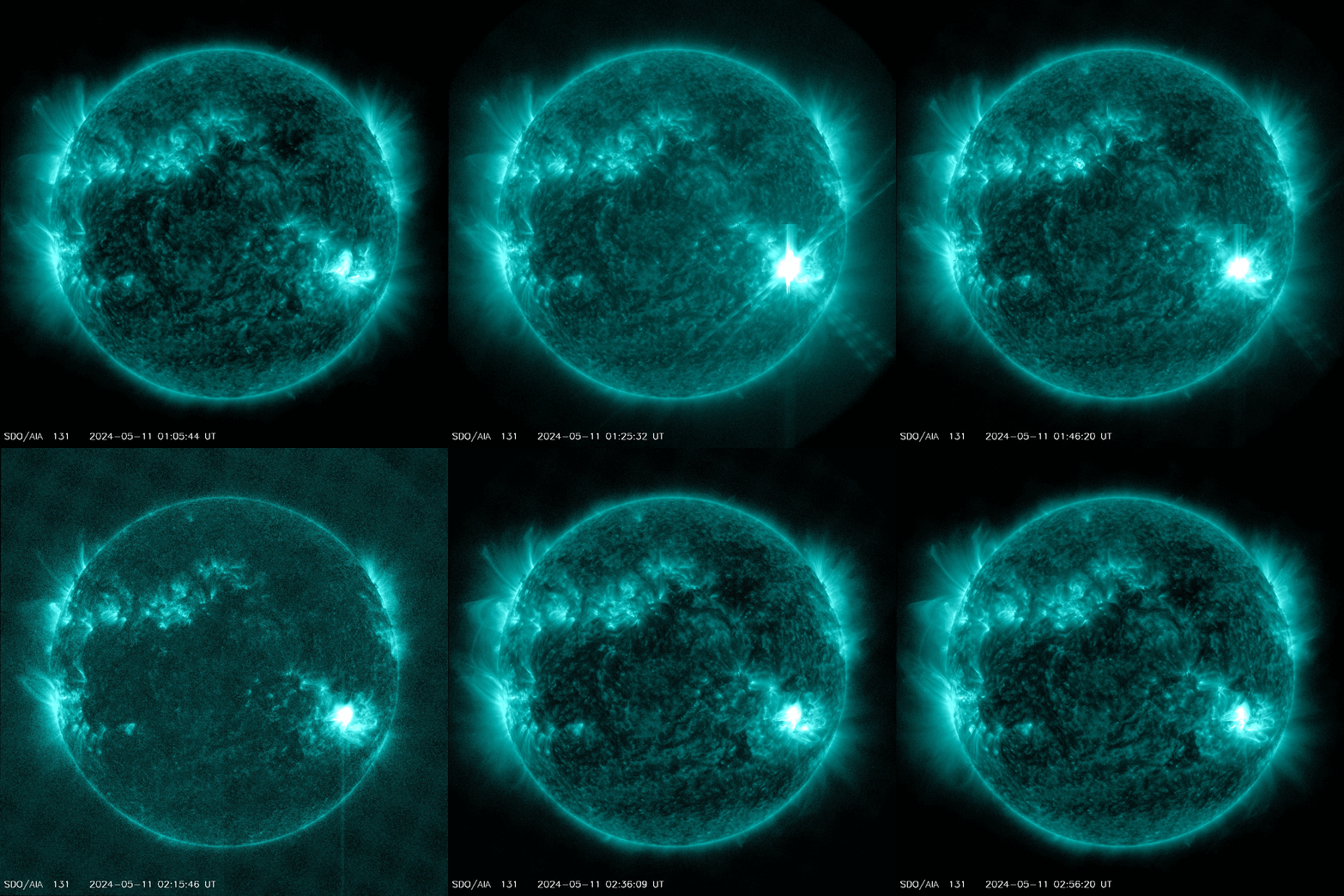
THE STORM IS OVER, BUT... This weekend's extreme geomagnetic storm is over, but there might be a last gasp. NOAA forecasters are currently predicting a return to severe (G4) conditions on May 12th when one or more CMEs might hit Earth's magnetic field. Of particular interest is the CME from yesterday's X5.8-class flare -- a potent storm cloud that could spark renewed auroras if its internal magnetic field is oriented correctly. CME impact alerts: SMS Text


AURORAS IN STRANGE PLACES: The historic geomagnetic storm of May 10-11, 2024, produced auroras across Europe, Asia, Japan, Mexico, and all 50 US stetes--even Hawaii. Hundreds of millions of people saw the colored lights for the first time in their lives. No photographer could have planned to frame Opuntia chlorotica with the red glow of a CME, yet here it is:

Kyle Nulla Cognomen sends this picture from Las Vegas, Nevada. "What a gorgeous view of the desert sky illuminated by aurora," he says. "I could see the reds and greens with my naked eye!"
Our photo gallery is filled with unusual images like this one--auroras in strange places, illuminating cactii, palm trees, pyramids, and Carribean beaches. There's no way to pick a favorite. Or is there? Browse the gallery to explore the extraordinary global display.
Realtime Aurora Photo Gallery
Free: Spaceweather.com Newsletter
EXITING THE STRIKE ZONE: Sunspot AR3664 is still a giant, easily the equal of Carrington's sunspot, but it poses a declining threat to Earth. Why? Because it is exiting the strike zone. This picture from Philip Smith of Manorville NY shows the active region approaching the sun's western limb:
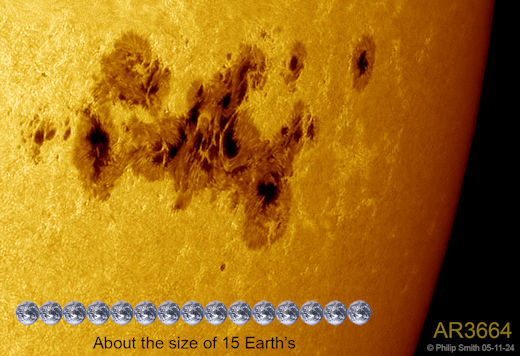
CMEs emitted by the departing sunspot are no longer flying toward Earth. At most only glancing blows are likely from eruptions on May 12th through 14th.
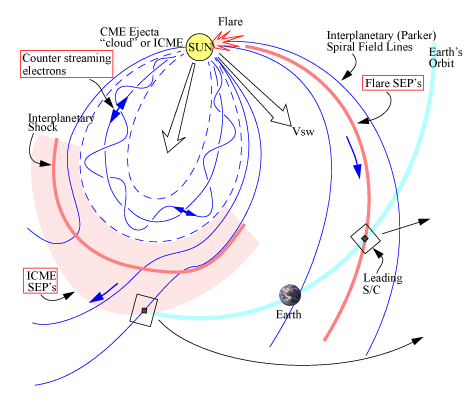
The danger could return on May 15th, however. On that date the sunspot will pass through a region of the sun magnetically connected to Earth via the Parker Spiral. Subatomic debris (protons and electrons) from explosions on May 15th and 16th could spiral back to Earth and rain down our planet. This is called a "radiation storm;" it can upset satellite electronics and cause polar radio blackouts.
Would you like an instant text message when solar radiation storms begin? Sign up for Space Weather Alerts and select the PRO plan.
more images: from Apollo Lasky of Naperville, IL; from Adriano Amadori of Verona, Italy; from Raffaello Lena of Rome Italy;
Realtime Space Weather Photo Gallery
Free: Spaceweather.com Newsletter
18K GOLD TOTAL ECLIPSE PENDANT: This pendant has touched the shadow of the Moon. On April 8, 2024, during a total eclipse of the sun in Texas, the students of Earth to Sky Calculus launched it to the stratosphere onboard a cosmic ray research balloon. Floating more than 118,110 feet high, the locket spent 3 minutes and 45 seconds wrapped in lunar shadow:
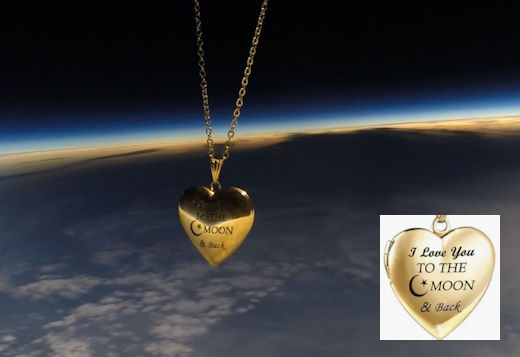
You can have it for $199.95. The 18K gold-plated locket is inscribed with the words "I love you to the Moon and back," and opens to hold a personal photo or other small item. It comes with a greeting card showing the locket in flight and telling the story of its journey to the edge of space during the total eclipse.
Far Out Gifts: Earth to Sky Store
All sales support hands-on STEM education
Realtime Comet Photo Gallery
Free: Spaceweather.com Newsletter
Realtime Space Weather Photo Gallery
Free: Spaceweather.com Newsletter