GEOMAGNETIC STORM WATCH (G1): NOAA forcasters say that minor G1-class geomagnetic storms are possible on 20th when a CME is expected to graze Earth's magnetic field. The CME was hurled into space by a powerful M7-class flare on May 17th, so even a glancing blow might be geoeffective. CME impact alerts: SMS Text


AURORAS IN AFRICA: For the first time in 30 years, Spaceweather.com has received photos of auroras in Africa. They appeared during the historic geomagnetic storm on May 10, 2024. Sophie Paulin photographed the red glow using an all-sky camera in Farm Hakos, Namibia (latitude 22.5° S):
"This is certainly exceptional," says Hisashi Hayakawa, a space weather researcher at Japan’s Nagoya University. "To my knowledge, this is the first auroral observation in Namibia since 1989."
Observed by multiple observers in Farm Hakos, the display was also photographed from Namibia's Etosha National Park (18.9° S) and from a ship off the coast of Capetown, South Africa (32° S). These sightings confirm again that May 10th was a Great Storm, one of the biggest in the past 500 years.


Realtime Aurora Photo Gallery
Free: Spaceweather.com Newsletter
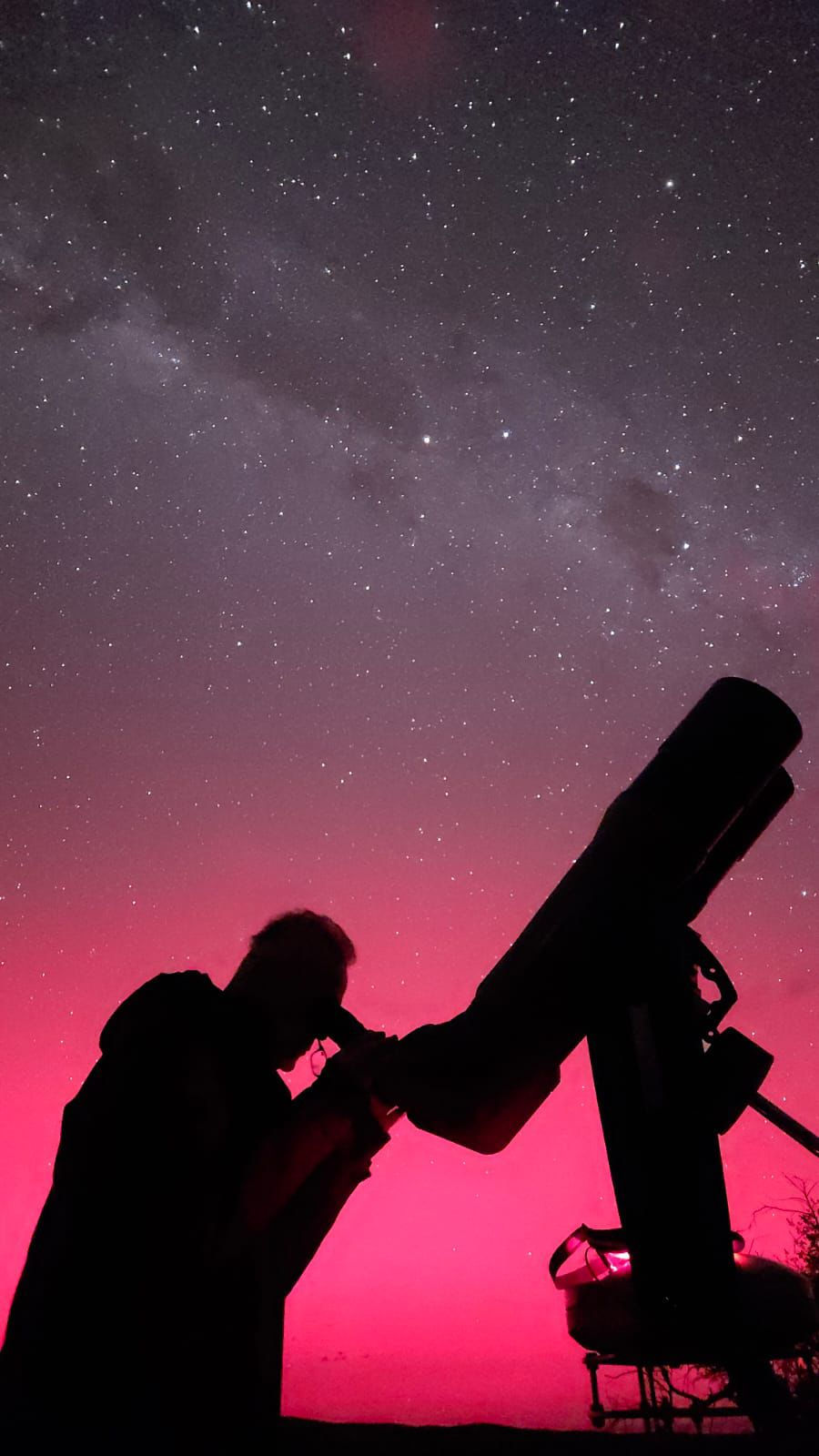
THE SUN JUST RIPPED OFF A COMET'S TAIL: Earth isn't the only celestial body experiencing extreme space weather. Comet 12P/Pons-Brooks just got hit, too. The effects of a CME strike are shown in this May 15th photo taken by Ujvárosi Beáta using a remote-controlled telescope in Hakos, Namibia:

Note the structure near the comet's nucleus (inset). This is called a "disconnection event." It's caused by a CME (or fast solar wind stream) hitting the comet. One of the earliest recorded examples of this phenomenon occured in April 2007 when NASA’s STEREO-A spacecraft watched a CME strike Comet Encke and rip its tail completely off: movie.

"Current images of Comet 12P clearly show the effects of stormy space weather conditions with its tail 'ripped off' by solar wind," says Beáta.
Realtime Space Weather Photo Gallery
Free: Spaceweather.com Newsletter
18K GOLD TOTAL ECLIPSE PENDANT: This pendant has touched the shadow of the Moon. On April 8, 2024, during a total eclipse of the sun in Texas, the students of Earth to Sky Calculus launched it to the stratosphere onboard a cosmic ray research balloon. Floating more than 118,110 feet high, the locket spent 3 minutes and 45 seconds wrapped in lunar shadow:
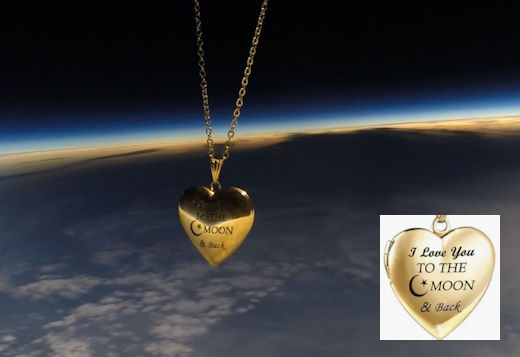
You can have it for $199.95. The 18K gold-plated locket is inscribed with the words "I love you to the Moon and back," and opens to hold a personal photo or other small item. It comes with a greeting card showing the locket in flight and telling the story of its journey to the edge of space during the total eclipse.
Far Out Gifts: Earth to Sky Store
All sales support hands-on STEM education
Realtime Comet Photo Gallery
Free: Spaceweather.com Newsletter
Realtime Space Weather Photo Gallery
Free: Spaceweather.com Newsletter