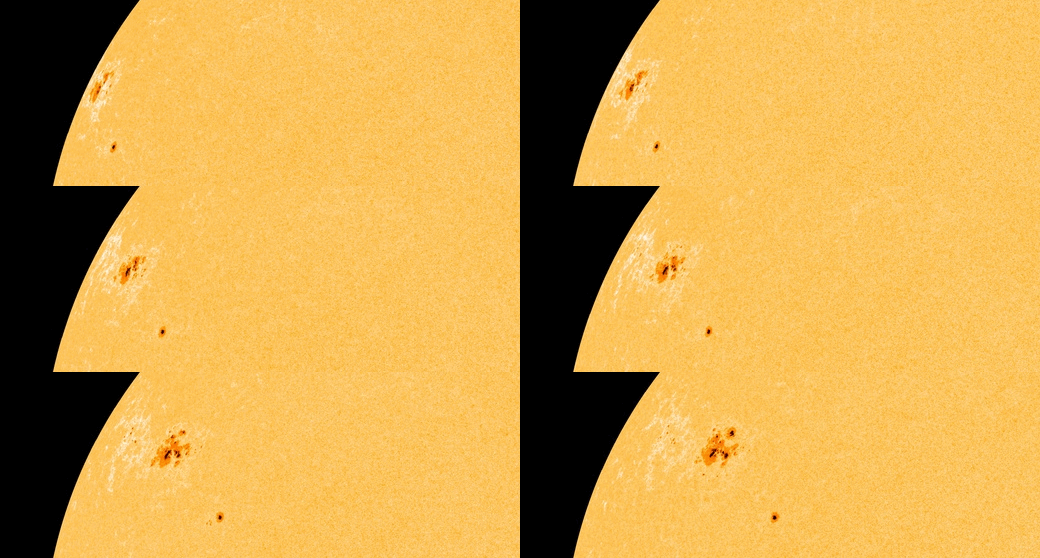
INCREASING CHANCE OF FLARES: First, watch this movie. That's sunspot AR3691, which doubled in size yesterday and has developed a 'beta-gamma-delta' magnetic field, which harbors energy for X-class solar flares. With the return of AR3664 (see below), this makes two sunspots capable of powerful soon-to-be-Earth-directed explosions. Solar flare alerts: SMS Text
RETURN OF AN HISTORIC SUNSPOT: It's back. Almost. Sunspot AR3664, the source of the historic May 10th superstorm, has spent the past two week's transiting the farside of the sun. Today it announced its impending return with an X2.8-class solar flare:
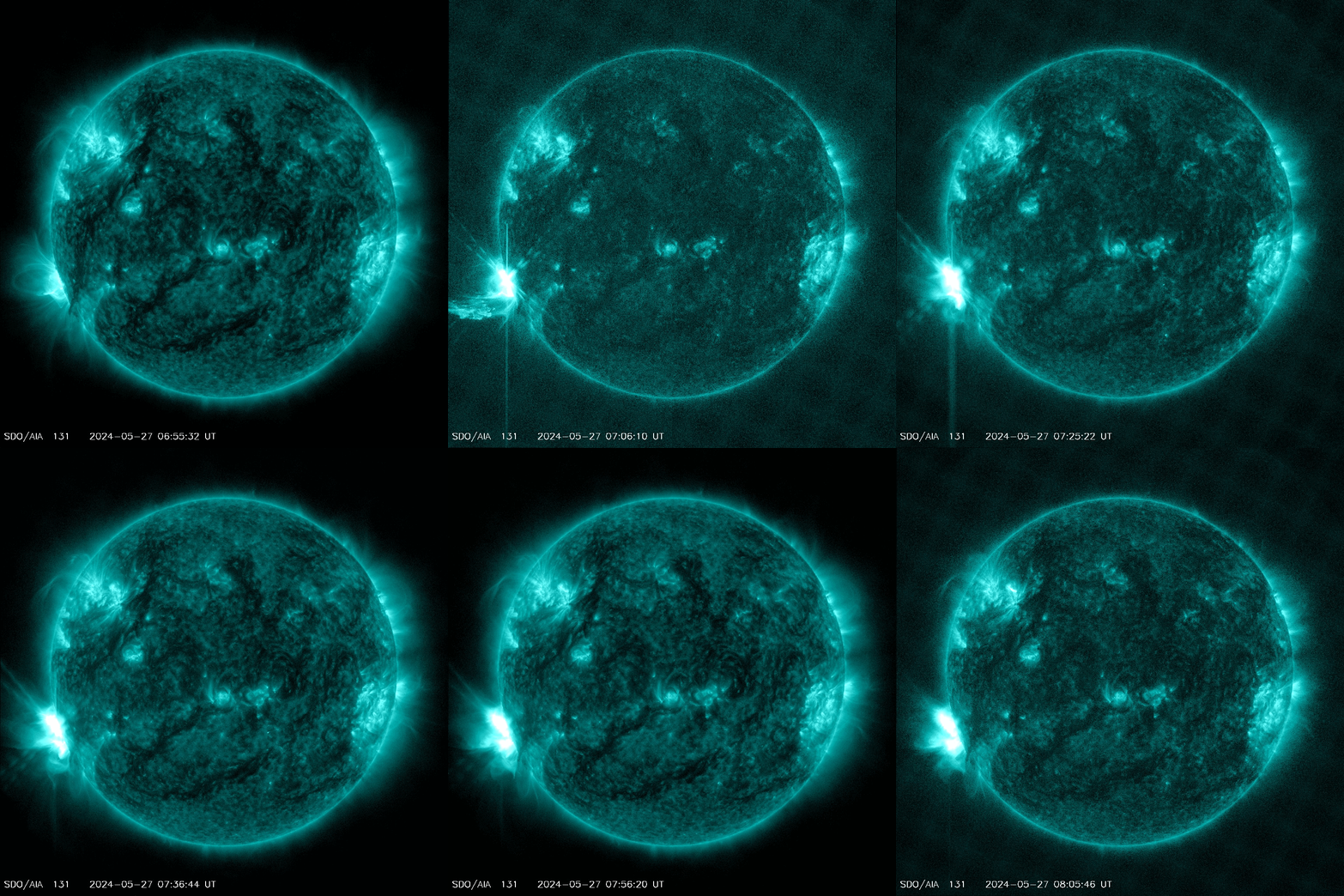
Above: The extreme UV flash from today's X2.8-class solar flare. Credit: NASA/SDO
The flare was probably even stronger than X2.8. The base of the explosion was eclipsed by the edge of the sun, so not all of the X-rays it produced were counted by sensors used to classify the flare.
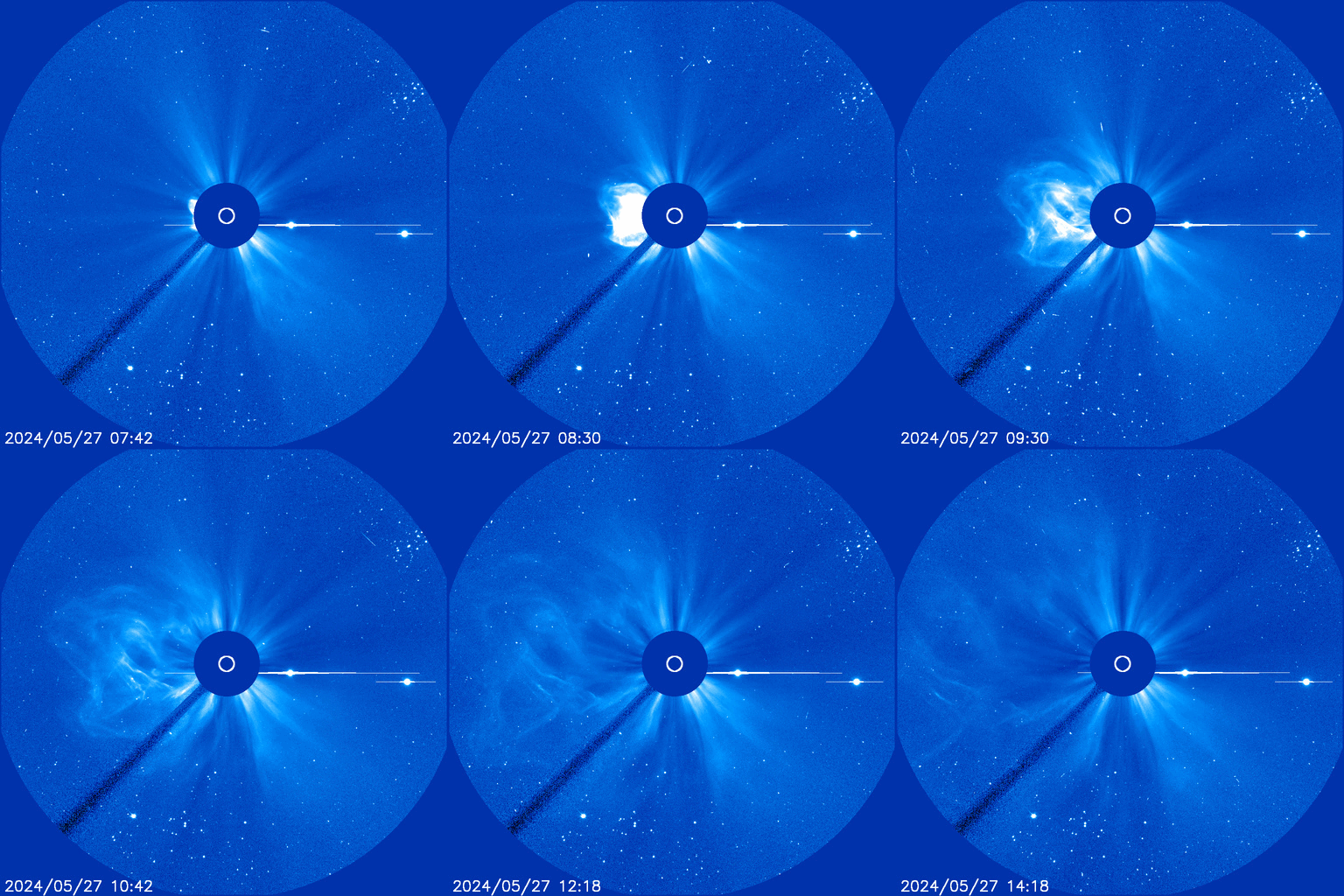
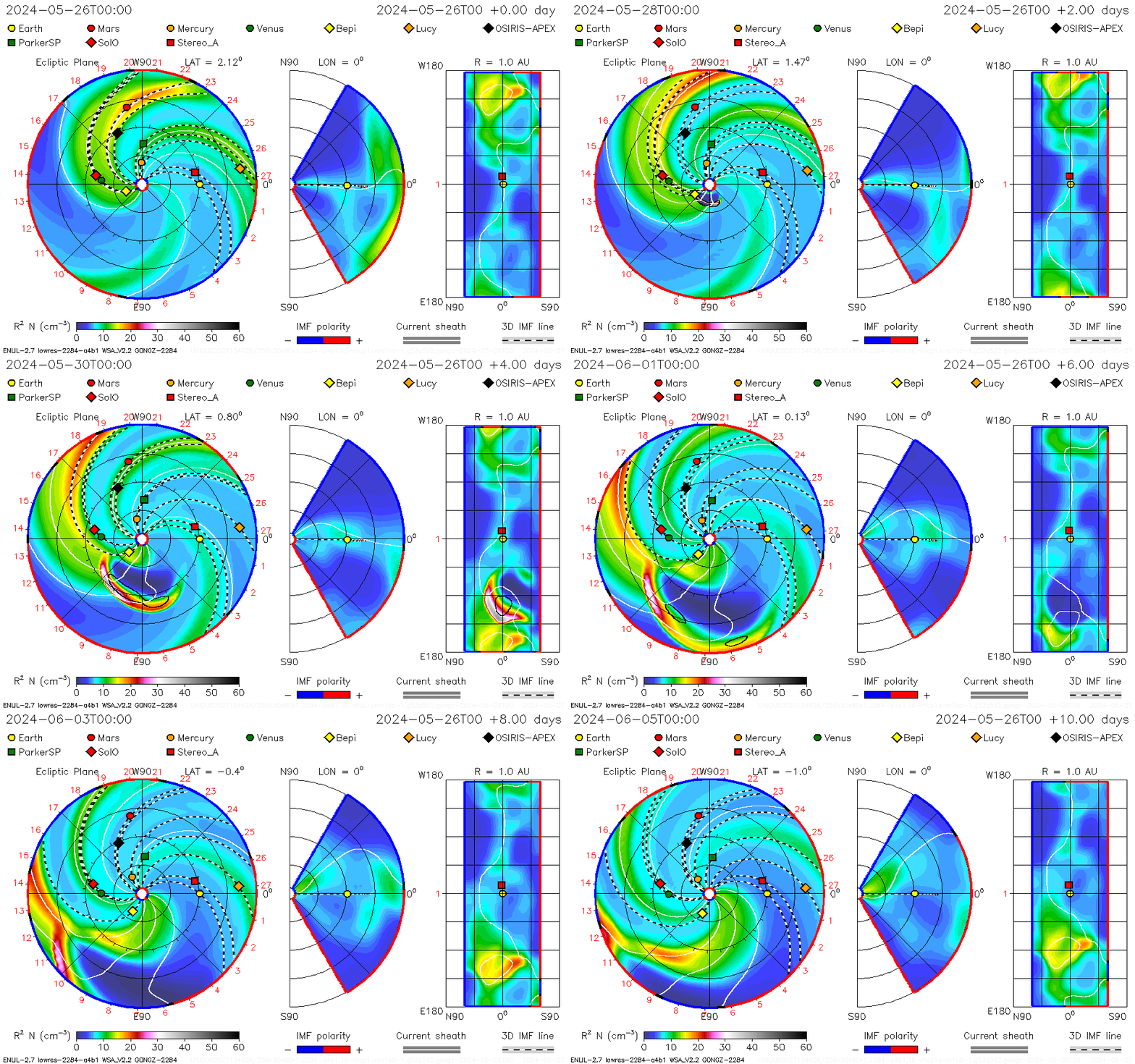
The explosion caused a deep shortwave radio blackout over east Asia and hurled a bright CME into space. A NASA model of the CME confirms that it will miss Mercury, Venus and Earth. None of the inner planets will be affected by this powerful event.
How do we know the flare came from AR3664? Helioseismology. The giant sunspot is affecting the way the sun vibrates, and its seismic echoes are visible in maps of the sun's farside:
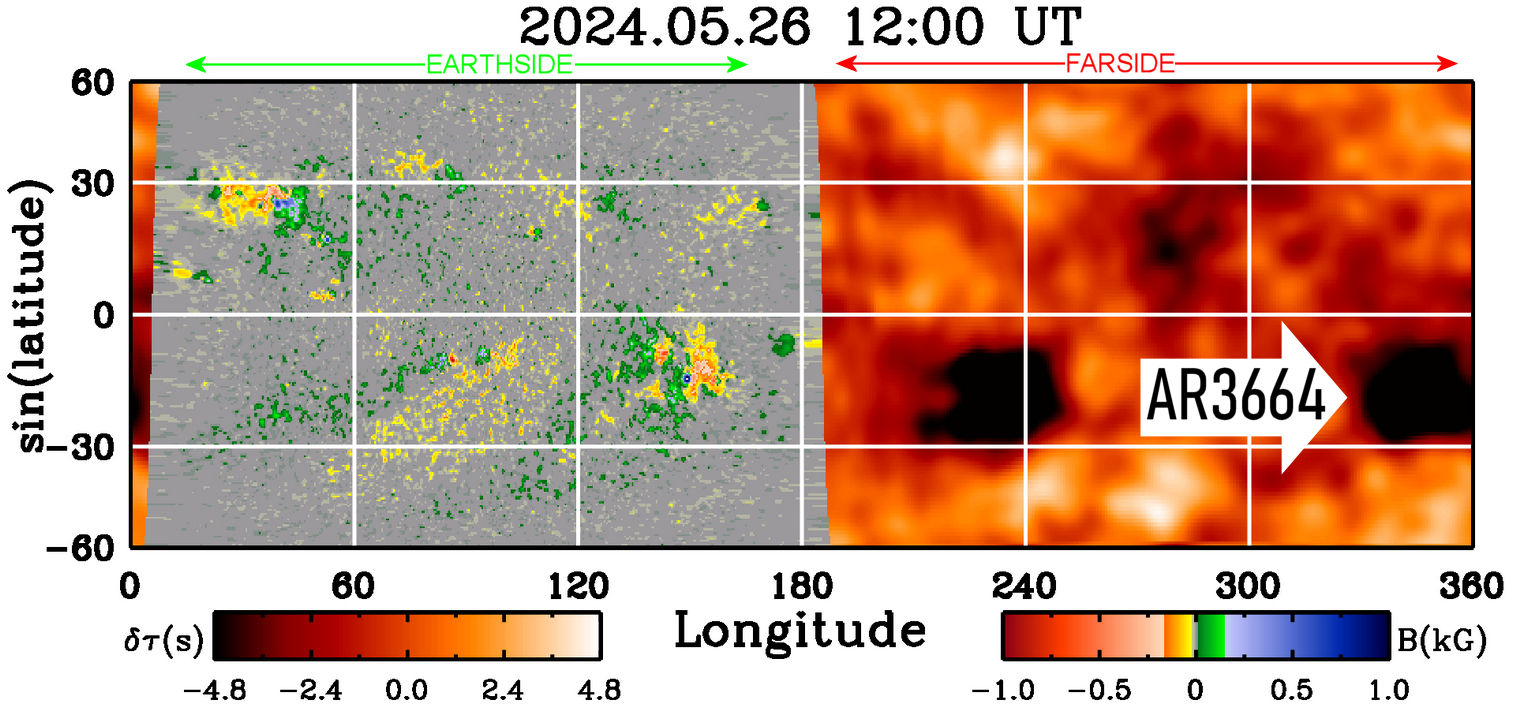
This helioseismic map shows that AR3664 is just behind the southeastern limb of the sun--a good match for the location of today's X-flare. Clearly, AR3664 is still active as it turns to face Earth again later this week. Solar flare alerts: SMS Text
Realtime Space Weather Photo Gallery
Free: Spaceweather.com Newsletter
18K GOLD TOTAL ECLIPSE PENDANT: This pendant has touched the shadow of the Moon. On April 8, 2024, during a total eclipse of the sun in Texas, the students of Earth to Sky Calculus launched it to the stratosphere onboard a cosmic ray research balloon. Floating more than 118,110 feet high, the locket spent 3 minutes and 45 seconds wrapped in lunar shadow:

You can have it for $199.95. The 18K gold-plated locket is inscribed with the words "I love you to the Moon and back," and opens to hold a personal photo or other small item. It comes with a greeting card showing the locket in flight and telling the story of its journey to the edge of space during the total eclipse.
Far Out Gifts: Earth to Sky Store
All sales support hands-on STEM education
LUNAR POLLEN CORONA: It's springtime in Finland, and you can see the signs in the heavens. Airborne pine pollen is creating beautiful rings of light around the sun and Moon. Pentti Arpalahti photographed this example on May 24th from Helsinki:
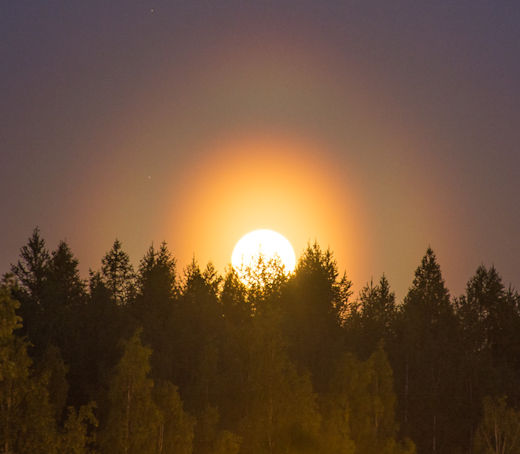
"The 99.7% full Moon rose at midnight surrounded by a beautiful pollen corona," says Arpalahti.
Pollen coronas appear when light is scattered from the outside of pollen grains. The resulting rings of light can be intensely colorful. "Rings" isn't quite the right word, though. The coronas are usually lumpy and elliptical, mimicking the shape of the pollen grains.
This photo of pine pollen seen through a microscope shows what's going on:

They look like Mickey Mouse hats. The "ears" are air sacs that help the pollen catch the wind. When the air is moving, these sacs align the grains, allowing them to scatter light coherently. The sacs also distort the shape of the diffraction pattern, transforming it from a circle into a lumpy ellipse.
Realtime Space Weather Photo Gallery
Free: Spaceweather.com Newsletter
Realtime Comet Photo Gallery
Free: Spaceweather.com Newsletter
Realtime Aurora Photo Gallery
Free: Spaceweather.com Newsletter