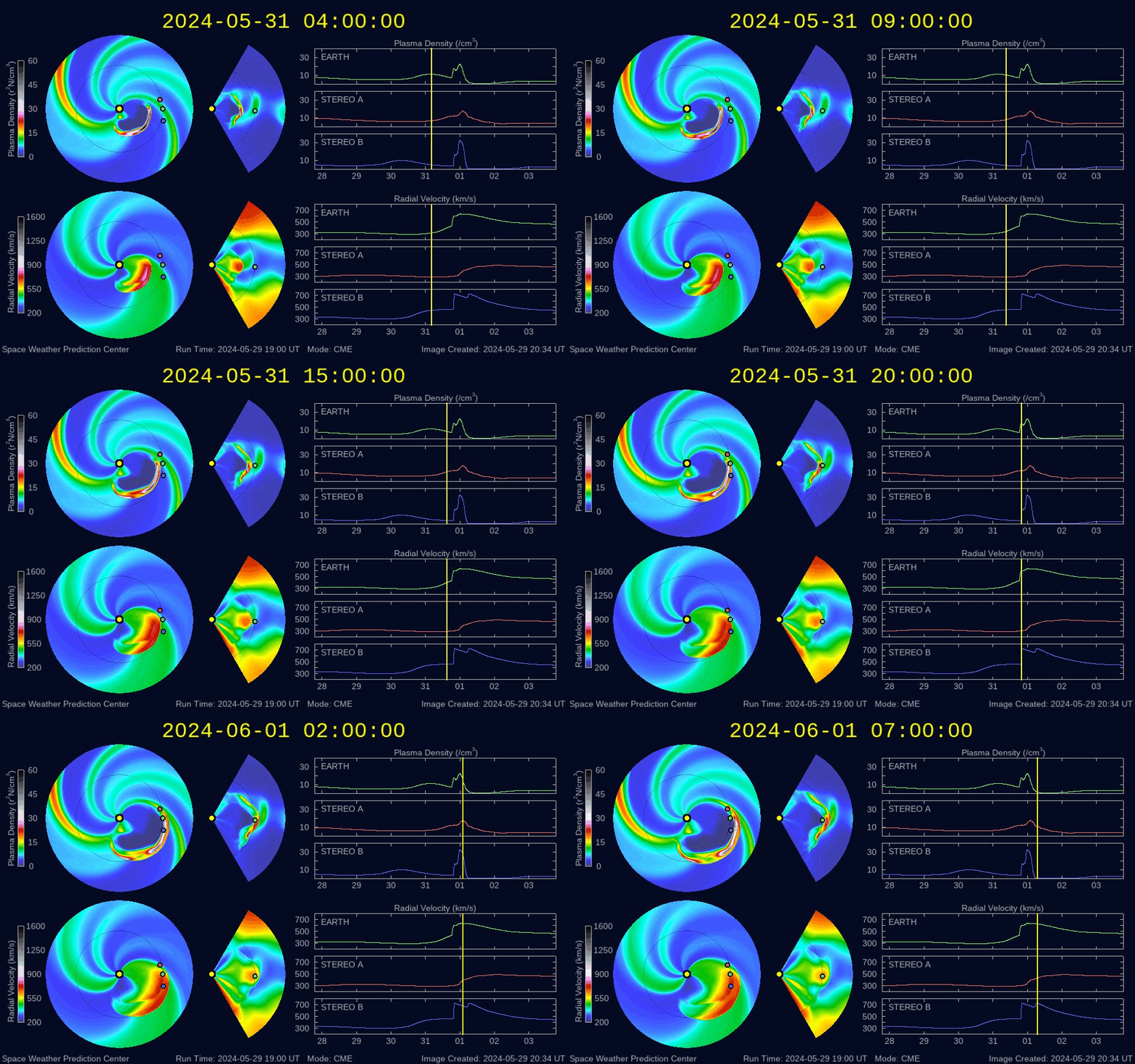
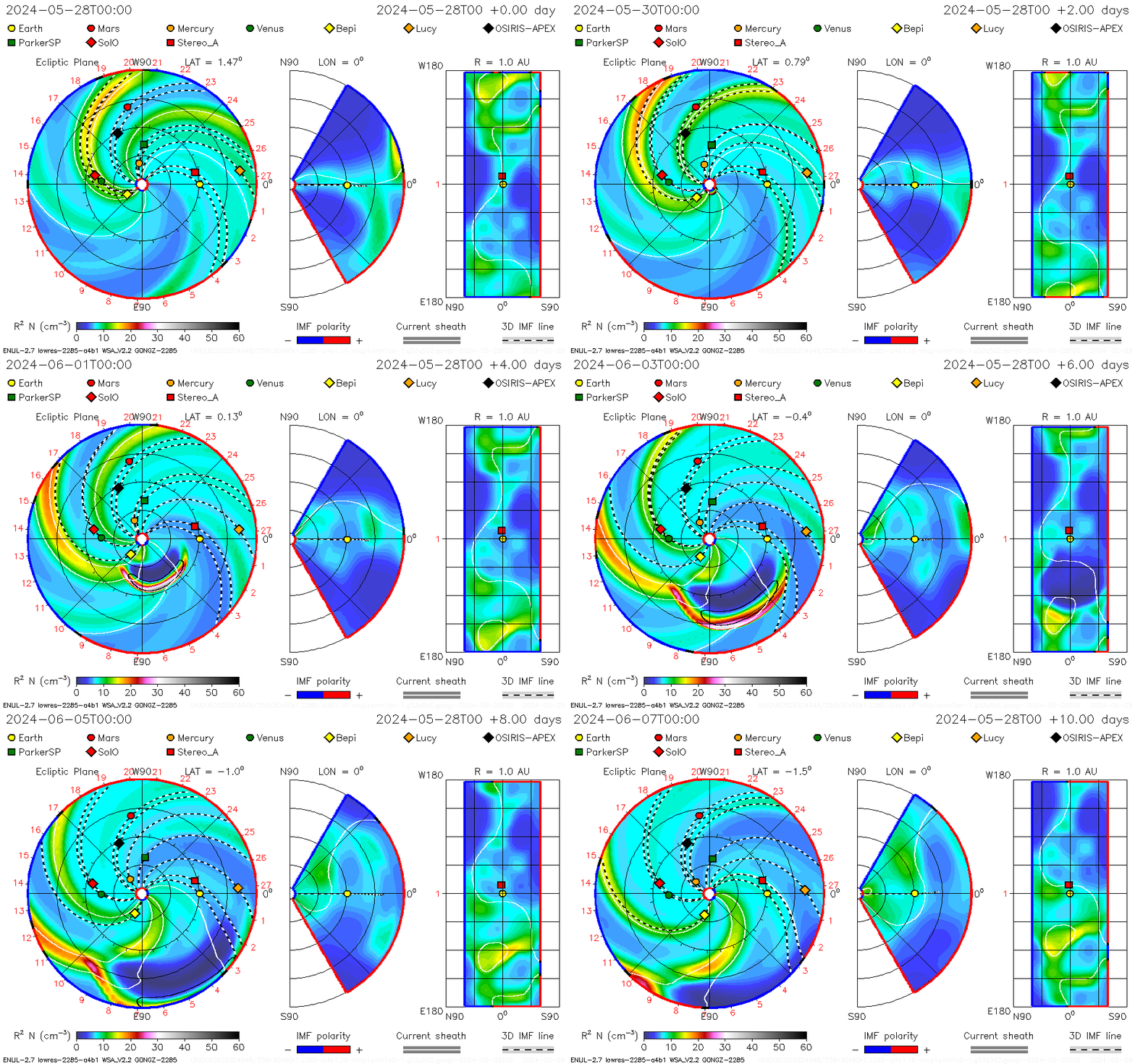
GEOMAGNETIC STORM WATCH (G2): NOAA forecasters say that G2-class geomagnetic storms are possible on May 31st when a CME is expected to graze Earth's magnetic field. It was hurled into space by an X1.4-flare on May 29th. This forecast is uncertain. NOAA's model predicts a stiff glancing blow, while NASA's model suggests a near miss. If an impact does occur, the resulting storm could extend into June 1st. CME impact alerts: SMS Text

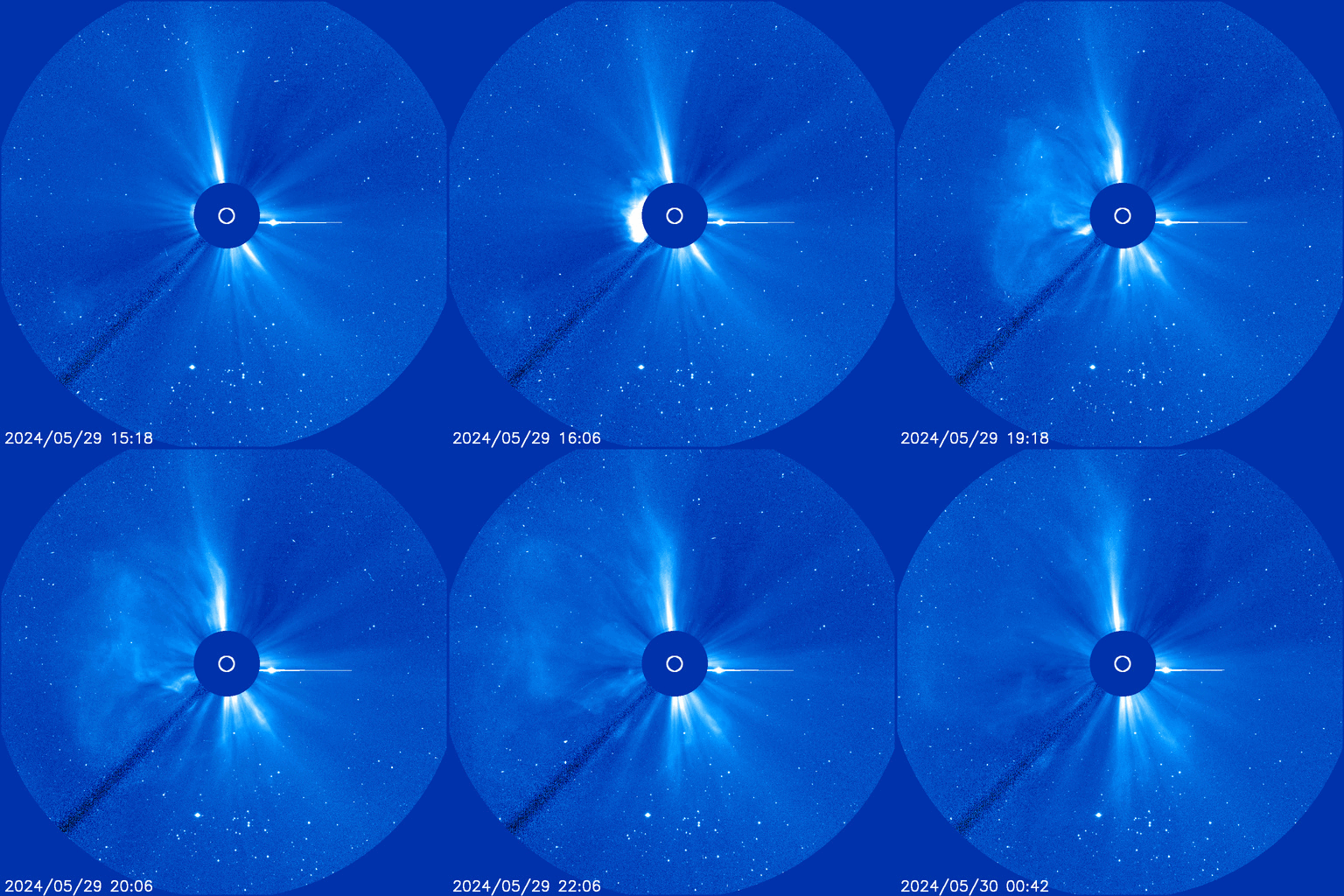
ANOTHER X-FLARE: Sunspot AR3664 (a.k.a. AR3697) has decayed, but it is still potent. It just emitted another X-flare, the third this week. NASA's Solar Dynamics Observatory captured the extreme ultraviolet flash from the X1.1-class explosion:
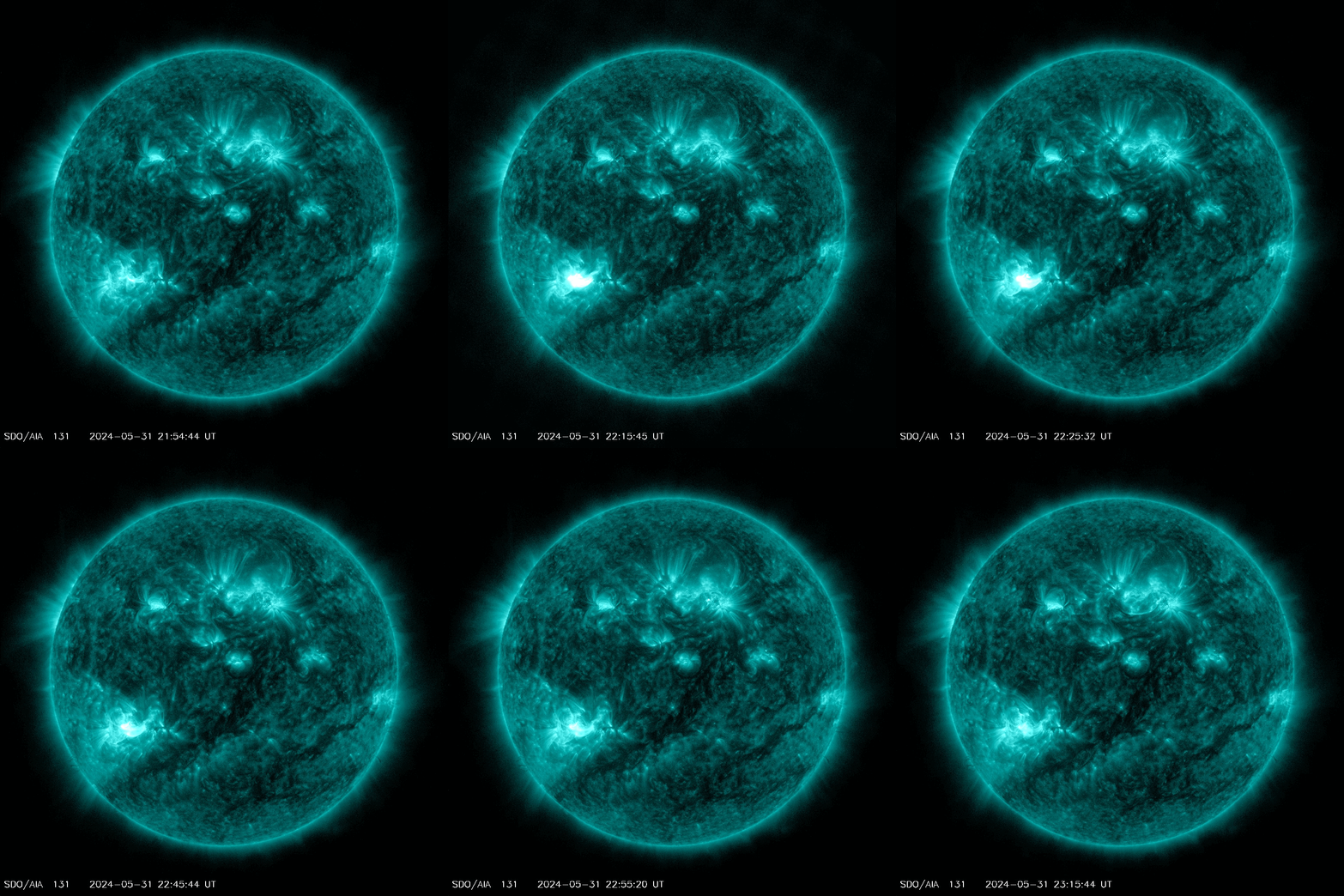
Radiation from the flare ionized the top of Earth's atmosphere, briefly causing a shortwave radio blackout over the Pacific side of North America. Signals below 30 MHz faded for as muchch as 30 minutes after the flare's peak (2203 UT).
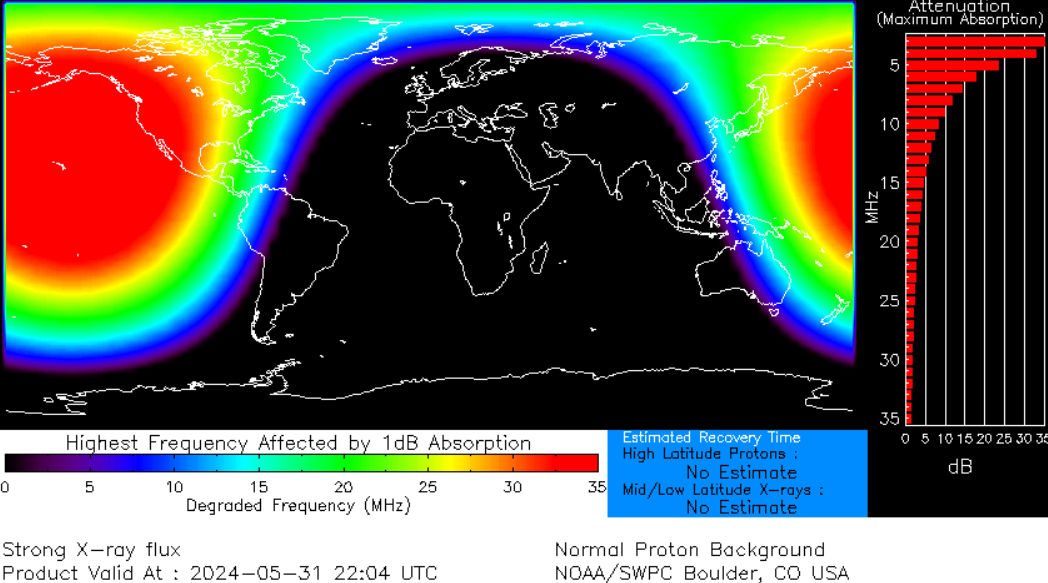
This flare may have been too brief to lift a significant CME out of the sun's atmosphere. Stay tuned for confirmation. Solar flare alerts: SMS Text
AIRGLOW IS BEING BOOSTED BY SOLAR ACTIVITY: The pale waves in this movie are not clouds. It's airglow. "The airglow above Missouri has been very active this week," reports Dan Bush of Albany, MO. "Here is an animated GIF from May 28th."
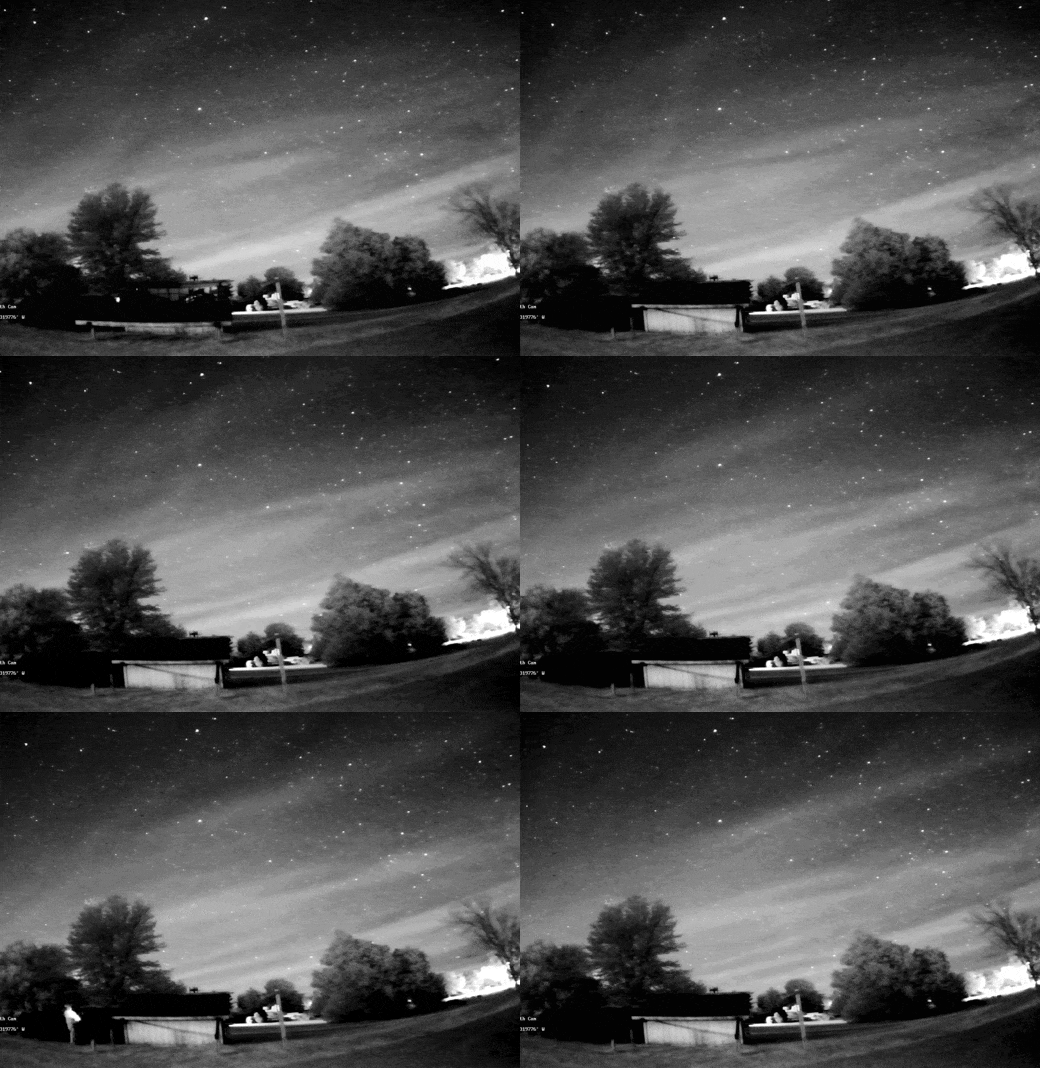
Airglow is a chemical reaction in Earth's upper atmosphere. It occurs when oxygen atoms (O) and oxygen molecules (O2) bump together about 95 km above Earth's surface. The collisions produce green photons much like the green of aurora borealis.
Solar activity boosts airglow by heating the upper atmosphere. Warmer air causes more collisions and, thus, more green light to emerge. Studies show that airglow is up to 40% brighter when the sun is most active. Indeed, this is why airglow has been relatively bright this week; solar activity is high.
The ripples in Bush's airglow movie are not, however, caused by space weather. Earth weather is to blame. "Storms were going on in Texas, Oklahoma, and Kansas when this occurred," says Bush. Convective updrafts from these storms hit the airglow layer creating a bulls-eye pattern of pressure waves that rippled across the Missouri sky.
more images: from Aaron Watson in the West Elk Mountains of Colorado
Realtime Space Weather Photo Gallery
Free: Spaceweather.com Newsletter
18K GOLD TOTAL ECLIPSE PENDANT: This pendant has touched the shadow of the Moon. On April 8, 2024, during a total eclipse of the sun in Texas, the students of Earth to Sky Calculus launched it to the stratosphere onboard a cosmic ray research balloon. Floating more than 118,110 feet high, the locket spent 3 minutes and 45 seconds wrapped in lunar shadow:
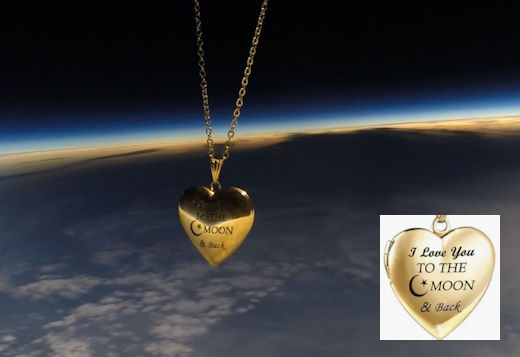
You can have it for $199.95. The 18K gold-plated locket is inscribed with the words "I love you to the Moon and back," and opens to hold a personal photo or other small item. It comes with a greeting card showing the locket in flight and telling the story of its journey to the edge of space during the total eclipse.
Far Out Gifts: Earth to Sky Store
All sales support hands-on STEM education
Realtime Comet Photo Gallery
Free: Spaceweather.com Newsletter
Realtime Aurora Photo Gallery
Free: Spaceweather.com Newsletter