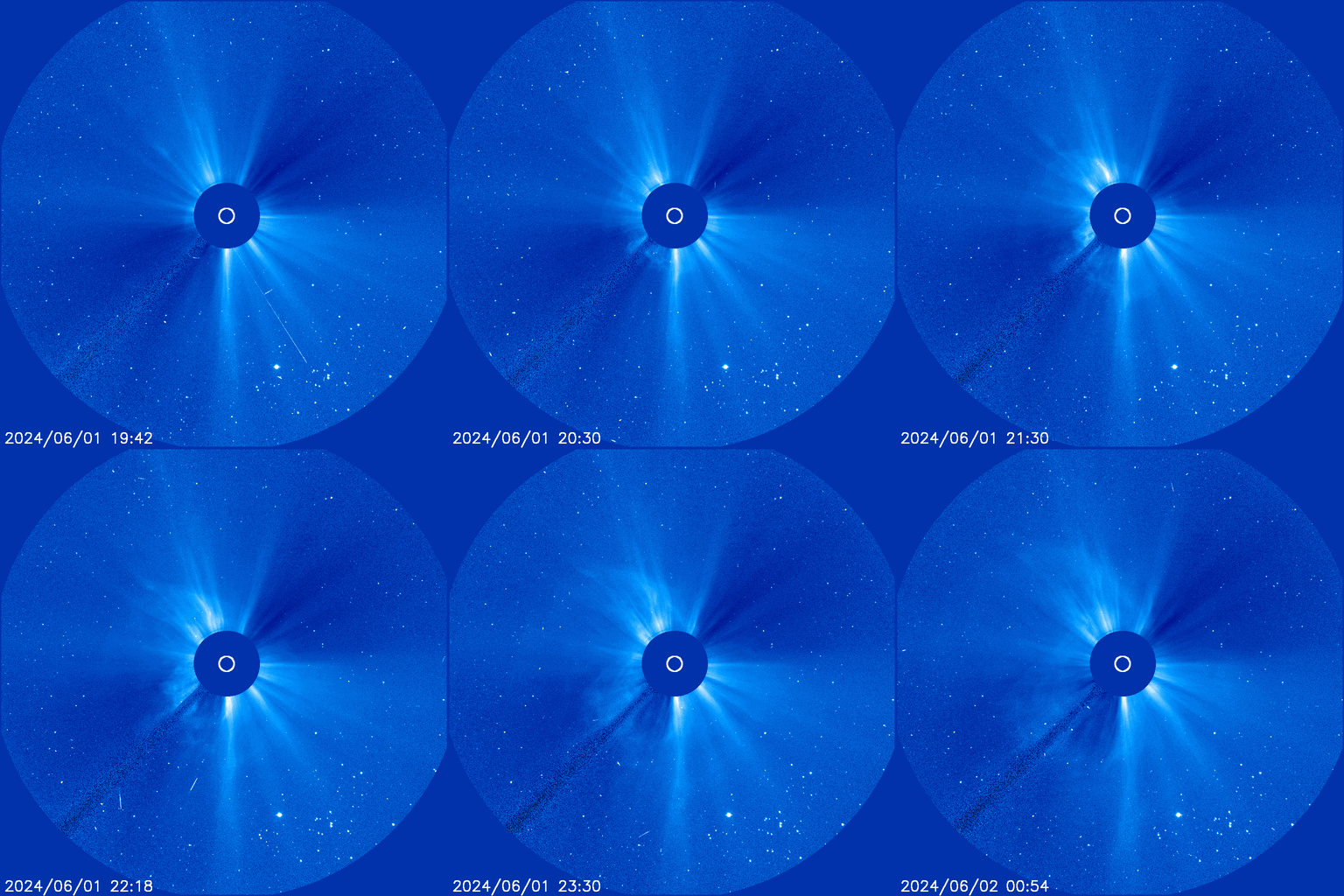
GEOMAGNETIC STORM WATCH (G1): NOAA forecasters say that a G1-class geomagnetic storm is possible on June 4th when a CME is expected to graze Earth's magnetic field. The CME was hurled into space on June 1st after a complex X1-M7 double solar flare. Much confusion has attended this forecast because there were actually two CMEs at the same time--one toward and one away from Earth. Analysts unraveled the two storm clouds to produce a likely model of the Earth-directed CME's trajectory. CME impact alerts: SMS Text

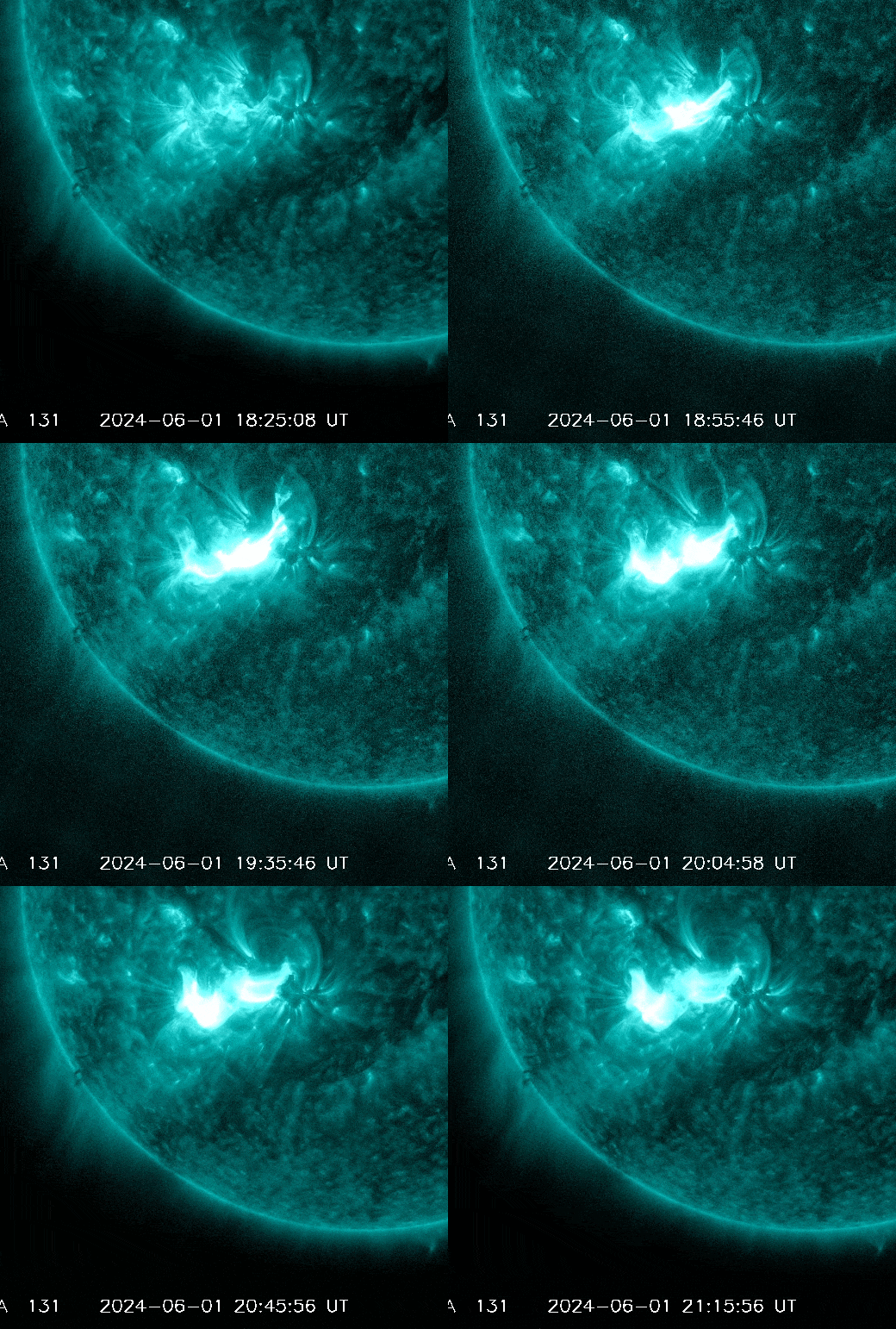

X-FLARE AFTER X-FLARE AFTER X-FLARE: Exploding like popcorn, sunspot AR3664 (a.k.a. AR3697) produced three X-flares on May 31st and June 1st. Each one caused a radio blackout on the daylit side of Earth, reducing the strength of shortwave transmissions at all frequencies below 30 MHz. Almost all longitudes were affected by one or more of the flares.
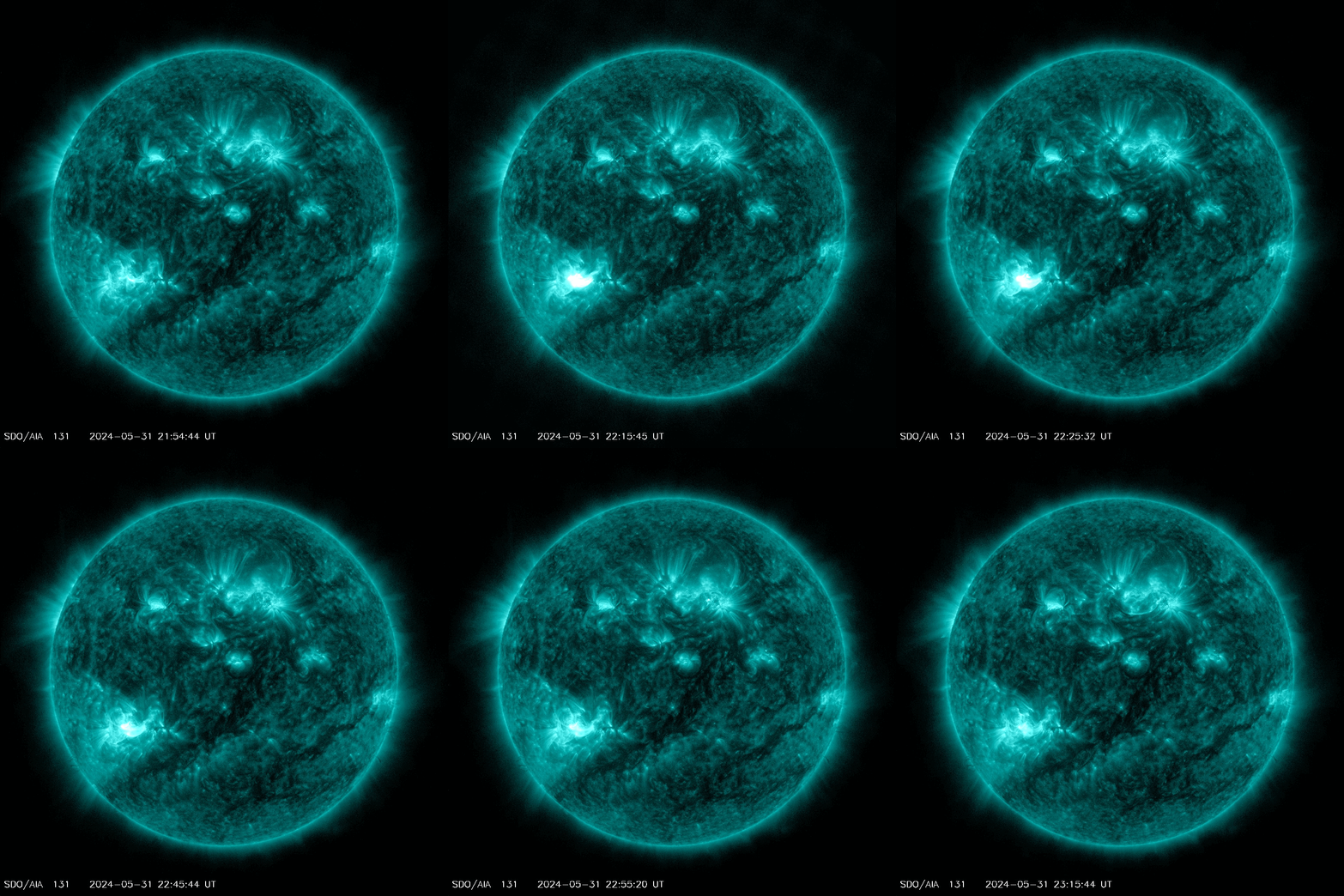
Don't be surprised if there's another flare today. AR3664 has an unstable 'delta-class' magnetic field that harbors energy for strong explosions. NOAA forecasters estimate a 35% chance of X-flares and a 75% chance of M-flares on June 2nd. Solar flare alerts: SMS Text
Realtime Space Weather Photo Gallery
Free: Spaceweather.com Newsletter
THE ANTI-TRANSIT OF VENUS: On June 3rd, Venus will pass directly behind the sun--a so-called "anti-transit." The event is impossible to observe from Earth. On June 1st, however, amateur astronomer Joerg Schoppmeyer nearly did it. "I photographed Venus only 38 arcminutes from the edge of the sun," he explains.
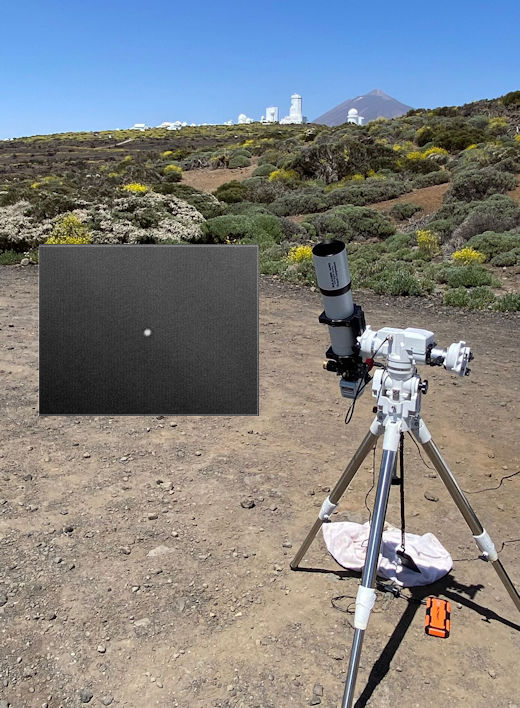
"Under almost ideal conditions, I was able to observe this very close to the famous Izana telescopes at an altitude of 2,400 meters on the island of Tenerife," says Schoppmeyer. "I constructed a device which prevents direct and indirect sunlight from reaching the camera behind the Baader Herschel prism. Only the crucial area in which Venus is located was recorded."
Schoppmeyer plans to try again on June 2nd when the distance will be only 23 arcminutes--an even more impossible shot. Good luck!
Realtime Space Weather Photo Gallery
Free: Spaceweather.com Newsletter
18K GOLD TOTAL ECLIPSE PENDANT: This pendant has touched the shadow of the Moon. On April 8, 2024, during a total eclipse of the sun in Texas, the students of Earth to Sky Calculus launched it to the stratosphere onboard a cosmic ray research balloon. Floating more than 118,110 feet high, the locket spent 3 minutes and 45 seconds wrapped in lunar shadow:
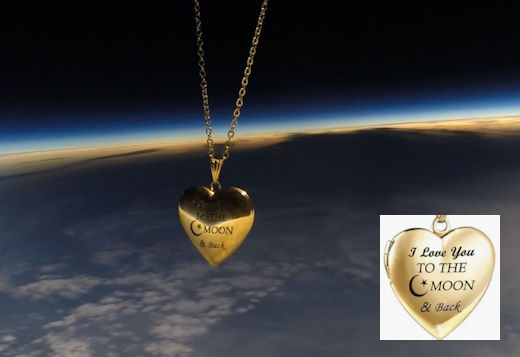
You can have it for $199.95. The 18K gold-plated locket is inscribed with the words "I love you to the Moon and back," and opens to hold a personal photo or other small item. It comes with a greeting card showing the locket in flight and telling the story of its journey to the edge of space during the total eclipse.
Far Out Gifts: Earth to Sky Store
All sales support hands-on STEM education
Realtime Comet Photo Gallery
Free: Spaceweather.com Newsletter
Realtime Aurora Photo Gallery
Free: Spaceweather.com Newsletter