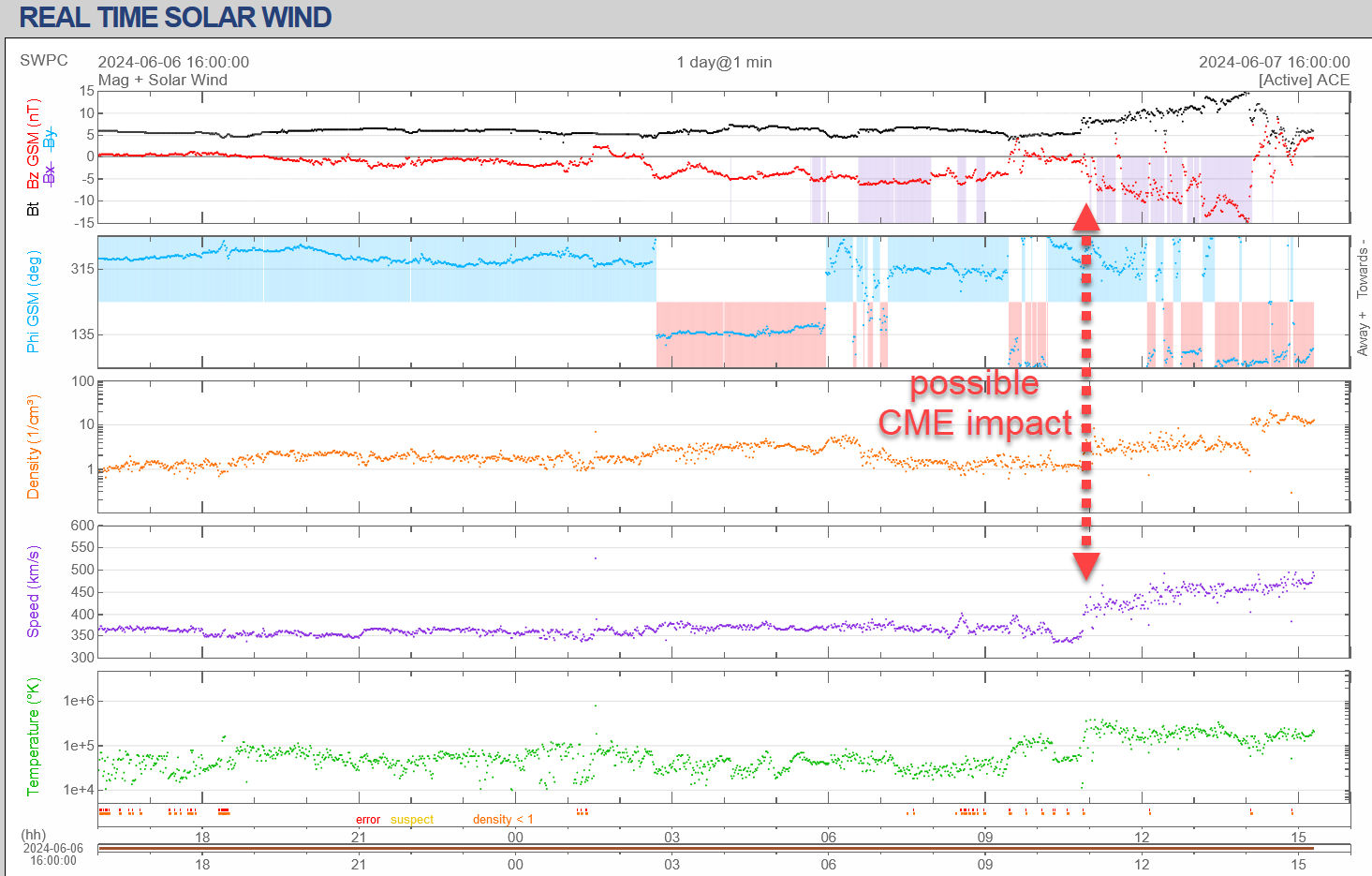
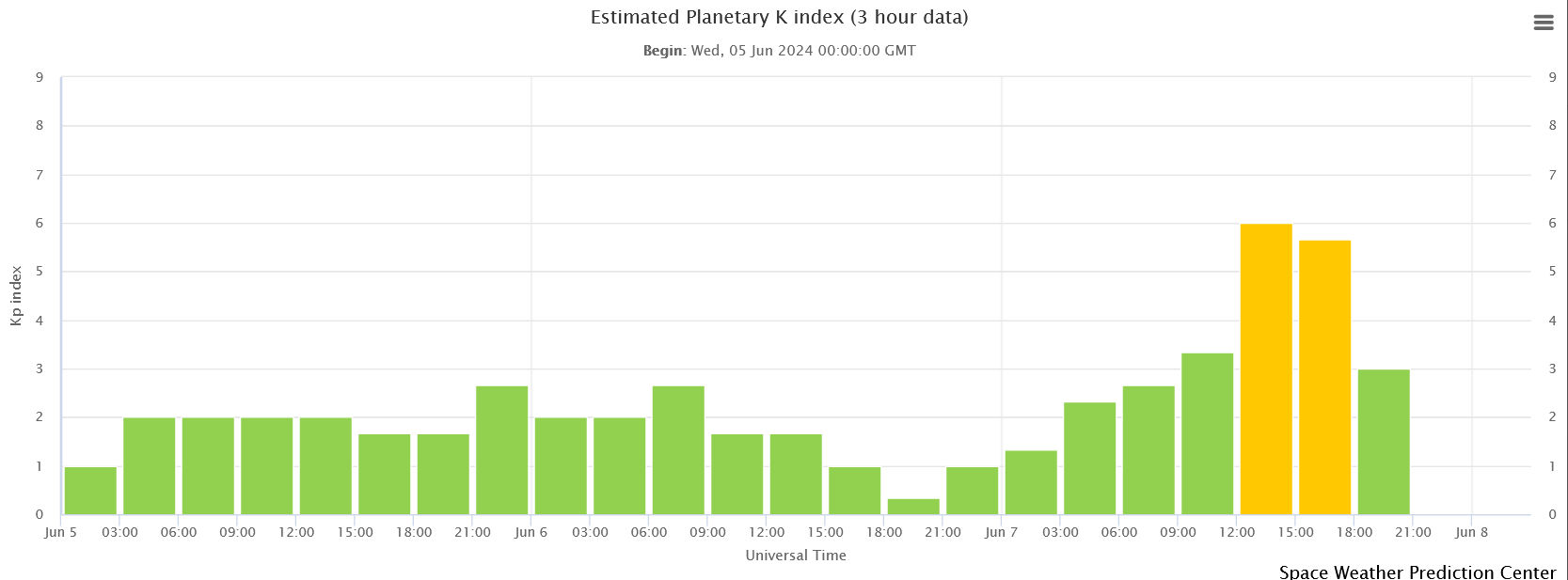
UNEXPECTED GEOMAGNETIC STORM: This was not in the forecast. An interplanetary shock wave unexpectedly hit Earth's magnetic field on June 7th (11:30 UT), sparking a G2-class geomagnetic storm. The shock wave might have been a previously unrecognized CME, either too faint to see or misclassified as a farside event. The storm, which lasted approximately 6 hours, is over now. Aurora alerts: SMS Text

A NOVA WILL EXPLODE THIS SUMMER (PROBABLY): The night sky is about to get a new star. Sometime this summer, astronomers believe, a nova will explode in the constellation Corona Borealis (the Northern Crown). The exploding star will be bright enough to see with the naked eye even from light-polluted cities.
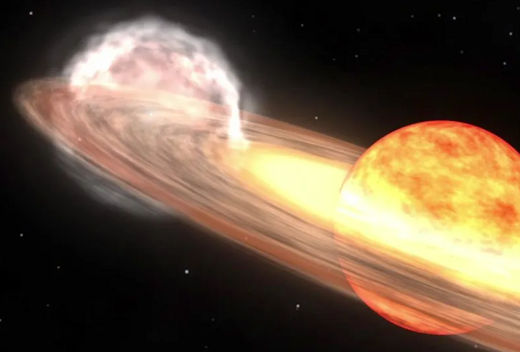
A NASA artist's concept of the T CrB binary star system
"It’s a once-in-a-lifetime event," says Rebekah Hounsell of NASA’s Goddard Space Flight Center. "I believe it will create a lot of new astronomers out there."
T Coronae Borealis (T CrB) is a binary system 3,000 light-years from Earth. It consists of a white dwarf orbiting an ancient red giant. Hydrogen from the red giant is being pulled down onto the surface of the white dwarf, accumulating toward a critical mass. Eventually, it will trigger a thermonuclear explosion.
The last time T CrB exploded was in 1946. About a year before that blast, the system suddenly dimmed--a pattern astronomers called the "pre-eruption dip." In 2023, T CrB dipped again, heralding a new eruption. If the 1946 pattern repeats itself, the nova should occur between now and September 2024.

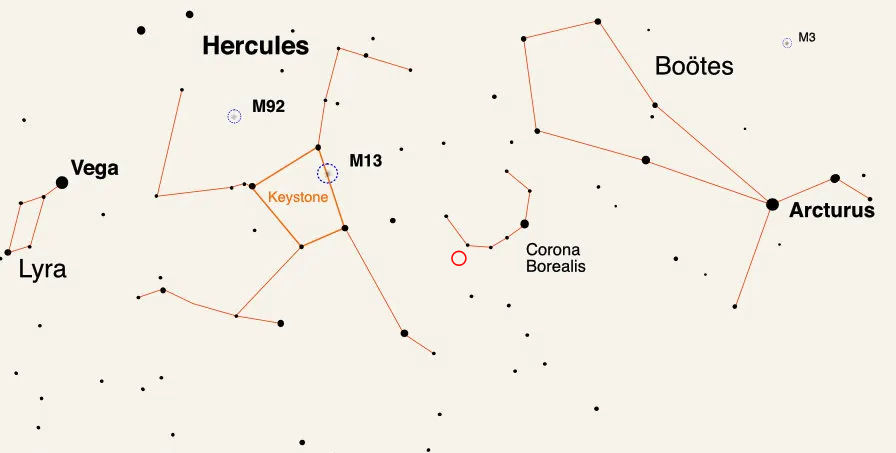
A sky map showing the location of T CrB (red circle)
The outburst will be brief. Once it erupts, the nova will be visible to the naked eye for a little less than a week – but Hounsell is confident it will be quite a sight to see. The expected magnitude is between +2 and +3, similar to stars in the Big Dipper.
"Typically, nova events are faint and far away," says Elizabeth Hays, chief of the Astroparticle Physics Laboratory at NASA Goddard. "This one will be really close, with a lot of eyes on it. We can’t wait to get the full picture of what's going on."
Realtime Space Weather Photo Gallery
Free: Spaceweather.com Newsletter
STERLING SILVER GEOMAGNETIC CAT: On May 10, 2024, a CME slammed into Earth's magnetic field, sparking the biggest geomagnetic storm in 35 years. Moments later, the students of Earth to Sky Calculus launched a cosmic ray balloon directly into the storm. The Geomagnetic Cat Pendant went along for the ride:
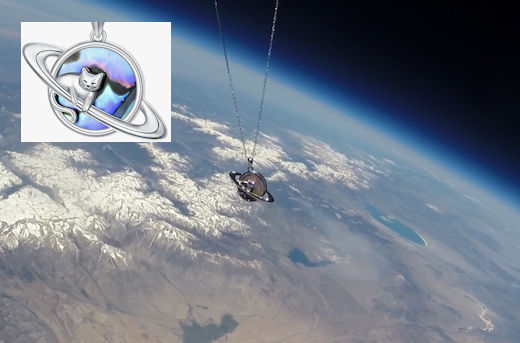
This sterling silver feline floated through the stratosphere for 3 hours during the storm, gathering radiation data for the students' monitoring program. Later, when the sun set and the sky grew dark, red and green auroras danced above the Sierra Nevada mountains of California where the balloon was launched.
You can have it for $219.95. The pendant comes with a greeting card showing the cat in flight and telling the story of its journey to the stratosphere and back. This is truly a once-in-a-lifetime gift.
Far Out Gifts: Earth to Sky Store
All sales support hands-on STEM education
Realtime Comet Photo Gallery
Free: Spaceweather.com Newsletter
Realtime Noctilucent Cloud Photo Gallery
Free: Spaceweather.com Newsletter
Realtime Aurora Photo Gallery
Free: Spaceweather.com Newsletter