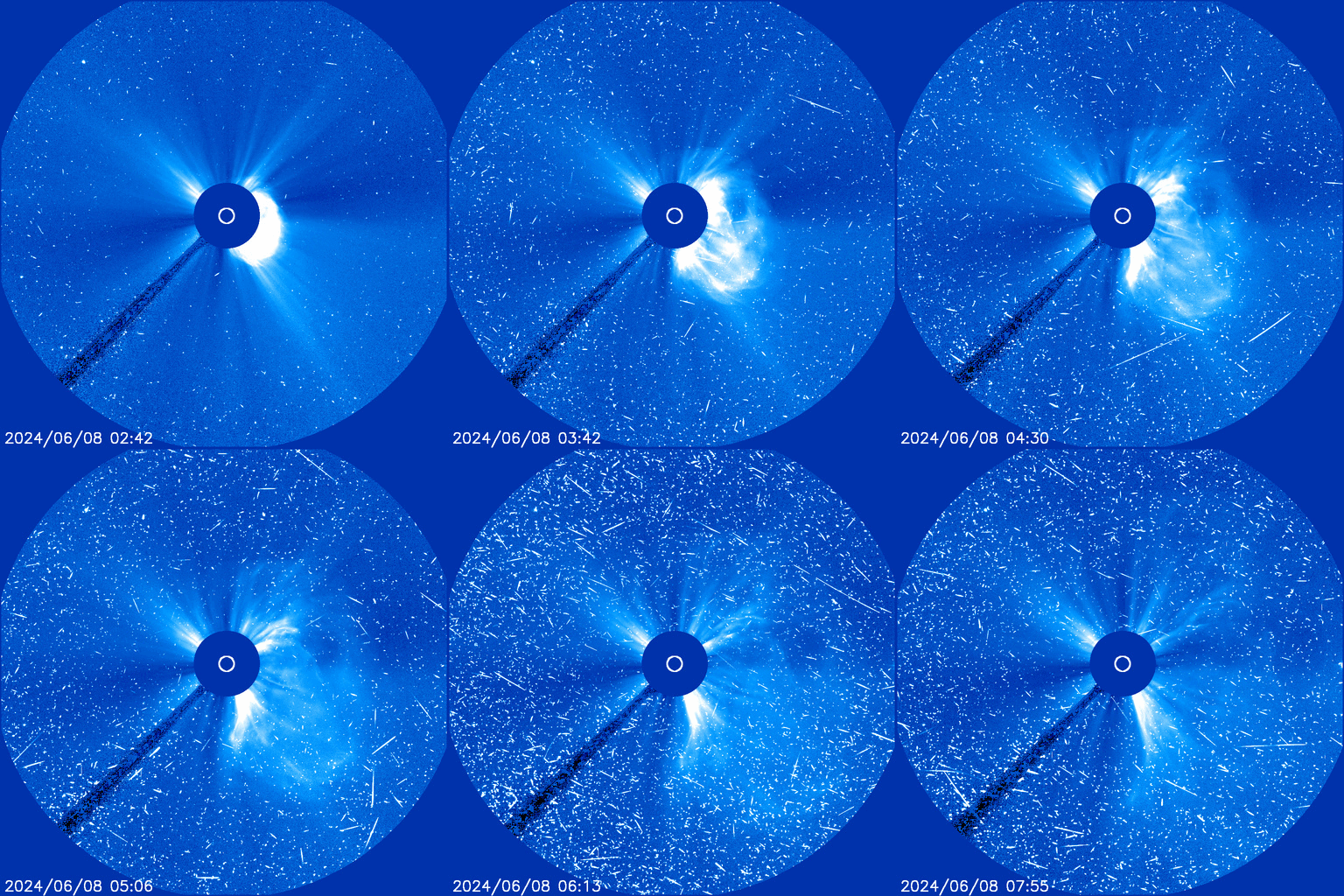
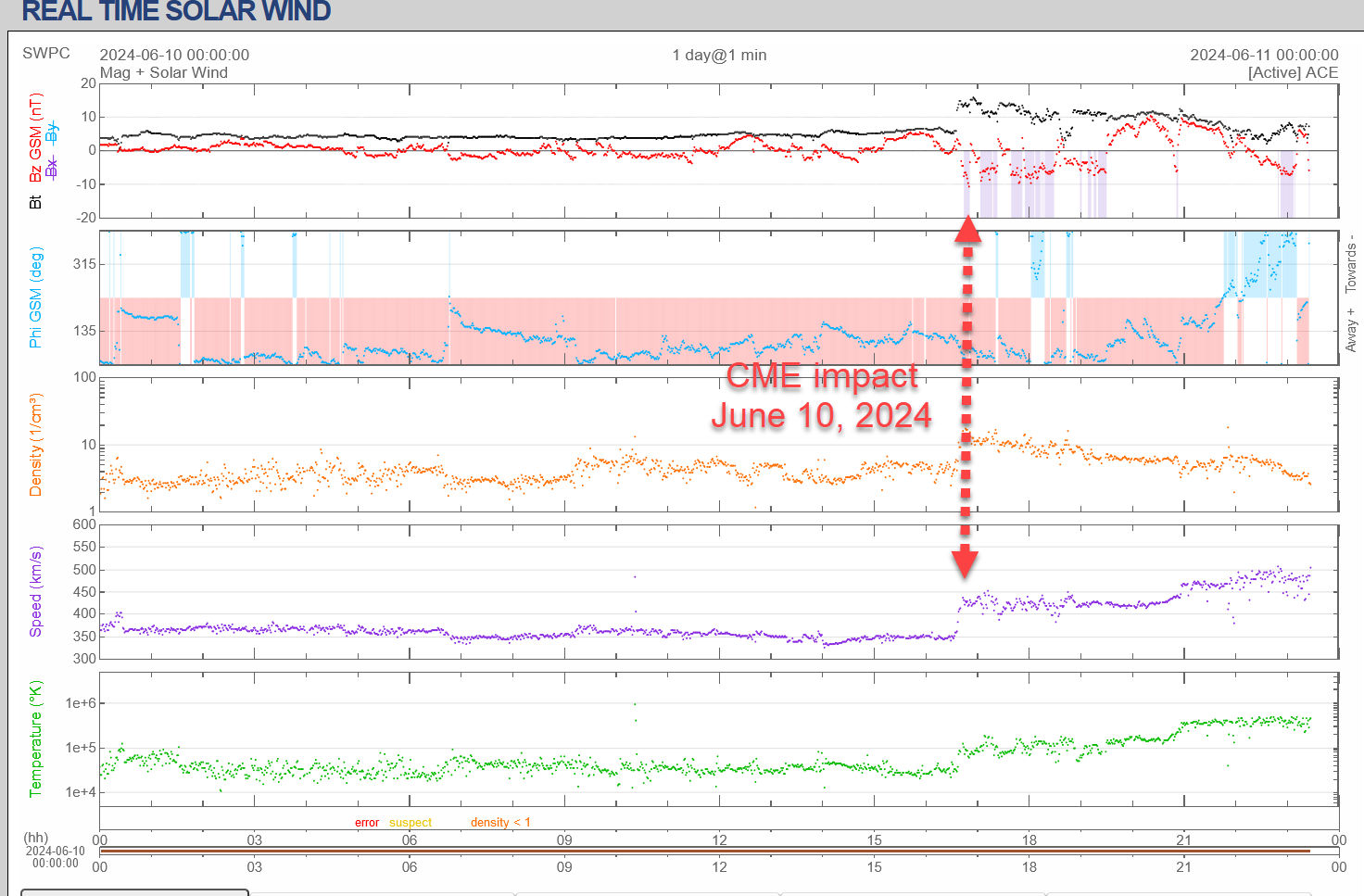
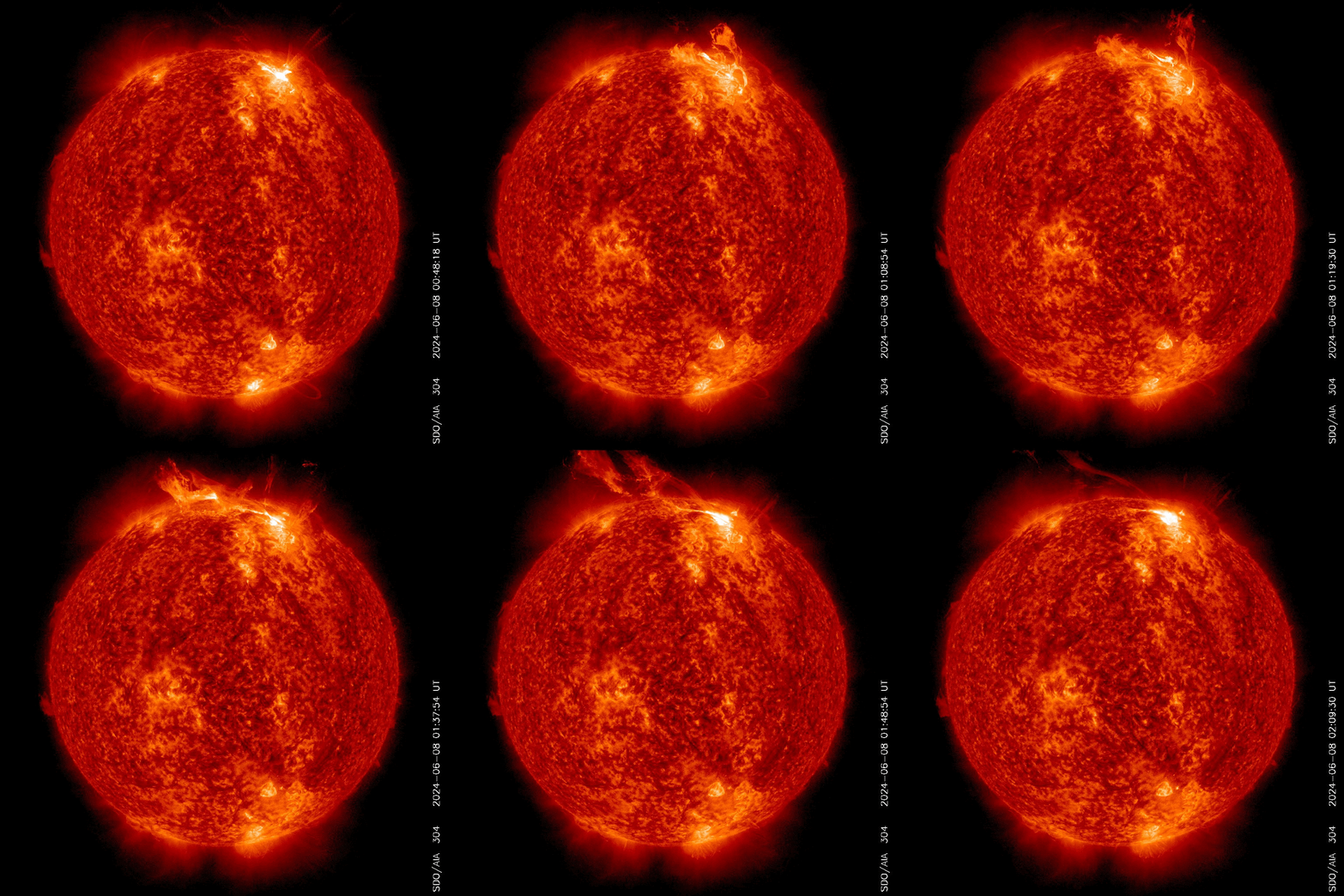
INEFFECTIVE CME IMPACT: As predicted, a CME struck Earth's magnetic field on June 10th (TIME). However, the weak impact was ineffective; it did not cause a geomagnetic storm. The CME was hurled into space by an M9.7-class flare from sunspot AR3664/3697 on June 8th. CME impact alerts: SMS Text
3 MILLON YEARS AGO, AN INTERSTELLAR CLOUD HIT EARTH: Today, Earth is in a safe space. Like all the other planets in the Solar System, it is cocooned within the sun's magnetic field--a giant bubble called "the heliosphere." The heliosphere protects us from dangerous things in the Galaxy like interstellar clouds and cosmic rays.
3 million years ago, the heliosphere may have collapsed. A new paper just published in Nature Astronomy argues that a dense cloud of gas hit the Solar System, compressing the heliosphere to a fraction of its usual size.
"Earth suddenly was outside the protective bubble," says Merav Opher of Boston University, the paper's lead author. "Earth and all the planets were exposed to massive amounts of hydrogen, increased radiation, and interstellar dust."
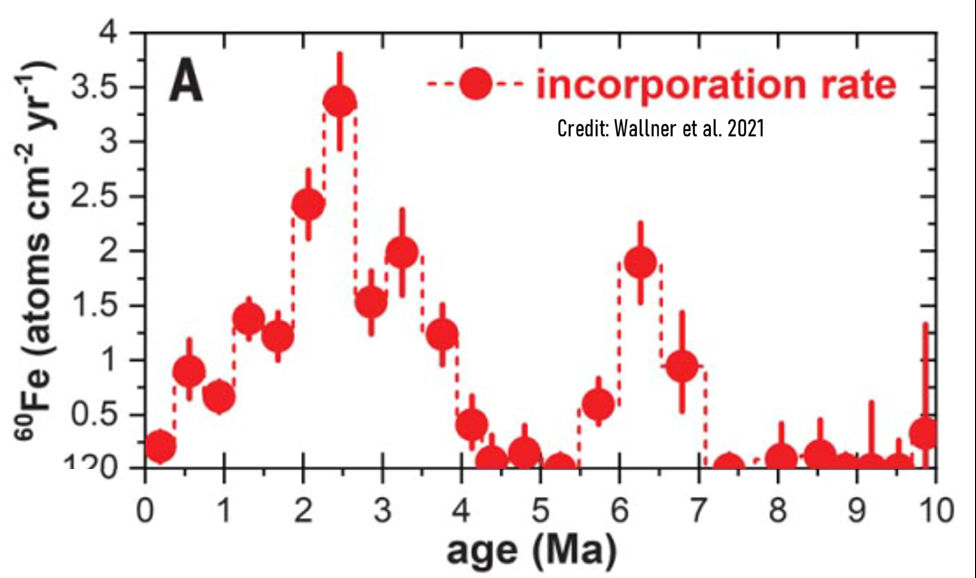
Researchers have long wondered if something happened to Earth 2 to 3 million years ago. Deep-sea sediments, Antarctic snow, and lunar samples from that time period all contain extraterrestrial radioactive isotopes (iron-60 and plutonium-244). The peak is quite striking.
A nearby supernova might have peppered Earth with these substances, but Opher and colleagues had a different idea. In the constellation Lynx there is a ribbon-shaped cluster of dense interstellar clouds. Using a velocity model for the clouds, they found that the sun and at least one of the clouds may have crossed paths 2 to 3 million years ago
"We show that during the cloud's passage, the heliosphere shrinks to a scale of 0.22 AU, smaller than the Earth's orbit around the sun," says Opher. According to their simulation, the helioshere was compressed and stretched into a tadpole-like structure with Earth's orbit (red circle) on the outside:
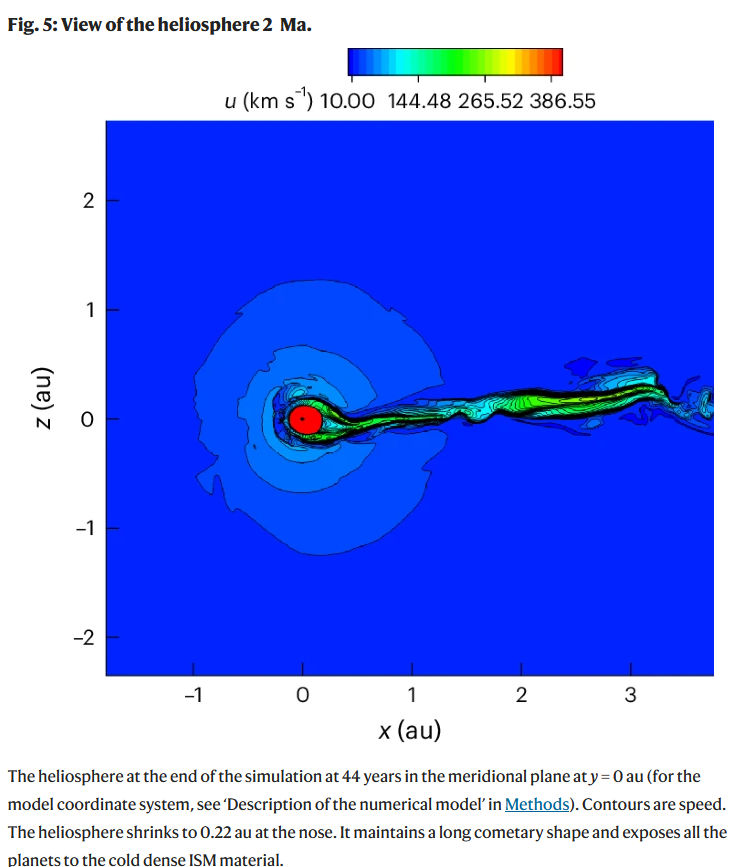
There is some evidence that Earth cooled while it was outside the heliosphere. Deep in our oceans, fossils of tiny marine organisms known as foraminifera preserve ancient climate data. Oxygen isotopes in those fossils suggest the temperature dropped 2–3 million years ago. Could this be a result of interstellar gas and cosmic rays altering our atmosphere?
"This idea should be revisited with modern atmospheric modelling," the authors urge.
Eventually, the cloud passed and the heliosphere bounced back. "Earth was inside its protective bubble again," says Opher. It's a good place to be.
Want to learn more? Read the original research.
Realtime Space Weather Photo Gallery
Free: Spaceweather.com Newsletter
STERLING SILVER GEOMAGNETIC CAT: On May 10, 2024, a CME slammed into Earth's magnetic field, sparking the biggest geomagnetic storm in 35 years. Moments later, the students of Earth to Sky Calculus launched a cosmic ray balloon directly into the storm. The Geomagnetic Cat Pendant went along for the ride:
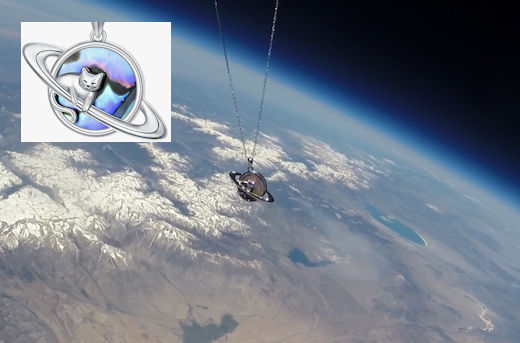
This sterling silver feline floated through the stratosphere for 3 hours during the storm, gathering radiation data for the students' monitoring program. Later, when the sun set and the sky grew dark, red and green auroras danced above the Sierra Nevada mountains of California where the balloon was launched.
You can have it for $219.95. The pendant comes with a greeting card showing the cat in flight and telling the story of its journey to the stratosphere and back. This is truly a once-in-a-lifetime gift.
Far Out Gifts: Earth to Sky Store
All sales support hands-on STEM education
Realtime Comet Photo Gallery
Free: Spaceweather.com Newsletter
Realtime Noctilucent Cloud Photo Gallery
Free: Spaceweather.com Newsletter
Realtime Aurora Photo Gallery
Free: Spaceweather.com Newsletter