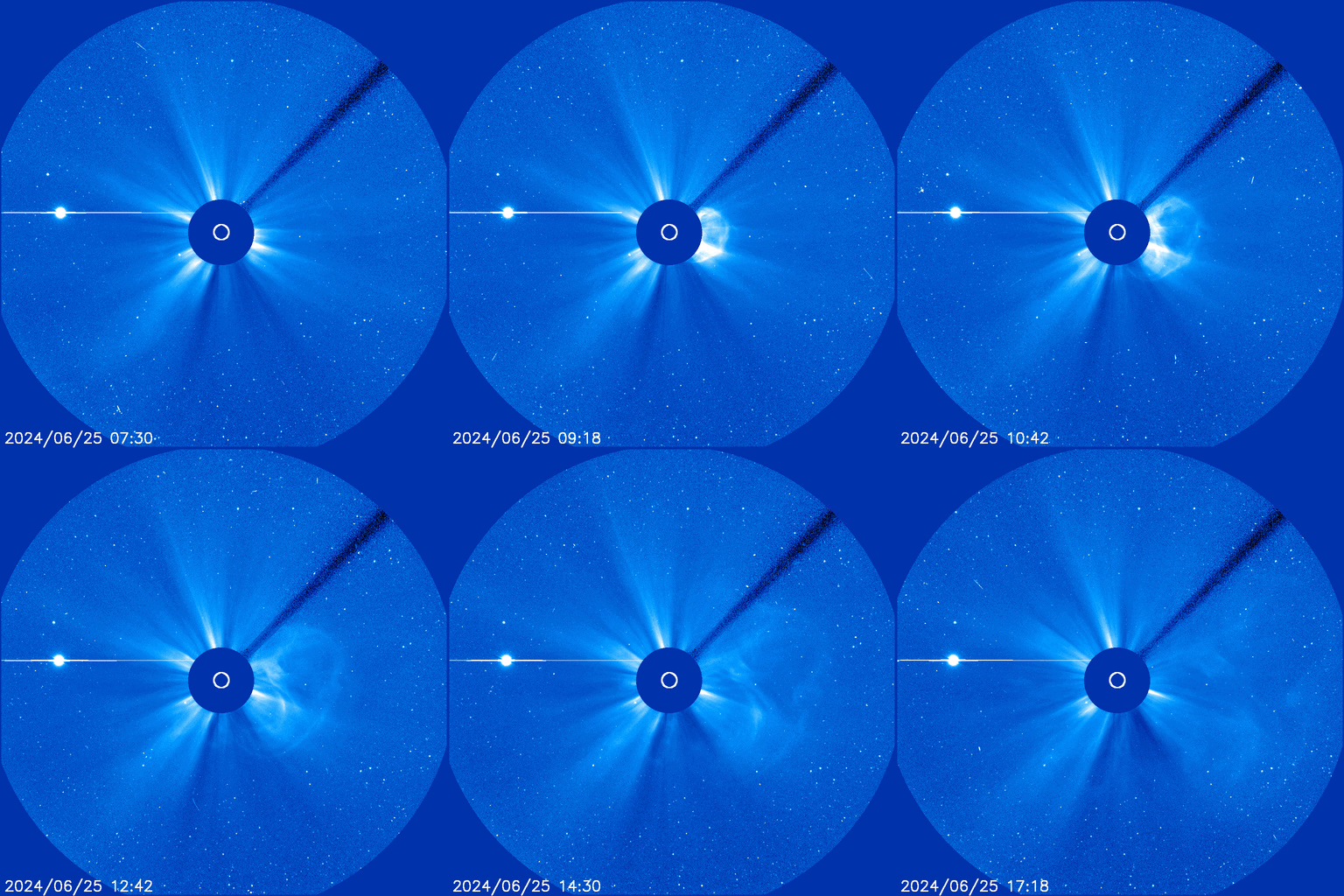
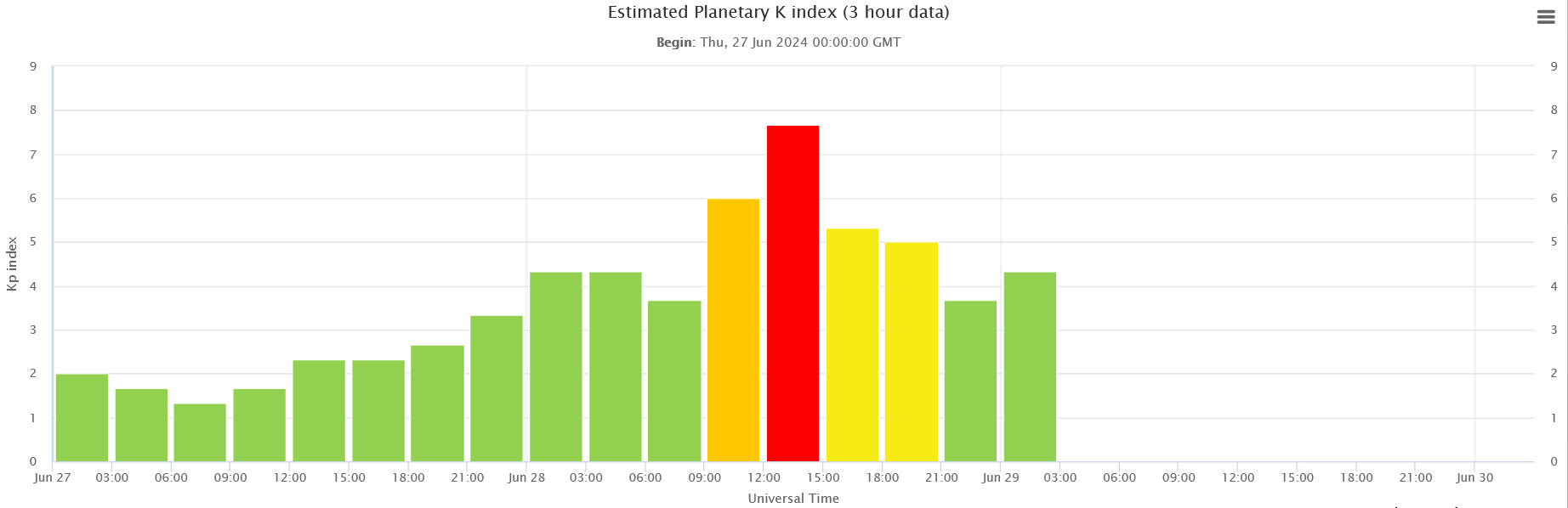
SURPRISE GEOMAGNETIC STORM: Forecasters were surprised yesterday, June 28th, when a CME struck Earth and caused a severe (G4-class) geomagnetic storm. The CME was expected, but the severity of the storm was not; it was supposed to be a minor G1-class event. Daylight over Europe and the Americas hid a potentially dynamite display of auroras. Aurora alerts: SMS Text


NOCTILUCENT CLOUDS BLANKET EUROPE: This weekend, Europe is experiencing a widespread outbreak of noctilucent clouds (NLCs). Normally confined inside the Arctic Circle, the electric-blue wisps of frosted meteor smoke have been sighted as far south as Italy:
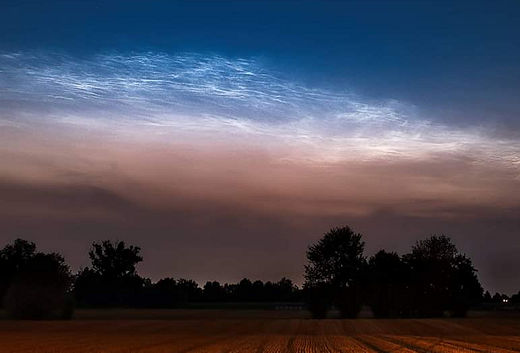
"It was a beautiful display," reports Fabrizio Marchi from Treviso, a city near Venice. "We are at +45 N, so the clouds have reached mid-latitudes."
Similar displays brightened the night skies of Austria, the Netherlands, Scotland, France, England, Lithuania, Croatia, Germany, Denmark, Belgium, Luxembourg, and Finland.
2024 is supposed to be a bad year for NLCs because Solar Max has arrived. High solar activity should melt these fragile clouds away. Two factors may be counteracting the sun.
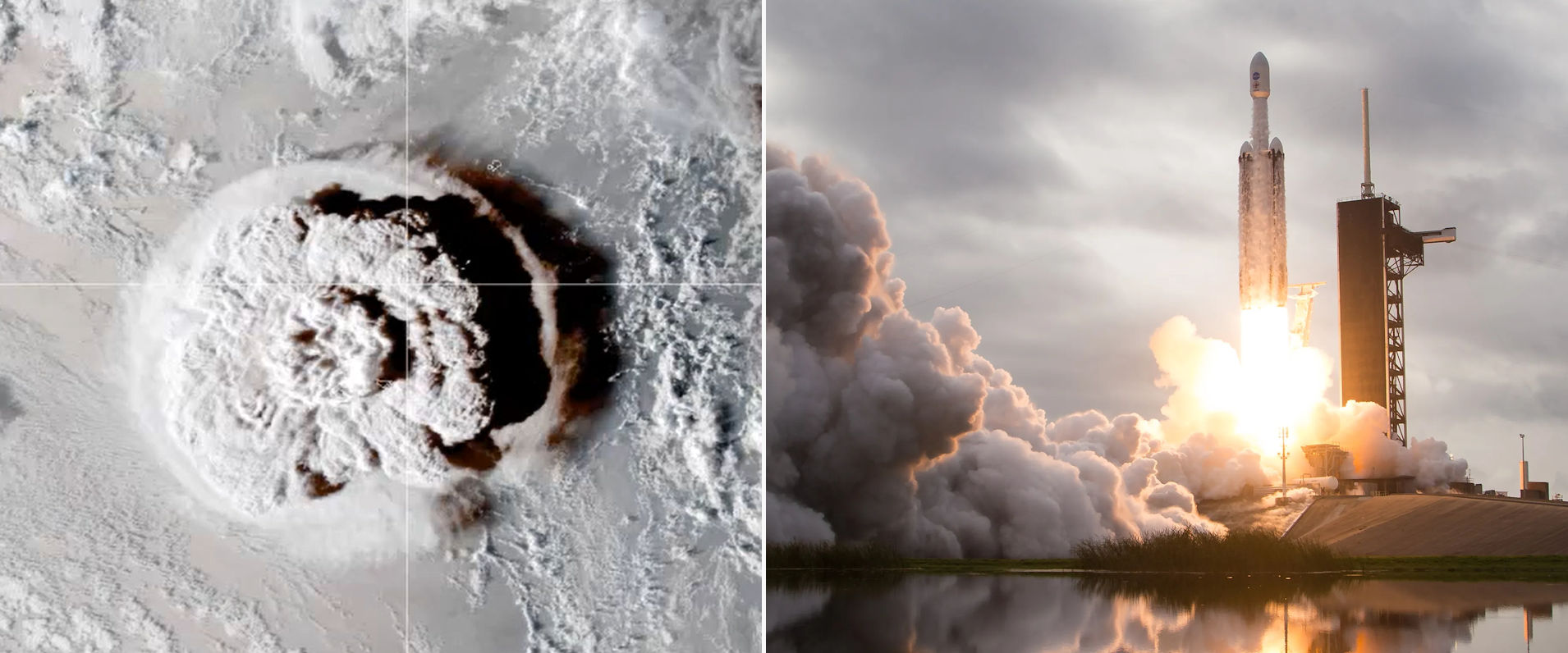
The Tonga undersea volcano (left) and a SpaceX Falcon Heavy launch (right)
First, there's Tonga. The undersea volcano erupted in January 2022, hurling record amounts of water into the atmosphere. That was two years ago, but it takes about two years for the vapor to circulate up to the mesosphere where NLCs form. Water is a key ingredient for NLCs, so Tonga's moisture could be turbocharging the clouds
Second is SpaceX. Studies show that water-rich rocket exhaust boosts the abundance of NLCs. So far this year (Jan. 1st - June 27th), 124 rockets have been launched, mostly by SpaceX. That's 4 times the rate of launches during previous Solar Maxima. Quadrupling the amount of rocket exhaust in the mesosphere might be enough to overwhelm the water and ice destroying effects of the active sun.
Realtime Noctilucent Cloud Photo Gallery
Free: Spaceweather.com Newsletter
THIS PENDANT HAS TOUCHED THE SHADOW OF THE MOON: On April 8, 2024, the students of Earth to Sky Calculus launched a cosmic ray research balloon directly into a total eclipse of the sun. This handmade pendant went along for the ride. Floating more than 118,110 feet above the path of totality in Texas, the necklace spent 3 minutes and 45 seconds wrapped in the shadow of the Moon:
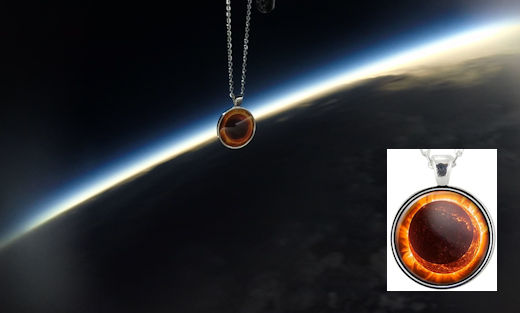
You can have it for $149.95. Created by an artist in Texas where the balloon was launched, the pendant displays a solar eclipse art print sealed under a smooth glass cover. It comes with a greeting card showing the pendant in flight and telling the story of its journey to the edge of space during the total eclipse.
Far Out Gifts: Earth to Sky Store
All sales support hands-on STEM education
CANYON OF FIRE: A filament of magnetism in the sun's southern hemisphere erupted today (June 29th). On its way to space, the plasma-filled strand cut a 'canyon of fire' in the sun's atmosphere:
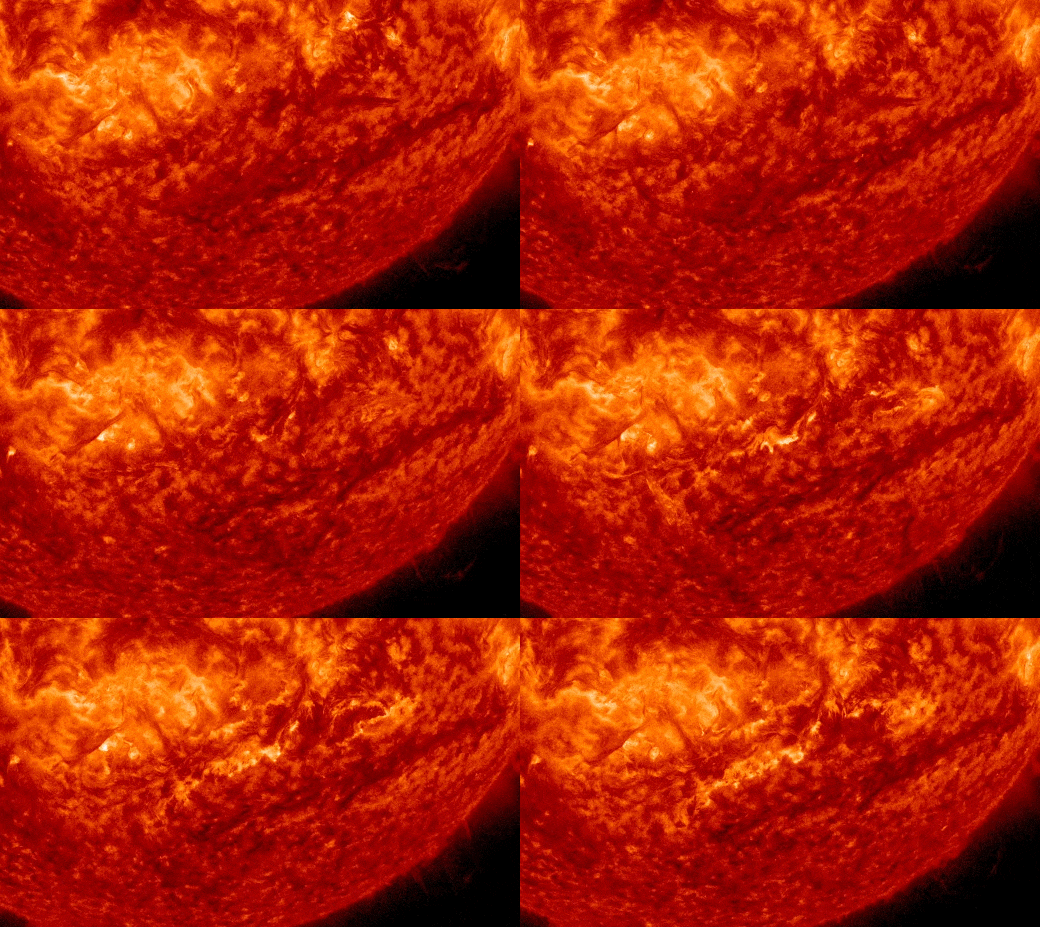
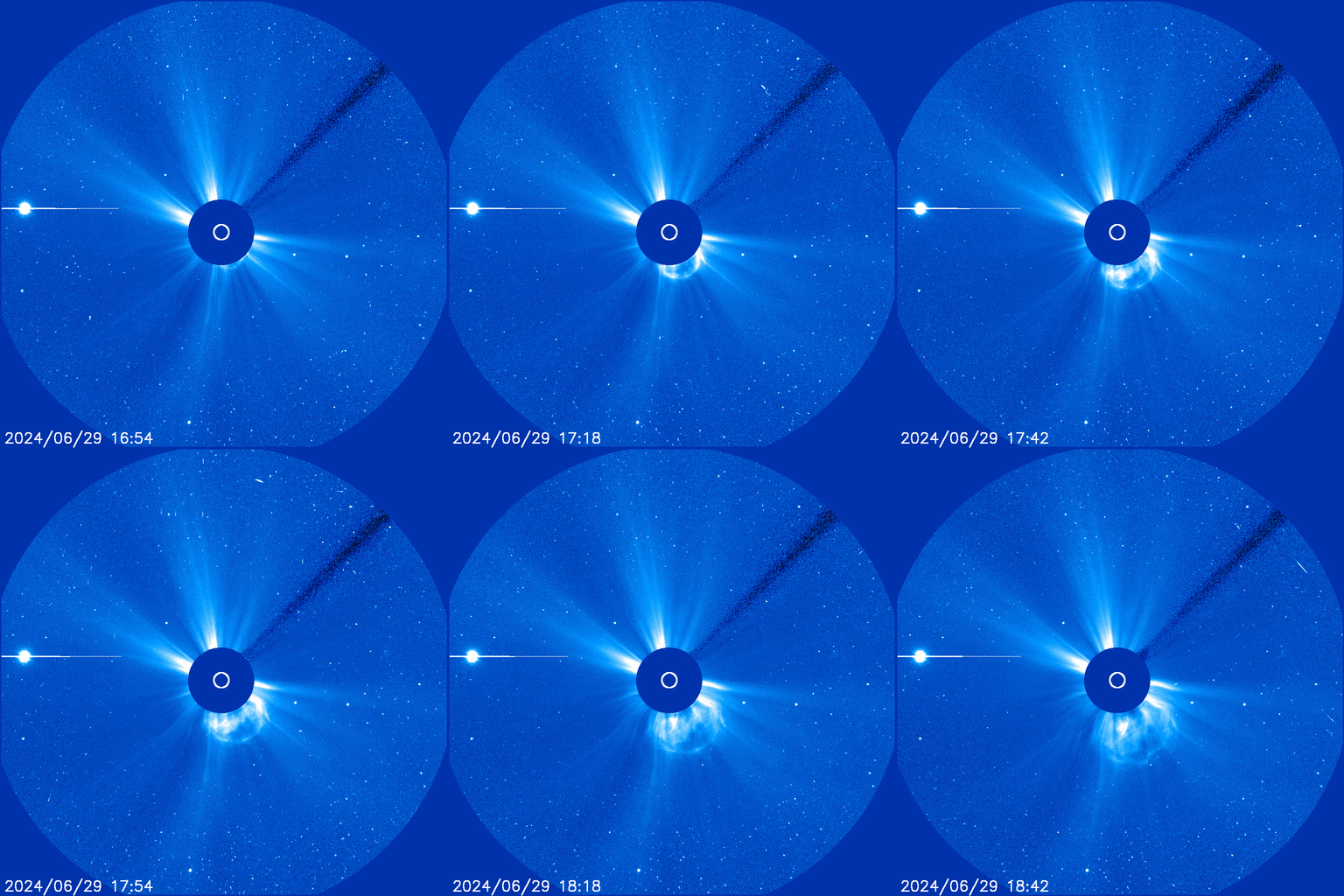
The contents of that canyon are now inside a coronal mass ejection (CME), seen here in a movie from SOHO coronagraphs. The bulk of the CME will pass south of Earth. However, its flank might deliver a glancing blow on July 2nd. Stay tuned for forecast models from NOAA. CME alerts: SMS Text
Realtime Space Weather Photo Gallery
Free: Spaceweather.com Newsletter
Realtime Comet Photo Gallery
Free: Spaceweather.com Newsletter
Realtime Aurora Photo Gallery
Free: Spaceweather.com Newsletter