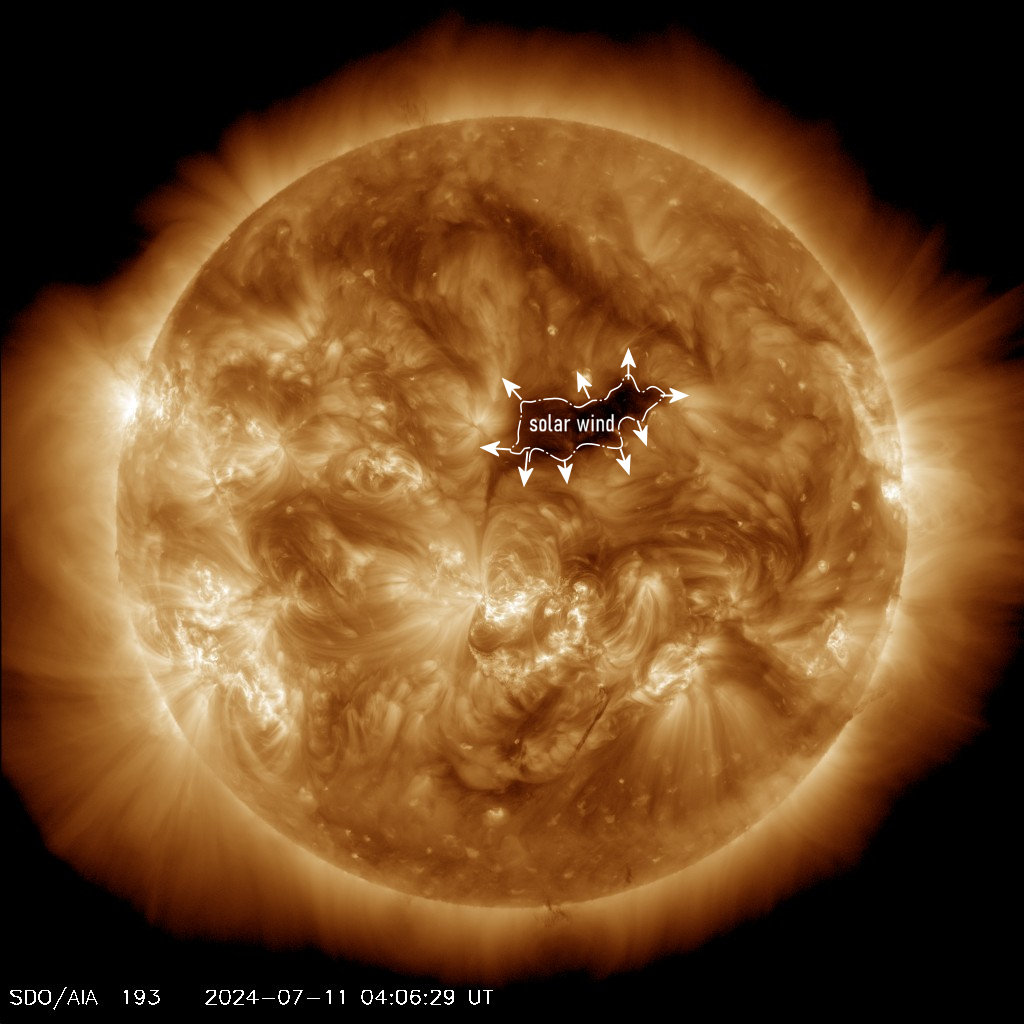
GEOMAGNETIC STORM WATCH (G1): NOAA forecasters say that minor G1-class geomagnetic storms are possible on July 13-14 when a stream of solar wind is expected to hit Earth's magnetic field. The gaseous material is flowing from a northern hole in the sun's atmosphere. Aurora alerts: SMS Text

SUPERSTORM TRIGGERED A MASS MIGRATION OF SATELLITES: Earth just experienced the biggest mass migration of satellites in history. On May 10, 2024, approximately 5000 spacecraft had to maneuver to maintain altitude, resisting a geomagnetic storm that was trying to pull them down. The event is described in a research paper just accepted by the Journal of Spacecraft and Rockets.
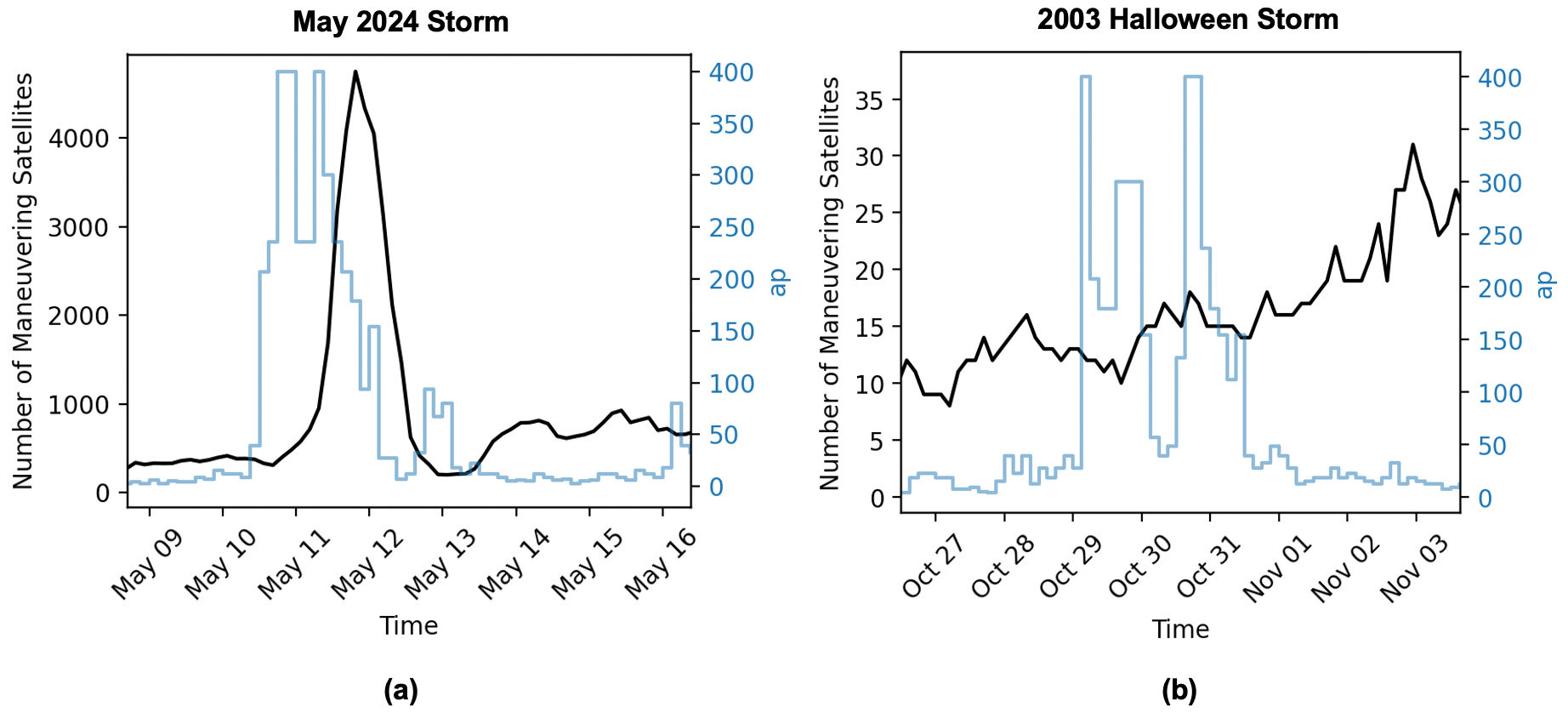
Above: Black--number of maneuvering satellites; Blue--intensity of the storm
"Most were SpaceX Starlink satellites," says William Parker of MIT, the paper's lead author. "Each satellite has a GNSS receiver as well as autonomous station-keeping and collision-avoidance capabilities. When they sensed the effects of the storm, thousands of the satellites made the decision to maneuver."
The need to migrate upward was caused by a sudden increase in satellite drag. Earth's atmosphere absorbed a huge amount of energy from the solar storm, causing it to puff up like a marshmallow held over a campfire. Tendrils of heated air reached into space and started dragging the satellites down.
"The superstorm's peak power was 2.63 TeraWatts," says Martin Mlynczak, who retired from NASA's Langley Research Center a month after the storm. Before he left, he used infrared data from NASA's TIMED spacecraft to estimate the amount of thermal energy dumped into the upper atmosphere. "It deposited enough energy to run my house for 10 million years (I average about 510 kWh per month)," he says.
Earth's atmosphere has been heated this much before, most recently during the Halloween storms of 2003. In those days, however, the satellite population was relatively low (fewer than 1000) and there was no mass migration.
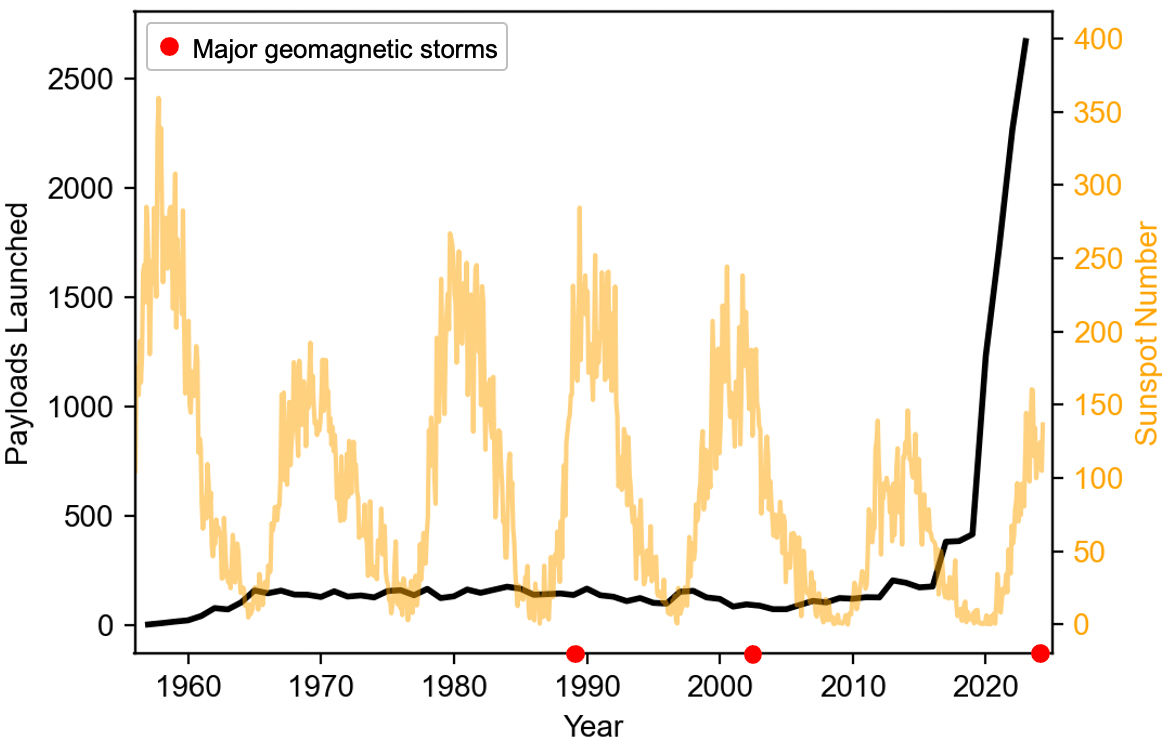
Above: Number of payloads launched to Earth orbit per year.
"The May 2024 geomagnetic storm was the first major storm to occur during a new paradigm in low Earth orbit satellite operations dominated by commercial small satellites," the authors wrote in their paper.
Thanks mainly to the advent of Starlink in 2019, Earth now has almost 10,000 active satellites--ten times the number in 2003. When a fraction of them unexpectedly decide to change course all at once, satellite operators must scramble to track them, making sure they don't collide. This creates a new and unprecedented risk for all satellites, even ones that don't move.
It's a problem that will only get worse in the years ahead. "Major storms are more likely throughout 2024-2025 during the peak of Solar Cycle 25," says Parker, "and the satellite population continues to grow."
Want to learn more? Read the original research here.
Realtime Space Weather Photo Gallery
Free: Spaceweather.com Newsletter
GLOW-IN-THE-DARK AURORA PENDANT: Are you looking for a far-out gift? Consider the Glow-in-the-Dark Aurora Pendant. On July 8, 2024, it flew to the stratosphere onboard an Earth to Sky Calculus cosmic ray research balloon:
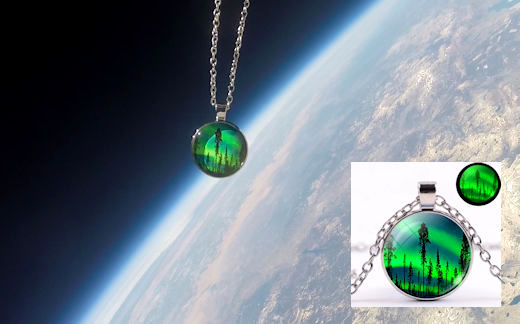
You can have it for $99.95. For 3 hours, the necklace floated 106,444 feet above the Sierra Nevada mountains of central California while radiation sensors inside the balloon's payload gathered data for the students' cosmic ray monitoring project. It comes with a greeting card showing the pendant in flight and explaining the Earth to Sky Calculus radiation experiment.
The students of Earth to Sky Calculus are selling space jewelry to support their cosmic ray ballooning program. Don't wait for Christmas--get yours now!
Far Out Gifts: Earth to Sky Store
All sales support hands-on STEM education
Realtime Comet Photo Gallery
Free: Spaceweather.com Newsletter
Realtime Aurora Photo Gallery
Free: Spaceweather.com Newsletter
Realtime Noctilucent Cloud Photo Gallery
Free: Spaceweather.com Newsletter