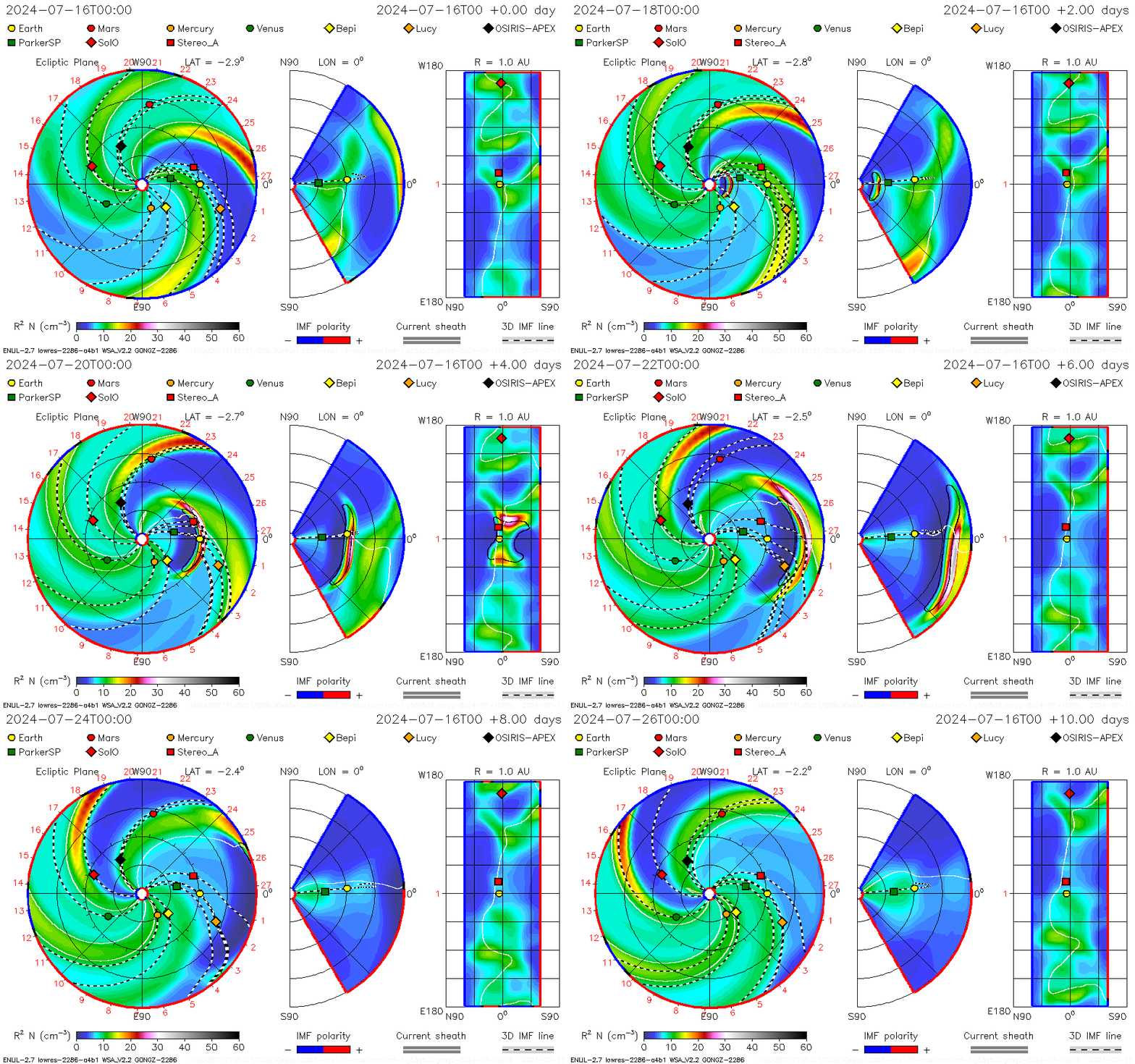
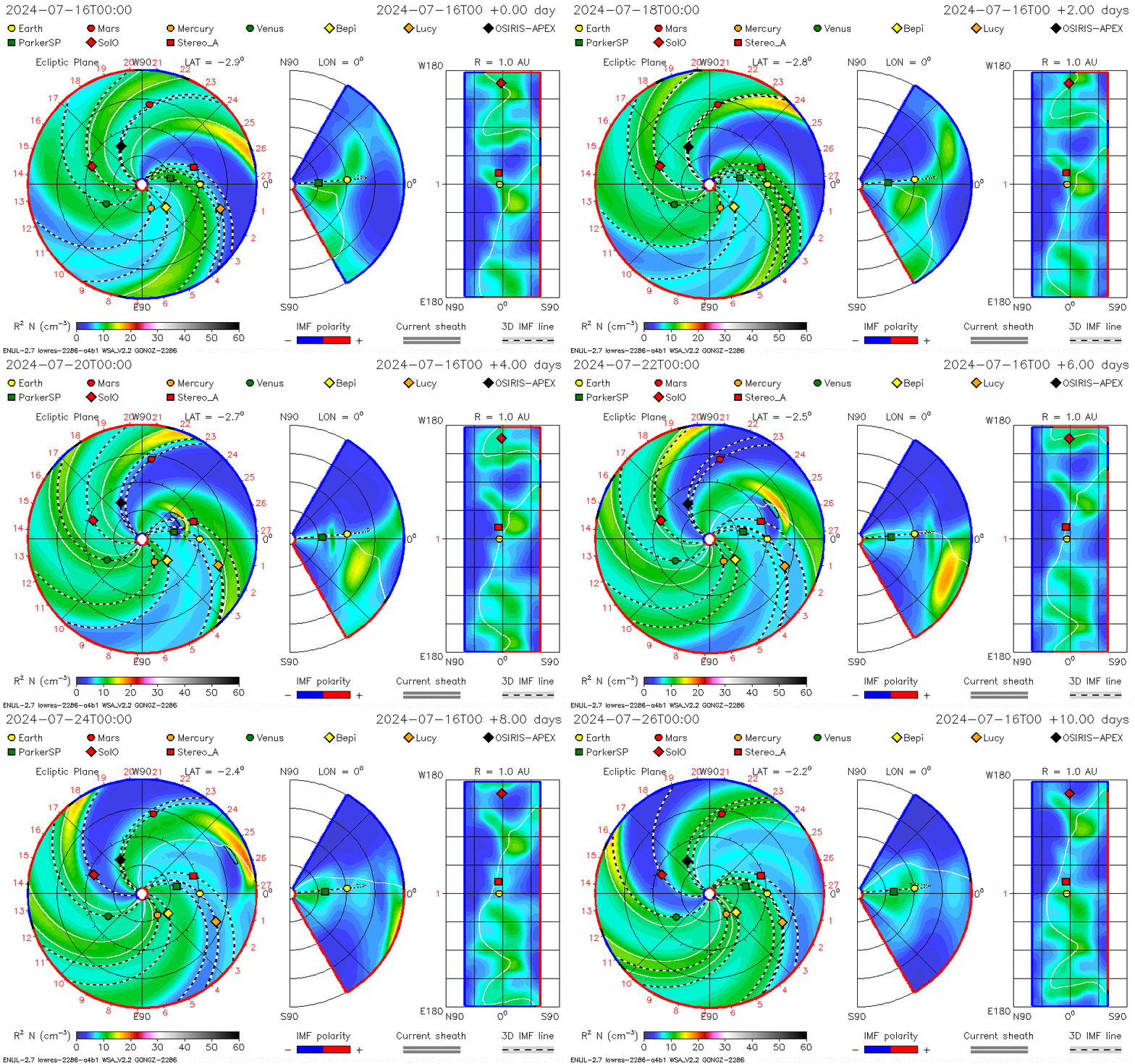
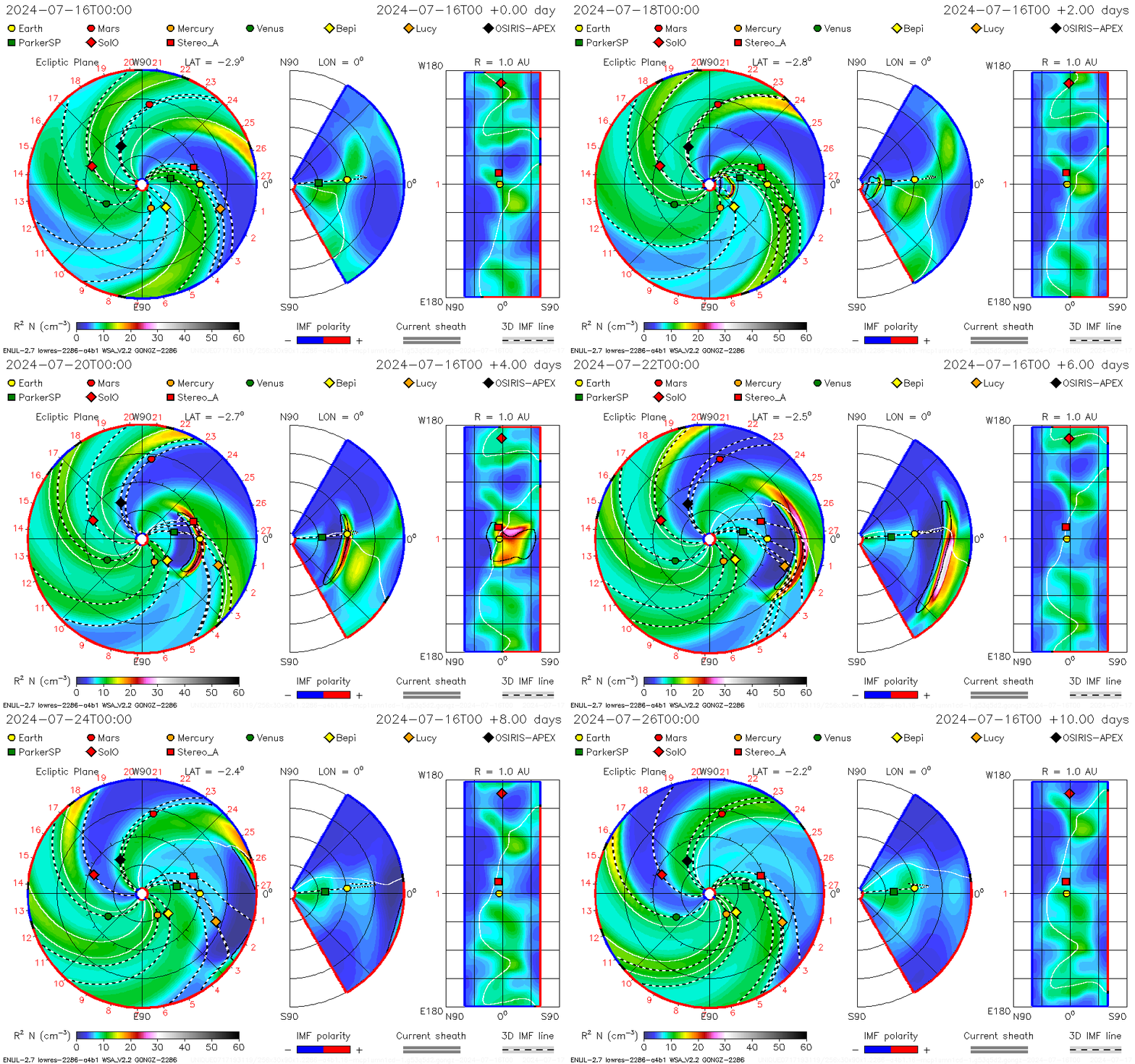
GEOMAGNETIC STORM WATCH (G1): Two and possibly three faint CMEs are heading for Earth following a series of eruptions from sunspots AR3743, AR3753, and AR3744 on July 16-17. Their collective impact on July 20-21 could cause a minor G1-class geomagnetic storm. Aurora alerts: SMS Text

INCOMING 'DAYLIGHT COMET' MIGHT NOT FALL APART: Comet Tsuchinshan-ATLAS (C/2023 A3) might not be falling apart, after all. Last week, respected researcher Zdenek Sekanina suggested that the comet's destruction was inevitable and, indeed, already underway. New data, however, give hope that it could survive for a daylight apparition later this year.
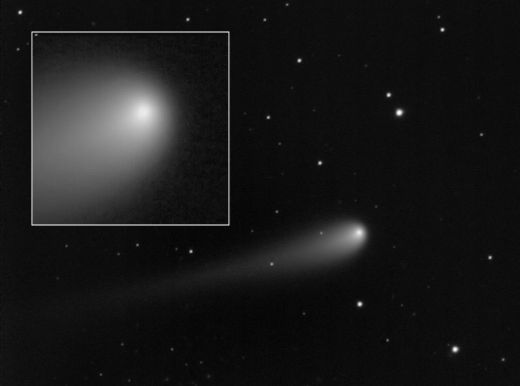
Above: Comet Tsuchinshan-ATLAS photographed on July 13 by Eliot Herman using a telescope in Chile
Astronomers using the TRAPPIST telescopes in Chile recently measured the comet's water production rate. They found a healthy 2x1028 molecules/s emerging from the nucleus. "That is about the rate expected for a ~100% active nucleus of ~2 km diameter," notes comet expert Qicheng Zhang of the Lowell Observatory. "A comet of that size shouldn't be disintegrating at its current distance from the sun (1.6 au)."
Indeed, it appears to be intact. If the comet's nucleus had split into a swarm of boulders, the comet's coma (its atmosphere) would look like a superposition of "comets within comets." Instead, it has the parabolic windsock shape of a single large nucleus falling into the sun. "A field of active boulders cannot physically produce the coma we see right now," says Zhang.
For a while, astronomers worried about the comet's light curve, which temporarily faded earlier this year:
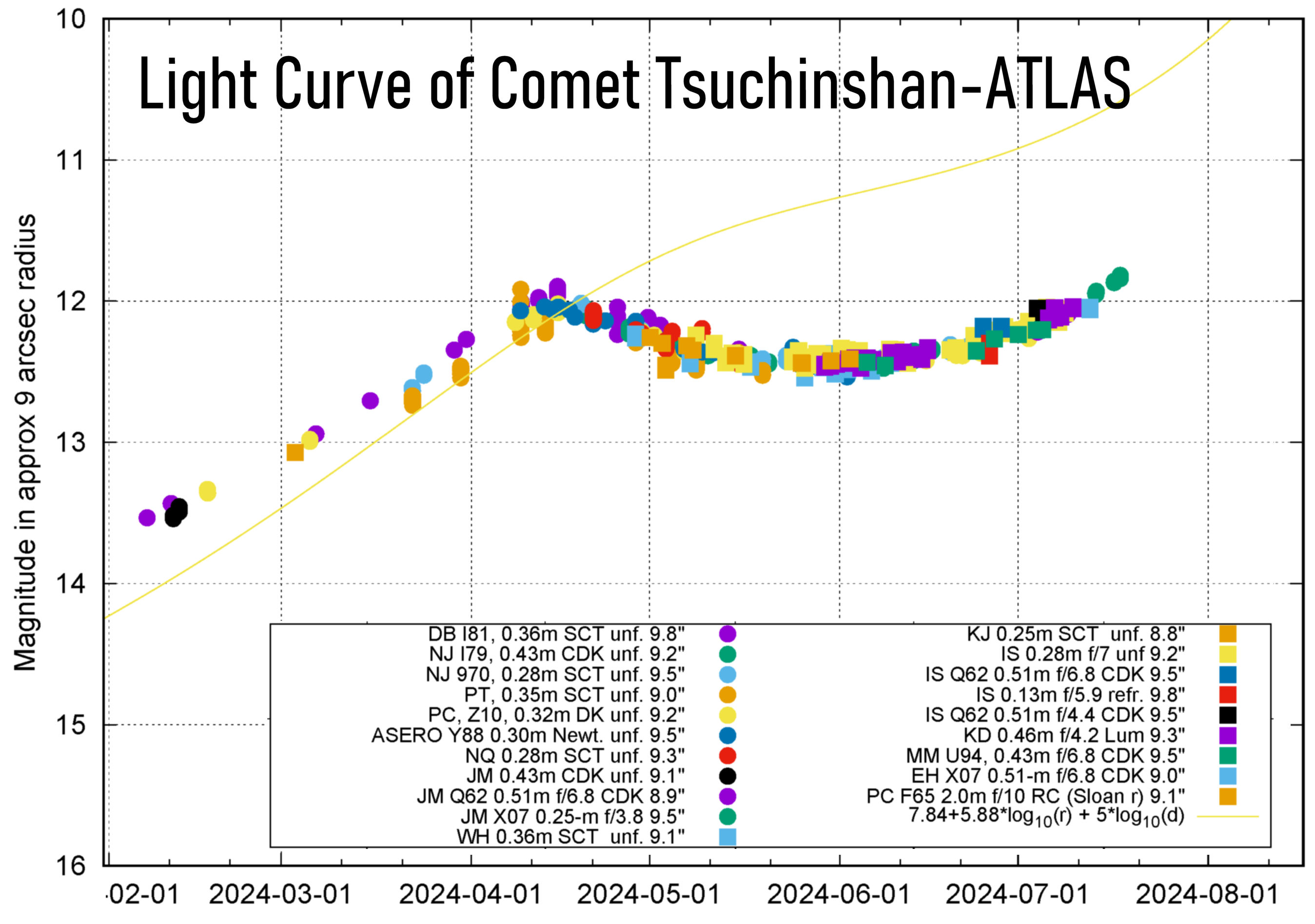
Above: The comet's light curve, courtesy Nick James of the BAA.
"Now, however, it is brightening quite rapidly and the lightcurve is smooth with no indication of any fragmentation or outbursts," reports Nick James, director of the Comet Section of the British Astronomical Association (BAA).
All of this is potentially good news for sky watchers. If Tsuchinshan-ATLAS can hold itself together for a few more months, it could put on quite a show.
"If the comet continues to behave as it is now, it will brighten to magnitude +4 ± 1 at perihelion on Sept. 27th, to a daylight peak of -3 ± 1 near inferior conjunction on Oct. 9th, and subsequently produce a quite possibly 20+ degree dust tail visible under dark skies (Oct ~19) before fading away," says Zhang.
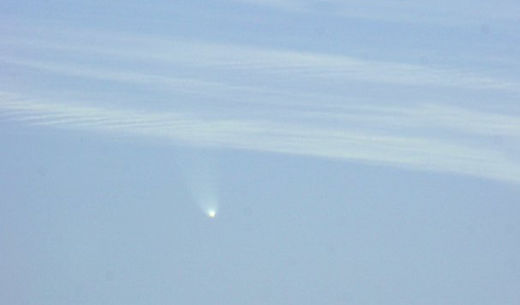
Comet McNaught photographed in daylight by Thorsten Boeckel on Jan. 13, 2007. [gallery]
The potential daylight visibility in October depends in part on a process called "forward scattering." Forward scattering happens when a comet passes almost directly between Earth and the sun. Dust in the comet's atmosphere can scatter sunlight toward Earth, making the comet seem extra bright. The same thing happened to Comet McNaught in 2007, making it visible in broad daylight as a magnitude -5.5 object.
Nick James expects the comet to brighten "quite rapidly" during the next month, and he encourages observers in the southern hemisphere (where the comet is currently visible) to monitor developments. Stay tuned!
Realtime Comet Photo Gallery
Free: Spaceweather.com Newsletter
REAL MONEY FROM SPACE: On July 16, 1969, the world watched as a Saturn V rocket launched Neil Armstrong, Buzz Aldrin, and Michael Collins to the Moon. Exactly 55 years later, the students of Earth to Sky Calculus launched the US Mint's limited edition Saturn V dollar coin to the stratosphere:
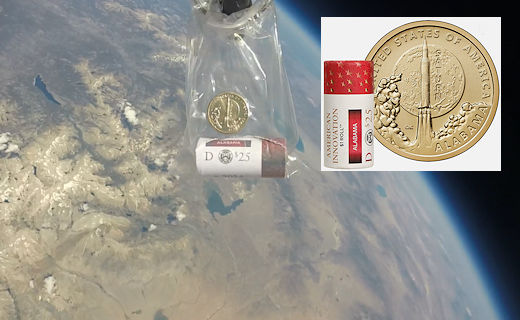
You can have a single coin for $49.95 or an entire unbroken roll for $249.95. No longer available from the US Mint, these rare coins flew 121,665 feet above the Sierra Nevada on July 16, 2024. One side shows the mighty Saturn V rocket blasting off from Cape Canaveral; the other side features the Statue of Liberty in profile.
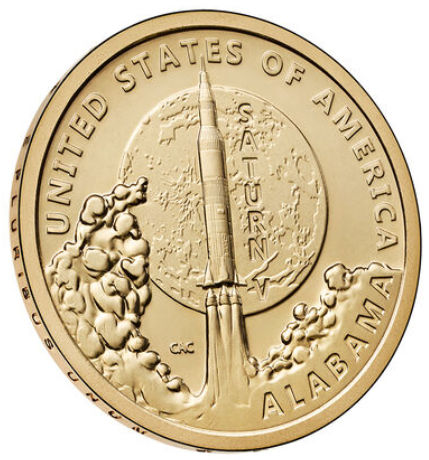

The students are selling space coins to support to support their cosmic ray research program. (Helium is expensive!) Each order comes with a greeting card showing the coins in flight and telling the story of their journey to the stratosphere and back again.
Far Out Gifts: Earth to Sky Store
All sales support hands-on STEM education
Realtime Aurora Photo Gallery
Free: Spaceweather.com Newsletter
Realtime Space Weather Photo Gallery
Free: Spaceweather.com Newsletter
Realtime Noctilucent Cloud Photo Gallery
Free: Spaceweather.com Newsletter