GEOMAGNETIC STORM WATCH (G2): Multiple CMEs are heading for Earth. They could spark G2-class geomagnetic storms when they arrive on July 31st and August 1st. During such storms, naked-eye auroras may be seen in northern-tier US states and central Europe. CME Impact alerts: SMS Text
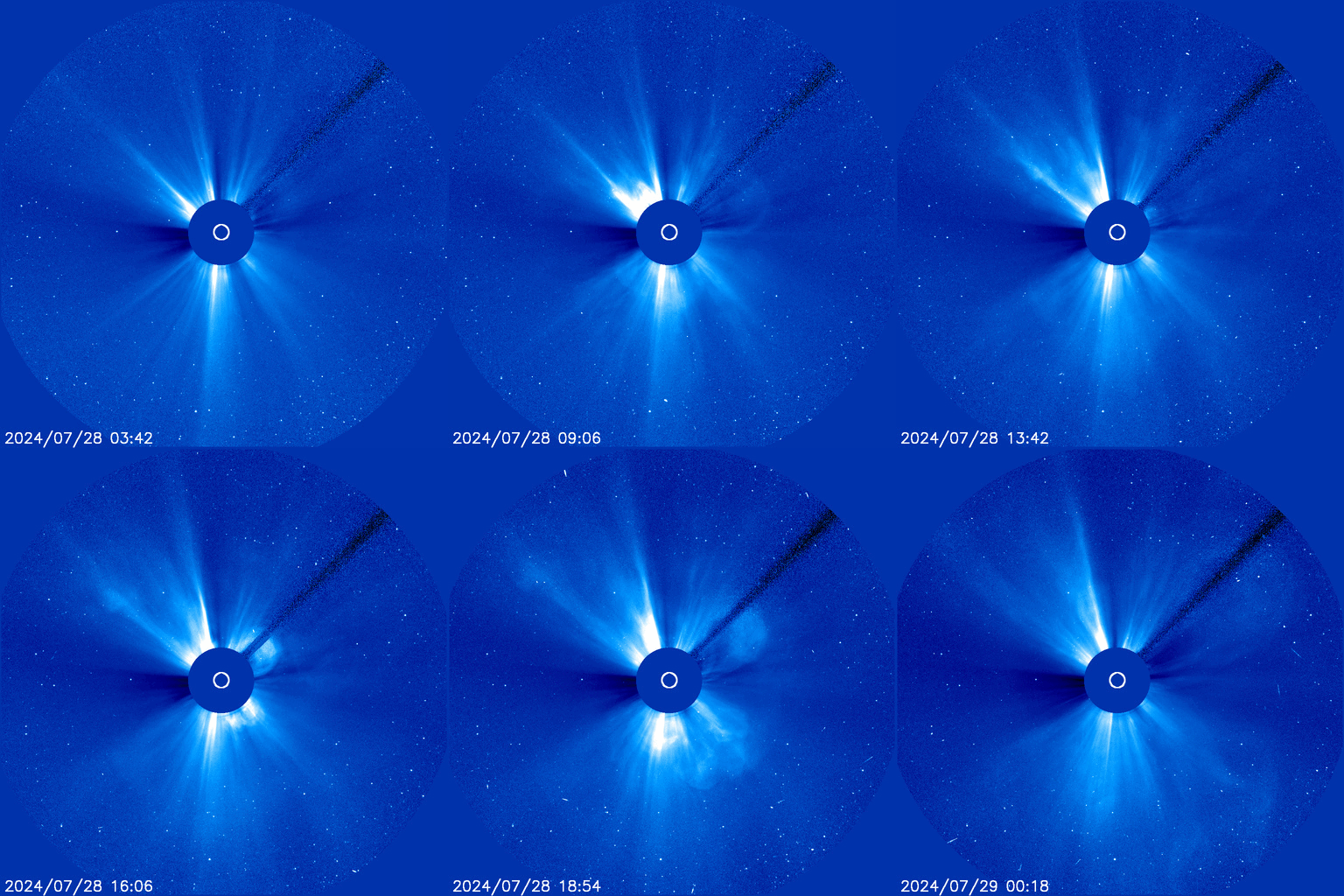

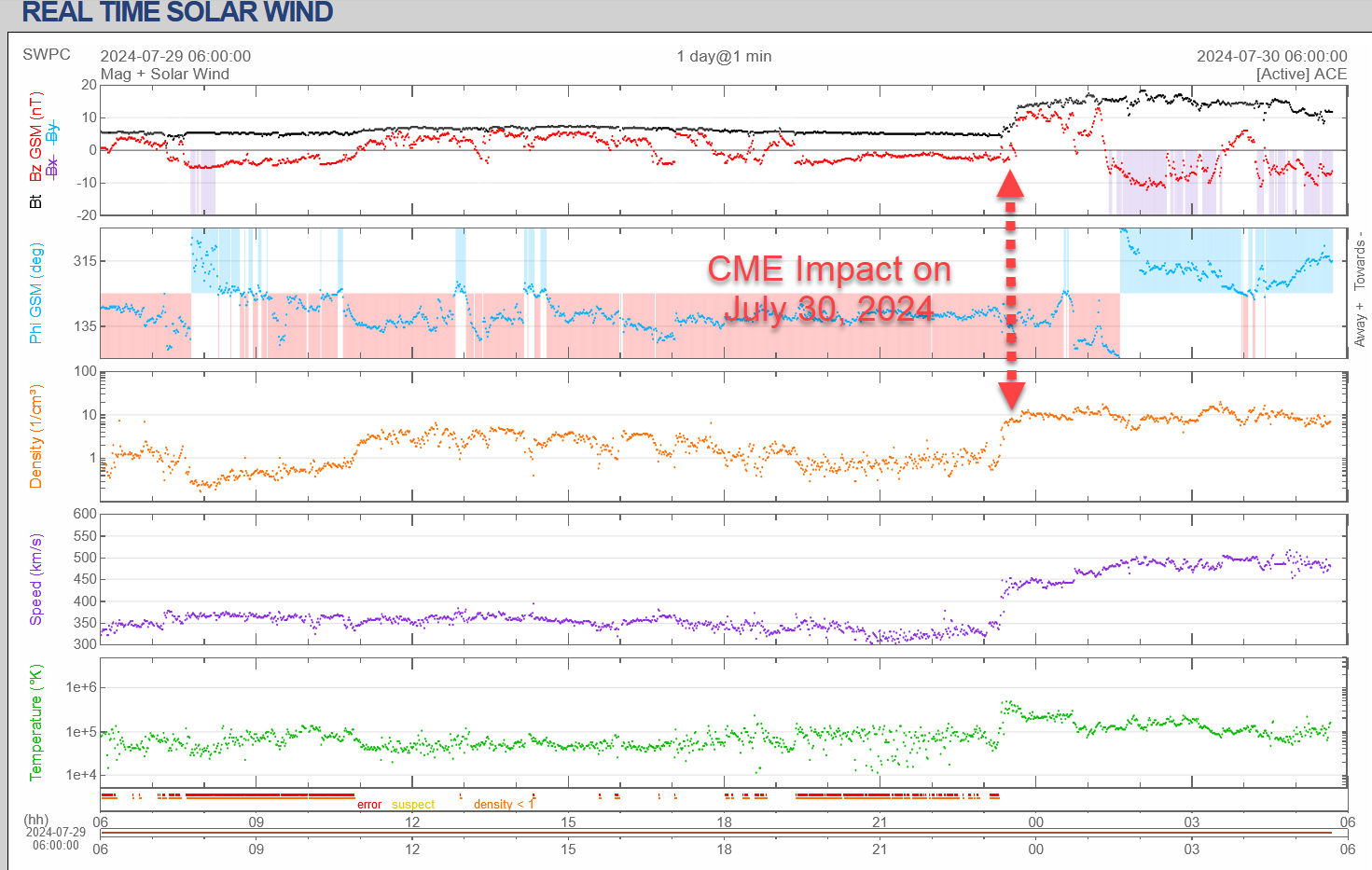
CANNIBAL CME SPARKS PHOTOGRAPHIC AURORAS: A Cannibal CME struck Earth's magnetic field on July 30th at 0027 UT. The impact sparked a minor G1-class geomagnetic storm with photographic auroras as far south as Arizona:
"The auroras were not visible to the naked eye, but my camera was able to capture these faint red pillars from the south rim of the Grand Canyon," says photographer David Blanchard. "This is a 74 minute time lapse. I also managed to capture waves in the airglow, a few meteors, and countless flaring satellites."
Auroras so faint they're visible only to cameras are not what we expected from a potent Cannibal CME. What happened? Inside this Cannibal CME, magnetic fields fields were pointing in the wrong direction; they did not connect well to Earth's magnetosphere. As a result, the storm was minor (G1) instead of strong (G3). CME Impact alerts: SMS Text


more images: from Aaron Watson in the West Elk Mountains of Colorado; from Alan Dyer near Gleichen, Alberta; from Carl Bernhardt in the Grand Canyon National Park, Arizona; from Chris Almquist of Ely, MN; from Jake Stehli of Winona, Minnesota
Realtime Aurora Photo Gallery
Free: Spaceweather.com Newsletter
THINGS YOU SEE WHILE WAITING FOR AURORAS: Dan Bush wasn't trying to photograph sprites. "I was out several times during the night of July 30th looking for auroras here in northern Missouri," explains Bush. "Instead, I captured this bright jellyfish sprite."
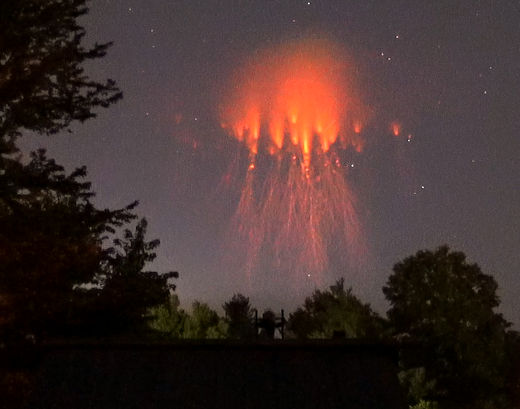
"I did photograph some pinkish aurora glows off and on throughout the night," says Bush, "but sprites stole the show."
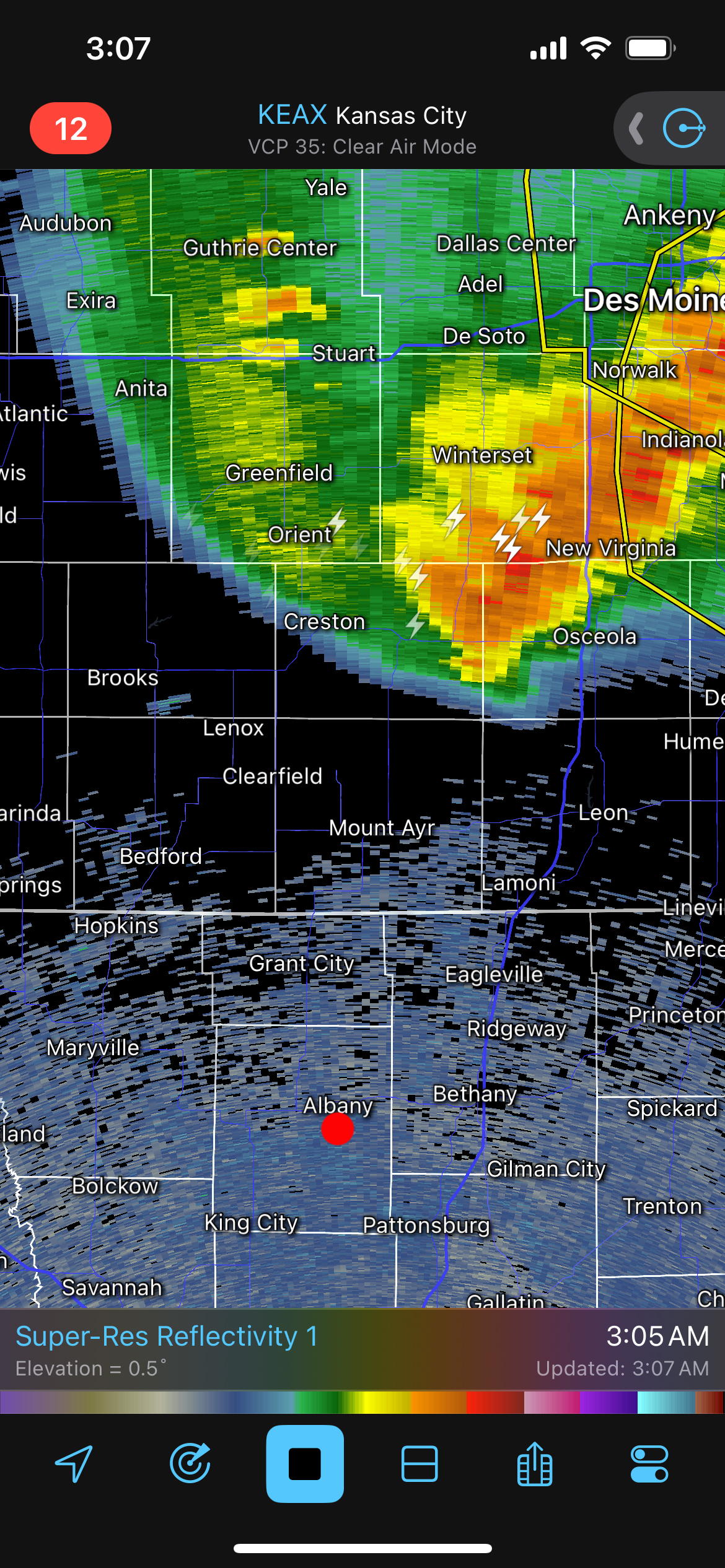
While Bush was watching, a severe thunderstorm moved into Iowa, about 60 miles north of his home in Albany, Missouri, with sprites dancing across the cloudtops. "The display was intense, and included the largest and brightest sprite I had ever seen!"
Realtime Space Weather Photo Gallery
Free: Spaceweather.com Newsletter
GLOW-IN-THE-DARK AURORA PENDANT: Are you looking for a far-out gift? Consider the Glow-in-the-Dark Aurora Pendant. On July 8, 2024, it flew to the stratosphere onboard an Earth to Sky Calculus cosmic ray research balloon:
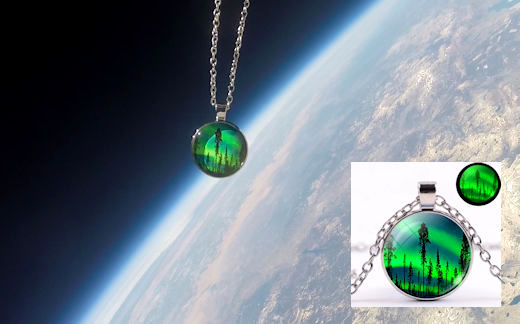
You can have it for $99.95. For 3 hours, the necklace floated 106,444 feet above the Sierra Nevada mountains of central California while radiation sensors inside the balloon's payload gathered data for the students' cosmic ray monitoring project. It comes with a greeting card showing the pendant in flight and explaining the Earth to Sky Calculus radiation experiment.
The students of Earth to Sky Calculus are selling space jewelry to support their cosmic ray ballooning program. Don't wait for Christmas--get yours now!
Far Out Gifts: Earth to Sky Store
All sales support hands-on STEM education
Realtime Comet Photo Gallery
Free: Spaceweather.com Newsletter
Realtime Noctilucent Cloud Photo Gallery
Free: Spaceweather.com Newsletter