GEOMAGNETIC STORM WATCH (G2): NOAA has issued a geomagnetic storm watch for Aug. 3rd, when a CME is expected to graze Earth's magnetic field. Hurled into space by an M8-class solar flare, the CME could spark a G2-class geomagnetic storm with naked-eye auroras in northern-tier US states. CME Impact alerts: SMS Text



SUNSPOT COUNTS HIT A 23-YEAR HIGH: The sun is partying like it's 2001. That's the last time sunspot counts were as high as they are now. The monthly average sunspot number for July 2024 was 196.5, according to the Royal Observatory of Belgium's Solar Influences Data Analysis Center. This eclipses every month since Dec. 2001:
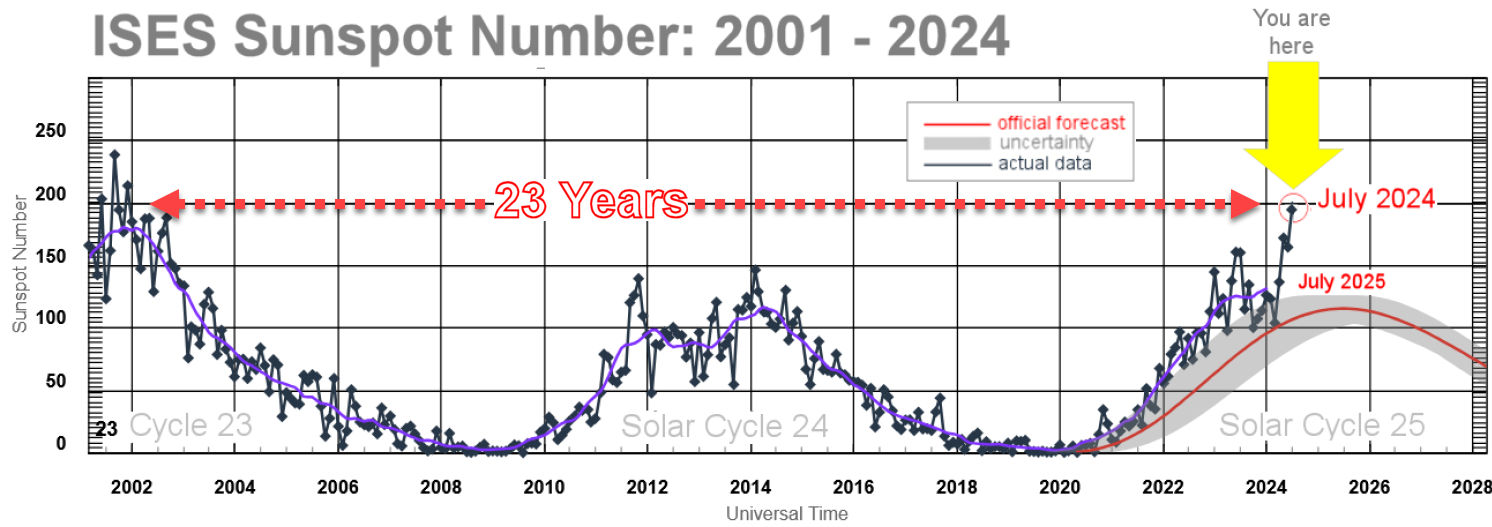
Solar Cycle 25 wasn't expected to be this strong. When it began in Dec. 2019, experts predicted it would be a weak cycle like its immediate predecessor Solar Cycle 24. If that forecast had panned out, Solar Cycle 25 would be one of the weakest solar cycles in a century.
Instead, Solar Cycle 25 has shot past Solar Cycle 24 and may be on pace to rival some of the stronger cycles of the 20th century. Already in May 2024 we have experienced a century-class geomagnetic storm with auroras sighted in the South Pacific, central America and south Africa.
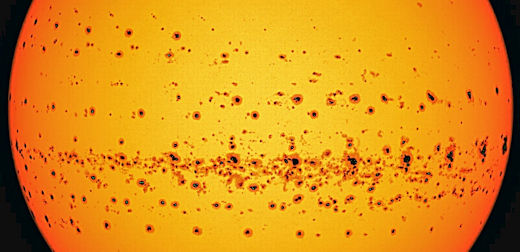
Above: A composite image of sunspots in July 2024. credit: Senol Sanli
The last time sunspot numbers were this high, the sun was on the verge of launching the Great Halloween Storms of 2003, which included the strongest X-ray solar flare ever recorded (X45) and a CME so powerful it was ultimately detected by the Voyager spacecraft at the edge of the solar system.
Is this Solar Max? The jury is still out. Sunspot numbers may continue to rise in the months ahead and, based on the behavior of previous cycles, we can confidently expect high solar activity for at least 2 to 3 more years. Stay tuned! Solar flare alerts: SMS Text
AURORAS IN THE USA: A Cannibal CME hit Earth on July 30th, followed by two lesser CMEs on July 31st. None of the impacts was strong, but together they sparked photographic auroras in more than a dozen US states. Terrence Cook was driving down I-80 near Billings, Montana, when the light show began:
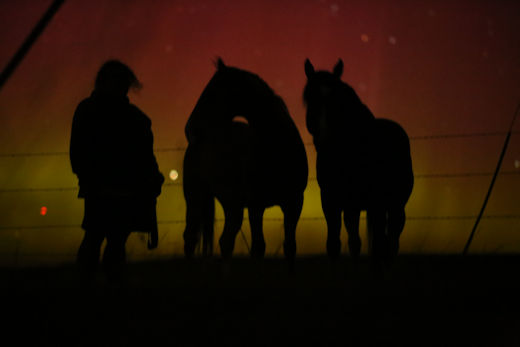
"I pulled over to enjoy the show, and during the brightest lights of the night, two horses visited us from the dark," says Cook. "They even seemed to be aware of it, although much more interested in us."
Similar auroras could appear on Aug. 3rd when a potent CME is expected to graze Earth's magnetic field. The off-target CME *might* miss, but if it doesn't, G2-storms are likely. Aurora alerts: SMS Text
Realtime Aurora Photo Gallery
Free: Spaceweather.com Newsletter
SILK SPACE ROSE: This rose will last forever, and it has been to the edge of space. On Jan. 4th, the students of Earth to Sky Calculus launched it onboard a cosmic ray research balloon. At the apex of the flight it floated 111,424 feet above the Sierra Nevada mountains of central California:
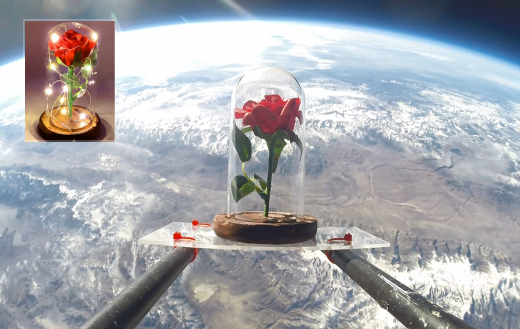
You can have it for $126.65. The students are selling space roses to support their cosmic ray ballooning program. Each silk bloom comes with a greeting card showing the rose in flight and telling the story of its journey to the stratosphere and back again. Also included are the glass dome, wooden base, and an LED light kit to make your rose glisten like the stars.
Far Out Gifts: Earth to Sky Store
All sales support hands-on STEM education
Realtime Space Weather Photo Gallery
Free: Spaceweather.com Newsletter
Realtime Comet Photo Gallery
Free: Spaceweather.com Newsletter
Realtime Noctilucent Cloud Photo Gallery
Free: Spaceweather.com Newsletter