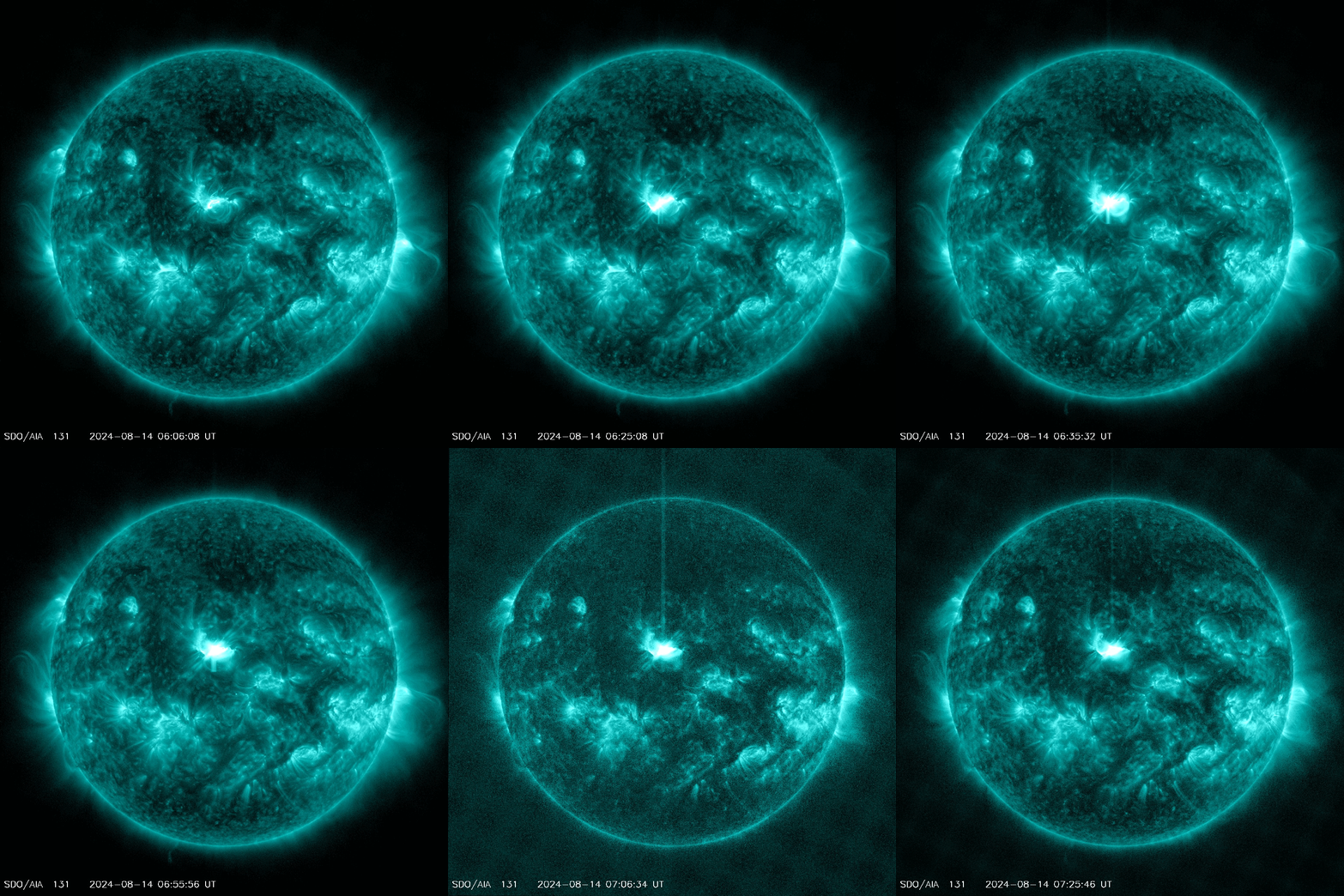
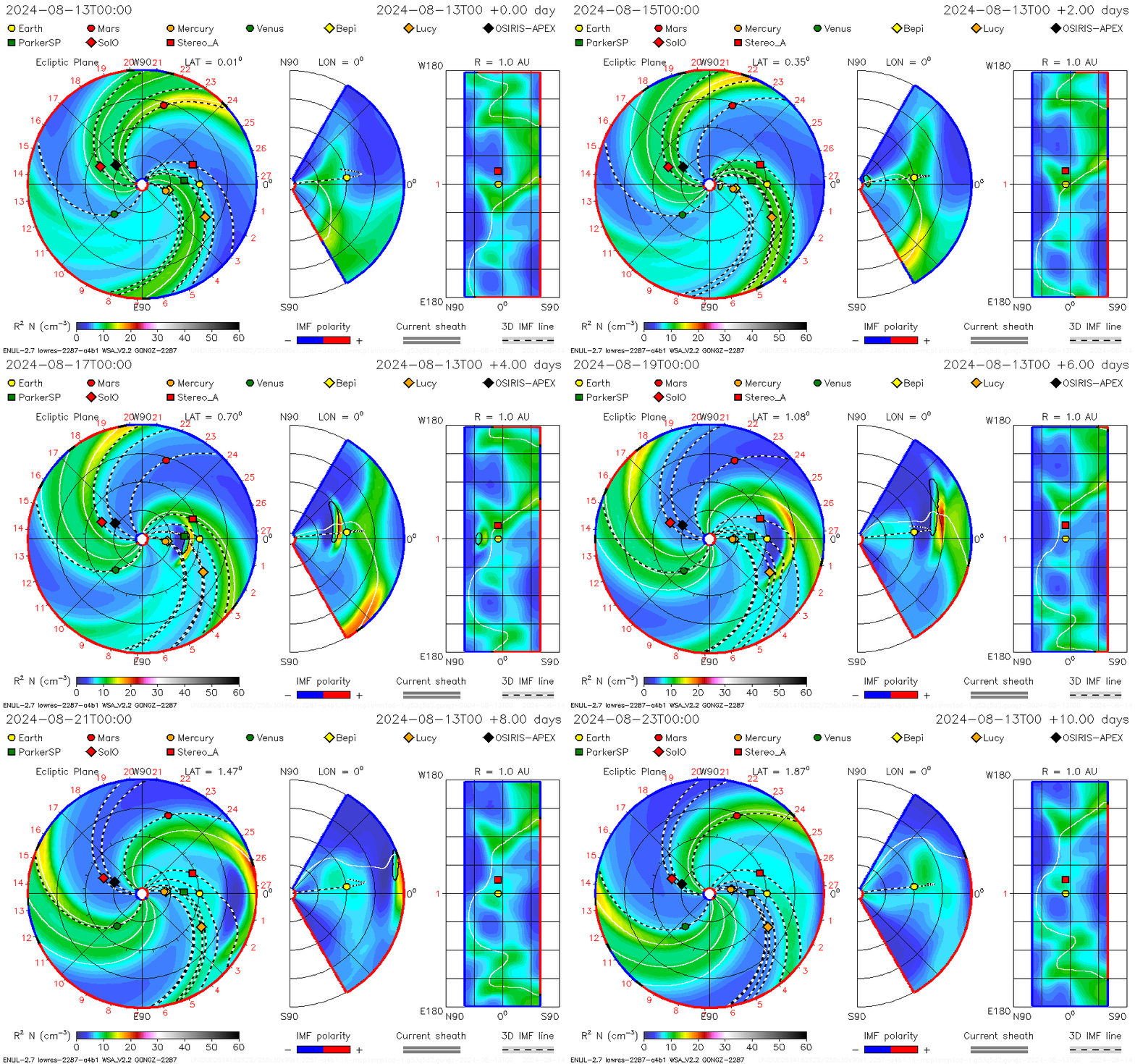
GEOMAGNETIC STORM WATCH (G1): Wednesday's X1-class solar flare from sunspot AR3784 hurled a faint CME directly toward Earth. Minor G1-class geomagnetic storms are possible when it arrives. A NOAA model predicts Aug. 18th; NASA's model leans more toward Aug. 17th. CME impact alerts: SMS Text

AURORAS SHOULD NOT BE ORANGE (BUT THEY ARE): During this week's severe (G4-class) geomagnetic storm, Tony Bendele of Pennsylvania saw something rare and a little mysterious. "Orange auroras!" he says. "Yes, Orange. I had never seen this color in auroras before." He took this picture before sunrise on Aug. 12th:
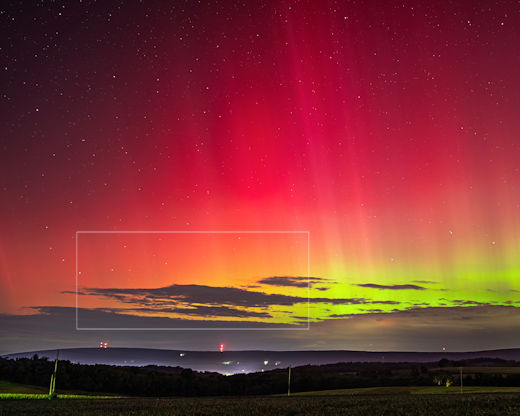
"At first, I thought something was wrong, so I checked this image numerous times. The color orange is really there," he says.
What's so mysterious about orange? Auroras get their colors from specific atoms and molecules in Earth’s atmosphere. For instance, green is due to oxygen, while pink comes from nitrogen. The problem is, there’s nothing in the air capable of making bright orange.
Theoretically, nitrogen and oxygen (N2, N2+, and O2+) can produce emissions at orange wavelengths. However, these emissions are very weak compared to other competing colors produced by the same molecules. Auroras should not be orange.
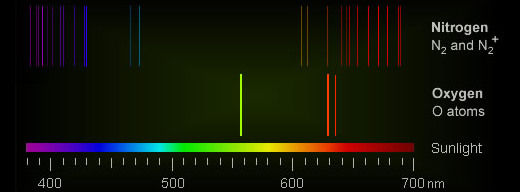
Colors produced by atoms and molecules in Earth's atmosphere
The answer may be simple. During typical geomagnetic storms, red auroras and green auroras are well separated; red on top, green on the bottom. However, when geomagnetic storms become intense, as happened on Aug. 12th, red and green auroras can mix in a zone 150 km to 200 km high. The overlap naturally produces a yellow-orange glow–no mystery molecule required.
Have you photographed an orange aurora? Submit your pictures here.
Realtime Space Weather Photo Gallery
Free: Spaceweather.com Newsletter
REAL MONEY FROM SPACE: On July 16, 1969, the world watched as a Saturn V rocket launched Neil Armstrong, Buzz Aldrin, and Michael Collins to the Moon. Exactly 55 years later, the students of Earth to Sky Calculus launched the US Mint's limited edition Saturn V dollar coin to the stratosphere:
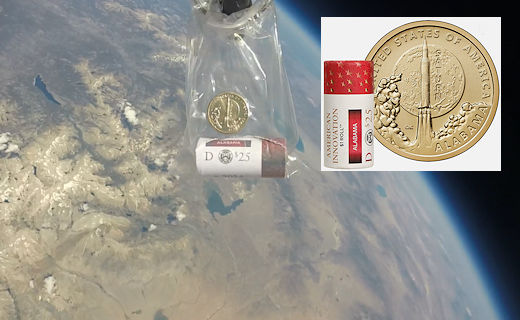
You can have a single coin for $49.95 or an entire unbroken roll for $249.95. No longer available from the US Mint, these rare coins flew 121,665 feet above the Sierra Nevada on July 16, 2024. One side shows the mighty Saturn V rocket blasting off from Cape Canaveral; the other side features the Statue of Liberty in profile.
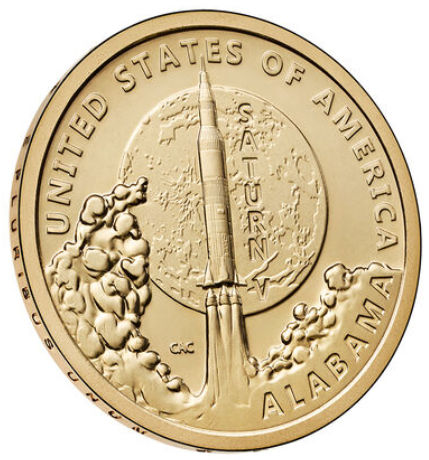

The students are selling space coins to support to support their cosmic ray research program. (Helium is expensive!) Each order comes with a greeting card showing the coins in flight and telling the story of their journey to the stratosphere and back again.
Far Out Gifts: Earth to Sky Store
All sales support hands-on STEM education
Realtime Aurora Photo Gallery
Free: Spaceweather.com Newsletter
Realtime Comet Photo Gallery
Free: Spaceweather.com Newsletter
Realtime Noctilucent Cloud Photo Gallery
Free: Spaceweather.com Newsletter