SUNSPOT NUMBERS REMAIN HIGH: So far this month, average sunspot numbers are hovering between 200 and 250. If this continues for another 12 days, August 2024 will end up as the spottiest month in more than 20 years, rivaling the peak of old Solar Cycle 23. No forecasters predicted that Solar Cycle 25 (the current cycle) would be so strong, but the sun has its own plans. Solar flare alerts: SMS Text
WAITING FOR THE NEXT SPACEX SPIRAL: For more than a year, Zach Goldberg has been wondering what he saw. The aurora photographer was camping in Denali National Park in April 2023 when, out of nowhere, a giant blue spiral pinwheeled across the night sky. "We had no idea what it was," says Goldberg. "Fortunately, we already had our cameras out for the auroras." This is what he saw:
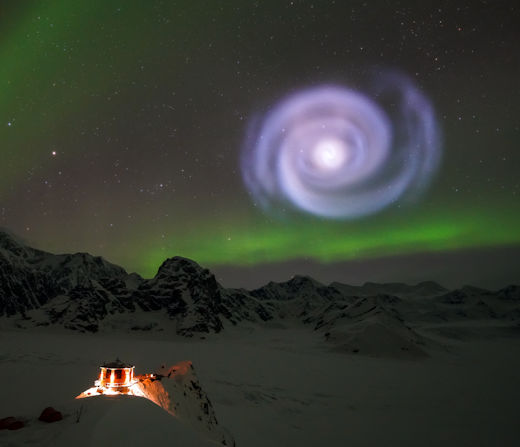
Mystery solved: It was a "SpaceX spiral." On April 15, 2023, SpaceX launched a Falcon 9 rocket from California's Vandenberg Space Force Base. It carried 51 small satellites to Earth-orbit, a mission known as Transporter-7. When the rocket's discarded upper stage passed over Alaska, it vented its unused fuel.
Spirals are a common side-effect of Transporter rideshare missions. Within these Falcon 9 rockets, satellites from various clients have different destinations. SpaceX must rotate the rocket's second stage for deployment. The de-orbit burn and fuel dump naturally spirals.
Another spiral appeared on March 5, 2024, when Transporter-10 deployed 53 satellites:
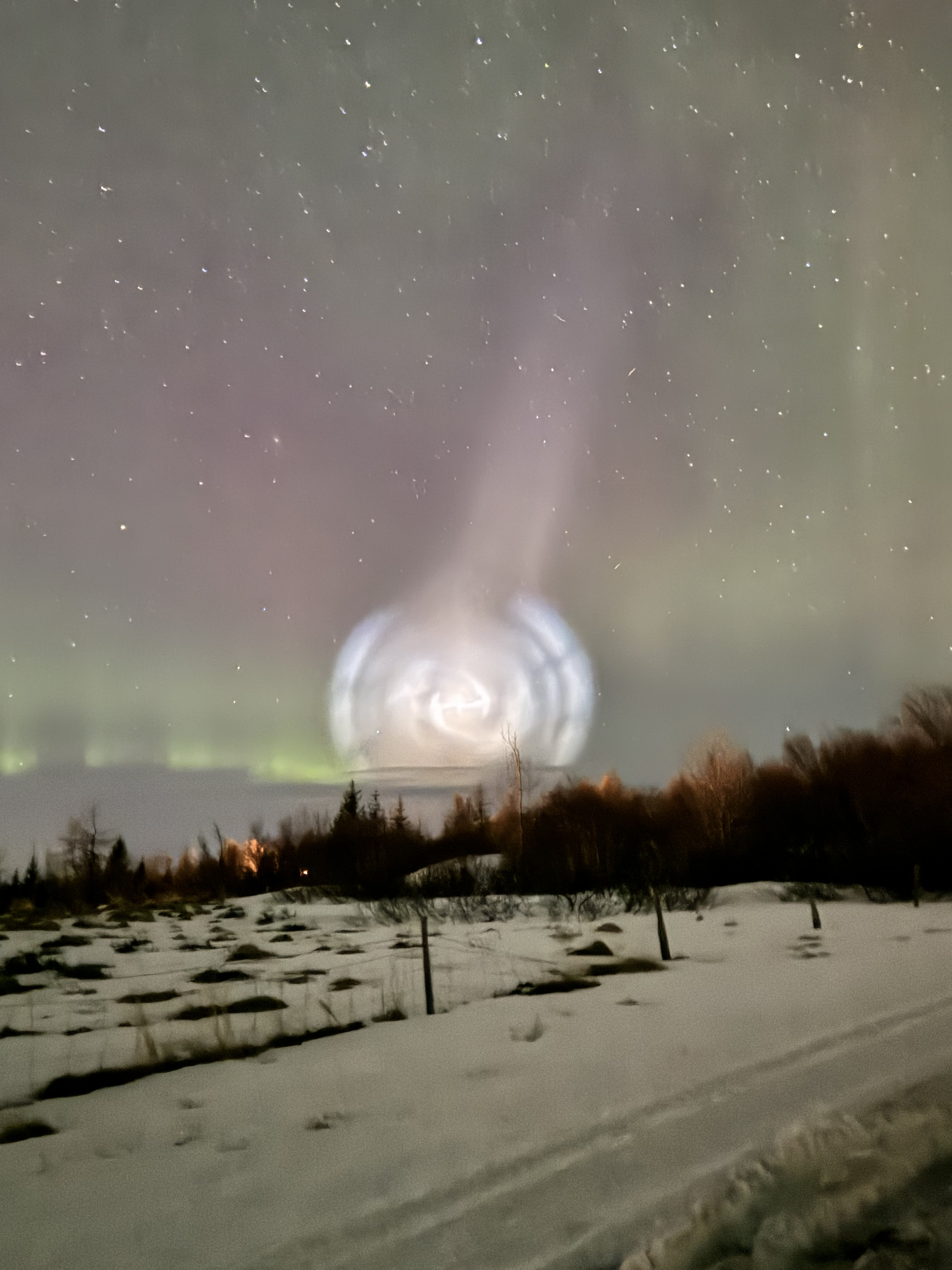
"I caught this in Akureyri, Iceland, around 1 a.m. local time," says photographer Shang Yang. "It looked otherworldly against the Northern Lights!"
When will it happen again? Possibly in two months. The Transporter-12 mission is currently scheduled for October 2024. It could dump its fuel into a northern autumn sky filled with equinox auroras and Orionid meteors. Arctic photographers are encouraged to monitor the launch schedule and submit your images here.
Realtime Aurora Photo Gallery
Free: Spaceweather.com Newsletter
A RAINBOW AT NIGHT: Have you ever seen a rainbow after dark? On Aug. 18th, Aaron Watson of Paonia, Colorado, saw two of them:

Rainbows appear when sunlight is reflected from falling raindrops. In this case, the sun was not required. "I woke up to the sound of rain with the nearly full Moon beaming through the window," says Watson. "It was the perfect recipe for a moonbow."
In fact, it was a double moonbow. Single moonbows are caused by single reflections inside raindrops. Double moonbows like Watson saw are caused by double reflections. "It was vibrant and colorful even to the unaided eye and lasted several more minutes as it slowly faded," says Watson.
Realtime Space Weather Photo Gallery
Free: Spaceweather.com Newsletter
AMBER BUMBLEBEE SPACE PENDANT: Bumblebees don't usually fly so high. The students of Earth to Sky Calculus launched this one to the stratosphere onboard a cosmic ray research balloon. Here it is floating 115,158 feet above California's Sierra Nevada:
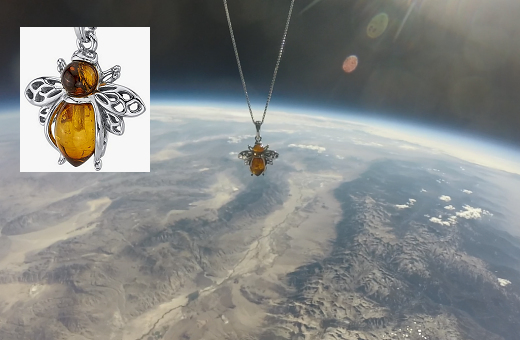
You can have it for $179.95. This bee is made of genuine Baltic Amber with a sterling silver exoskeleton. The rich Cognac-colored pendant measures 3/4 inch and comes with a matching 18-inch sterling silver chain.
The students are selling space pendants to support their cosmic ray ballooning program. Each one comes with a greeting card showing the bumblebee in flight and telling the story of its trip to the stratosphere and back again.
Far Out Gifts: Earth to Sky Store
All sales support hands-on STEM education
Realtime Aurora Photo Gallery
Free: Spaceweather.com Newsletter
Realtime Comet Photo Gallery
Free: Spaceweather.com Newsletter
Realtime Noctilucent Cloud Photo Gallery
Free: Spaceweather.com Newsletter