SUNSPOT NUMBERS AT A 20-YEAR HIGH: For the second month in a row, the monthly-average sunspot number is cruising toward a 20-year high. The current value, around 230, would eclipse every month since Sept. 2001, which occured during the peak of old Solar Cycle 23. The current cycle (Solar Cycle 25) was not supposed to be this strong, and it may become even stronger before Solar Max is finished. Solar flare alerts: SMS Text
A HIGH-LATITUDE SUNSPOT: New sunspot AR3800 is not particularly big or flare-y, but it is interesting for another reason: It has a high latitude. The sunspot is growing in the southern hemisphere 27 degrees below the sun's equator:
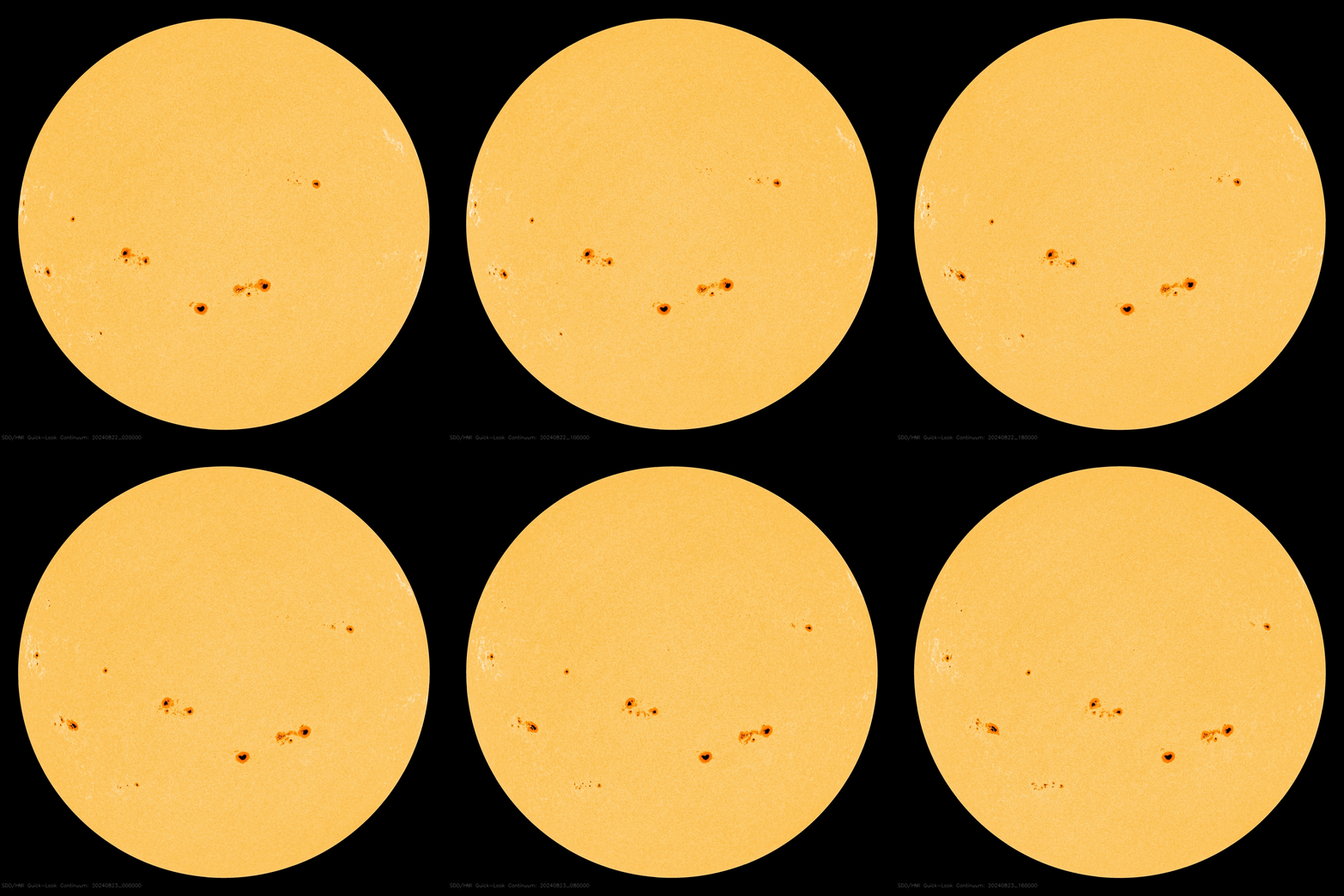
This may not sound particularly "high". On Earth, the 27th parallel (south) crosses places such as Namibia and Australia. These are not considered high latitudes. But for sunspots, which tend to cluster around the sun's equator, 27 degrees is indeed high latitude.
So what? The potential significance of this sunspot is what it tells us about Solar Cycle 25. High latitude sunspots tend to appear early in the 11-year solar cycle, as shown in this plot from the Solar Terrestrial Center of Excellence:
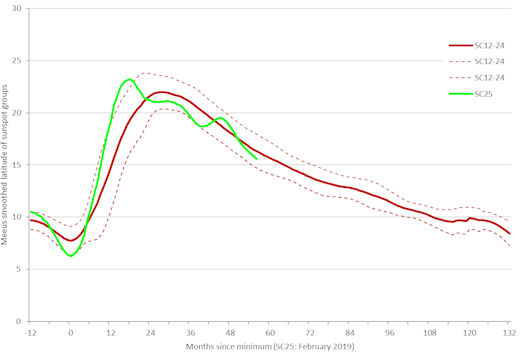
As solar cycles unfold, sunspots start high, then converge toward the equator. The existance of AR3800 is an anecdotal sign that we're still in the early stages of Solar Cycle 25. If so, strong solar activity is just getting started and may last for another 2 to 3 years. Solar flare alerts: SMS Text
Realtime Space Weather Photo Gallery
Free: Spaceweather.com Newsletter
EDGE OF SPACE BUTTERFLY: Are you looking for a far-out gift? Consider the Edge of Space Butterfly. On June 26th, this crystal pendant hitched a ride onboard an Earth to Sky Calculus cosmic ray research balloon:
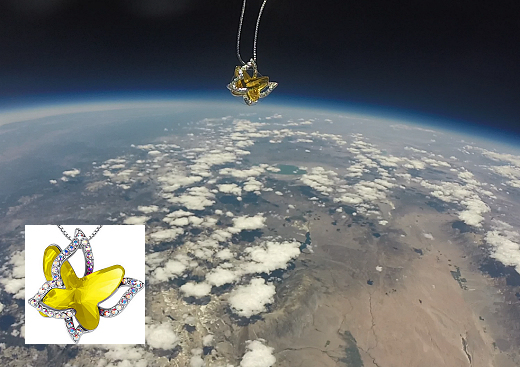
You can have it for $172.95. The inner yellow citrine crystal is surrounded by a "spread your wings" lattice of sparkling zirconia. A rich layer of rhodium plating ensures the longevity of the pendant and its 18-inch chain.
The Edge of Space Butterfly makes a great anniversary, Christmas, or birthday gift. It comes with a greeting card showing the pendant in flight and telling the story of its trip to the stratosphere and back again.
Far Out Gifts: Earth to Sky Store
All sales support hands-on STEM education
Realtime Aurora Photo Gallery
Free: Spaceweather.com Newsletter
Realtime Comet Photo Gallery
Free: Spaceweather.com Newsletter
Realtime Noctilucent Cloud Photo Gallery
Free: Spaceweather.com Newsletter