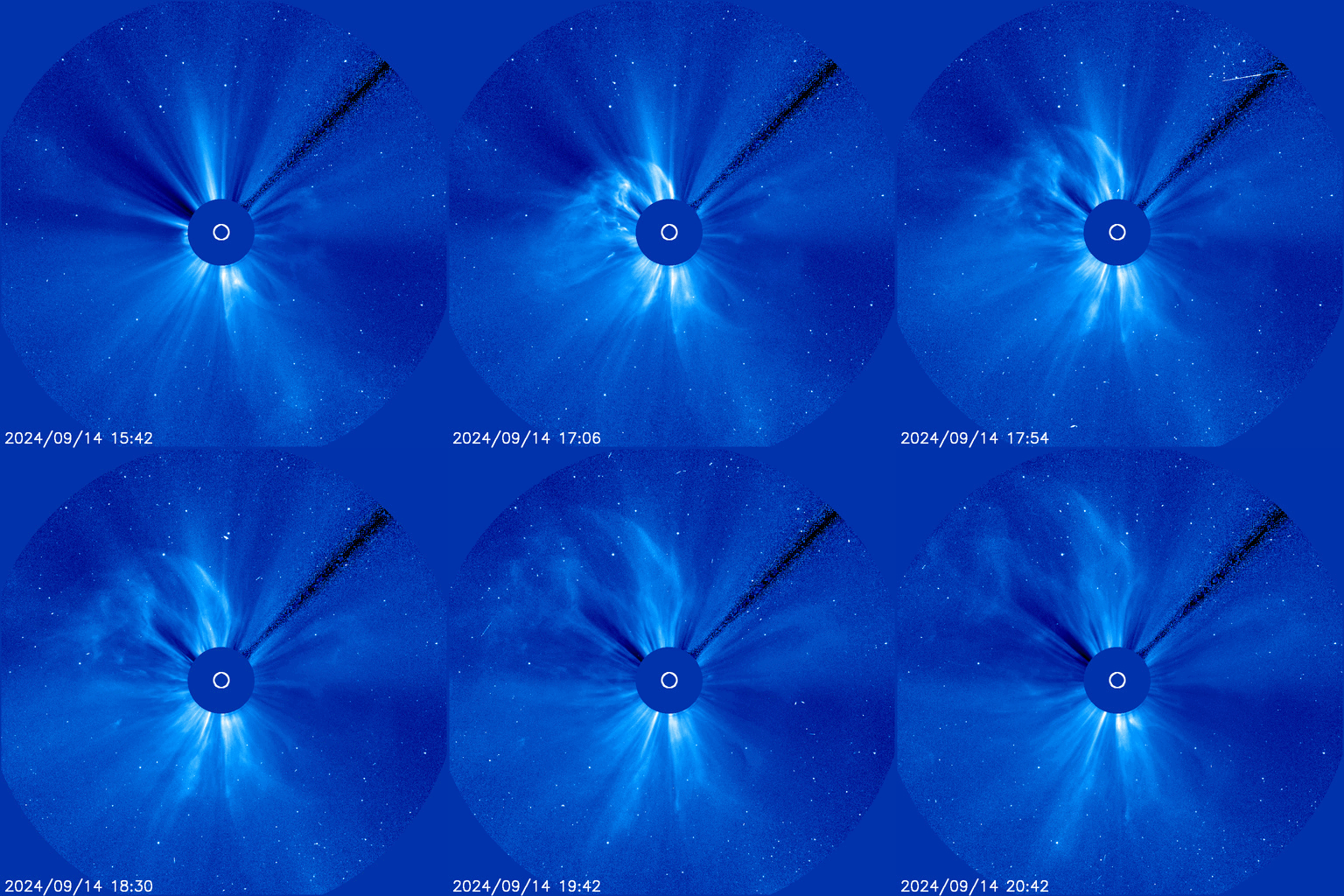
THE CME HAS ARRIVED: A CME from Saturday's X4.5-class solar flare has just reached Earth. According to NOAA, the impact could spark a geomagnetic storm as strong as category G3 (Strong). High-latitude sky watchers should be alert for auroras mixed with moonlight on the night of Sept. 16-17. Aurora alerts: SMS Text

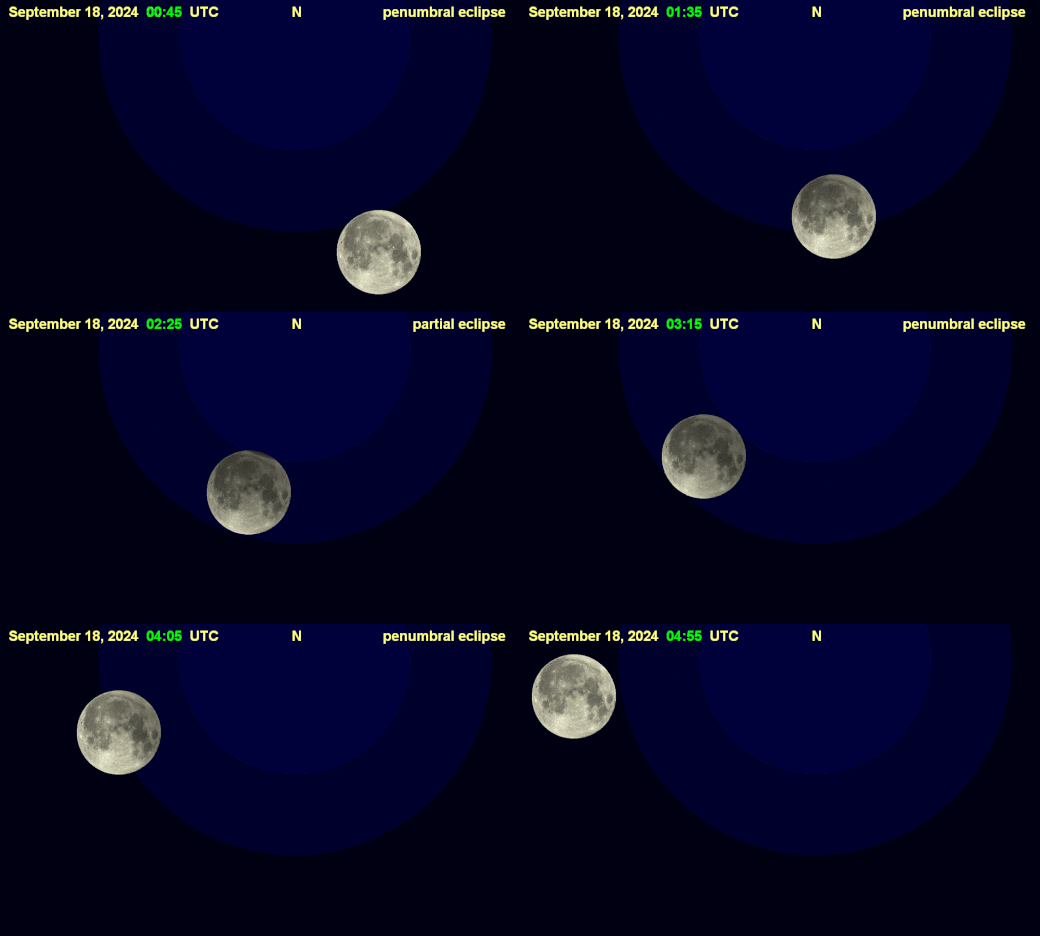
PARTIAL ECLIPSE OF THE HARVEST MOON: This week's full Moon is special for several reasons. (1) It's the Harvest Moon, the full Moon closest to the autumnal equinox. (2) It's a perigee Moon, slightly closer to Earth than usual. And, (3), it's going to be partially eclipsed. This animation created by reader Peter Zimnikoval shows the Moon grazing Earth's shadow during the early UTC hours of Sept. 18th:
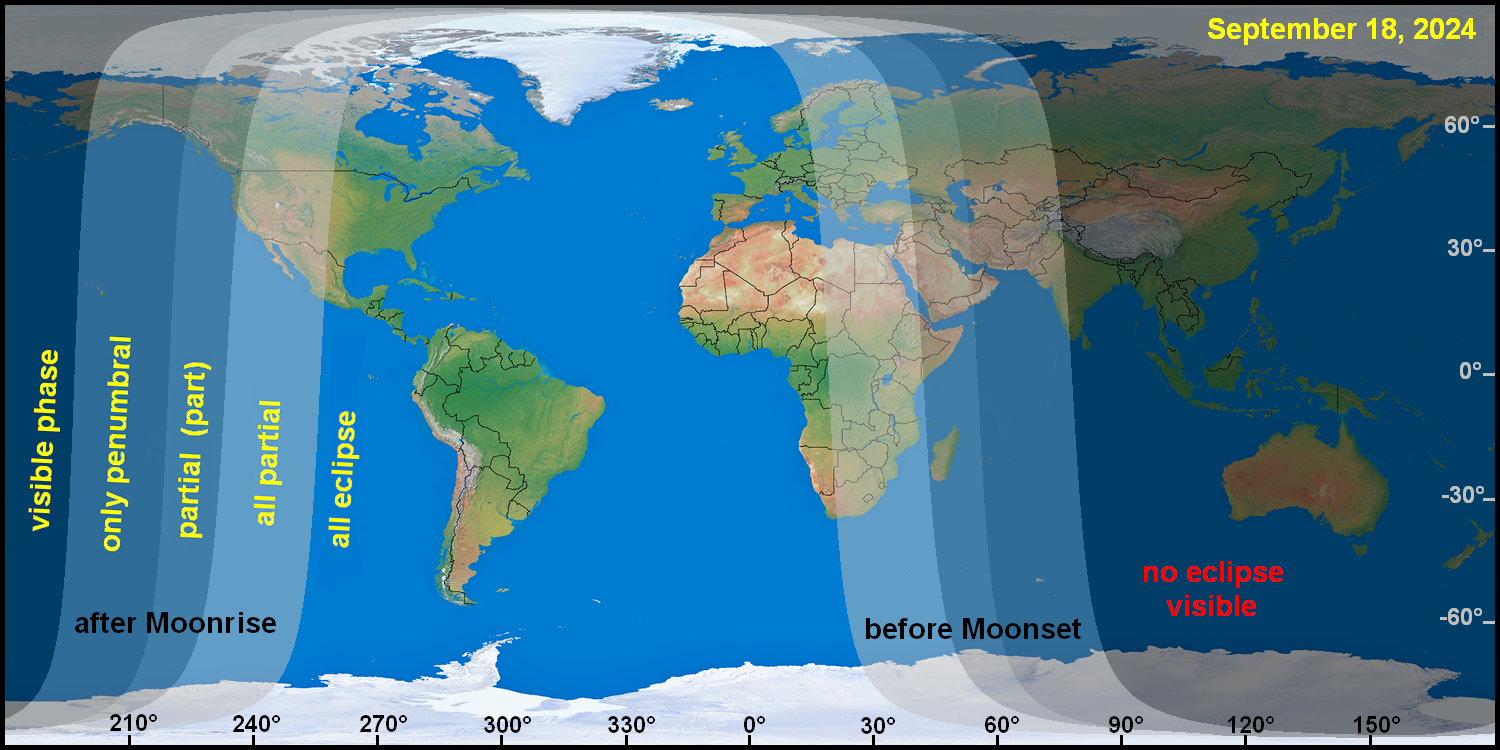
For sky watchers in the Americas, the eclipse occurs on Sept. 17th. Peak coverage occurs at 10:44 p.m. EDT (7:44 p.m. PDT), when a little more than 8 percent of the Moon will be in shadow.
Mainstream media stories are trumpeting this as a "supermoon eclipse." Indeed, it is a supermoon, or as an astronomer would say, a "perigee Moon." The Moon's orbit is an ellipse with one side ("perigee") about 50,000 km closer than the other ("apogee"). Full Moons that occur on the perigee side of the Moon's orbit are extra big and bright. This week's Harvest Moon becomes full within 10 hours of perigee, making it about 5 percent bigger and 13 percent brighter than usual. Is that really "super"? You decide.
Before the days of electric lights, farmers relied on moonlight to harvest ripening autumn crops after sunset. The partial eclipse will briefly dim the glow. Pro tip for farmers: Take your headlamp.
Realtime Space Weather Photo Gallery
Free: Spaceweather.com Newsletter
"HAND OF APOLLO" STAR TREK CHRISTMAS ORNAMENT: You can't buy this on Amazon. The Hand of Apollo Christmas Ornament is only available from the Earth to Sky Store. On Aug. 15, 2024, it flew to the stratosphere onboard a cosmic ray research balloon:
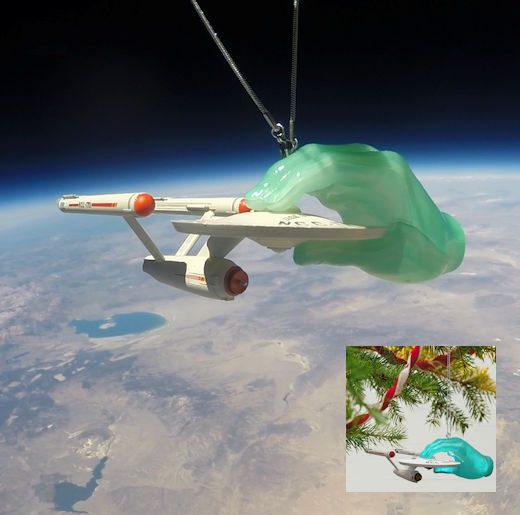
You can have it for $127.95. This ornament depicts the iconic opening scene from original Star Trek series episode "Who Mourns for Adonais?" first aired in 1967. Near the planet Pollux III, the Enterprise was held immobile by an energy field shaped as a human hand. It belonged to a being claiming to be the Greek god Apollo. This will look far out on your Christmas tree this December.
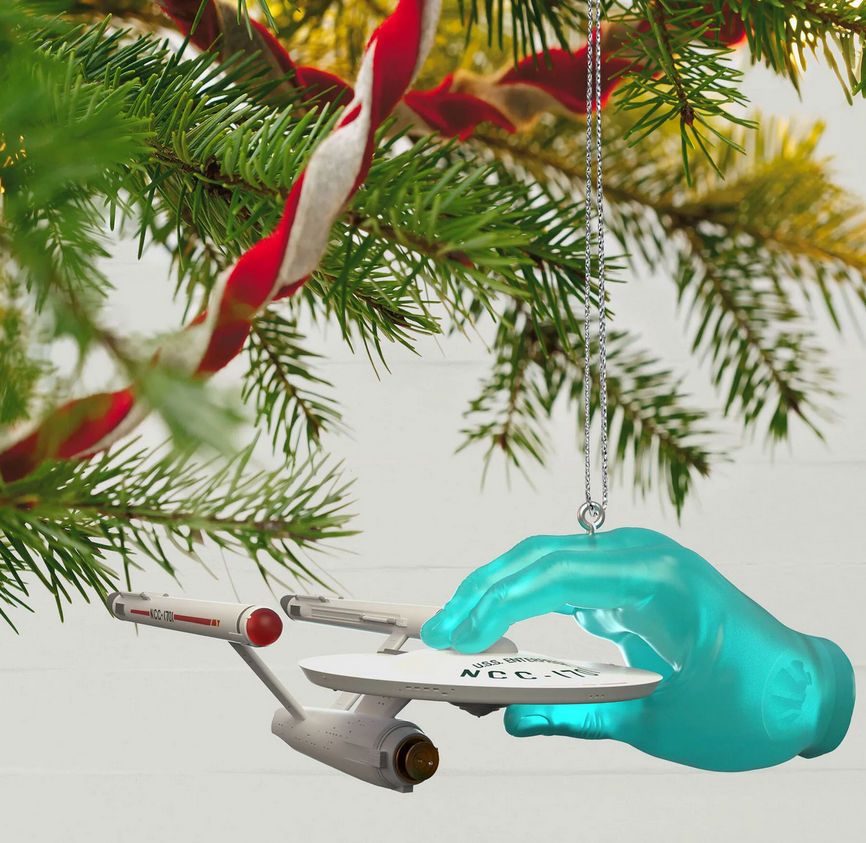
The students of Earth to Sky Calculus are selling space ornaments to support their cosmic ray ballooning program. Don't wait for Christmas--get yours now!
Far Out Gifts: Earth to Sky Store
All sales support hands-on STEM education
Realtime Aurora Photo Gallery
Free: Spaceweather.com Newsletter
Realtime Comet Photo Gallery
Free: Spaceweather.com Newsletter
Realtime Noctilucent Cloud Photo Gallery
Free: Spaceweather.com Newsletter