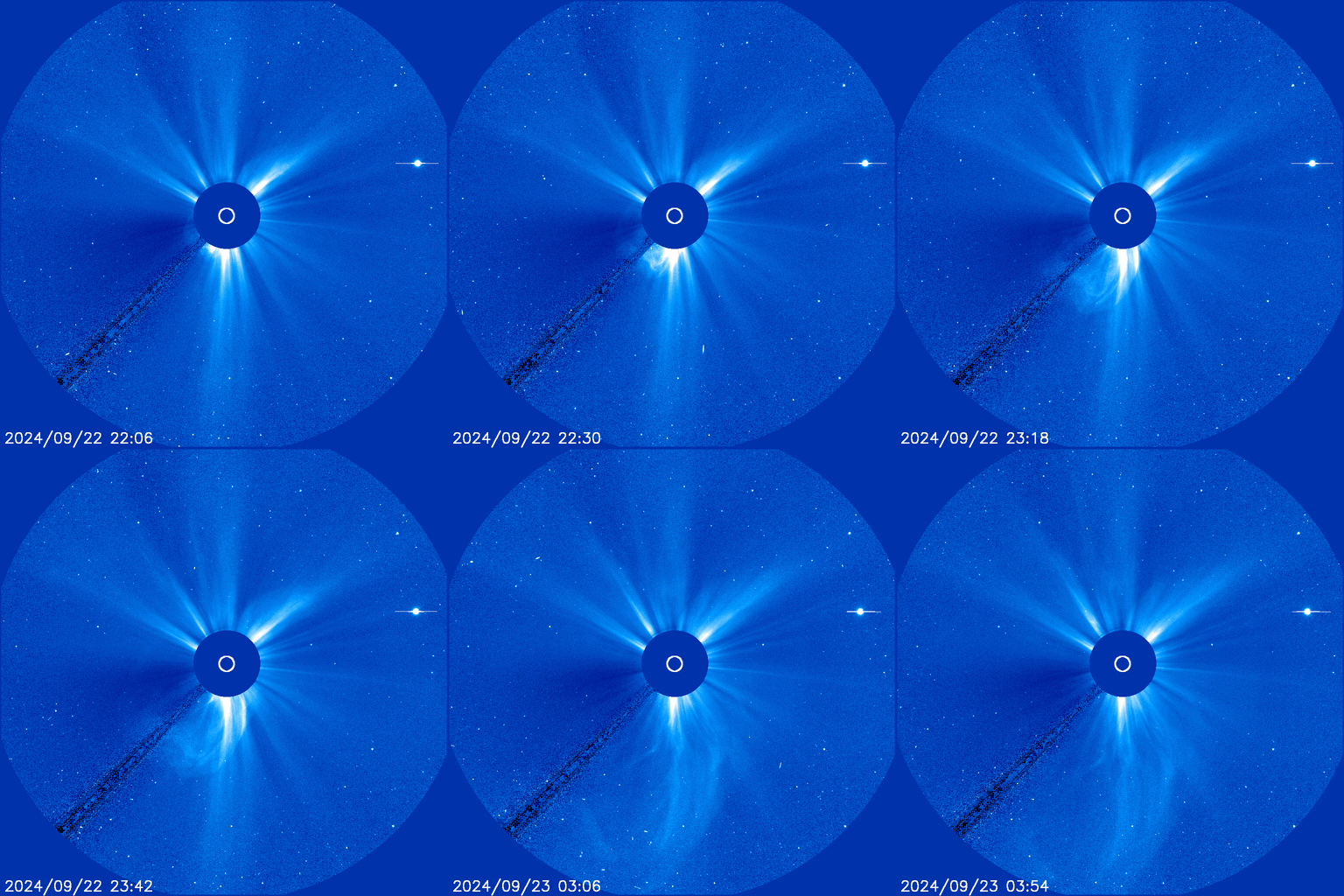
POSSIBLE EARTH-DIRECTED EXPLOSION: Surprising forecasters, who thought sunspot AR3835 was too stable to explode, sunspot AR3835 exploded on Sept. 22nd (2139 UTC). The M3.4-class flare hurled a massive plume of plasma into space:

Debris from the blast entrained even more plasma on its way out of the sun's atmosphere, forming a partial halo CME. The bulk of the CME will miss Earth, but its flank will deliver a glancing blow to our planet on Sept. 25th, according to a NASA model.
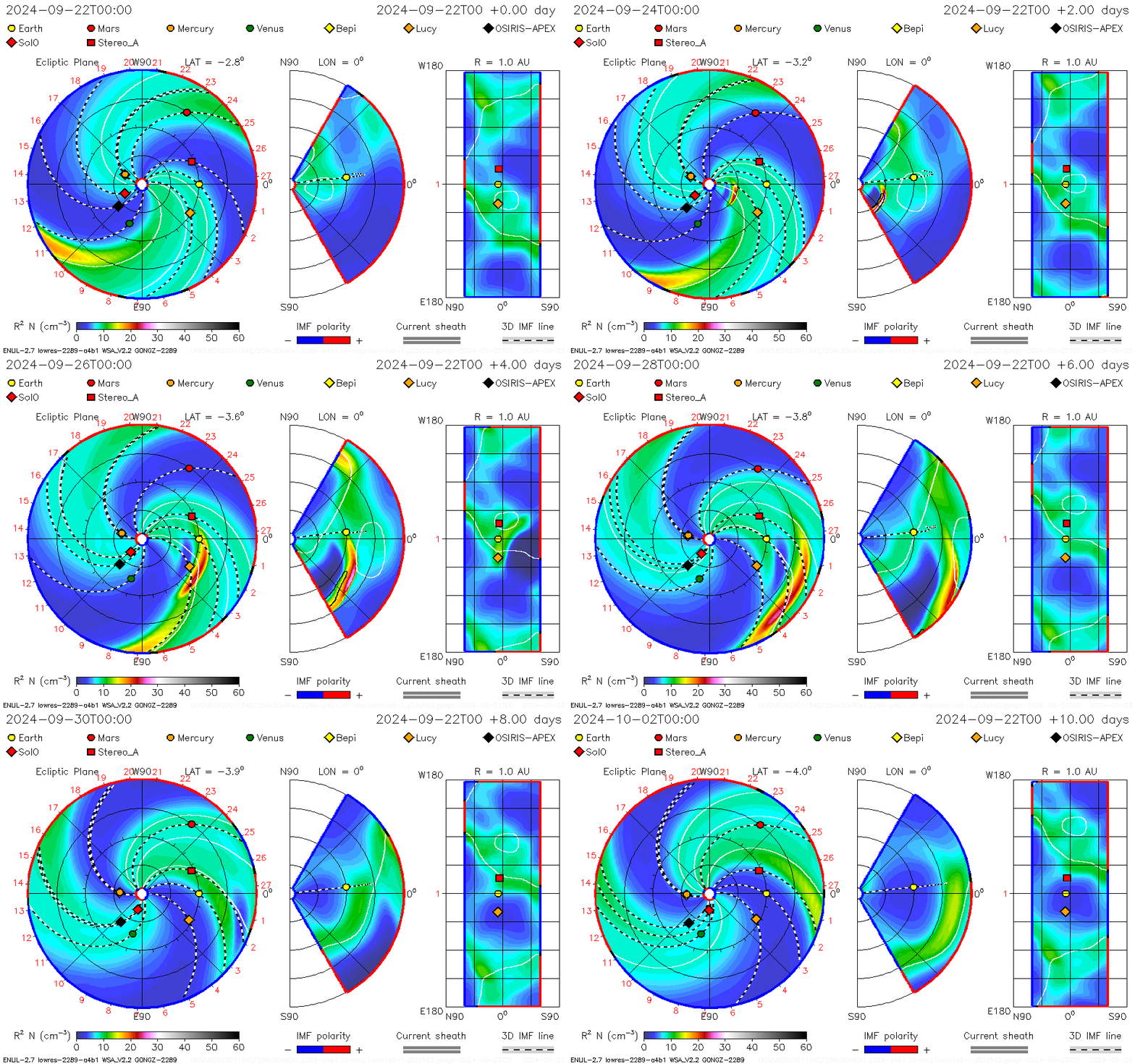
At this time of year, even a glancing blow from a CME can cause a geomagnetic storm. Why? Because during weeks around equinoxes, Earth's magnetic field is unusually well connected to the sun's. It's called the "Russell-McPherron effect." The incoming CME could therefore cause a G1-class geomagnetic storm when it reaches Earth. Aurora alerts: SMS Text

Realtime Space Weather Photo Gallery
Free: Spaceweather.com Newsletter
APPROACHING COMET SEEN FROM THE ISS: Comet Tsuchinshan-ATLAS (C/2023 A3) is approaching Earth and brightening rapidly. "So far Comet Tsuchinshan-ATLAS looks like a fuzzy star to the naked eye, but with a 200mm, f2 lens at 1/8s exposure you can really start to see it!' reports NASA astronaut Matthew Dominick, who photographed the comet from the International Space Station on Sept. 19th:
Dominick's time lapse movie shows the comet rising above Earth's airglow layer along with at least 3 satellites. "This comet is going to make for some really cool images as it gets closer to the sun," he says.
Indeed, the comet will fly by the sun on Sept. 27th, receiving a dose of solar heating as it approaches Earth for a close encounter on Oct. 12th. As seen from our planet, the sun-warmed comet's brightness could reach negative magnitudes during the second week of October.
"Negative magnitude" means Comet Tsuchinshan-ATLAS would be visible in broad daylight, especially on Oct. 9th when light from the nearby sun will be forward scattered by comet dust, amplifying the comet's brightness. If the most optimistic predictions come true, it could look like Comet McNaught in 2007:
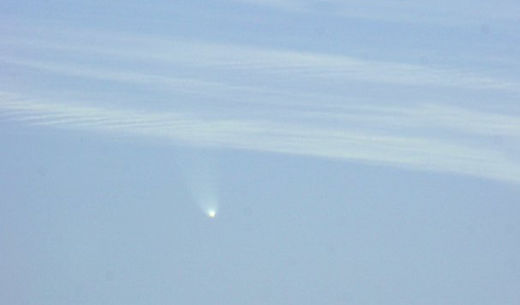
Comet McNaught photographed in daylight by Thorsten Boeckel on Jan. 13, 2007. [gallery]
Forward scattering also boosted the brightness of Comet McNaught, making it visible in daylight as a magnitude -5.5 object. Thousands of observers alerted by Spaceweather.com saw the comet in the noontime sky. Could it happen again? Stay tuned!
more images: from Mariano Ribas of Buenos Aires, Argentina; from Chaim Scowcroft of Sandy Beach Oahu, Hawaii
Realtime Comet Photo Gallery
Free: Spaceweather.com Newsletter
STERLING SILVER MOONCAT: This cat has experienced a severe geomagnetic storm. A CME hit Earth's magnetic field during on Sept. 16th. The students of Earth to Sky Calculus quickly launched a cosmic ray balloon into the resulting storm, with the Sterling Silver Mooncat hitching a ride:
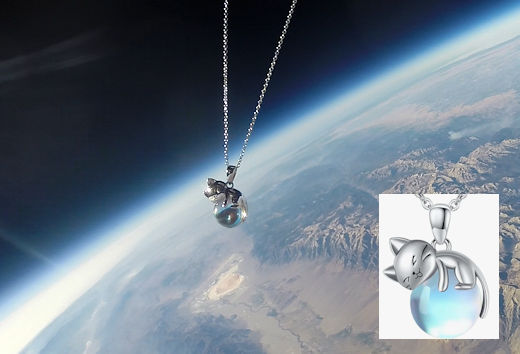
You can have it for $199.95. Curled around a genuine blue moonstonethe sterling silver cat floated through the stratosphere for almost 3 hours during the storm, gathering radiation data for the students' monitoring program. The Mooncat comes with a greeting card showing the pendant in flight and explaining the radiation experiment.
The students of Earth to Sky Calculus are selling space jewelry to support their cosmic ray ballooning program. Don't wait for Christmas--get yours now!
Far Out Gifts: Earth to Sky Store
All sales support hands-on STEM education
Realtime Aurora Photo Gallery
Free: Spaceweather.com Newsletter
Realtime Noctilucent Cloud Photo Gallery
Free: Spaceweather.com Newsletter