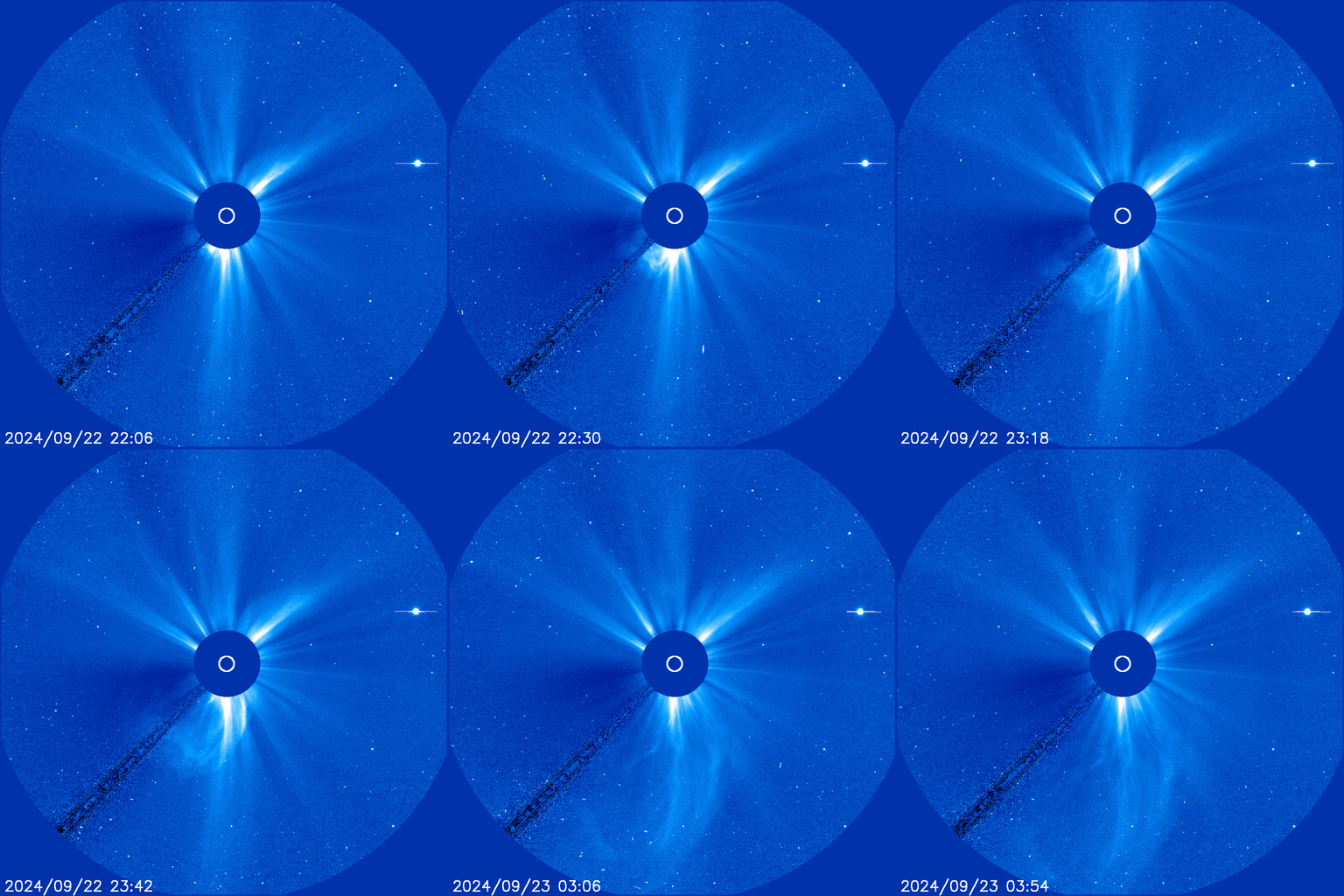
GEOMAGNETIC STORM WATCH (G1): A lopsided halo CME is expected to graze Earth's magnetic field on Sept. 25-26. The impact could cause a G1-class geomagnetic storm. NOAA's model predicts a strike on Sept. 25th; NASA's model predicts the 26th. The difference gives a sense of the uncertainty in this low-confidence forecast. Aurora alerts: SMS Text

BRIGHT MORNING COMET: The week has barely begun, and Comet Tsuchinshan-ATLAS (C/2023 A3) has already tripled in brightness. "The change of the comet compared to yesterday has been exponential," reports Frank A. Rodriguez, who saw the comet today just before sunrise over Gran Canaria island:
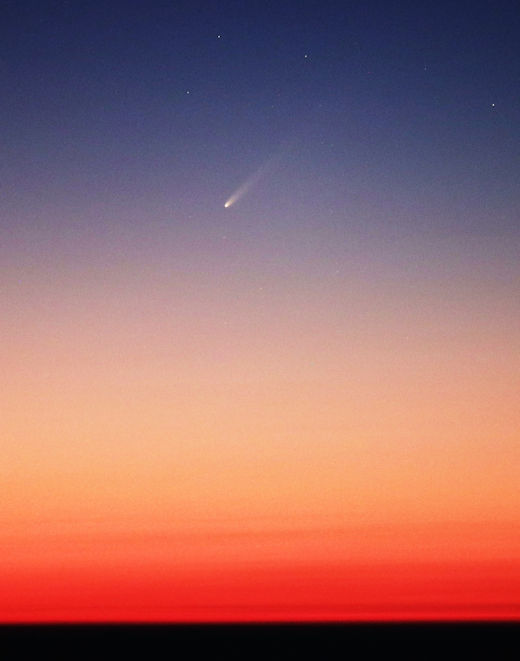
"This is a one-second exposure at ISO 1000," he says. "Despite the brightness of the dawn sky, I was able to see the comet using averted vision."
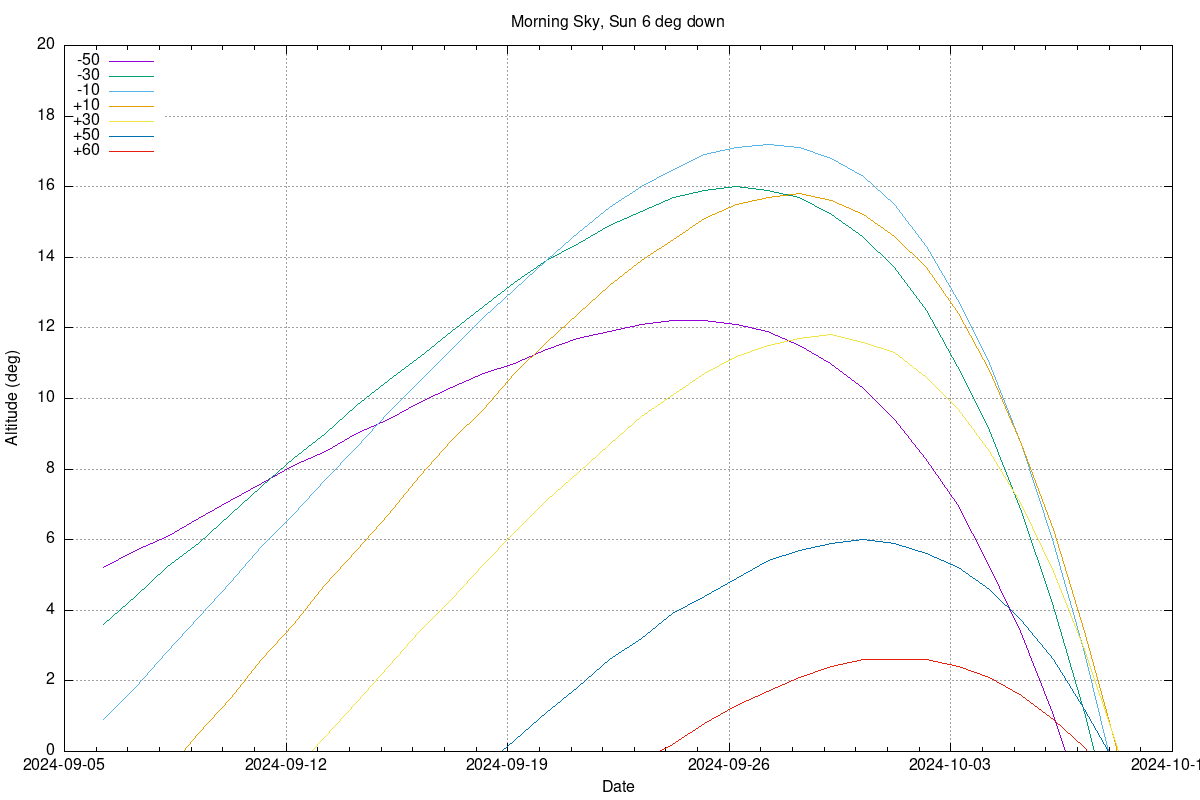
The view is about to improve. Every day this week, the comet will climb higher in the morning sky, peaking in altitude between Sept. 26th and 29th. For some observers, the comet will be as high as 16 degrees above the horizon, well clear of the brightest twilight. An altitude chart prepared by Nick James of the British Astronomical Association can help you plan your observation; locations in the tropics and near the equator are favored.
This morning in Chile, Yuri Beletsky worried that low clouds would block his view. "We got really lucky when the comet suddenly appeared just above the cloud deck," he says.
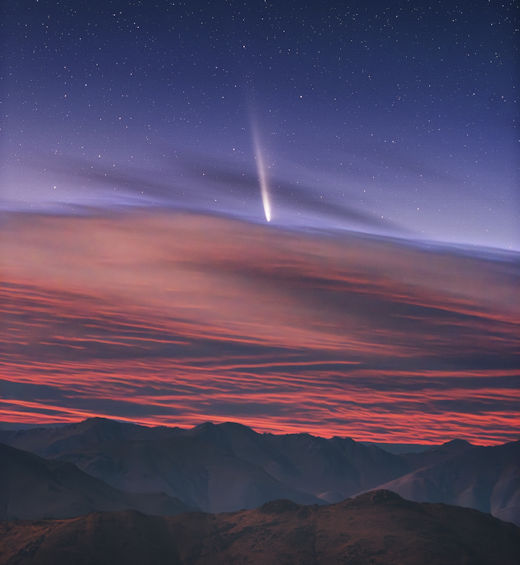
"This is a stack of five 15 second exposures from my Nikon D810a camera," he says. "The view was spectacular."
Clearly, Comet Tsuchinshan-ATLAS is living up to the hype. Later this week the comet will pass by the sun near the orbit of Mercury where it will receive a brightening dose of solar heat. Then it will proceed toward Earth for a close encounter (0.47 AU) and possible daytime apparition during the second week of October.
Ready to take your own photo? Experienced observers say the comet is now about as bright as a star of magnitude +3.5, which makes it an easy target for cameras and telescopes. Set your alarm for dawn and point your optics here.
more images: from Chris Schur of Payson, AZ; from Chaim Scowcroft of Oahu, Hawaii; from David Marshall of Christ Church, Barbados; from Victor Rivera of Isabela, Puerto Rico; from Alberto Quijano Vodniza of Pasto, Colombia; from Raymond Pickard of Bathurst NSW, Australia; from Michael Mattiazzo of Swan Hill, Australia;
Realtime Comet Photo Gallery
Free: Spaceweather.com Newsletter
STERLING SILVER MOONCAT: This cat has experienced a severe geomagnetic storm. A CME hit Earth's magnetic field during on Sept. 16th. The students of Earth to Sky Calculus quickly launched a cosmic ray balloon into the resulting storm, with the Sterling Silver Mooncat hitching a ride:
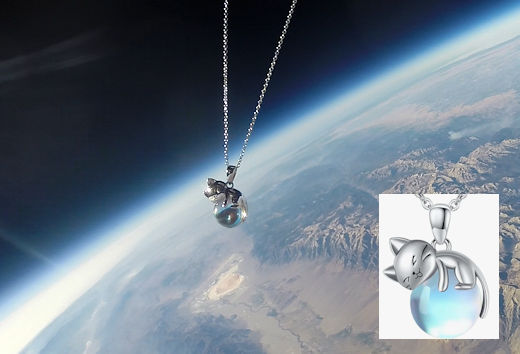
You can have it for $199.95. Curled around a genuine blue moonstone, the sterling silver cat floated through the stratosphere for almost 3 hours during the storm, gathering radiation data for the students' monitoring program. The Mooncat comes with a greeting card showing the pendant in flight and explaining the radiation experiment.
The students of Earth to Sky Calculus are selling space jewelry to support their cosmic ray ballooning program. Don't wait for Christmas--get yours now!
Far Out Gifts: Earth to Sky Store
All sales support hands-on STEM education
Realtime Space Weather Photo Gallery
Free: Spaceweather.com Newsletter
Realtime Aurora Photo Gallery
Free: Spaceweather.com Newsletter
Realtime Noctilucent Cloud Photo Gallery
Free: Spaceweather.com Newsletter