AUTUMNAL CRACKS IN EARTH'S MAGNETIC FIELD: How do you know it's autumn? Cracks are opening in Earth's magnetic field. Researchers call it the "Russell-McPherron effect." Solar wind flows through the gaps to fuel geomagnetic storms even without a CME impact. Earlier today, such a crack was responsible for an aurora surprise in Montana:

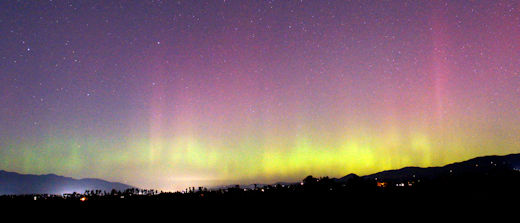
"Just before midnight, I peeked out my bedroom window and saw a green glow on the northern horizon," says photographer William Burnett. "I was quite surprised to see this as there was no official prediction of auroras, so I grabbed my digital camera and took this picture."
Connections formed by the Russell-McPherron effect are intermittent and often unpredictable. This means more surprises are possible in the nights ahead. Aurora alerts: SMS Text
BRIGHT MORNING COMET: Set your alarm for dawn. There's a bright comet in the morning sky. "The celestial wonder C/2023 A3 (Comet Tsuchinshan–ATLAS) is gracing the sunrise of the Northern Hemisphere!" says Alireza Vafa, who sends this picture from the Alborz Mountains of Iran:

"Mount Damavand—the highest peak in the Middle East—provided the perfect backdrop for this cosmic event," he says. "As the clock ticked down to just 40 minutes before sunrise, the comet revealed itself, shining brilliantly with a magnitude brighter than +3. Its brilliance was somewhat subdued against the illuminated dawn sky, but this is merely the beginning of a dazzling display in the days to come."
He's right. The view is about to improve. Every day this week, the comet will climb higher in the morning sky, reaching a peak between Sept. 26th and 29th. For some observers, the comet will be as high as 16 degrees above the horizon. This chart prepared by Nick James of the British Astronomical Association shows how the comet's height above the horizon depends on latitude. Note that it is visible in both hemispheres.
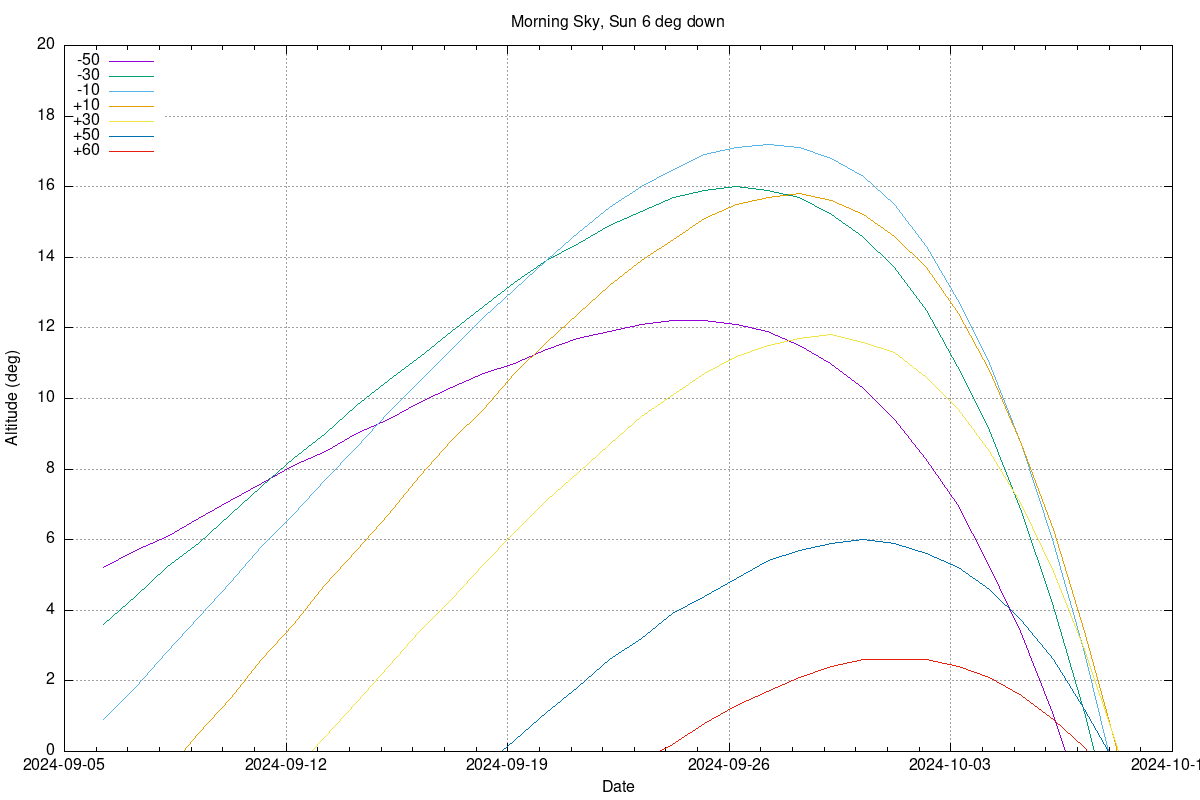
On Sept. 27th, the comet will pass by the sun near the orbit of Mercury where it will receive a brightening dose of solar heat. Then it will proceed toward Earth for a close encounter (0.47 AU) on Oct. 12th. Around that time, the comet might be bright enough to see in broad daylight. Stay tuned!
Realtime Comet Photo Gallery
Free: Spaceweather.com Newsletter
STERLING SILVER MOONCAT: This cat has experienced a severe geomagnetic storm. A CME hit Earth's magnetic field during on Sept. 16th. The students of Earth to Sky Calculus quickly launched a cosmic ray balloon into the resulting storm, with the Sterling Silver Mooncat hitching a ride:
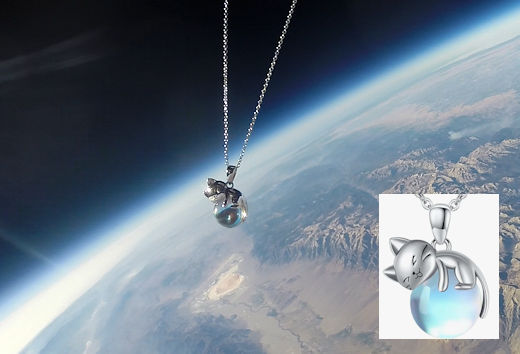
You can have it for $199.95. Curled around a genuine blue moonstone, the sterling silver cat floated through the stratosphere for almost 3 hours during the storm, gathering radiation data for the students' monitoring program. The Mooncat comes with a greeting card showing the pendant in flight and explaining the radiation experiment.
The students of Earth to Sky Calculus are selling space jewelry to support their cosmic ray ballooning program. Don't wait for Christmas--get yours now!
Far Out Gifts: Earth to Sky Store
All sales support hands-on STEM education
Realtime Space Weather Photo Gallery
Free: Spaceweather.com Newsletter
Realtime Aurora Photo Gallery
Free: Spaceweather.com Newsletter
Realtime Noctilucent Cloud Photo Gallery
Free: Spaceweather.com Newsletter