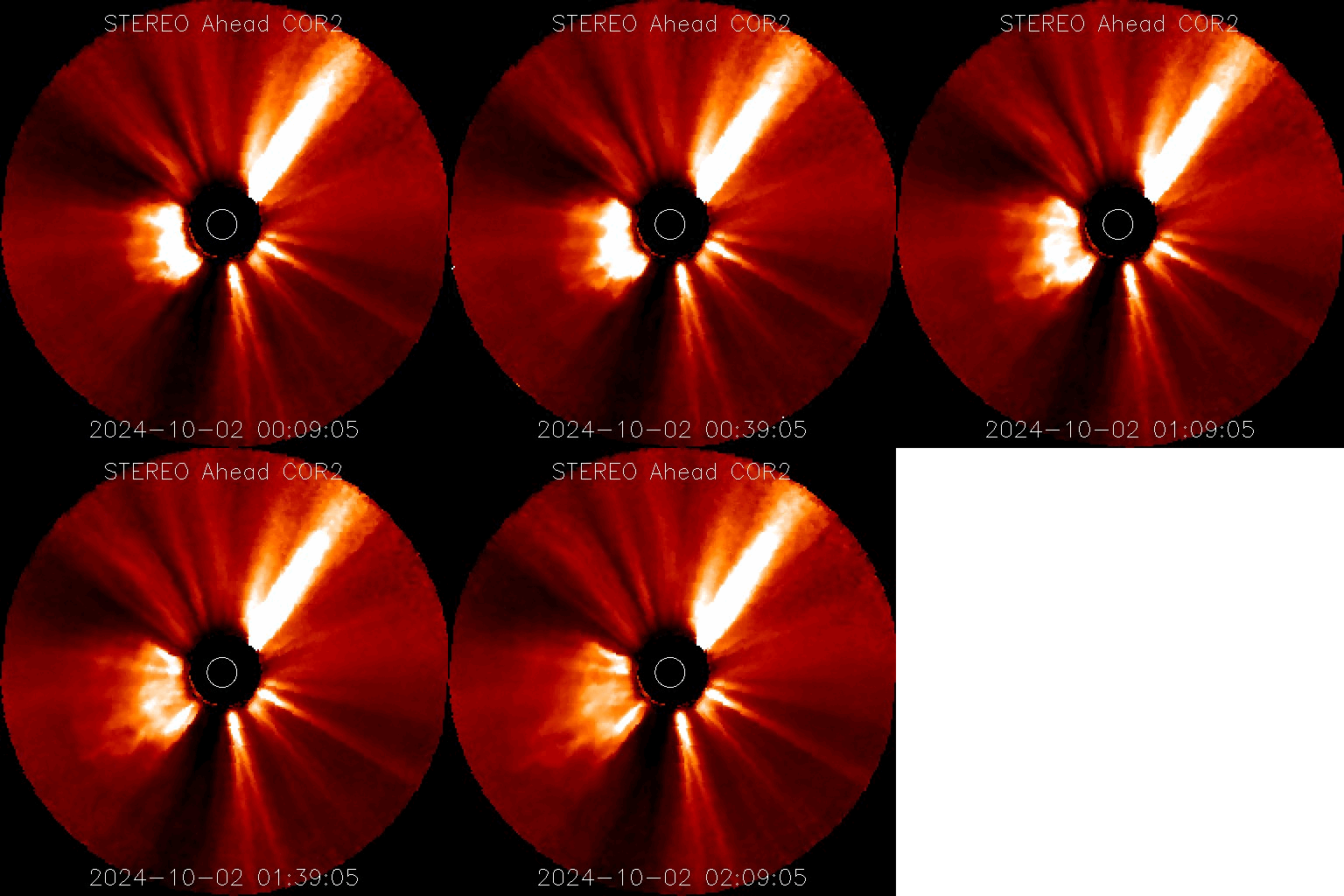
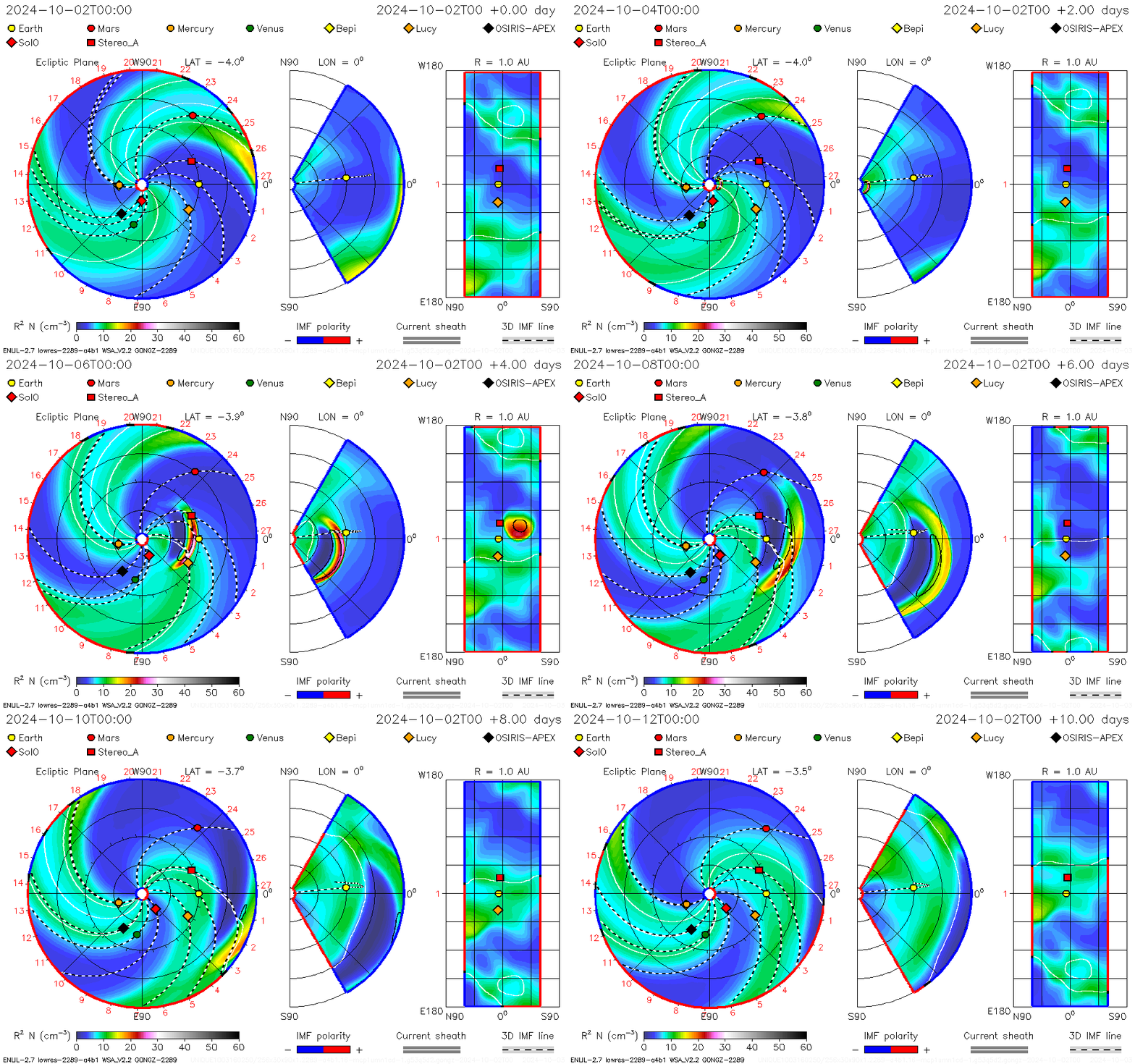
TWO CMEs ARE HEADING FOR EARTH: Confirmed: Two CMEs are now heading for Earth following consecutive X-flares (X7.1 and X9.1) from active sunspot AR3842. According to NOAA and NASA models, the first will strike Earth on Oct 4th and the second (more potent) will strike on Oct. 6th. The dual impacts could spark strong G3-class geomagnetic storms with auroras at mid-latitudes. CME impact alerts: SMS Text

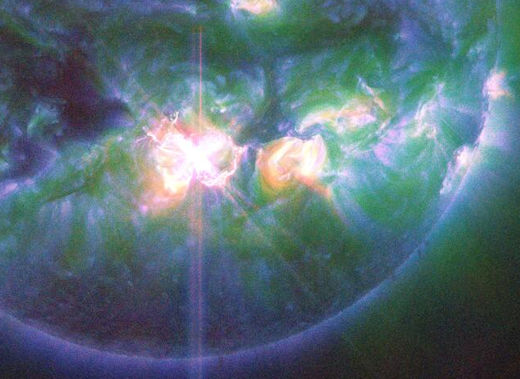
THE STRONGEST FLARE YET (UPDATED): Sunspot AR3842 exploded again today, producing the strongest solar flare of Solar Cycle 25 so far. NASA's Solar Dynamics Observatory recorded the X9.1-category blast:
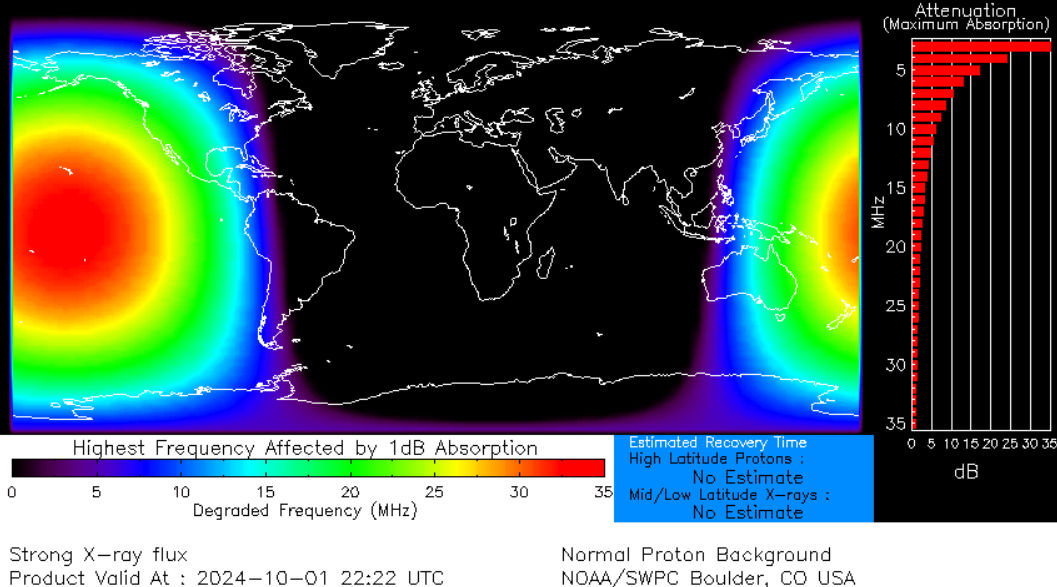
Radiation from the flare ionized the top of Earth's atmosphere and caused a deep shortwave blackout over Africa and the South Atlantic. Ham radio operators in the area may have noticed loss of signal at frequencies below 30 MHz for as much as a half an hour after 12:18 UTC.
Of greater interest is the CME. SOHO coronagraph images show a halo CME emerging from the blast site:
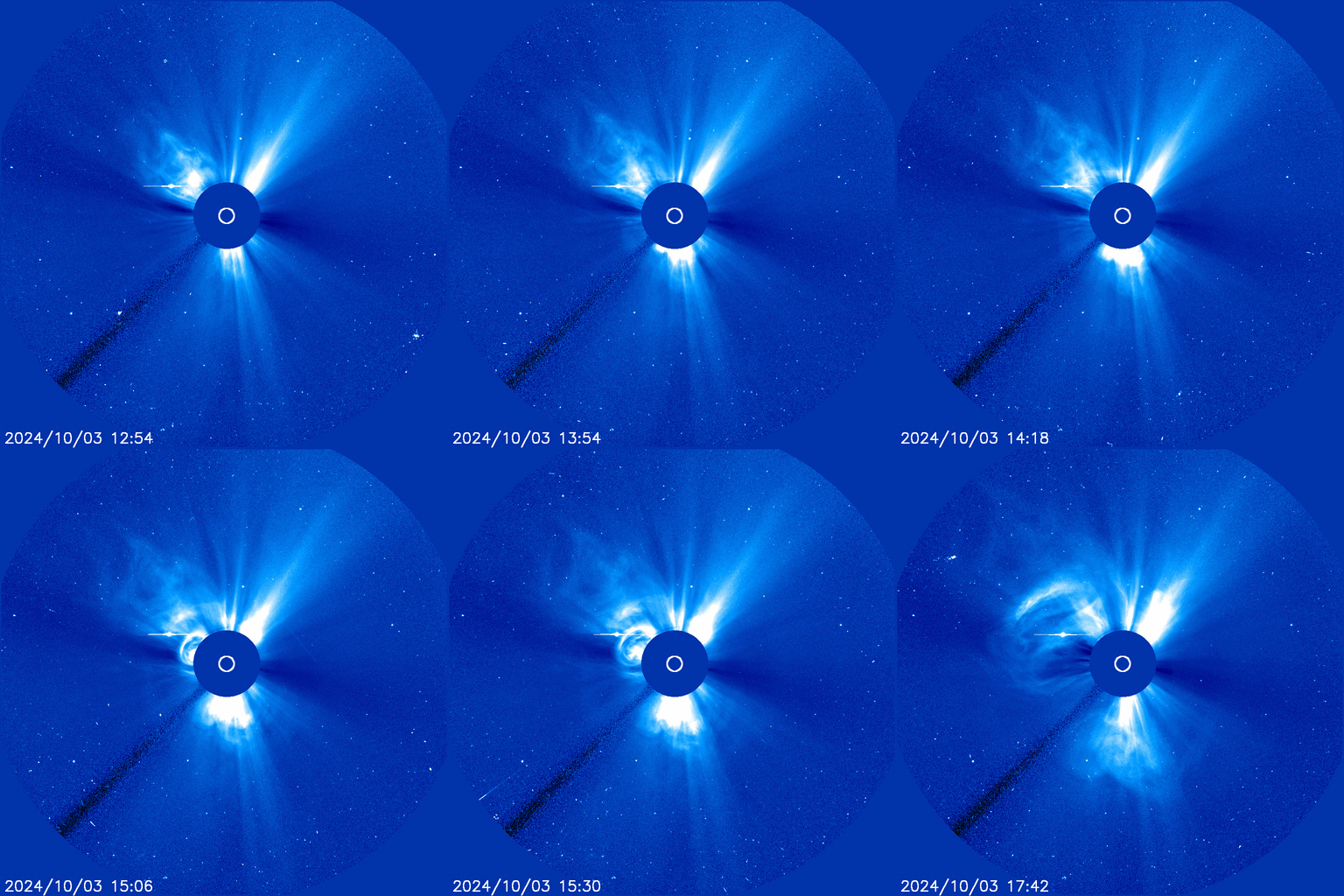
According to a NASA model, this CME will strike Earth on Oct. 6th, adding its effect to that of an earlier CME expected to arrive on Oct. 4th or 5th. Auroras are therefore likely this weekend. CME impact alerts: SMS Text
more images: from John Candy of Whitley Bay, UK; from Philippe Tosi of Nîmes, France; from David Strange of Salcombe Regis, East Devon, UK; from Pepe Manteca of Begues, Catalonia, Spain; from Warren Spreng of Mason, Ohio
Realtime Space Weather Photo Gallery
Free: Spaceweather.com Newsletter
A 'NIGHT LIGHT' FROM THE STRATOSPHERE: Looking for an out-of-this-world gift? Consider the Full Moon Night Light. On Jan. 4th, the students of Earth to Sky Calculus flew the glowing globe to the stratosphere on board a cosmic ray research balloon:
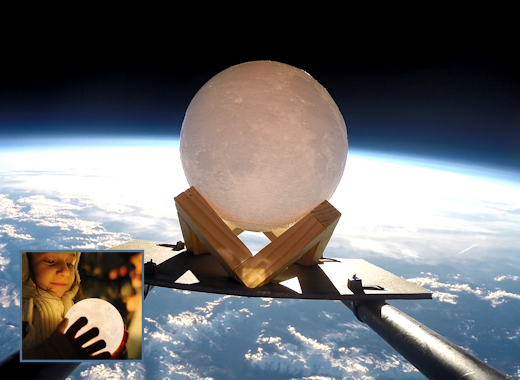
You can have it for $149.95. The surface of the sphere is a 3D-printed topo-map of the Moon, tracing every major crater and mountain range. It is also a night light. A built-in USB-rechargeable battery provides up to 20 hours of soothing illumination.
The glowing orb comes with a greeting card showing the Moon in flight and telling the story of its journey to the edge of space. Sales support the Earth to Sky Calculus cosmic ray ballooning program and hands-on STEM research.
Far Out Gifts: Earth to Sky Store
All sales support hands-on STEM education
A COMET OVER EASTER ISLAND: Retired biologist Eliot Herman traveled all the way to the South Pacific to see yesterday's solar eclipse. That's not all he saw. "I am at Easter Island where we witnessed Comet Tsuchinshan-ATLAS (C/2023 A3) rising at dawn on eclipse day," he says.
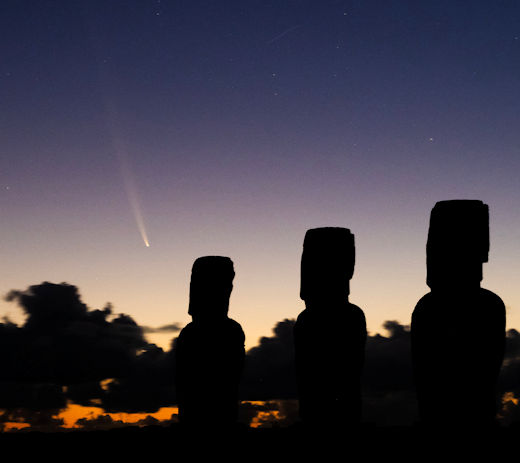
"It was a wonderful view in morning twilight where perhaps 1000 years ago the natives of this island also saw bright comets rising over their Moai," he says.
For the past week, astronomers around the world have been photographing Tsuchinshan-ATLAS in the early morning sky. Soon, mornings will no longer be an option. The comet is sinking back toward the sun as it transitions to the evening sky next week. On Oct. 9th and 10th, the comet will pass between Earth and the sun. Sunlight forward scattered by comet dust could amplify the comet's brightness, making it visible even in broad daylight. Stay tuned!
more images: from Frank A. Rodriguez of Gran Canaria island, Canary Islands; from Alan Dyer of Monument Valley, Arizona ; from Malcolm Park of Magdalena New Mexico; from Fabrizio Melandri of Perito Moreno, Argentina; from Luke O'Brien of Eaglehawk Neck, Tasmania;
Realtime Comet Photo Gallery
Free: Spaceweather.com Newsletter
Realtime Aurora Photo Gallery
Free: Spaceweather.com Newsletter