CHANCE OF MORE X-FLARES TODAY: The solar disk is filled with big sunspots.There are currently four active regions with unstable 'delta-class' magnetic fields that harbor energy for strong solar flares. NOAA forecasters estimate a 75% chence of M-class flares and a 35% chance of X-flares during the next 24 hours. Solar flare alerts: SMS Text
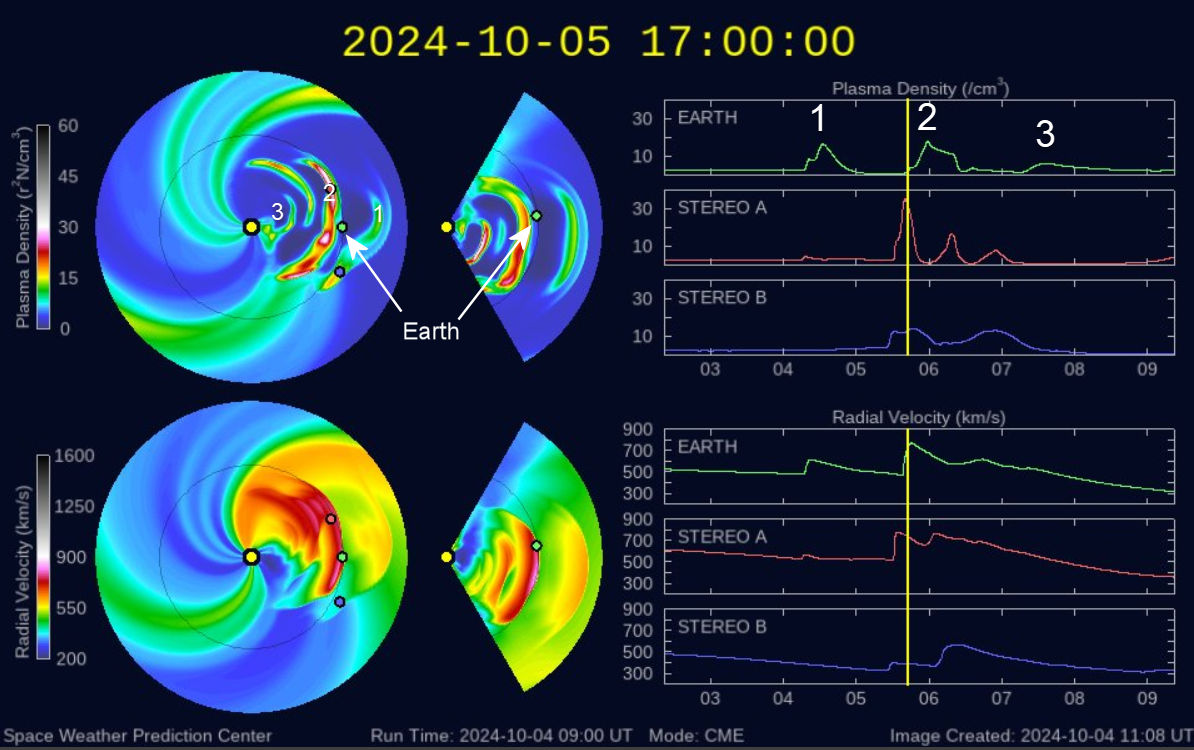
GEOMAGNETIC STORMS THIS WEEKEND: This week, two powerful X-class solar flares (X7.1 and X9.1) and a series of lesser M-flares hurled CMEs toward Earth. A new NOAA model shows three of them hitting or grazing our planet between Oct. 4th and 7th:
Click to view the animated NOAA model
The most potent CME (#2 in the graphic above) is expected to arrive during the late hours of Oct. 5th (UTC). This could spark a strong strong G3-class geomagnetic storms with auroras at mid-latitudes. For observers in the USA, this means the night of Oct. 5-6.
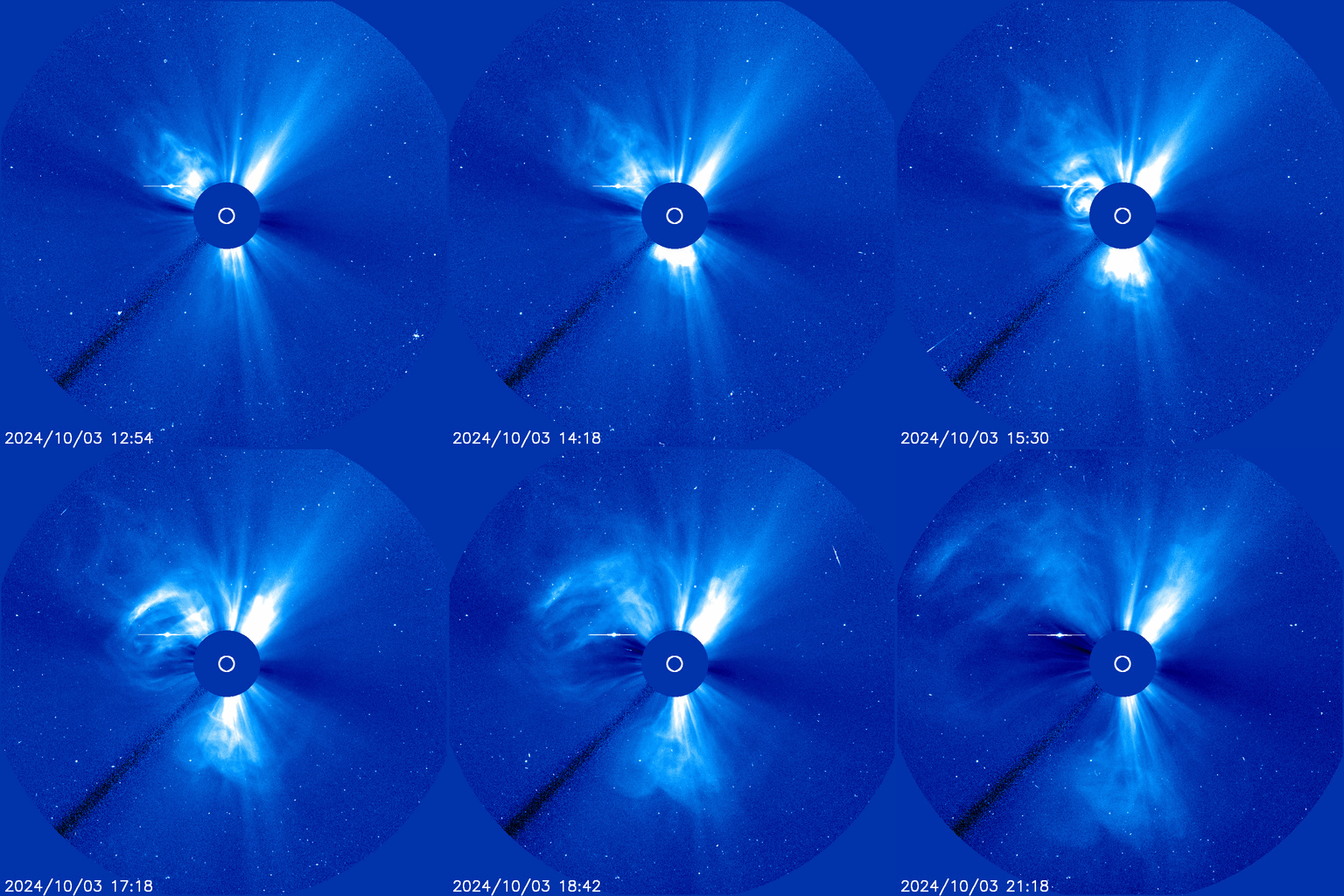

The other two CMEs (#1 and #3) are less potent. By themselves they might not cause much of a storm. At this time of year, however, even weak CMEs can be effective due to the autumnal Russell-McPherron effect. The collective effect all three CMEs could therefore cause strong storms throughout the forecast interval. CME impact alerts: SMS Text
Realtime Space Weather Photo Gallery
Free: Spaceweather.com Newsletter
A 'NIGHT LIGHT' FROM THE STRATOSPHERE: Looking for an out-of-this-world gift? Consider the Full Moon Night Light. On Jan. 4th, the students of Earth to Sky Calculus flew the glowing globe to the stratosphere on board a cosmic ray research balloon:
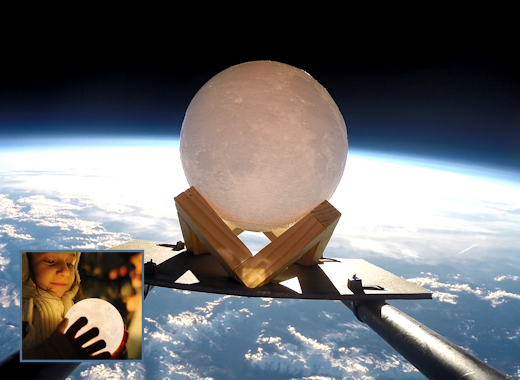
You can have it for $149.95. The surface of the sphere is a 3D-printed topo-map of the Moon, tracing every major crater and mountain range. It is also a night light. A built-in USB-rechargeable battery provides up to 20 hours of soothing illumination.
The glowing orb comes with a greeting card showing the Moon in flight and telling the story of its journey to the edge of space. Sales support the Earth to Sky Calculus cosmic ray ballooning program and hands-on STEM research.
Far Out Gifts: Earth to Sky Store
All sales support hands-on STEM education
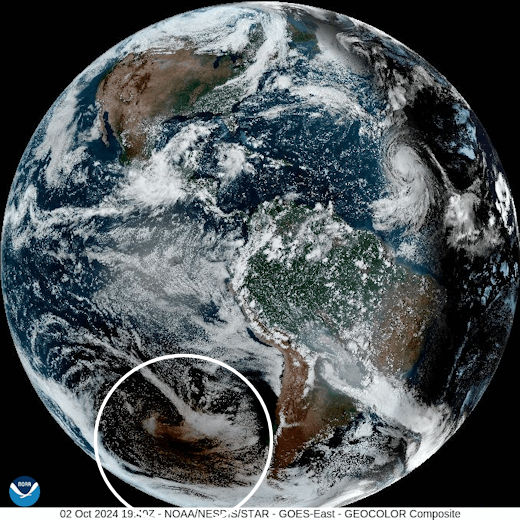
THE SHADOW OF THE MOON: On Oct. 2nd, the Moon passed directly in front of the sun and cast its shadow on the Earth below. That shadow is circled in this GOES satellite image of the western hemisphere:
Click here to play a movie of the shadow in motion
A timelapse movie from the satellite shows the shadow racing across the South Pacific at 2,000 mph. Very few people were inside the shadow zone--less than 175,000 by some estimates. The largest group of astronomers congregated on Easter Island (Rapa Nui) where the eclipse was maximum. Browse the gallery to see some of their pictures.
Realtime Eclipse Photo Gallery
Free: Spaceweather.com Newsletter
Realtime Comet Photo Gallery
Free: Spaceweather.com Newsletter
Realtime Aurora Photo Gallery
Free: Spaceweather.com Newsletter