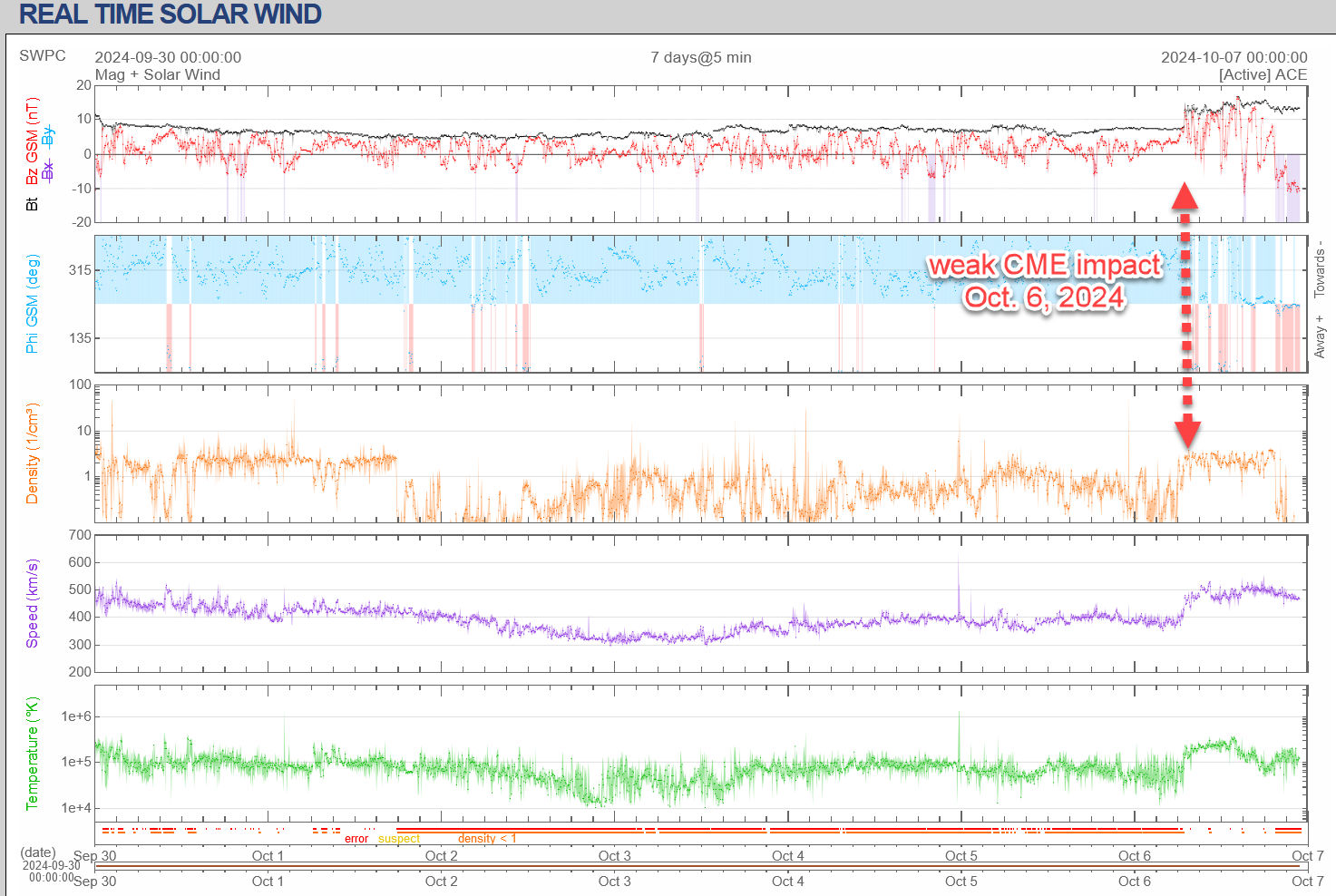
MINOR GEOMAGNETIC STORM: Minor G1-class geomagnetic storms are underway following a CME impact on Oct. 6th (~0700 UTC). The CME's arrival time was correctly predicted, but its size was not. The impact was much weaker than expected--hence the minor storm. Nevertheless, high-latitude sky watchers should be alert for auroras during the night of Oct. 6-7. CME impact alerts: SMS Text

A BRIGHT COMET AT SUNRISE: Comet Tsuchinshan-ATLAS (C/2023 A3) is approaching the sun where most comets would be impossible to photograph. However, Tsuchinshan-ATLAS is not like most comets. Yesterday, airline passenger Val Italo photographed the comet from the window seat of a plane flying over Arkansas:
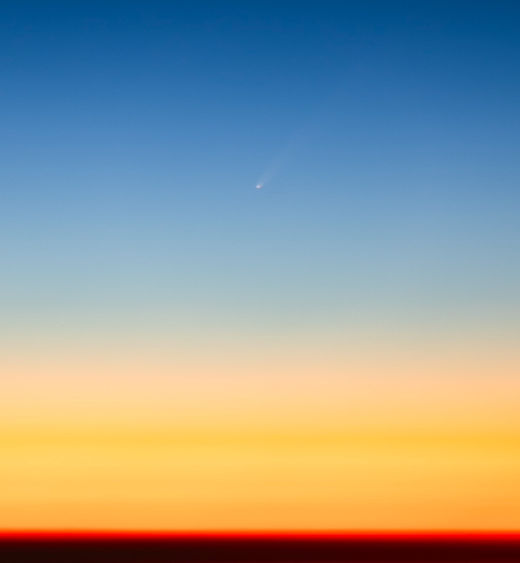
"I spotted the comet with the naked eye deep in the twilight at 6:30am," says Italo. "The sun rose only about 30 minutes later. It was easy to see with direct vision, and looked like a miniature contrail."
The comet was about 14 degrees from the sun on Oct. 5th when Italo photographed it. The distance is rapidly shrinking. At closest approach on Oct. 9th, Tsuchinshan-ATLAS will be only 4 degrees from the sun, so close that it could be dangerous to point cameras and telescopes at the comet. Stray sunlight magnified by optics can damage your eyes.
Pro tip: Stand in the shadow of a building, blocking the sun but not the comet. Tsuchinshan-ATLAS could be bright enough to see or photograph in broad daylight like Comet McNaught in 2007--but always protect your eyes from bright sunlight.
Realtime Space Weather Photo Gallery
Free: Spaceweather.com Newsletter
A 'NIGHT LIGHT' FROM THE STRATOSPHERE: Looking for an out-of-this-world gift? Consider the Full Moon Night Light. On Jan. 4th, the students of Earth to Sky Calculus flew the glowing globe to the stratosphere on board a cosmic ray research balloon:
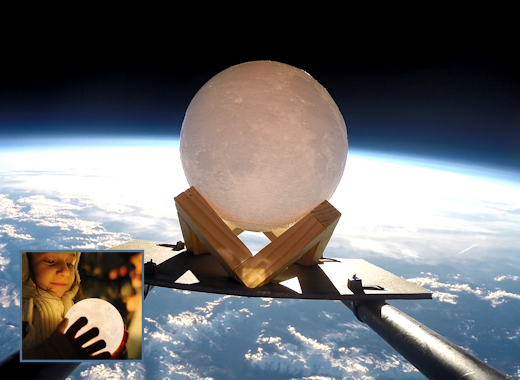
You can have it for $149.95. The surface of the sphere is a 3D-printed topo-map of the Moon, tracing every major crater and mountain range. It is also a night light. A built-in USB-rechargeable battery provides up to 20 hours of soothing illumination.
The glowing orb comes with a greeting card showing the Moon in flight and telling the story of its journey to the edge of space. Sales support the Earth to Sky Calculus cosmic ray ballooning program and hands-on STEM research.
Far Out Gifts: Earth to Sky Store
All sales support hands-on STEM education
A SUNSPOT ECLIPSE: On Oct. 2nd, the Moon passed in front of the sun, producing a solar eclipse visible across the Pacific Ocean and South America. Claudio Tenreiro watched from Curicó, Chile, and took these pictures:
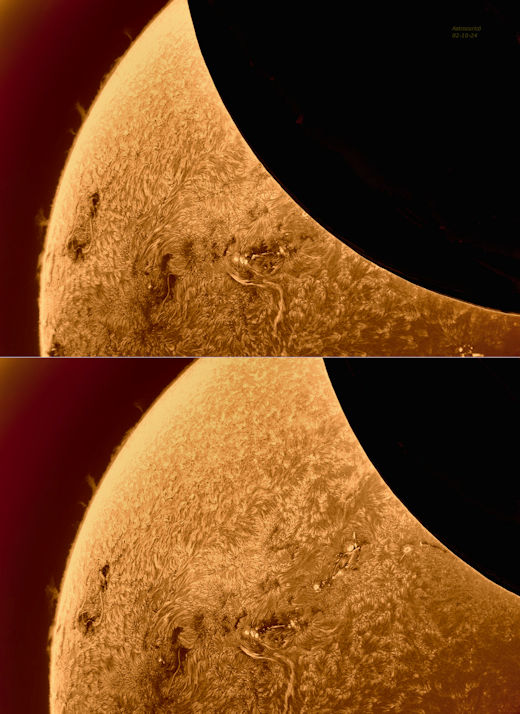
"It was fascinating to see the edge of the Moon eclipse individual sunspots--and there were many of them," says Tenreiro. "These two images were separated by 12 minutes."
Many more images have arrived from photographers in Argentina, Easter Island and Hawaii. Browse the gallery to see their pictures.
Realtime Eclipse Photo Gallery
Free: Spaceweather.com Newsletter
Realtime Comet Photo Gallery
Free: Spaceweather.com Newsletter
Realtime Aurora Photo Gallery
Free: Spaceweather.com Newsletter