SEVERE GEOMAGNETIC STORM PREDICTED: A geomagnetic storm (G1-G3) that sparked auroras as far south as Arizona and Texas on Oct. 7th and 8th is finally over. If you missed the show, good news: More auroras are in the offing. The sun just launched another CME directly toward Earth, and it could cause a severe G4-class storm when it arrives on Oct. 10th. Keep reading... Aurora alerts: SMS Text



POWERFUL X-CLASS SOLAR FLARE AND CME: Sunspot AR3848 was directly facing Earth this morning, Oct. 8th (0156 UTC), when it unleashed a powerful X1.8-class solar flare. NASA's Solar Dynamics Observatory recorded the extreme ultraviolet flash:
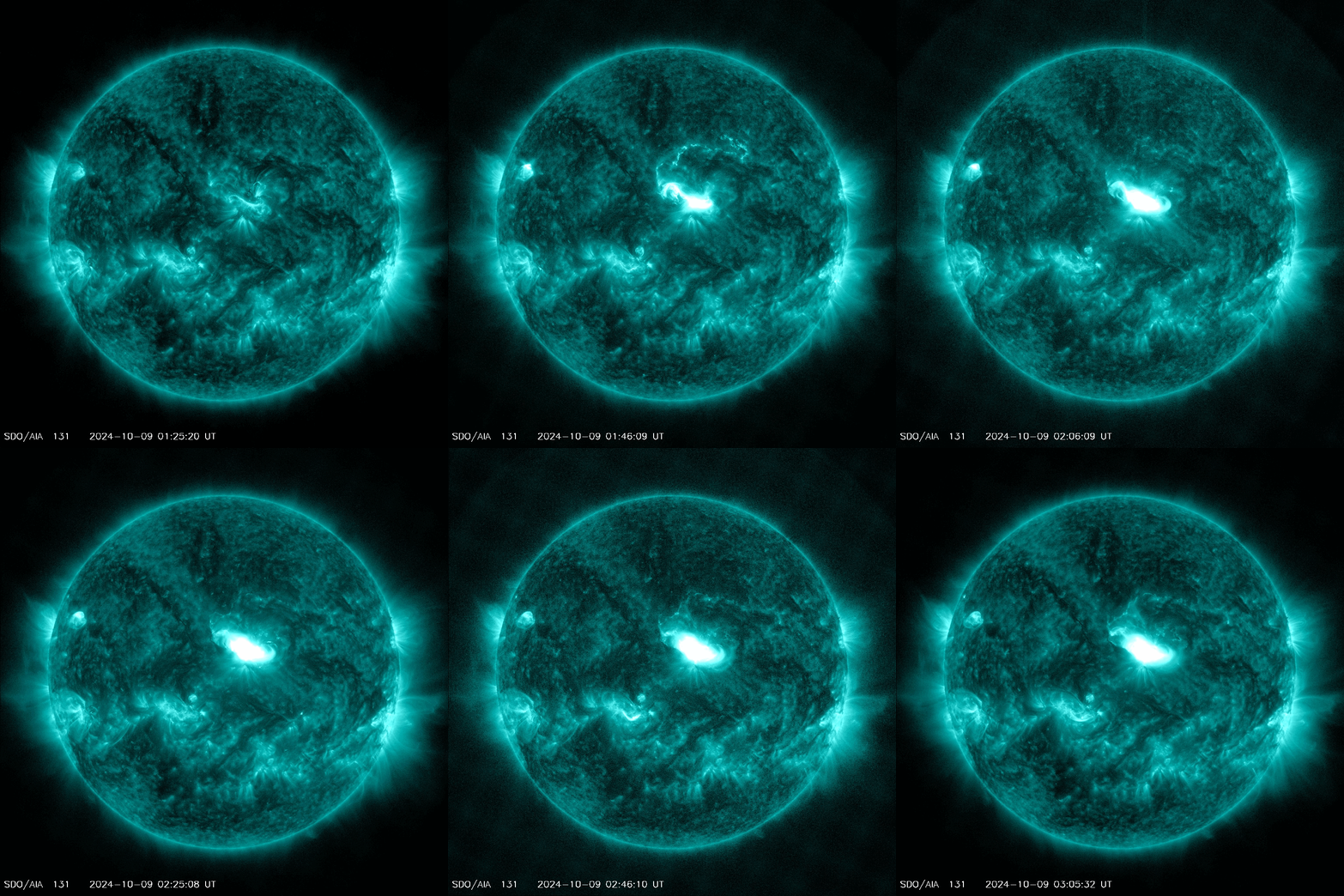
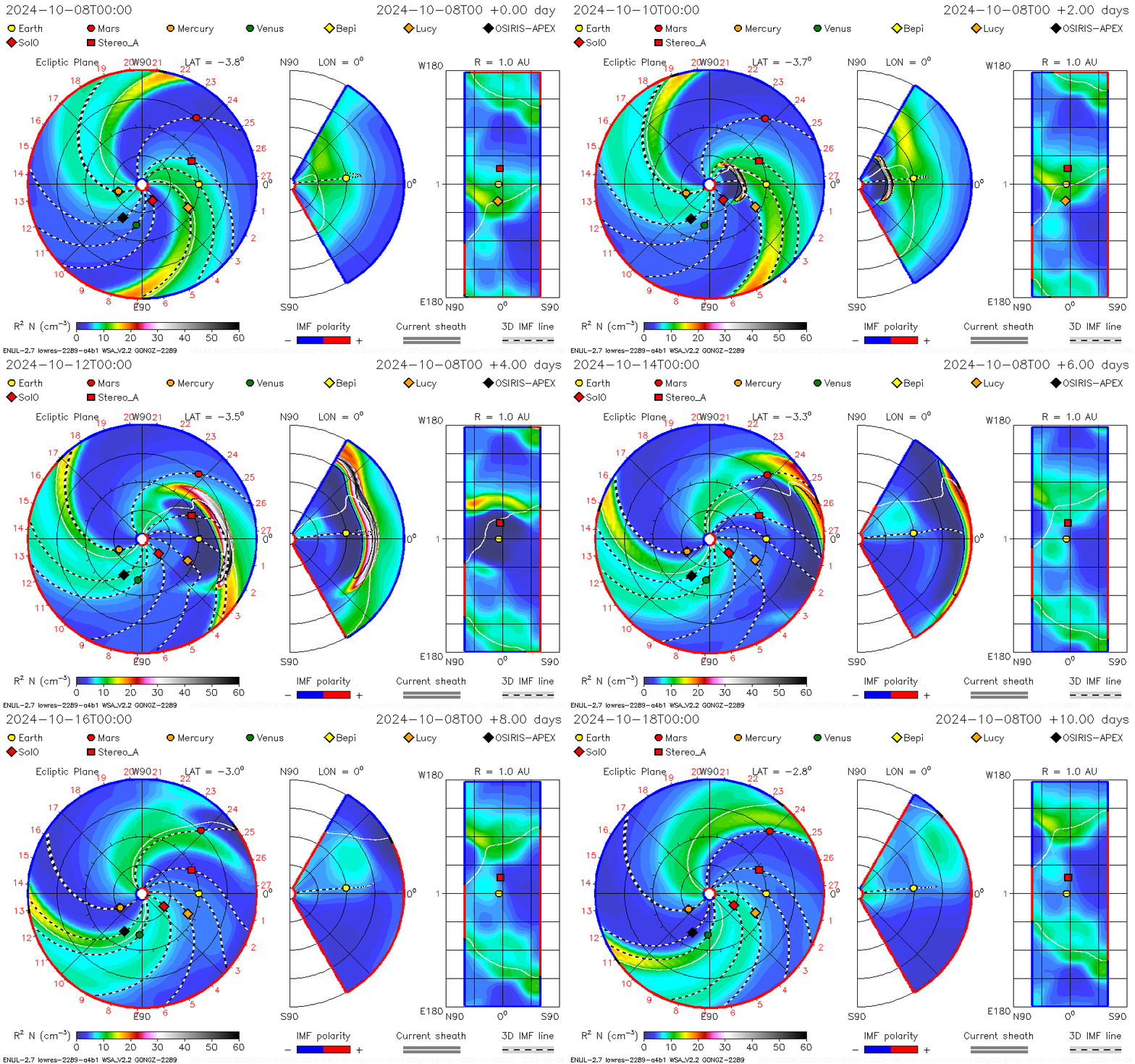
This explosion lasted more than five hours, long enough to lift a massive CME out of the sun's atmosphere. SOHO coronagraphs have since detected a bright, fast-moving CME heading directly toward Earth. NOAA and NASA models agree that the CME will strike our planet late on Oct. 10th. NOAA forecasters say that a severe G4-class geomagnetic storm is possible when the CME arrives.
This movie from SOHO is quite remarkable. It shows not only the CME, but also Comet Tsuchinshan-ATLAS passing close to the sun:
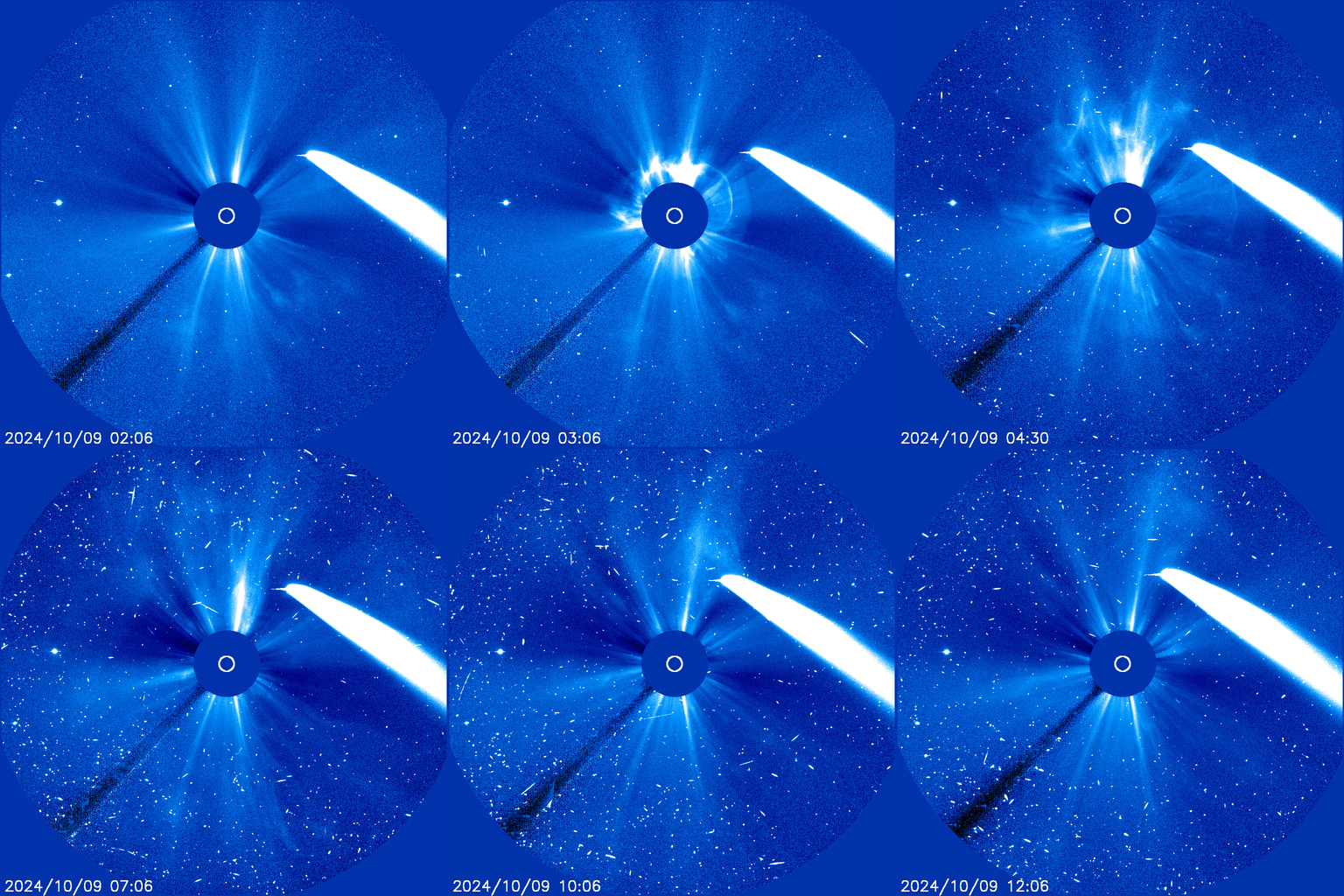
The CME will hit the comet before it hits Earth, probably later today. The impact could rip off the comet's tail. The same thing happened to Comet Encke in April 2007. A bent or broken tail is something astronomers should look for when Comet Tsuchinshan-ATLAS emerges from the sun's glare this weekend.
Stay tuned for updates about this developing story! CME impact alerts: SMS Text
Realtime Space Weather Photo Gallery
Free: Spaceweather.com Newsletter
THE GEOMAGNETIC MOONCAT: This cat has experienced a geomagnetic storm. Multiple CMEs hit Earth's magnetic field during the weekend of August 10-11. Students of Earth to Sky Calculus launched a cosmic ray balloon into the resulting severe geomagnetic storm. The Geomagnetic Mooncat went along for the ride.:
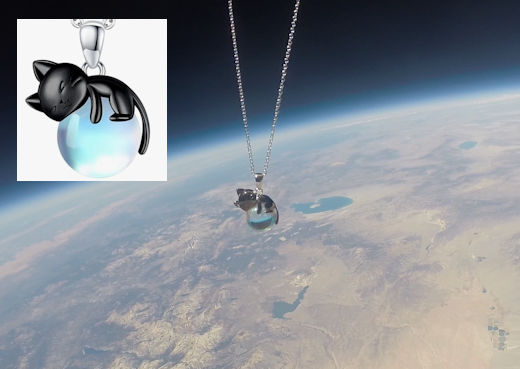
You can have it for $199.95. Supported by a sterling silver frame, the black cat is curled around a genuine blue moonstone. It floated through the stratosphere for almost 3 hours during the storm, gathering radiation data for the students' monitoring program. The Mooncat comes with a greeting card showing the pendant in flight and explaining the radiation experiment.
The students of Earth to Sky Calculus are selling space jewelry to support their cosmic ray ballooning program. Don't wait for Christmas--get yours now!
Far Out Gifts: Earth to Sky Store
All sales support hands-on STEM education
DAYLIGHT PHOTO OF COMET TSUCHINSHAN-ATLAS: This week, Comet Tsuchinshan-ATLAS is passing almost directly between Earth and the sun. Many astronomers thought it might be possible to photograph the comet in broad daylight. Petr Horálek did it, but it wasn't easy:
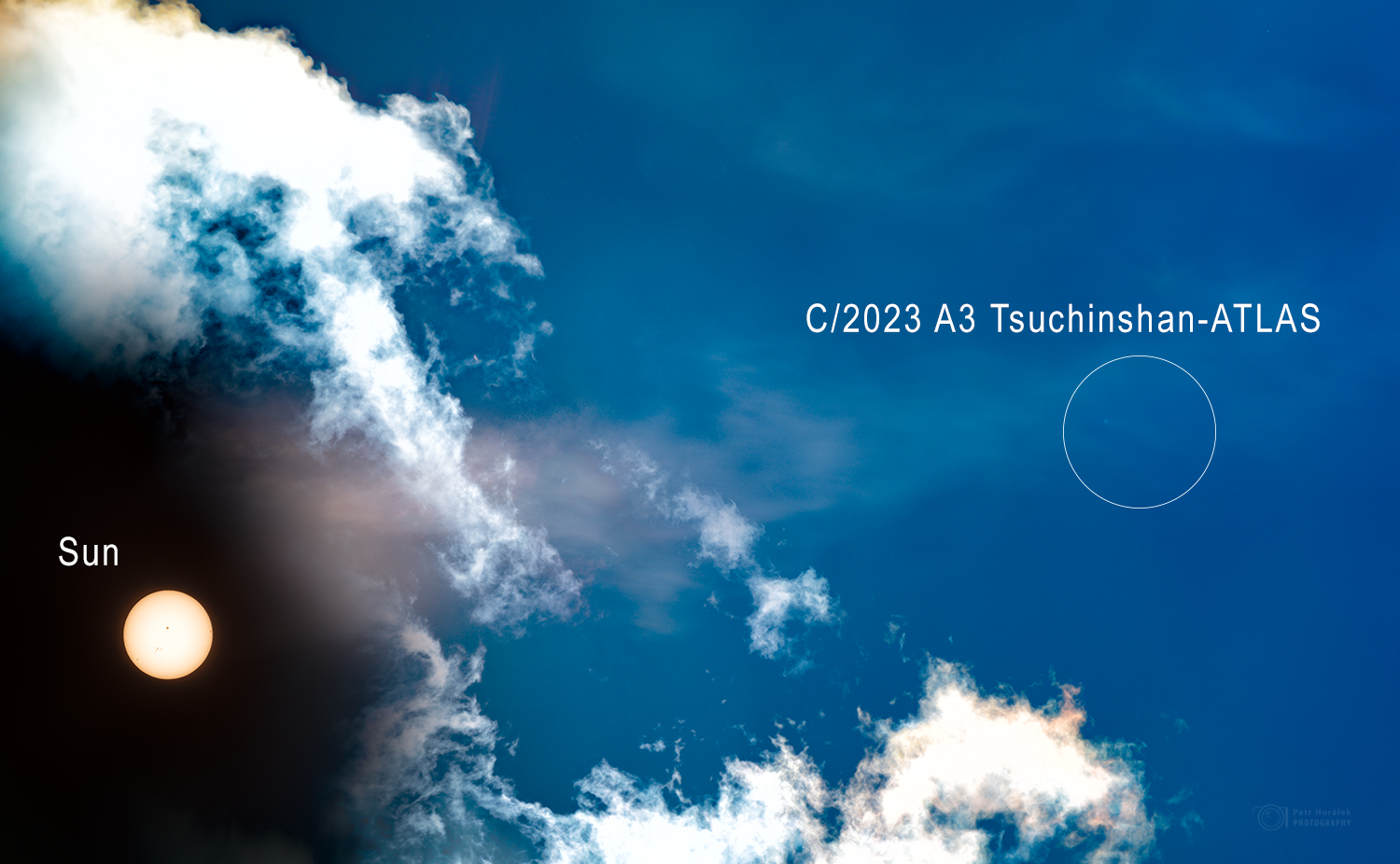
"It was quite a process," says Horalek. "First, I blocked the sun using a circular handmade Baader Astrossolar filter. Then I took 62 extremely fast exposures (1/6400 s, f2.8, ISO 100), which I stacked by median/mean to avoid any other objects flying in the view--especially spider threads flying through the air, which is typical of this central European season. Dark frames were taken and applied, too. As a side effect of using the filter, you can see some big sunspots."
"The comet was invisible to the naked eye," he adds. "This picture is extremely enhanced and the comet's core is 50 percent sharpened to improve visibility."
In mid-Jan. 2007, many observers saw Comet McNaught in broad daylight. Its fan-shaped tail in blue sky was visible to the naked eye. Comet Tsuchinshan-ATLAS fell just short of repeating that performance because it was 2 magnitudes dimmer than McNaught.
Realtime Comet Photo Gallery
Free: Spaceweather.com Newsletter
Realtime Aurora Photo Gallery
Free: Spaceweather.com Newsletter