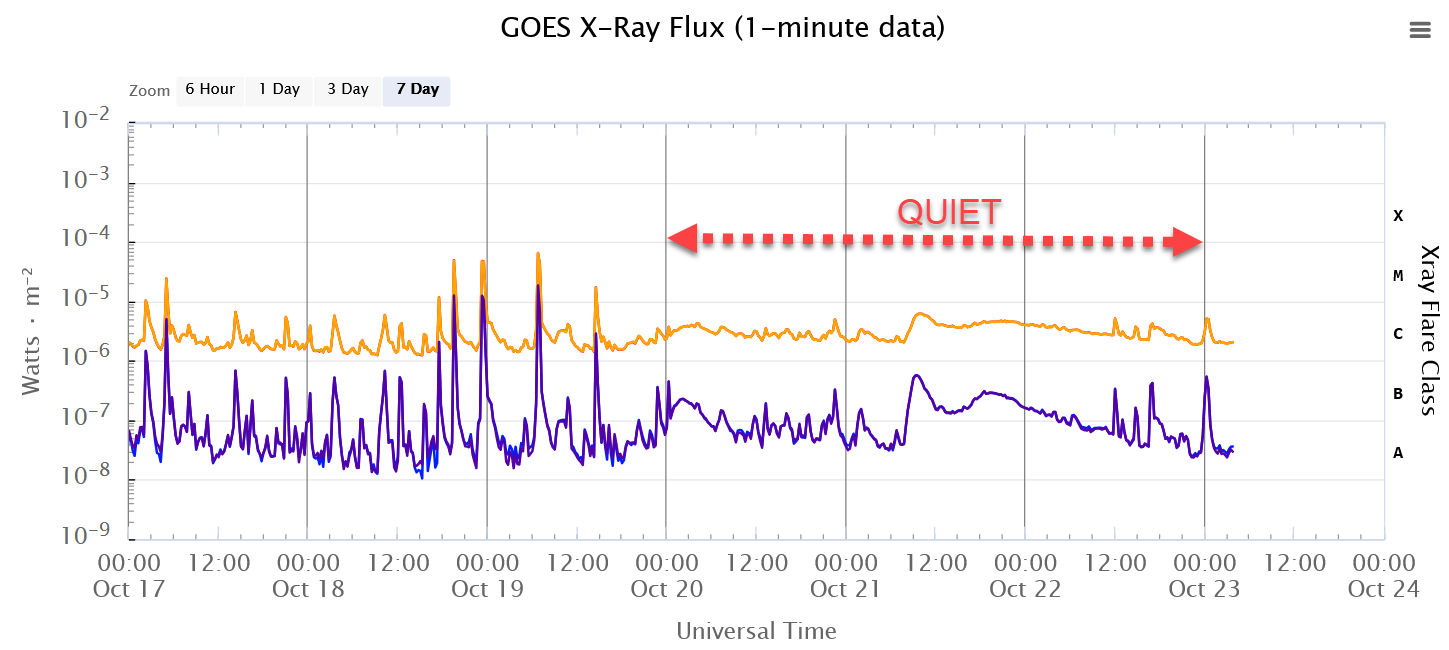
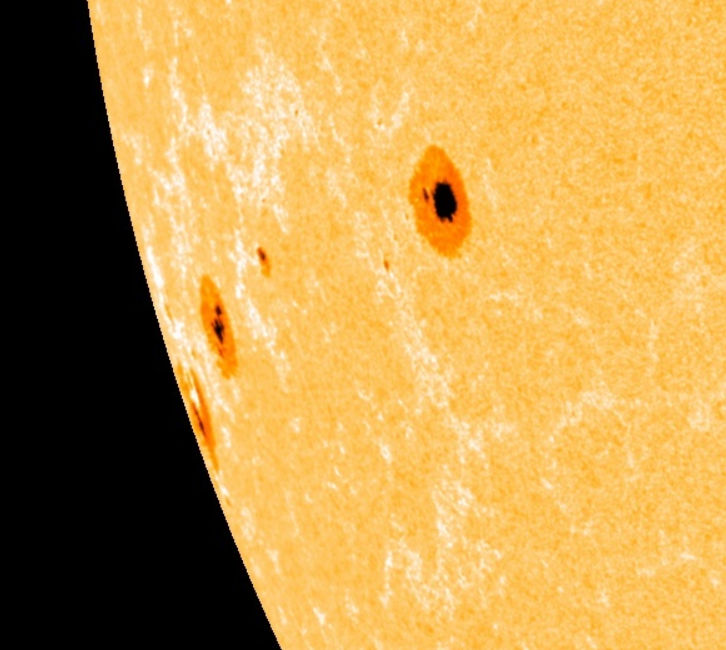
THE SUN IS STILL QUIET, BUT... Solar activity remains low for the 3rd day in a row. However, the quiet may soon end. A new sunspot is emerging over the sun's southeastern limb. It looks large and complex, and could be a source of solar flares. Solar flare alerts: SMS Text
A BIG DEVELOPMENT IN SPACE WEATHER FORECASTING: Imagine a giant CME heading straight for Earth, but no one knew it was coming. Space weather forecasters have long worried about such a scenario. Our best early warning system for CMEs is a coronagraph onboard the Solar and Heliospheric Observatory (SOHO), which was launched in Dec. 1995. How long can such an ancient spacecraft be expected to last?
We can stop worrying. Yesterday, NOAA unveiled its replacement, the CCOR-1 solar coronagraph onboard the new GOES-19 satellite:
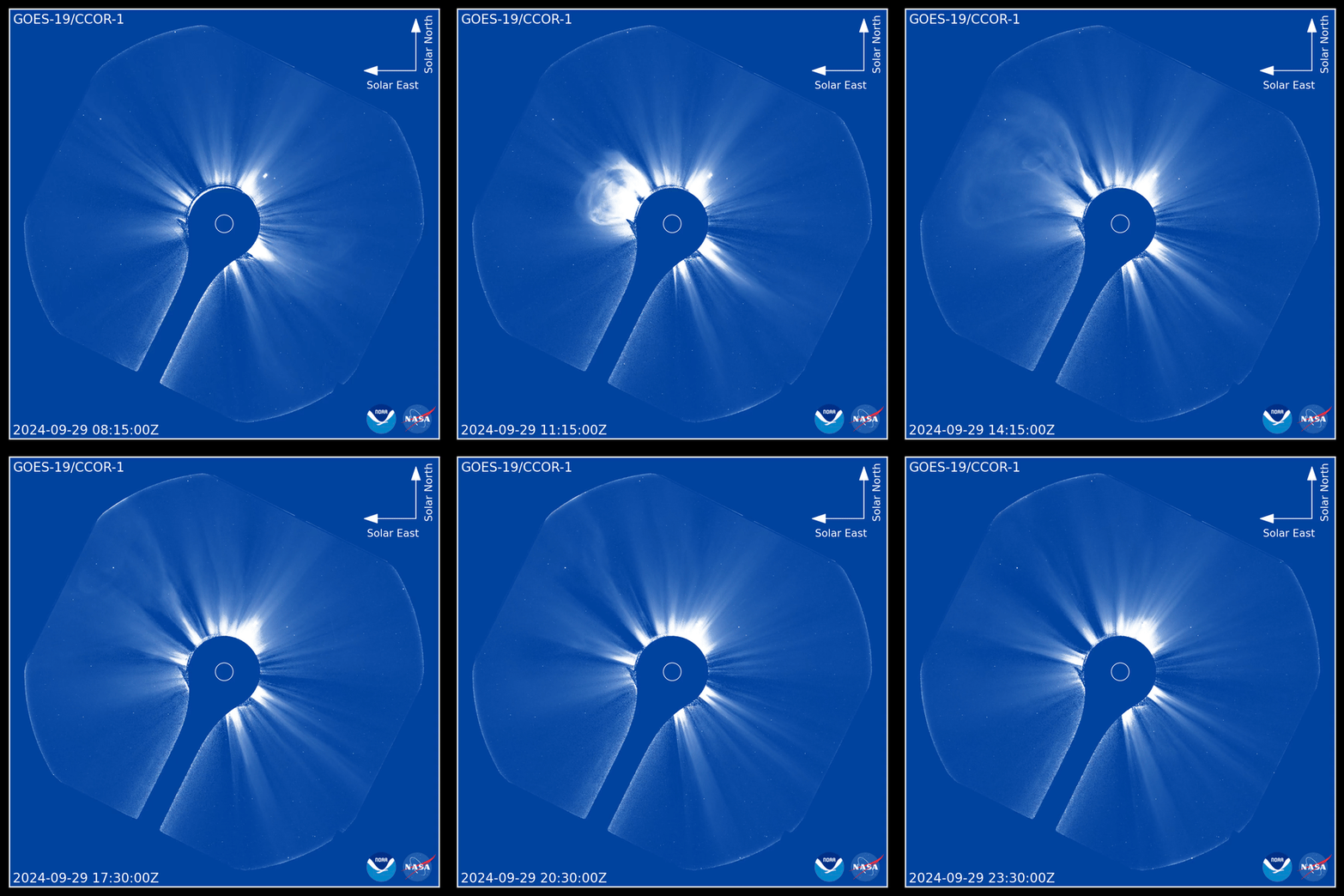
Using an occulting disk (the dark blue circle at the center of the video) to block the glare of the sun, CCOR-1 delivers uninterrupted monitoring of CMEs with a new image every 15 minutes. GOES-19 is currently undergoing post-launch testing and checkout of its instruments, including the coronagraph. In spring 2025, NOAA will begin using CCOR-1 for regular CME forecasts.
SOHO, meanwhile, will continue monitoring the sun as it has done for almost 30 years. This incredible spacecraft has discovered more than 5000 sungrazing comets and helped forecasters predict hundreds of strong geomagnetic storms. Long may it live!
Realtime Space Weather Photo Gallery
Free: Spaceweather.com Newsletter
THE NEW MOONCAT: On Oct. 11th, the students of Earth to Sky Calculus launched a cosmic ray balloon into a severe geomagnetic storm. Their mission: To discover the storm's effect on atmospheric radiation. The New Mooncat went along for the ride.
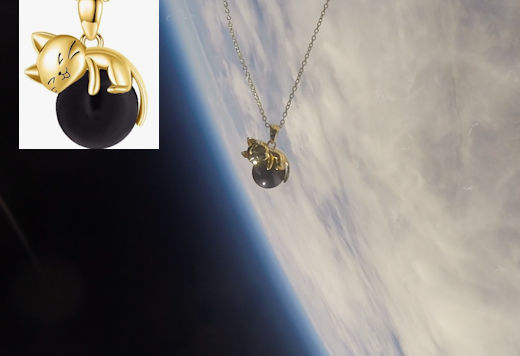
You can have it for $199.95. Wrapped around a circular stone of polished black onyx, the golden cat floated through the stratosphere for almost 3 hours while radiation sensors in the payload measured the storm. The pendant comes with a greeting card showing the cat in flight and telling the story of its journey to the stratosphere and back.
The students of Earth to Sky Calculus are selling space jewelry to support their cosmic ray ballooning program. Don't wait for Christmas--get yours now!
Far Out Gifts: Earth to Sky Store
All sales support hands-on STEM education
iPHONE PHOTOS OF COMET TSUCHINSHAN-ATLAS: Comet Tsuchinshan-ATLAS has faded to magnitude +5 and is no longer easily visible to the naked eye. It's still a great target for photographers. Tony Surma-Hawes took this picture using his iPhone 16 in Queensland, Australia:
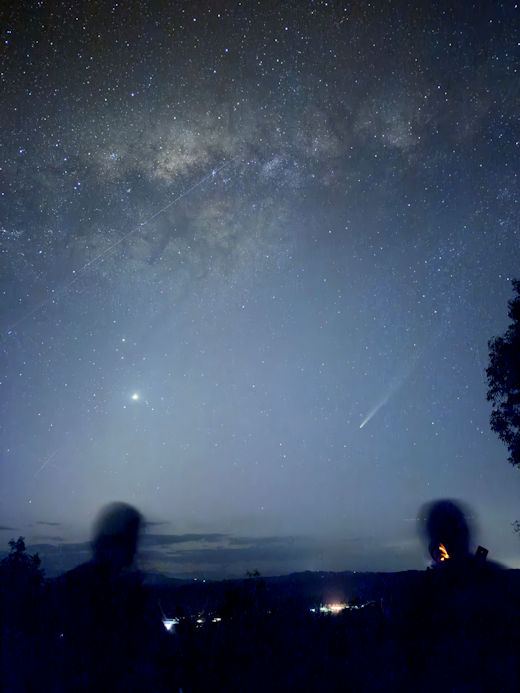
"I photographed the comet with my son and three of his friends," says Surma-Hawes. "We also caught a Starlink train passing overhead. As impressed the boys were with the comet in their cameras, their collective minds were blown by the procession of satellites. I have to say I had never seen the like myself."
If you have a modern smartphone, you can take a picture like this too. Go outside after sunset, point your phone at the western sky, and take a 10 second exposure in Night Mode. The comet is surprisingly easy to catch. Submit your photos here.
Realtime Comet Photo Gallery
Free: Spaceweather.com Newsletter
Realtime Aurora Photo Gallery
Free: Spaceweather.com Newsletter